How Much Does a Sewage Treatment Plant Cost, Including Installation?

One of the most common questions we are asked at JW Clark Ltd is: How much does a new sewage treatment plant cost, including all the installation work?

It’s a reasonable question, but the answer depends on several factors. The two main factors are: (i) access to the property and (ii) where the treated wastewater, or effluent, will discharge.

You may see sewage treatment plants advertised online, costing anything from £2,500 to £5,000. However, this is generally the cost of the treatment plant itself, not the cost of a complete, working installation.

The installation involves considerably more work than simply purchasing a tank and putting it in the ground.

JW Clark Ltd are Marsh Industries Approved Contractors, with nearly 20 years of experience working with Marsh Industries, a leading UK manufacturer of sewage treatment plants.
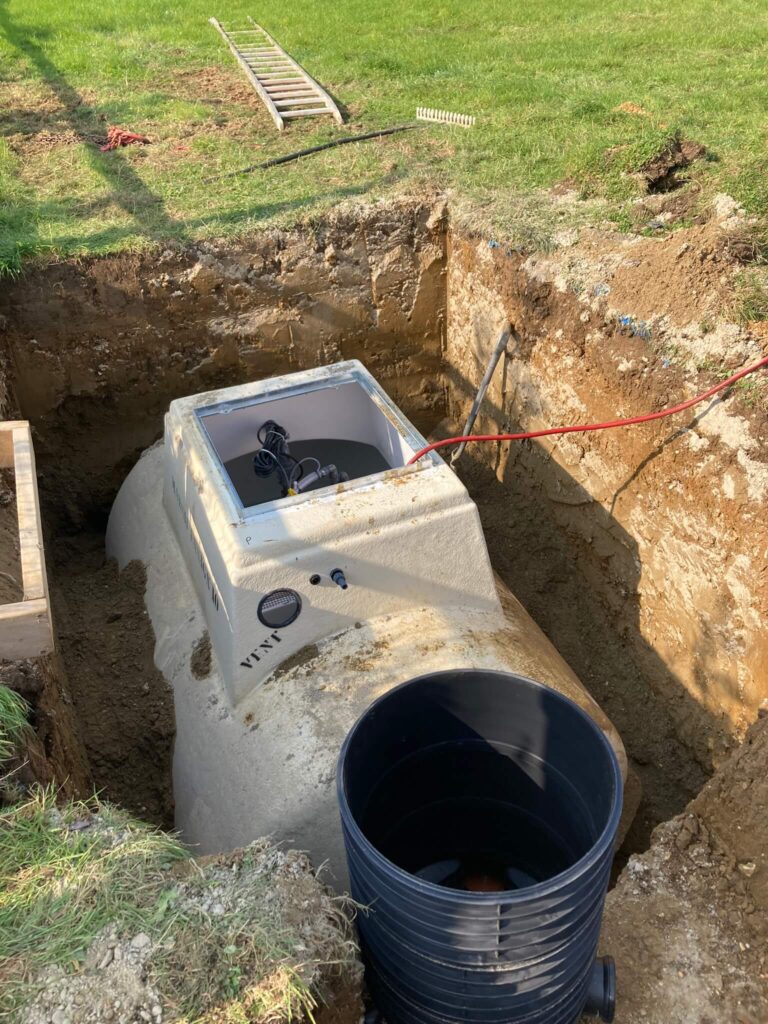
Above: Treatment Plant Installation, with concrete base in, and concrete surround partly done

What Does a Sewage Treatment Plant Cost, Fully Installed?

As a general guide, for a typical domestic property in the UK, the following approximate costs may be expected:

Type of Installation

Approximate Cost

Straightforward domestic installation, with good access and a suitable nearby discharge point

£9,000–£12,000

Installation involving restricted access, additional drainage work or more challenging ground conditions

£12,000–£18,000

More complicated installation, potentially requiring extensive land drainage, pumping or substantial additional work

£16,000–£20,000+

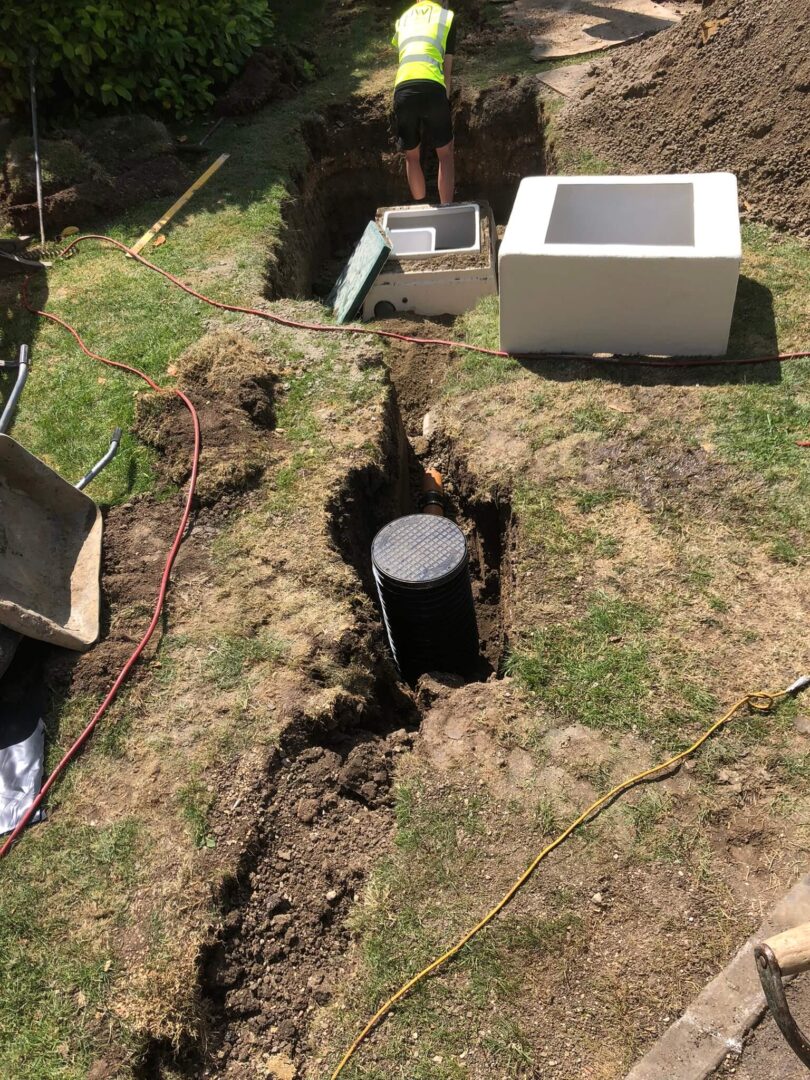
Above: An example of a treatment plant installation with good vehicular access to the rear garden.

These figures are intended as a general guide, rather than a quotation from JW Clark Ltd in advance of a site visit, and are exclusive of VAT where applicable.

Every property is different, and an accurate price can only be established once the requirements of the installation are understood.

What Are the Two Main Factors Affecting Installation Cost?

1. Access to the Property

Access is one of the most significant factors affecting the cost of installing a sewage treatment plant.

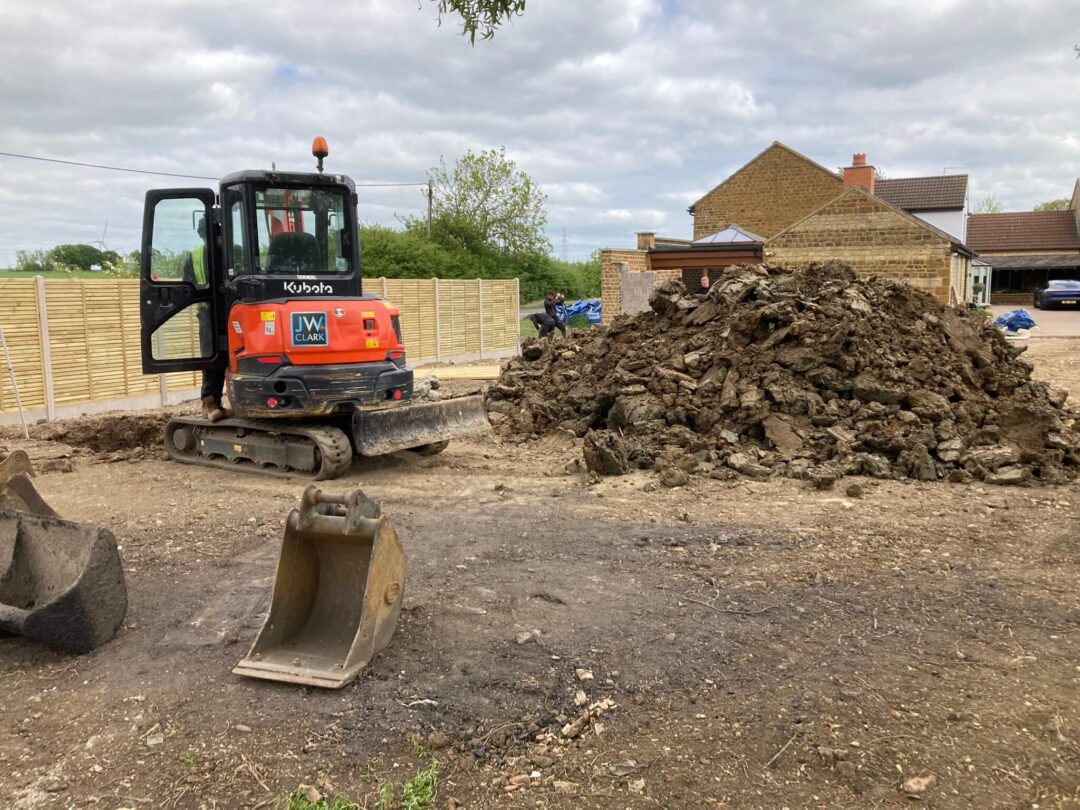
A typical domestic treatment plant installation may require an excavation 2 metres deep or more, depending on the size of the tank and the depth of the incoming drainage. This is a substantial excavation, and a reasonably large excavator is generally needed to carry out the work efficiently and safely. We tend to use a 3.7 tonne excavator, requiring a 2-metre wide gap for access. And 2.5m in height.

Where the treatment plant can be installed at the front of a property, with good access for excavators, delivery vehicles and lorries, the work will normally be a lot more straightforward, and of course a lot cheaper.

However, most domestic sewage treatment plants are required to be installed in the rear garden* and this is where access can become a major issue.

*Where a new sewage treatment plant is replacing an existing septic tank, it will usually need to be installed in the same location, or close to the existing tank. This is because the property’s drainage pipework already runs to that location, and relocating the treatment plant elsewhere would likely involve substantial additional excavation and the diversion of existing drains.

If access to the rear garden is restricted, it may not be possible to get a suitably sized excavator to the proposed installation area. In some circumstances, a crane may even be required to lift an excavator over the house. And we have done this many times before.

And excavating the hole is only part of the challenge.

There are normally large quantities of excavated soil to be removed from the rear garden and transported to the front of the property for disposal. Equally, substantial quantities of concrete will always need to be transported from the front of the property to the rear garden to form the surround to the treatment plant, in accordance with the manufacturer’s installation requirements. A standard 6-person treatment plant will normally take about 10-15 tonnes of concrete. And a treatment plant must always be surrounded in concrete. Click here to read our article Does a Treatment Plant have to be surrounded in concrete?

Where machinery and vehicles cannot gain direct access, moving these materials can become a labour-intensive and time-consuming operation.

In simple terms, installing a treatment plant at the front of a property with good access can be relatively straightforward. Installing the same treatment plant in a rear garden with restricted access will nearly always be considerably more expensive.

2. Where Will the Treated Wastewater Discharge?

The second major factor affecting cost is where the treated wastewater, often referred to as effluent, will discharge once it leaves the treatment plant.

There are two common arrangements.

i) Discharging into a ditch or watercourse

Where a suitable ditch, stream or other watercourse is available nearby, discharging the treated wastewater into it is generally the least expensive option, provided the necessary environmental requirements can be met.

Typically, this involves installing an outlet pipe from the treatment plant to the watercourse, ideally allowing the treated wastewater to flow away by gravity.

Where distances are short and ground levels are favourable, the additional groundwork can be relatively modest. Even if the levels don’t ‘work’, then a pump can be installed to pump the effluent to the ditch or watercourse.

ii) Discharging into a drainage field

Where there is no suitable watercourse available, a drainage field will normally be required to disperse the treated wastewater into the ground.

A drainage field consists of a network of perforated pipes laid within trenches containing suitable granular material. The system distributes the treated wastewater over an area of ground, allowing it to disperse naturally.

However, installing a drainage field can involve a considerable amount of additional groundwork.

Large quantities of soil will need to be excavated and removed from the property, while substantial quantities of gravel or other suitable drainage aggregate must be brought in and placed in the trenches.

The size of the drainage field depends on the wastewater discharge requirements and the permeability of the ground, which must be established through appropriate testing.

Once again, access can make a substantial difference.

If the drainage field is being installed in a rear garden with restricted access, removing the excavated soil and bringing in the necessary aggregate can become a significant operation.

In some circumstances, the cost of installing the drainage field can be similar to, or even greater than, the cost of installing the sewage treatment plant itself. Click here to read more about soakaways and drainage fields.

This is why establishing the proposed discharge arrangements is so important when assessing the overall installation cost.

What Is Included in the Installation Cost?

A typical sewage treatment plant installation will involve some or all of the following:

  • Supply and delivery of a suitably sized sewage treatment plant.
  • Excavation of the ground to accommodate the treatment plant.
  • Preparation of the excavation, including the necessary bedding and concrete surround where required.
  • Lowering and positioning the treatment plant.
  • Connecting the existing foul drainage to the new plant.
  • Installation of the outlet pipework to the discharge point.
  • Backfilling around the treatment plant in accordance with the manufacturer’s instructions.
  • Disposal of surplus excavated materials where required.
  • Electrical connections and commissioning.
  • Reinstatement of the disturbed ground.

Depending on the property, additional works may be necessary, including the removal or decommissioning of an existing septic tank, the installation of a drainage field or the provision of a pumped outlet.

These items can have a considerable impact on the total cost.

What Other Factors Affect the Price?

Although access and discharge arrangements are often the two biggest considerations, several other factors can influence the cost.

Ground Conditions

Excavating in reasonably dry, stable ground is generally more straightforward than working in rock, unstable material or ground containing significant groundwater.

Difficult ground conditions may require additional excavation support, groundwater control or specialist installation methods.

Size of the Treatment Plant

The treatment plant must be appropriately sized for the property and the amount of wastewater it is expected to receive.

A treatment plant serving a large house, multiple properties or commercial premises may require a larger unit than one serving a typical domestic property.

Larger units generally cost more to purchase and may require larger excavations and additional installation work.

Depth and Distance of the Drainage

The depth of the existing drainage and the distance between the property, treatment plant and discharge point will affect the amount of excavation and pipework required.

Where the ground levels do not allow the treated wastewater to flow away by gravity, a pumped outlet may be necessary.

This adds to the installation cost and introduces additional equipment requiring maintenance.

Does the Existing Septic Tank Need Removing?

If the new treatment plant is replacing an existing septic tank, the old system will need to be properly decommissioned.

Depending on its location, construction and condition, this might involve emptying the existing tank, removing it or making it permanently safe.

There may also be existing drainage pipework that can be retained, altered or replaced.

These requirements should be established when preparing the quotation.

Are There Any Other Costs to Consider?

In addition to the main installation, certain projects may require:

  • Percolation testing and drainage field design.
  • Building Control fees and inspections
  • Planning permission or an environmental permit, where required.

    Please note: JW Clark Ltd asks the customer to arrange Building Control approval and any required applications to the local planning authority or Environment Agency

  • Electrical works.
  • Additional landscaping or reinstatement.
  • Ongoing servicing, electricity and periodic desludging. Click here to read about servicing and aftercare.

In England, sewage treatment plant discharges must comply with the Environment Agency’s General Binding Rules, or an appropriate environmental permit must be obtained where required.

It is also important to establish whether connection to a public foul sewer is reasonably practicable before proceeding with a private sewage treatment system.

Why Is It Important to Obtain a Proper Quotation?

A quotation should ideally cover the complete installation, including the means of discharging the treated wastewater, rather than just supplying and fitting the treatment plant.

A relatively inexpensive treatment plant installation is of little benefit if the treated wastewater cannot discharge correctly. We regularly encounter systems where the treatment plant itself is functioning correctly, but the drainage field is undersized or unsuitable.

Where treated effluent is discharged to ground, it should discharge through a properly designed drainage field rather than a conventional rainwater soakaway. In simple terms, a treatment plant installation is only as effective as the drainage system serving it.

At JW Clark Ltd, we believe it is important to establish the requirements of the entire installation before work begins.

In particular, understanding access to the proposed installation area and establishing where the treated wastewater will discharge are essential to producing a realistic quotation.

As Marsh Industries Approved Contractors, JW Clark Ltd have extensive practical experience installing Marsh sewage treatment plants, including the associated excavation, concrete surrounds, drainage connections and discharge arrangements.

Request a Sewage Treatment Plant Installation Quote

JW Clark Ltd installs sewage treatment plants across Northamptonshire and the surrounding counties, including Bedfordshire, Buckinghamshire, Cambridgeshire, Leicestershire, Oxfordshire and Warwickshire.

If you are considering installing a new sewage treatment plant, or replacing an existing septic tank or treatment plant, we would be pleased to discuss your requirements.

It is helpful if you can provide the property address, details of the existing drainage arrangements, photographs of the proposed installation area and information about any nearby watercourse.

For further information or to request a quotation, please contact JW Clark Ltd.

Please note: All prices quoted in this fact sheet are approximate UK market guidance figures, not fixed prices or quotations from JW Clark Ltd. Actual costs will depend on the individual project and site conditions.