How Long Does a Septic Tank Soakaway Last?

If your property has a septic tank, you may assume that regular emptying will keep the system working indefinitely. Unfortunately, this isn’t always the case.

Although a septic tank can last for decades, the soakaway—also known as a drainage field—receiving its wastewater will eventually become blocked and stop working.

The terms ‘soakaway’ and ‘drainage field’ are often used interchangeably. However, a conventional rainwater soakaway is generally unsuitable for wastewater from a septic tank or treatment plant. Discharges to ground should use a properly designed drainage field.

Many older installations also fail to meet current environmental requirements, particularly where septic tank effluent enters a watercourse directly or through an ineffective drainage arrangement.

Here we explain why these systems fail, how long they last and when replacement may be necessary.
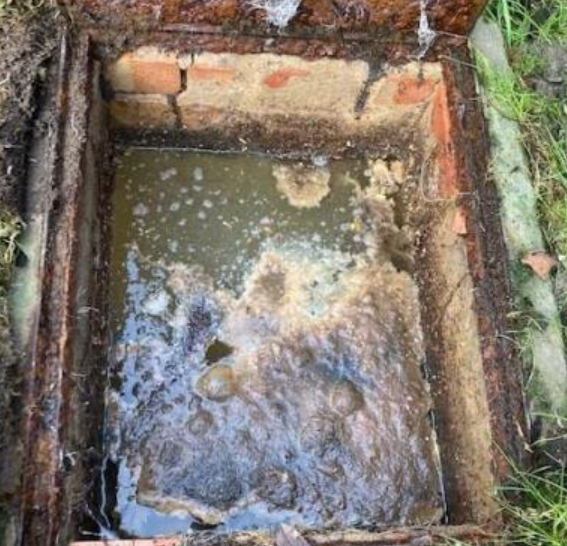
Above: From our experience, this is what most old septic tanks look like when we lift the lid

What does a septic tank soakaway do?

A septic tank separates solids from household wastewater.

Heavier solids settle at the bottom, while fats and grease accumulate near the surface. The partially treated liquid, known as effluent, flows into the surrounding drainage system.

In older installations, this may be a traditional rubble-filled soakaway, where wastewater gradually filters into the ground.
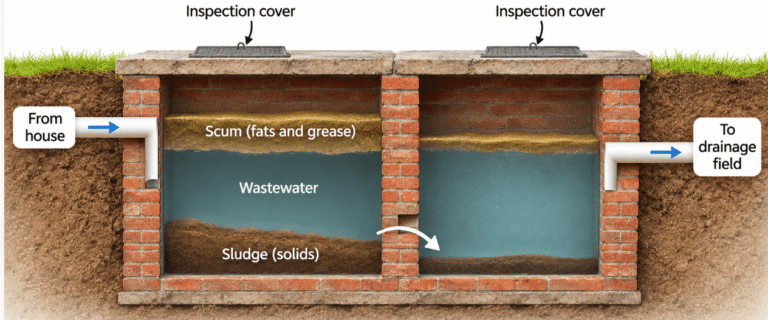
Above: An example of how an old Victorian septic tank was built – and many are still in existence today


However, the liquid leaving a septic tank is not clean water. It still contains organic matter, fine particles, bacteria and other contaminants.

Over time, these substances can cause the soakaway and surrounding soil to become blocked.

Why do septic tank soakaways eventually fail?

One principal cause is the gradual accumulation of organic material within the ground receiving the wastewater.

As effluent enters the soil, microorganisms develop a biological layer known as a biomat.

This is a natural part of the treatment process, helping remove contaminants from the wastewater.

However, as the biomat thickens, it can restrict the rate at which water passes into the surrounding ground.

Fine solids and grease escaping from the septic tank can make matters worse. Eventually, the ground may become unable to absorb wastewater quickly enough, causing the drainage system to back up or overflow.
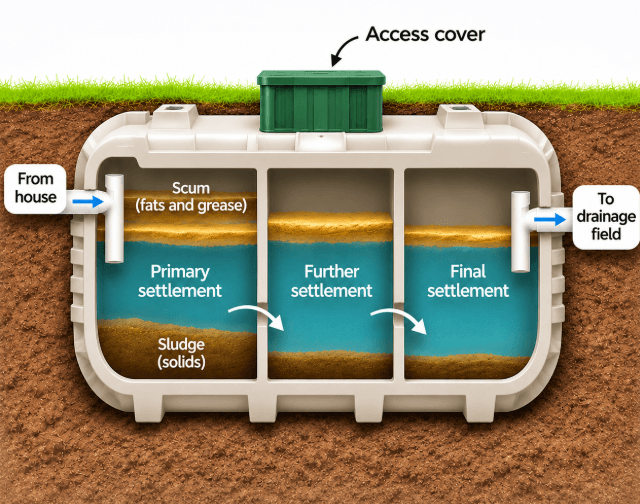
Above: Even in a modern-day septic tank, the design principle and the quality of separation are very basic

How many years should a septic tank soakaway last?

There is no fixed lifespan.

Some soakaways function for decades, while others develop problems much sooner.

Their lifespan depends on:

  • Ground conditions: Heavy clay absorbs wastewater less readily than suitable free-draining soils.
  • System size: Undersized soakaways can become overloaded.
  • Usage: More occupants produce more wastewater.
  • Maintenance: Poorly maintained tanks can allow solids into the drainage system.
  • Groundwater: High groundwater levels can prevent effective drainage.
  • Construction: Older installations may be poorly designed or unsuitable for their intended purpose.

What are the warning signs of a failing soakaway?

Common indications include:

  • Wastewater backing up into drains or the septic tank.
  • Toilets, sinks and baths draining slowly.
  • Wet or unusually green ground around the soakaway.
  • Unpleasant sewage smells.
  • Wastewater appearing at ground level.
  • Problems becoming worse during wet weather.

These symptoms can also result from blocked or damaged drainage pipes, so investigation is advisable before replacing the system.

Are septic tank soakaways still legal?

Traditional soakaways are not generally an acceptable means of disposing of septic tank effluent under current regulations in England.

An important distinction exists between a conventional soakaway and a properly designed drainage field.

Traditional soakaways are typically intended for rainwater disposal, whereas drainage fields are designed to distribute partially treated sewage effluent through suitable soil, allowing further treatment.

Modern drainage fields use perforated pipes laid in specially designed trenches, spreading wastewater over a larger area.

Under the Environment Agency’s general binding rules, septic tanks discharging to ground must use a suitable drainage field or infiltration system.

A compliant septic tank and drainage field can still be lawful. However, many older properties have drainage arrangements that may not satisfy these requirements.

The fact that an old septic tank system has operated for decades does not automatically mean it complies with current regulations.

Can a septic tank discharge into a stream or ditch?

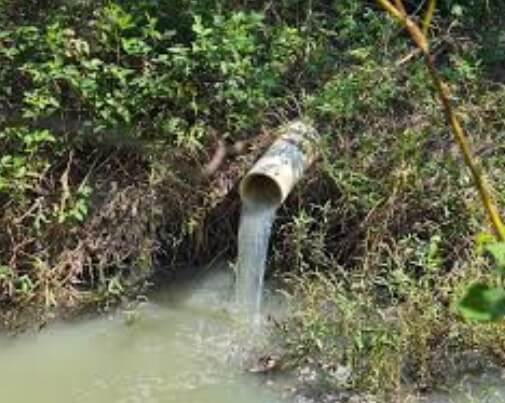
No. Since 1 January 2020, septic tanks in England have not been permitted to discharge directly into watercourses, including streams, rivers and ditches.

Older systems operating in this way must be upgraded or replaced with a compliant arrangement.

A modern package sewage treatment plant treats wastewater to a higher standard and may discharge into a suitable watercourse, provided the relevant environmental requirements are satisfied.

Alternatively, a compliant drainage field or connection to the public sewer may be appropriate.
Can an old septic tank cause problems when selling a house?

Yes, definitely. A non-compliant septic tank or soakaway can create considerable difficulties when selling a property.

During conveyancing, purchasers and their solicitors may investigate the property’s drainage arrangements and whether they comply with current environmental regulations.

If an older septic tank discharges into an unsuitable soakaway or directly into a watercourse, the buyer may be concerned about the cost of bringing the system into compliance.

This can result in:

  • Buyers requesting further drainage investigations.
  • Negotiations over the cost of replacement works.
  • Requests for the seller to upgrade the system before completion.
  • Delays to the sale.
  • Buyers reducing their offers or withdrawing altogether.

Property sellers must also provide the purchaser with written information about the private sewage system and its maintenance requirements.

Consequently, a septic tank system that appears to be working satisfactorily can still become an expensive problem when the property is marketed.

Related fact sheet: Are Septic Tanks Illegal? — Read our guide to current septic tank regulations and the implications for property owners.

Is a modern drainage field a permanent solution?

Not necessarily.

Although properly designed drainage fields are preferable to traditional soakaways, they can still deteriorate through biological clogging, excessive solids or overloading.

They also require suitable ground conditions, sufficient land and appropriate separation from groundwater.

Where these requirements cannot be met, alternative drainage arrangements may be necessary.

What should I do if my soakaway is failing or non-compliant?

There are three main options worth investigating.

  1. Install a replacement drainage field

Where suitable land and ground conditions exist, a compliant drainage field may be installed.

  1. Install a package sewage treatment plant Click here for more info

Where a suitable watercourse is available, a treatment plant may provide an alternative, subject to environmental requirements and any necessary permissions. A sewage treatment plant requires ongoing servicing and maintenance. Read our treatment care aftercare guide to understand what’s involved

  1. Connect to the public sewer Click here for more info

Where a public foul sewer is reasonably accessible, connecting to mains drainage can eliminate the need for an on-site sewage treatment and disposal system. In fact – where there is a public sewer within 30 metres of your boundary, you are legally obliged to connect to it, you cannot fit a new septic tank or treatment plant.

The most appropriate option depends on location, ground conditions, available space and cost.

Can JW Clark help?

JW Clark Ltd undertakes groundwork, drainage and public sewer connection works, including projects involving existing private drainage systems.

Established in 2004, we have extensive experience of underground drainage installations.

If your existing soakaway is failing, or you’re concerned about whether your septic tank arrangement complies with current regulations, we can help investigate practical alternatives.

These may include replacement drainage arrangements or connecting your property to the public sewer.

Contact JW Clark Ltd to discuss your property and the options available.

Find out more about our drainage and sewer connection services

Need a sewer connection within the public highway?

If your proposed sewer connection involves excavating a road or footpath, JW Clark can help you understand the permissions, practical requirements and likely costs.

Contact JW Clark Ltd to discuss your project or request a quotation.

Find out more about our sewer connection services

Sewer Connections - Building-Site-Scene - JW Clark

Do you have a project you wish to discuss?

Who Can Legally Carry Out a Sewer Connection in a Public Road?

Who Can Legally Carry Out a Sewer Connection in a Public Road?

If you’re building a new property and arranging a connection to the public sewer, or if you’re trying to get off a septic tank and onto the public sewer, you’ll likely discover that the existing sewer is located in the Highway somewhere. It will most likely be under the road, and often very deep – click here to read about how deep public sewers are.

Although many groundwork contractors can install all manner of underground drainage, not every contractor is suitably qualified or authorised to undertake sewer connection works within the public highway. It can be quite a specialist job.

There are specific legal requirements, permissions and qualifications that must be in place before work can begin.

Do you need a specialist sewer connection contractor?

In practice, yes.

Connecting to a public sewer beneath a road normally involves excavating the highway, exposing the existing sewer, installing the connection and reinstating the road afterwards.

These operations are governed by street works legislation and the requirements of the relevant water authority.

The contractor must have appropriately qualified personnel, suitable insurance and the necessary permissions.

Simply employing a general builder or groundworker will often not automatically satisfy these requirements.

What is a Section 50 licence?

Under the New Roads and Street Works Act 1991, a Section 50 licence allows a person or organisation without statutory street works powers to carry out specified works within the public highway.

For a private sewer connection, a Section 50 licence will normally be required from the local highway authority.

The licence sets out conditions relating to matters such as:

A contractor cannot simply excavate a public road because a customer has instructed them to connect to a sewer.

Importantly, a Section 50 licence is separate from the water authority’s permission to connect to the public sewer.

Click here to read more about Section 50 Licences

What qualifications must the contractor have?

Under Section 67 of the New Roads and Street Works Act 1991, street works must generally be supervised by someone holding the appropriate Street Works supervisor qualification.

There must also be at least one appropriately qualified operative on site whenever the relevant street works are being undertaken.

These are commonly referred to as NRSWA qualifications.

They cover activities including:

  • Locating and avoiding underground services.
  • Setting out signs, lights and barriers.
  • Excavation within the highway.
  • Reinstatement of roads and footpaths.
  • Supervision of street works.

The precise qualifications required depend on the activities being undertaken.

See how we managed highway permissions, a road closure and resident access on our Bourne End sewer connection project

Does the water authority also need to approve the connection?

Yes. Always. It’s their network and nobody can work on it without their say-so.

Before connecting to a public sewer, approval will normally be required from the relevant water authority under Section 106 of the Water Industry Act 1991.

Anglian Water, Severn Trent and Thames Water each have procedures governing connections to their sewer networks. These are the networks we generally work on, at JW Clark Ltd

Depending on the authority and proposed connection, the contractor may need to demonstrate:

  • Relevant experience and competence.
  • Suitable public liability insurance.
  • Appropriate health and safety arrangements.
  • Necessary training and qualifications.
  • Acceptable methods of working.

The water authority will normally specify the permitted connection method and require inspections.

Section 106 approval does not automatically authorise excavation within the public highway. The highway and water authority requirements must both be satisfied.

Click here to read more about Section 106 applications to a water authority

What insurance is required?

Sewer connections within public roads can involve substantial risks, including damage to underground utilities, injury to road users and defective highway reinstatement.

Highway authorities normally require evidence of adequate public liability insurance before granting a Section 50 licence.

Requirements vary, although a higher level of insurance at £10 million of public liability cover is commonly specified.

The water authority may impose additional insurance requirements.

Customers should ensure their contractor has suitable insurance for the proposed works.

Can a homeowner carry out their own sewer connection?

A homeowner cannot simply dig up a public road and connect to the sewer themselves.

Although Section 50 licences can be granted to individuals or organisations without statutory street works powers, the appropriate permissions, qualifications, insurance and safety arrangements must still be in place.

For most homeowners and small developers, employing an experienced sewer connection contractor is the only option.

What happens if work is undertaken without permission?

Carrying out street works without the necessary authority can result in enforcement action and potentially prosecution.

Unauthorised sewer connections may also require remedial work or retrospective action by the relevant water authority.

Defective highway reinstatement can lead to additional inspections, repair costs and other consequences.

These are important reasons for ensuring that the contractor is properly authorised and suitably qualified before commencing work.

What should I ask a sewer connection contractor?

Before appointing a contractor to work within the public highway, establish the following:

  1. Section 50: Who will arrange the highway licence?
  2. Qualifications: Are appropriately qualified NRSWA operatives and supervisors available?
  3. Section 106: Who will obtain the water authority’s approval?
  4. Insurance: Does the contractor have adequate public liability cover?
  5. Experience: Has the contractor previously undertaken sewer connections within public roads?
  6. Traffic management: Who will arrange temporary traffic lights or a road closure if required?
  7. Inspections: Who will arrange inspections and final sign-off?

An experienced contractor should be able to explain these responsibilities clearly.

Can JW Clark Ltd undertake sewer connections within public roads?

Yes, that’s what we do, and we’ve been doing it for over 20 years. JW Clark Ltd is an established groundwork and civil engineering contractor, with extensive experience of undertaking public sewer connections, including installations requiring excavation within the public highway.

Established in 2004, we regularly deal with the practical and administrative requirements associated with these works.

Our services can include Section 106 applications, Section 50 highway licences, traffic management, excavation, installation, reinstatement and arranging the necessary inspections.

We undertake sewer connection projects across areas served by Anglian Water, Severn Trent and Thames Water.

Need a sewer connection within the public highway?

If your proposed sewer connection involves excavating a road or footpath, JW Clark can help you understand the permissions, practical requirements and likely costs. Read our guide to how much a new sewer connection costs

Contact JW Clark Ltd to discuss your project or request a quotation.
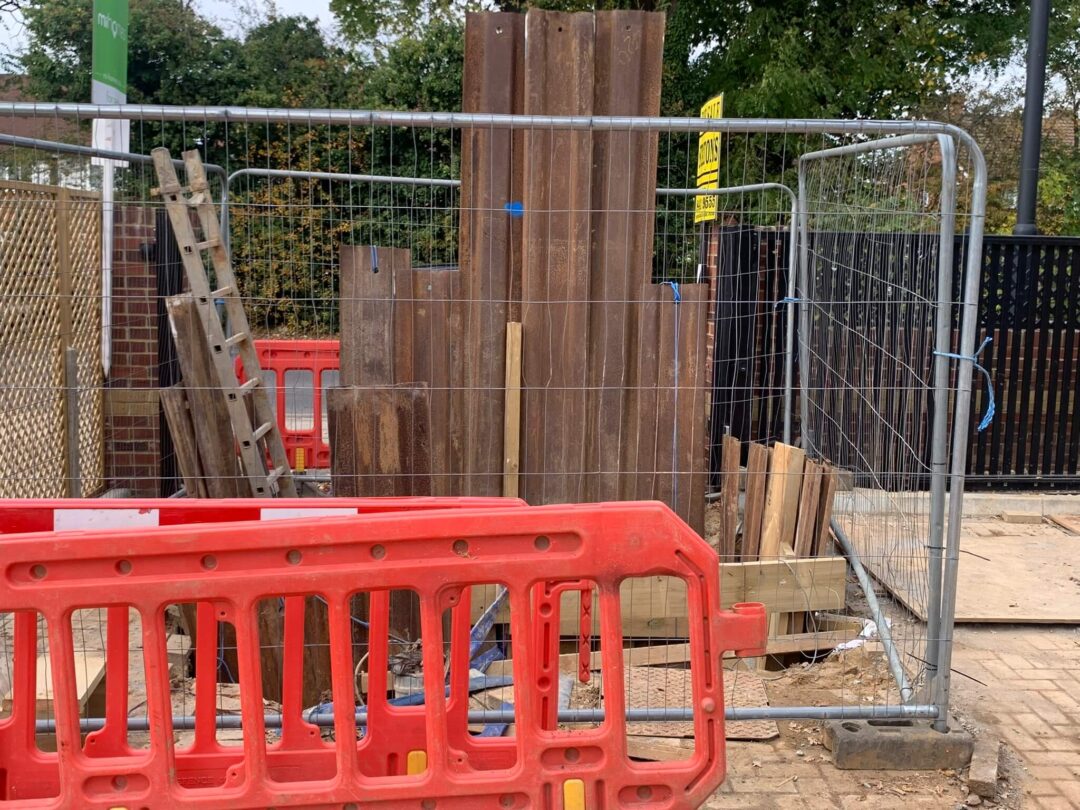
Find out more about our sewer connection services

Sewer Connections - Building-Site-Scene - JW Clark

Do you have a project you wish to discuss?

How Much Does a Road Closure Cost for a Sewer Connection?

If you need a new connection to the public sewer, it’s likely that the sewer is located beneath a public road, i.e. ‘The Highway’, either in the verge, a footpath or the road, and more often than not, in the road. Depending on the width of the road, the location of the sewer and the space needed to carry out the excavation safely, it may be necessary to temporarily close the road to traffic.

A temporary road closure can add several thousand pounds to the cost of a sewer connection. This is because there are normally two separate expenses: the highway authority’s charge for the legal road closure order and the cost of physically installing the closure and diversion.

For a breakdown of the wider costs, see how much a new sewer connection costs.

Why might a sewer connection require a road closure?

With it being most likely that the public sewer is in the road, connecting a new property to the sewer will often involve excavating within the public highway.

To undertake these works, the contractor will normally require a highway licence, commonly known as a Section 50 licence, from the relevant highway authority.

A Section 50 licence is required under the New Roads and Street Works Act 1991 for certain works involving the installation or retention of apparatus within the public highway.

Where there is sufficient space for traffic to pass the excavation safely – normally 3.5 metres or 3.0 metres, depending on the type of road – it may be possible to undertake the sewer connection using temporary traffic lights or other traffic management arrangements.

However, where the road is too narrow or the excavation is particularly wide, or there is insufficient space to maintain a safe traffic lane, the highway authority will often require a temporary road closure.

This usually involves obtaining a Temporary Traffic Regulation Order (TTRO).


What is a TTRO?

TTRO stands for Temporary Traffic Regulation Order, and is a legal order made by the highway authority that allows traffic to be temporarily prohibited or restricted from using a particular section of road. And it’s quite important to say that a TTRO does not always mean a closure, it can also mean just a restriction – but Highways’ fees are still the same, more on this at the bottom of the page…!

TTROs are commonly required for roadworks, including sewer connections undertaken under Section 50 licences.

They provide the legal framework for the temporary traffic restrictions needed to carry out the works.

However, obtaining a TTRO is not simply a matter of paying a fee and receiving permission to put up a Road Closed sign.

There is an administrative and legal process that must be followed, and this is why the fees can be substantial.

What does the TTRO fee pay for?

When a highway authority charges for a Temporary Traffic Regulation Order, the fee contributes towards the administrative and legal work involved in arranging the temporary restriction.

Depending on the authority and the circumstances, this can include:

  • Processing and assessing the application.
  • Preparing the legal order and associated documentation.
  • Advertising the proposed restrictions through the required public notices.
  • Consulting with or notifying the police and emergency services.
  • Notifying bus operators and coordinating any affected bus routes.
  • Checking the proposed diversion route and its suitability.
  • Coordinating the closure with other planned roadworks.
  • Informing other relevant organisations about the restrictions.

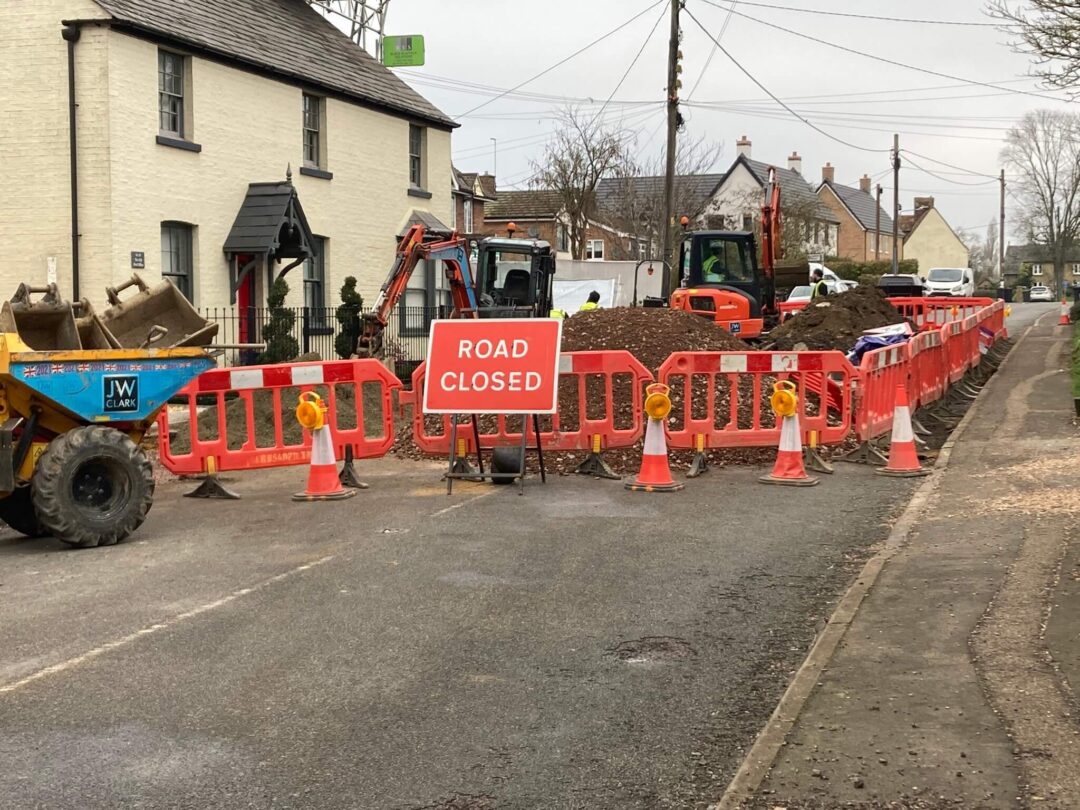
The process is intended to ensure that a road is not closed without proper consideration of the consequences for other road users, local residents, businesses and public services. On our Bourne End sewer connection project, despite the road being closed, we still carried out the work in sections so residents could still reach their properties during the closure

For example, a road closure may affect a scheduled bus route, access for emergency vehicles or the availability of an alternative route for heavy goods vehicles.

The highway authority needs to consider these issues before permitting the works to proceed.

Importantly, the TTRO fee generally pays for the legal and administrative arrangements. It does not pay for the physical road closure itself.

Interesting fact: Part of Highways’ job during the TTRO application process is to notify the emergency services of TTRO road closures, allowing them to plan alternative routes and update their sat nav systems to avoid closed roads.

Traffic Management Plans – More Than Just a Drawing

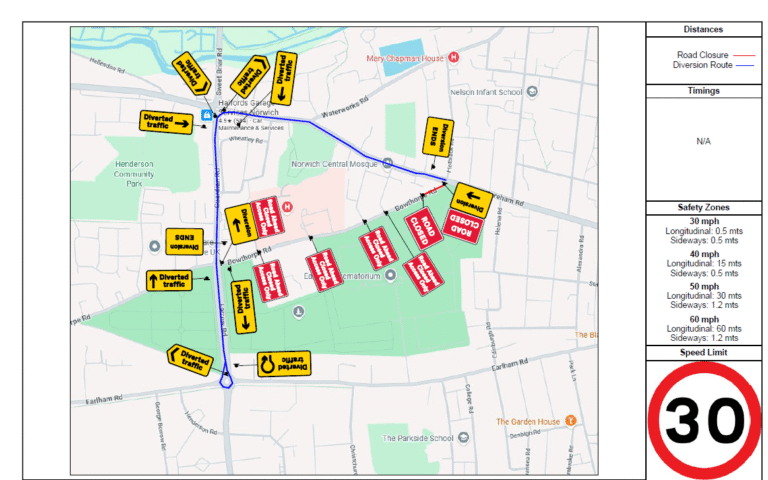
As part of our service of taking care of a TTRO application, we have to get a third-party company to design a Traffic Management Plan showing the proposed road closure and the diversion route, which has to detail where every single sign is going to be placed on the Highway. And it’s not unusual for a road closure and its diversion route to require upwards of 40 different signs.  On a recent road closure that we took care of, which started at 08:30 on a Monday, the traffic management company had to start putting signs out at 03:30.

These are submitted to the Highway Authority for approval, with stakeholders such as emergency services and bus operators potentially providing feedback.

Highways may request changes, meaning plans can go back and forth several times before final approval. This process can take considerable time and is another reason why road closures must be planned well in advance

How much does a TTRO cost?

TTRO fees vary considerably between different highway authorities.

The following are examples of published charges for planned roadworks-related TTROs in counties across southern England and around London.

Highway authority

Example TTRO charge

Kent County Council

£1,310

Hertfordshire County Council

£2,068

Buckinghamshire Council

£2,410.45

Oxfordshire County Council

£2,850–£3,000

West Berkshire Council

£3,334

Essex County Council

£1,426.72

In Oxfordshire, for example, the charge differs depending on whether the affected road carries a bus route.

These examples demonstrate that the TTRO charge alone can amount to thousands of pounds, before a contractor has even excavated the road.

The precise fee will depend on the highway authority, the type of order required and the charging schedule in force at the time of application. Additional charges may also apply in certain circumstances.

The additional cost of physically closing the road

This is the second expense, and one that customers do not always appreciate.

Paying the council for the TTRO does not mean the council will arrive and close the road for us. They only take care of the application and all the legals, it’s down to us to physically close the road.

As the contractor we must arrange and pay for the physical traffic management required to implement the closure.

This can include:

  • Preparing a suitable traffic management plan.
  • Supplying and installing Road Closed and diversion signs.
  • Providing barriers, cones and other necessary equipment.
  • Signing the diversion route at appropriate junctions.
  • Transporting the equipment to and from the site.
  • Inspecting, maintaining and adjusting the traffic management while the works are underway.
  • Removing the equipment and reopening the road once the works are complete.

On a relatively straightforward sewer connection, the physical closure and diversion arrangements can often cost up to £1,000, and often considerably more.

The actual cost depends on the length and complexity of the diversion, the number of signs required, the duration of the works and any additional traffic management measures imposed by the highway authority.

For example, closing a quiet residential road with a short alternative route will generally be less involved than closing a busy through-road requiring a lengthy diversion through several surrounding villages.

More complex closures may require additional operatives, temporary signals, specialist equipment or arrangements to maintain access.

These costs are separate from the TTRO fee and from the actual sewer connection works.

What might the total road closure cost be?

Consider a sewer connection requiring a planned TTRO with a highway authority fee of £2,000.

The costs might be:

Item

Example cost

Highway authority TTRO fee

£2,000

Physical road closure, signage and diversion

£1,000

Total additional road closure costs

£3,000   

This is an illustrative example, not a quotation. It excludes the Section 50 licence, the excavation, the actual sewer connection, reinstatement and any other applicable charges.

It also assumes a relatively straightforward road closure.

The important point is that road closure expenses can add a significant amount to the overall cost of a new sewer connection.

How long does it take to arrange a road closure?

TTRO applications generally require considerably more advance notice than many customers expect.

Depending on the highway authority, applications for planned road closures may need to be submitted approximately eight to twelve weeks or more before the proposed works.

This allows time for the necessary checks, coordination, consultation and legal advertising.

Consequently, even where the sewer connection itself can be completed in only a few days, arranging the road closure can introduce a much longer lead time.

At JW Clark, we recommend identifying any likely road closure requirements as early as possible, particularly where the connection is needed for a new-build property or development with an intended completion date.

Beware the TTRO that isn’t actually a road closure…..

There is one final point worth understanding, and it is something we have encountered on many sewer connection projects over the years.

Just because you have paid for a TTRO does not necessarily mean you can completely close the road and prevent all vehicles from passing through.

For example, the highway authority may determine that a minimum safe traffic width, perhaps around 3 metres depending on the circumstances, cannot be maintained alongside the excavation.

A TTRO may therefore be necessary to impose temporary restrictions.

You might reasonably assume that this means the road can simply be closed for the duration of the works.

Unfortunately, it isn’t always quite that straightforward.

The highway authority may still insist that access is maintained for some residents or certain other vehicles, or that the road is only closed intermittently.

We have encountered circumstances where measures such as the following have been required:

Using steel road plates to maintain access

Where residents need access to their homes, it may be necessary to temporarily cover an excavation with a suitably designed and secured steel road plate, allowing vehicles to pass when it is safe to do so.

This can create additional work and expense, particularly where excavations must be made safe and temporarily covered at certain times.

Closing the road for only short periods

In other circumstances, the highway authority may permit the road to be closed to traffic for only short periods, perhaps 15 minutes at a time, before access must be restored.

This can be particularly challenging during sewer connection works, where excavations, pipe installations and reinstatement operations are not always easily interrupted.

These arrangements must be assessed and agreed in advance, and any temporary access across an excavation must be properly engineered and safe.

A remark from a highways officer that has stayed with us

During discussions about one particular scheme, a highways officer once explained the situation to us rather memorably:

“A TTRO is not necessarily a Road Closure, it’s what we want it to be.”

It was a rather blunt way of putting it, but the point was clear.

A TTRO is a legal mechanism allowing the highway authority to impose temporary restrictions. The precise arrangements are determined by the authority and the conditions applicable to the works.

In other words, a TTRO gives the legal authority for the agreed traffic restrictions; it does not automatically give a contractor unrestricted control over the road.

It is therefore important to establish exactly what restrictions will be permitted before committing to the works.

At JW Clark, our experience of dealing with highway authorities helps us identify these potential complications, allowing us to plan the sewer connection and associated traffic management arrangements as effectively as possible.

Need a sewer connection that involves roadworks?

JW Clark Ltd specialises in public sewer connections, including installations requiring Section 50 licences, Temporary Traffic Regulation Orders and associated traffic management.

We undertake sewer connection works across areas served by Anglian Water, Severn Trent Water and Thames Water.

We can assist with the applications, highway arrangements, traffic management and physical installation, helping customers understand the likely costs and requirements before works commence.

If you are planning a connection to the public sewer, contact JW Clark Ltd for advice or a quotation.

Find out more about our sewer connection services

Do you have a project you wish to discuss?