Sewer Connection, Bourne End, Case Study
We were delighted to carry out this new sewer connection for a great repeat customer of ours, DL Toro Ltd, in the lovely town of Bourne End, Buckinghamshire

Objective
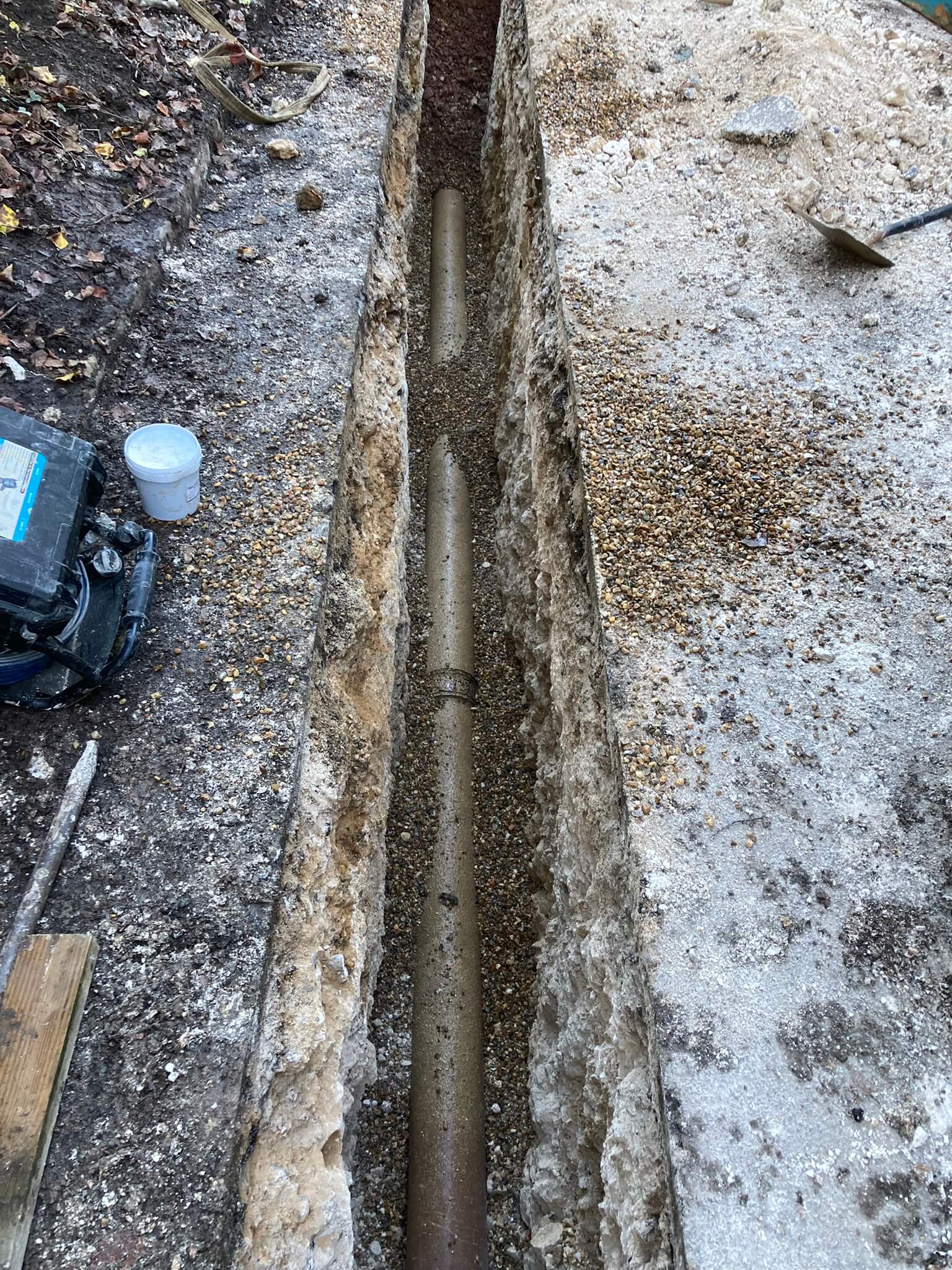
Our objective was to connect 5 new high-end properties to the public sewer. However the plots were 100 metres away from the existing public sewer. Therefore we the job required that we lay over 100 metres of new vitified clay pipework, with new manhole chambers along the way, and all in the Highway. The groundworks contractor for the site, DL Toro, tok care of all the works off the Highway and in private property.
The challenges....
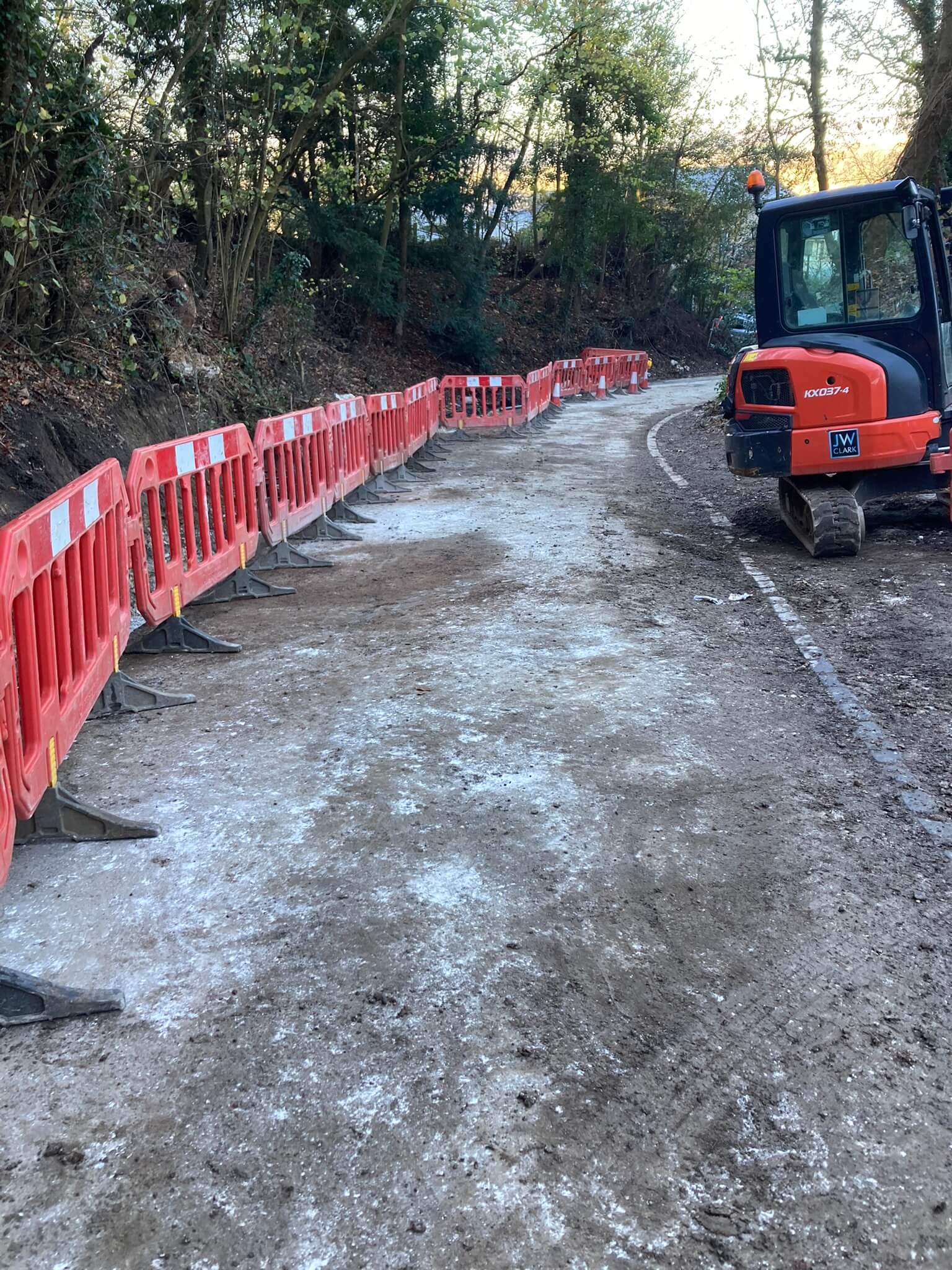
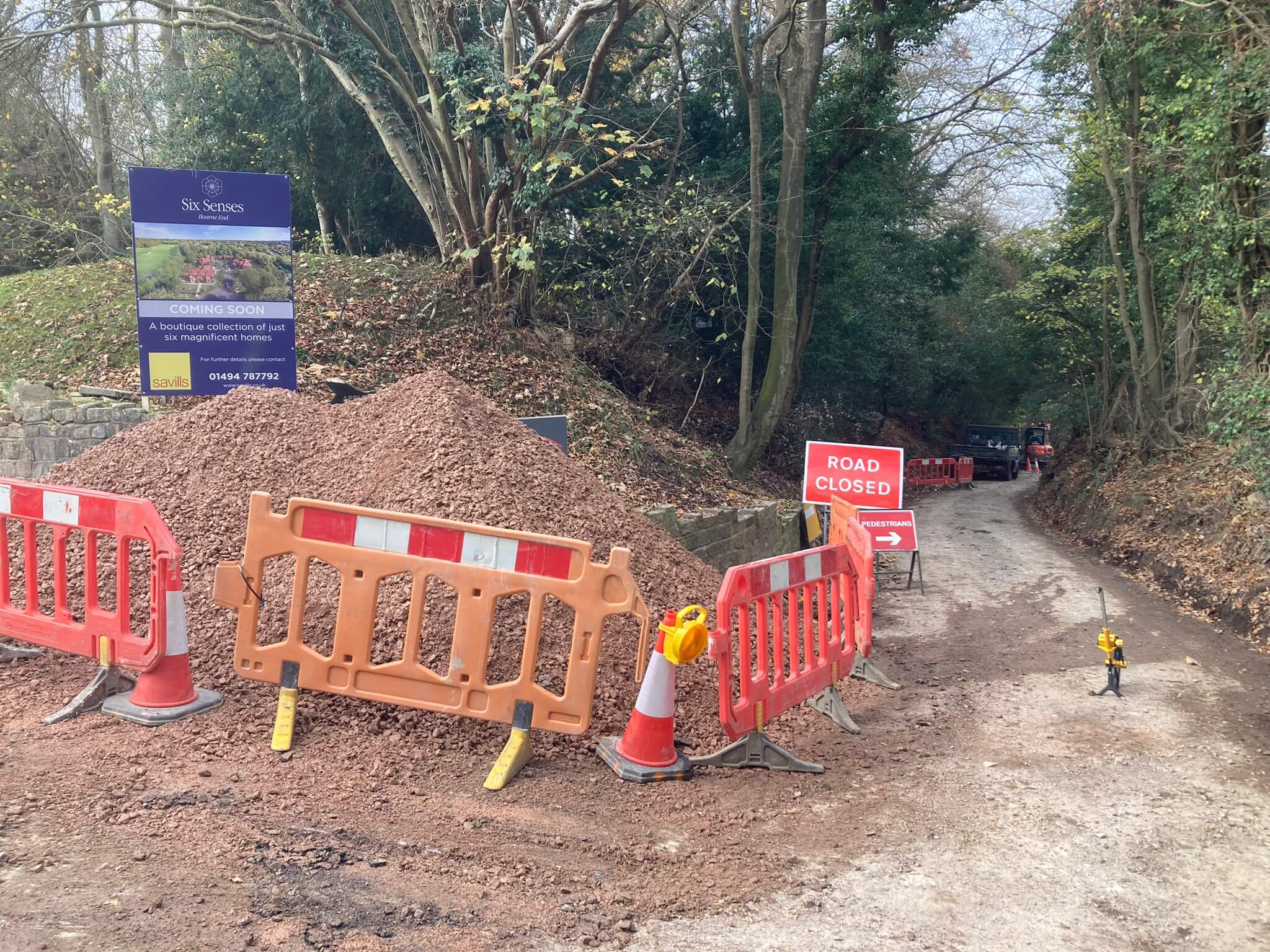
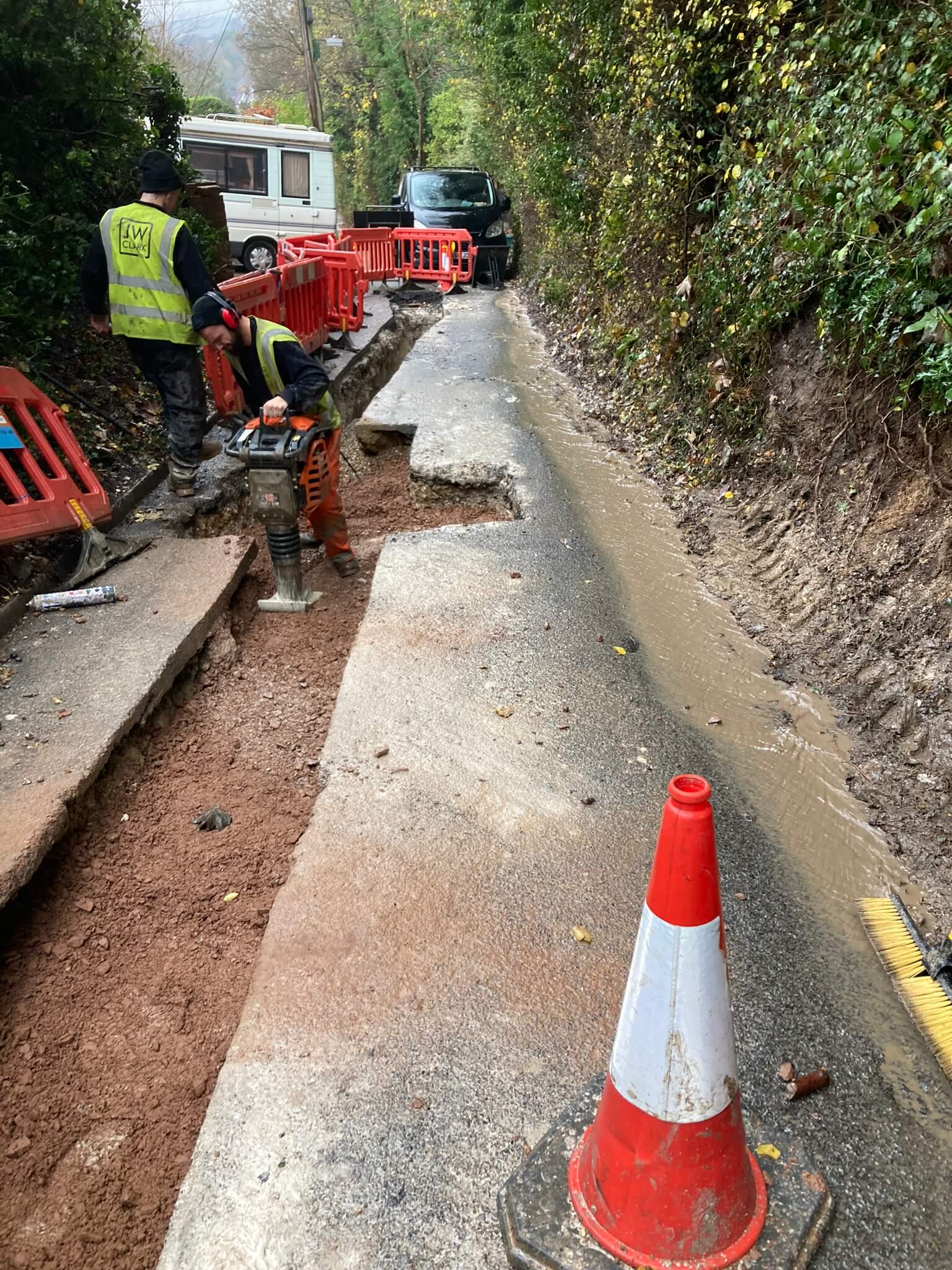
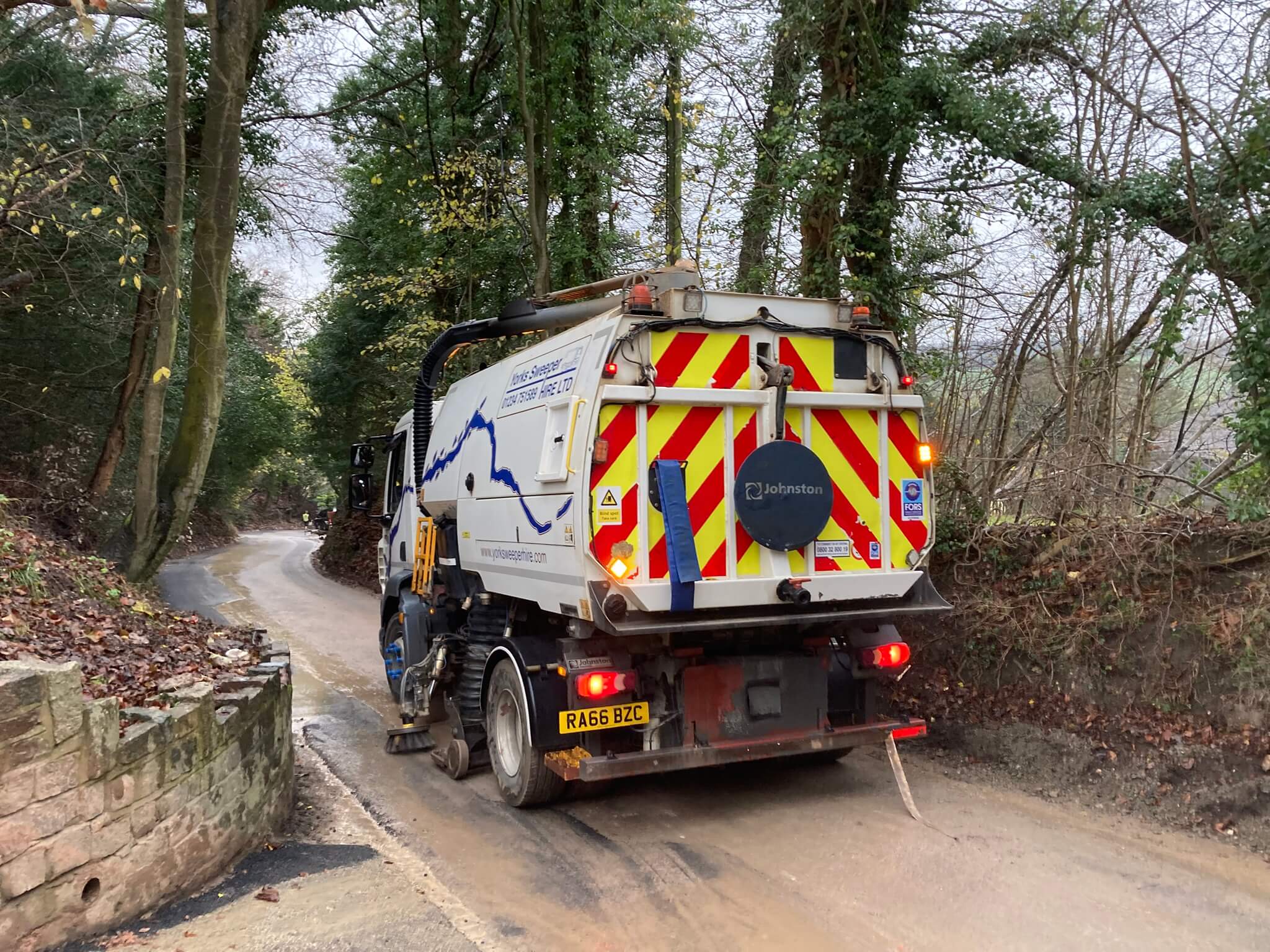
The public sewer that we needed to connect to, was at the bottom of a very narrow, single-track lane, and there was no way to carry out the works, without closing the road. As usual, we took care of all the permits for our customer, including the application to connect to the public sewer (the Section 106 application), the application to work in the highway (Section 50) and also a TTRO application – which is the application for a full road closure.
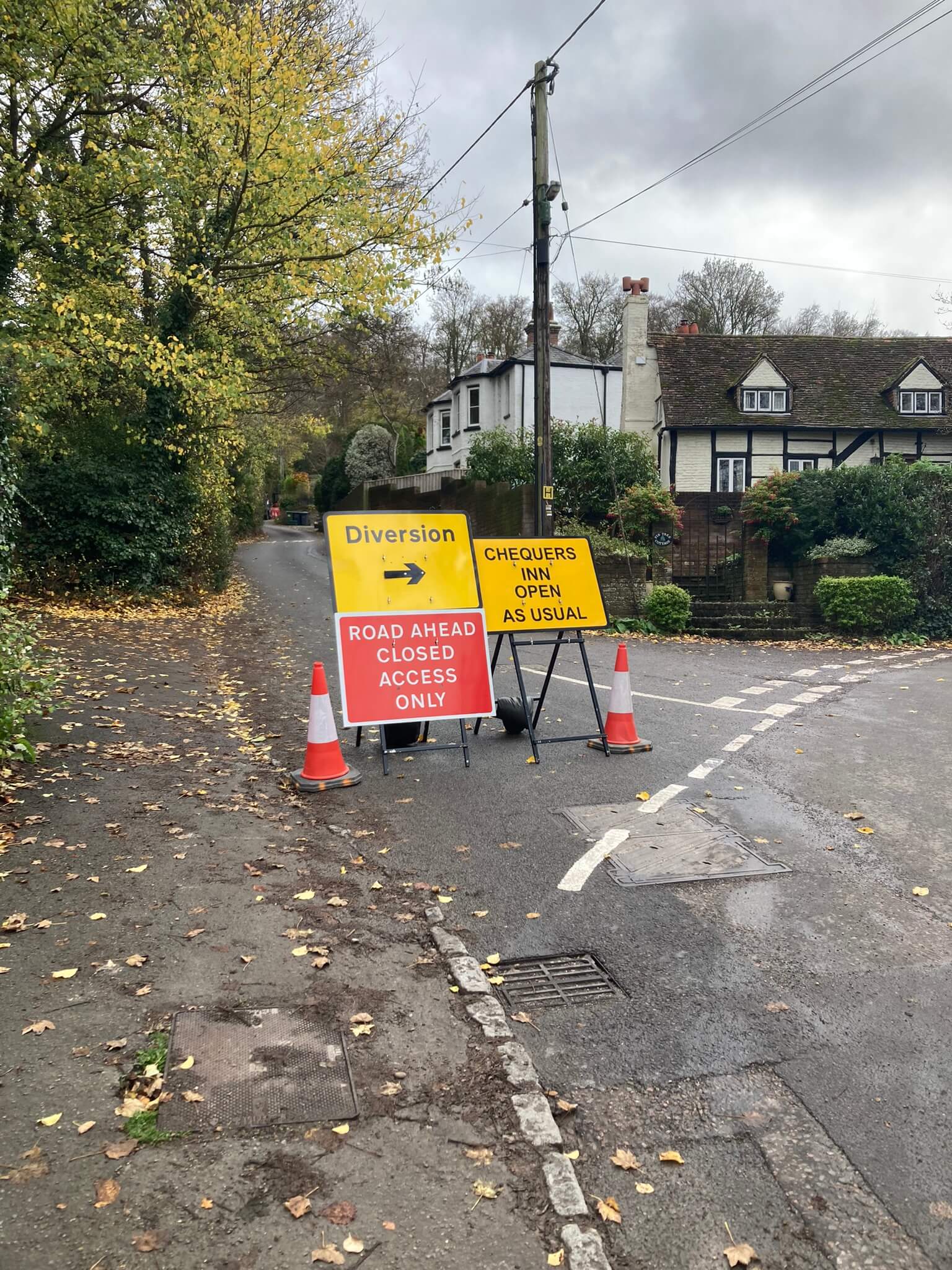
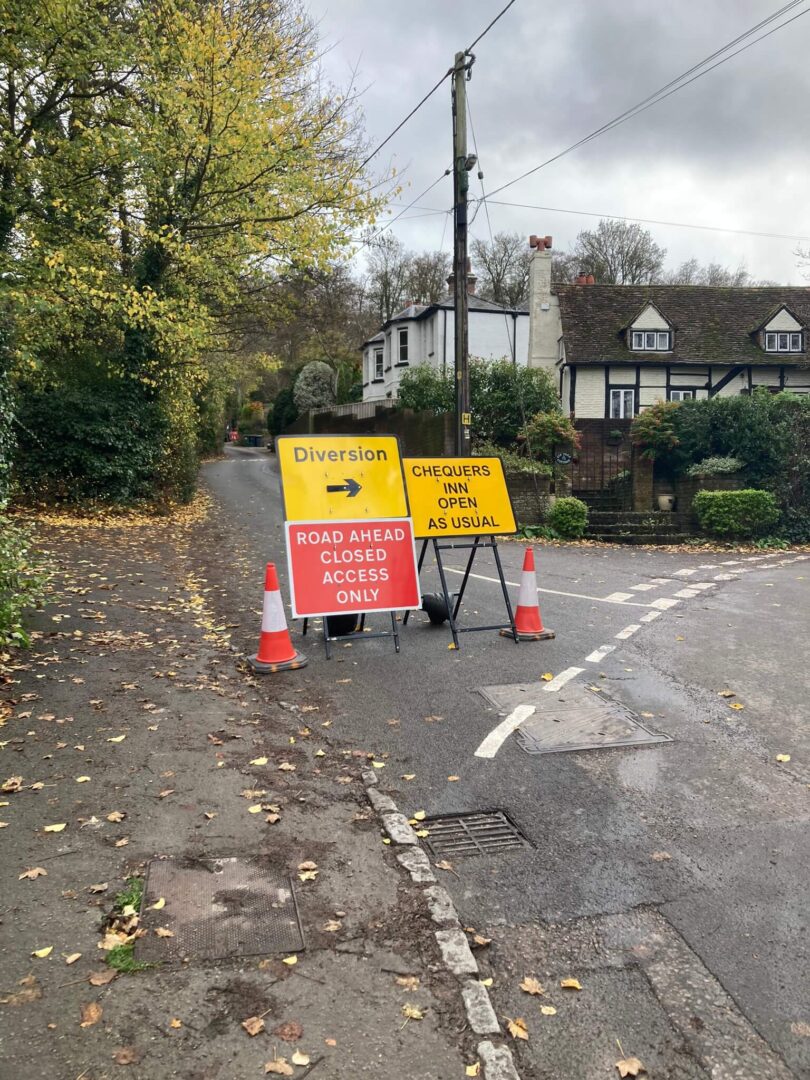
Highways agreed to our need to close the road, and a diversion route was agreed. In the days leading up to the start of the road closure, a local pub owner was particularly worried about any loss of trade, as his pub was at one end of the closure. We agreed with Highways and with our third-party traffic management company, that extra signage would be put out at either end of the diversion, advising people that the pub was still open for business.
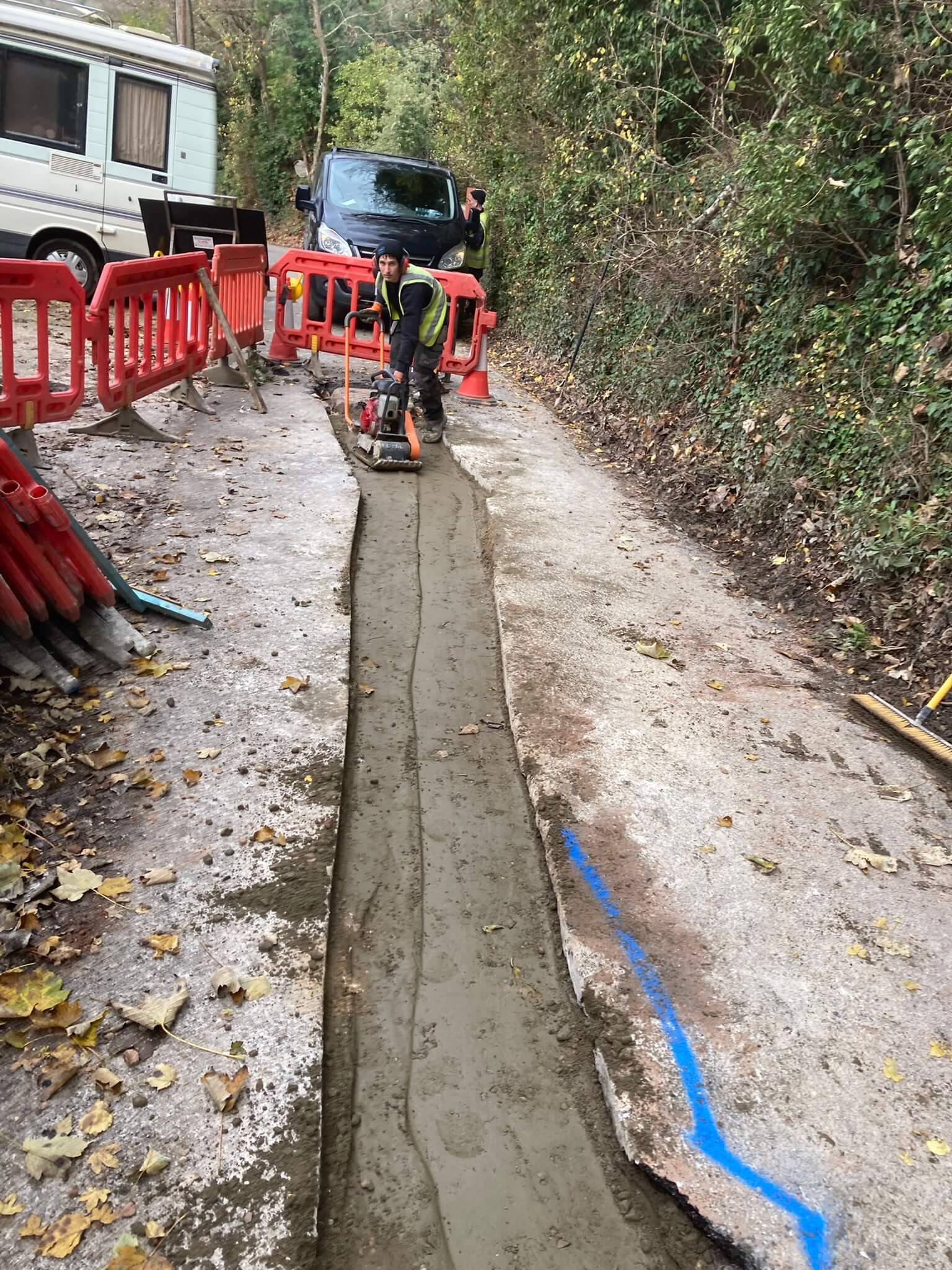
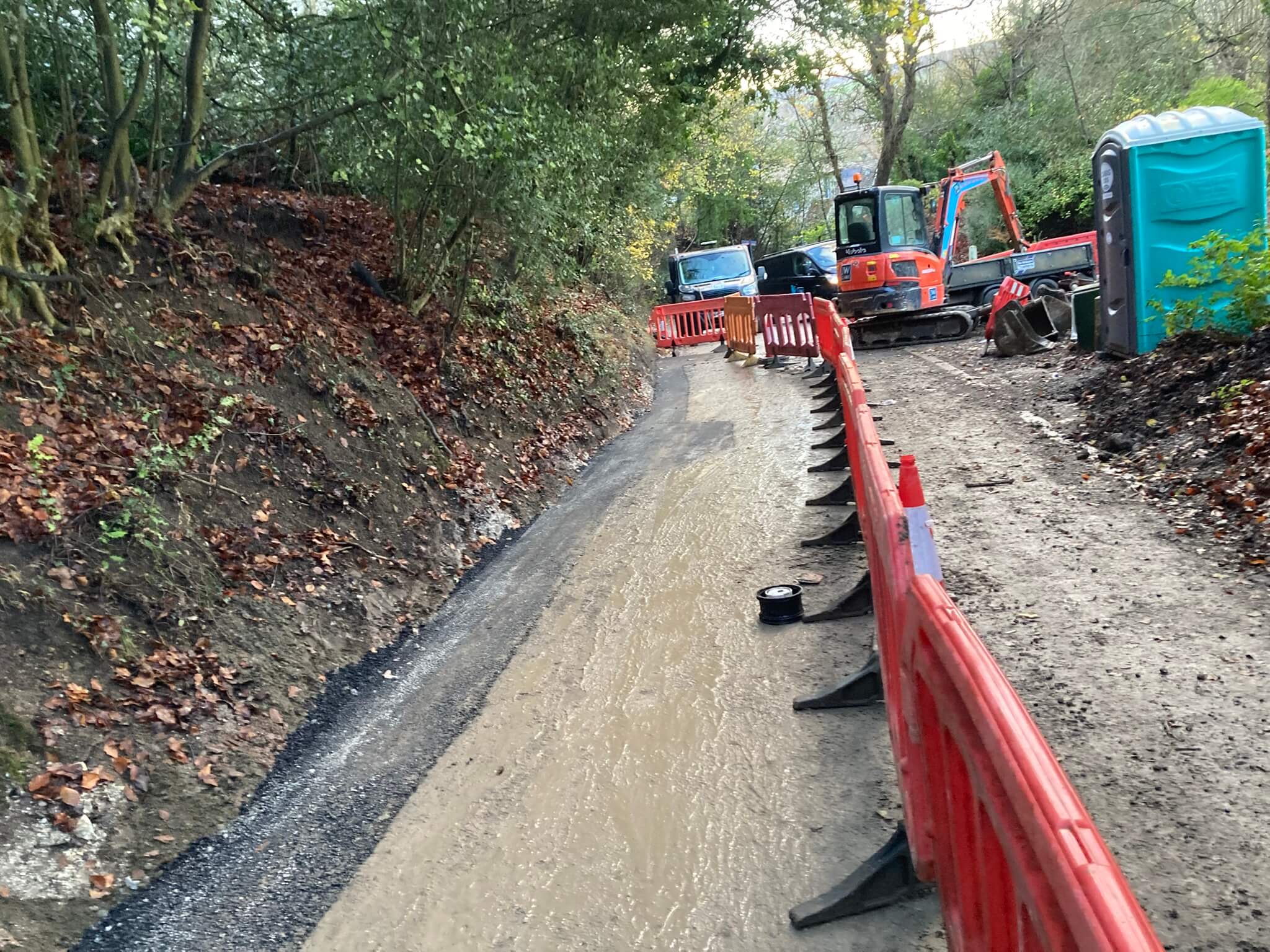
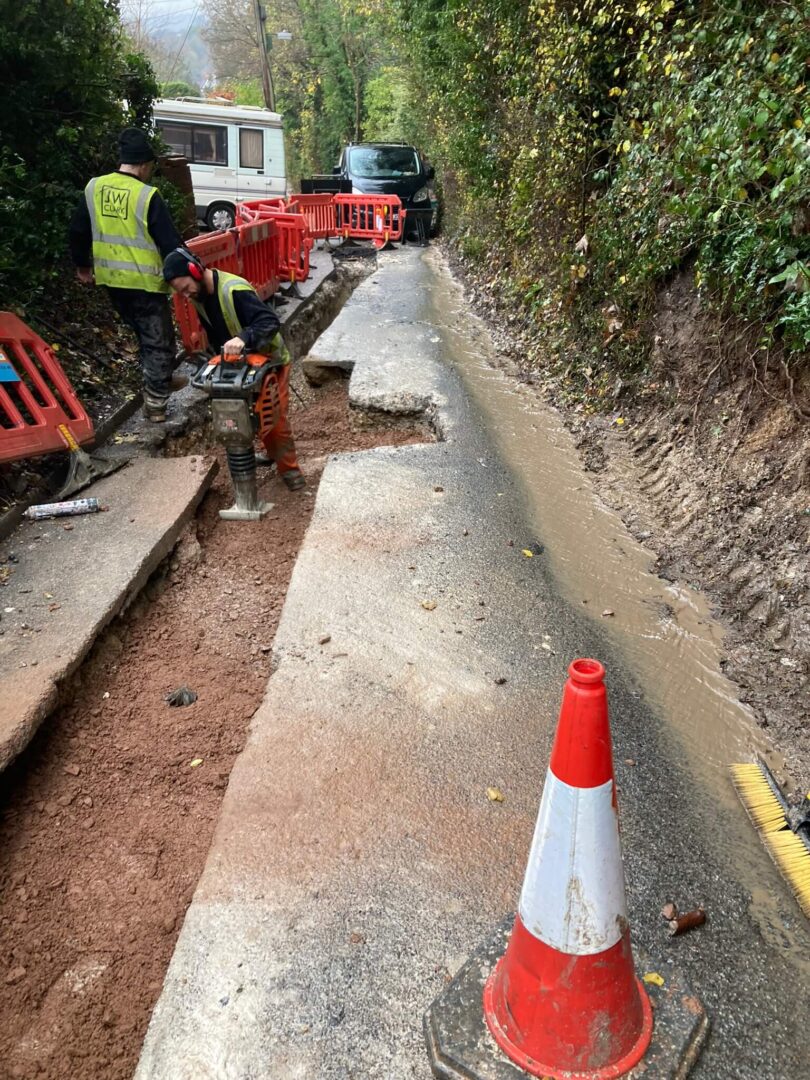
Despite a large section of the road being closed for the duration of the works, we still had to give vehicular access to a handful of residents whilst the works were being carried out. To enable this to happen, we carried out the work in ‘sections’, and residents were able to access their properties from one direction and then from another direction, after trenches were backfilled and reinstated.
About the project
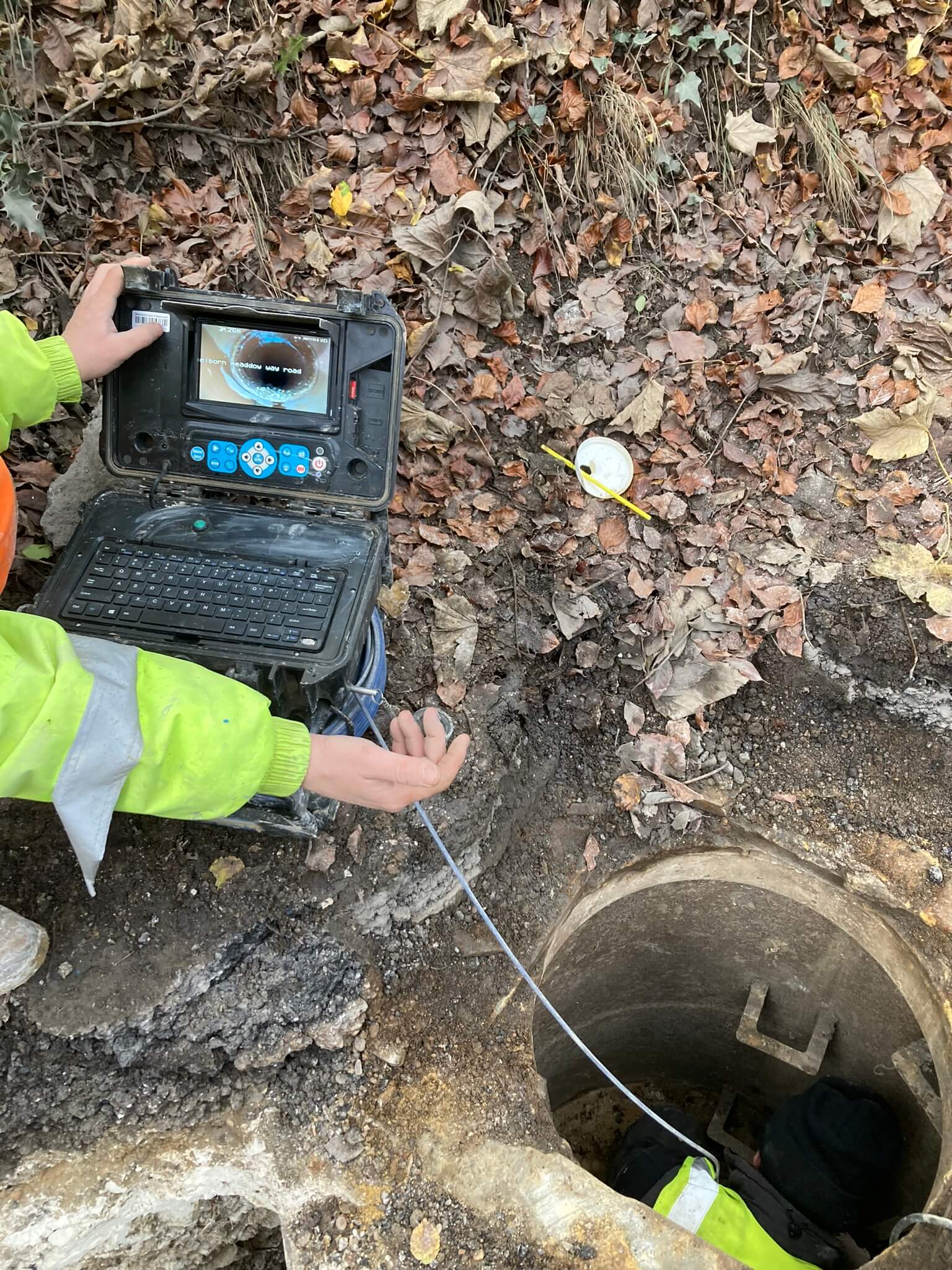
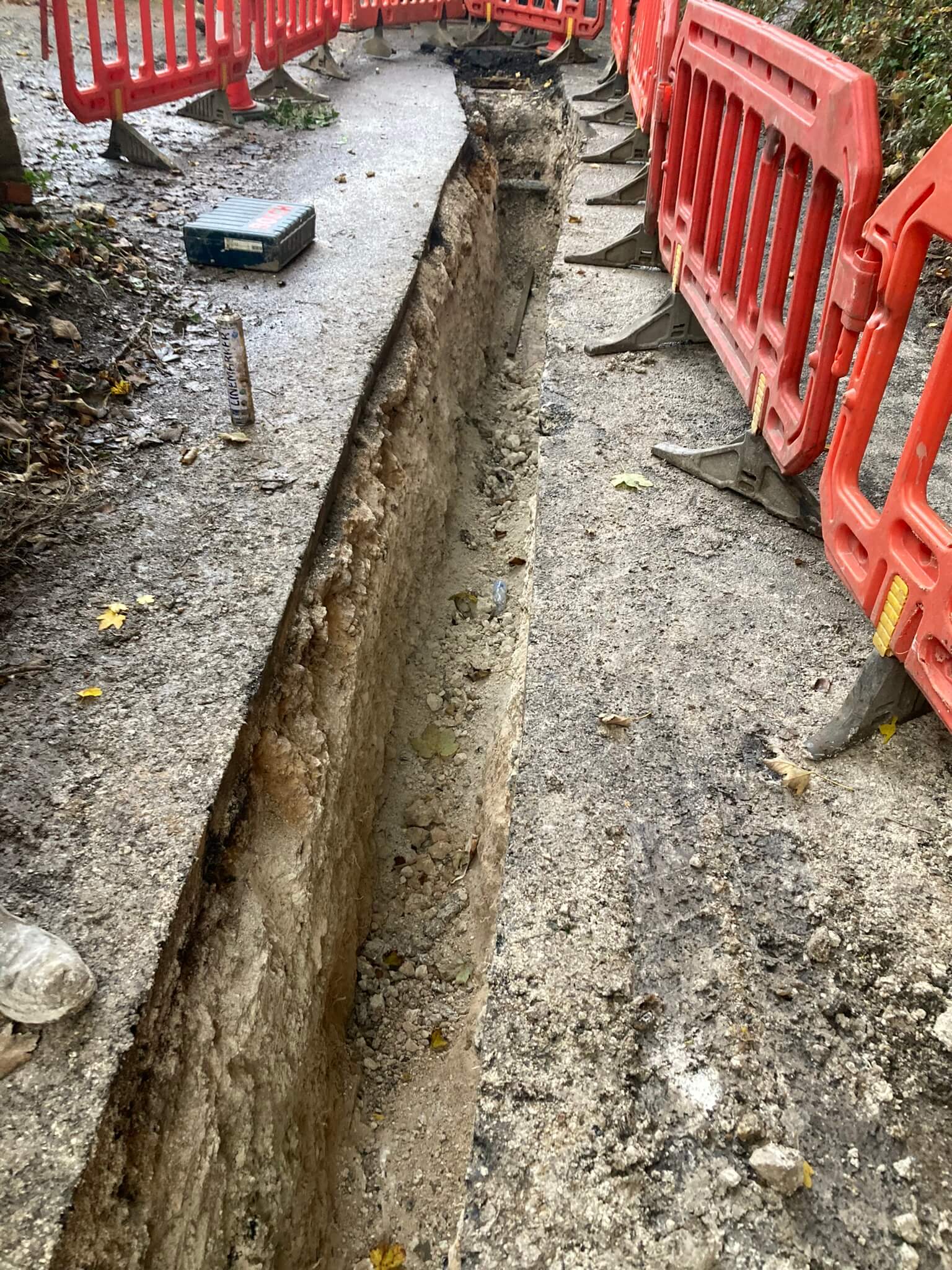
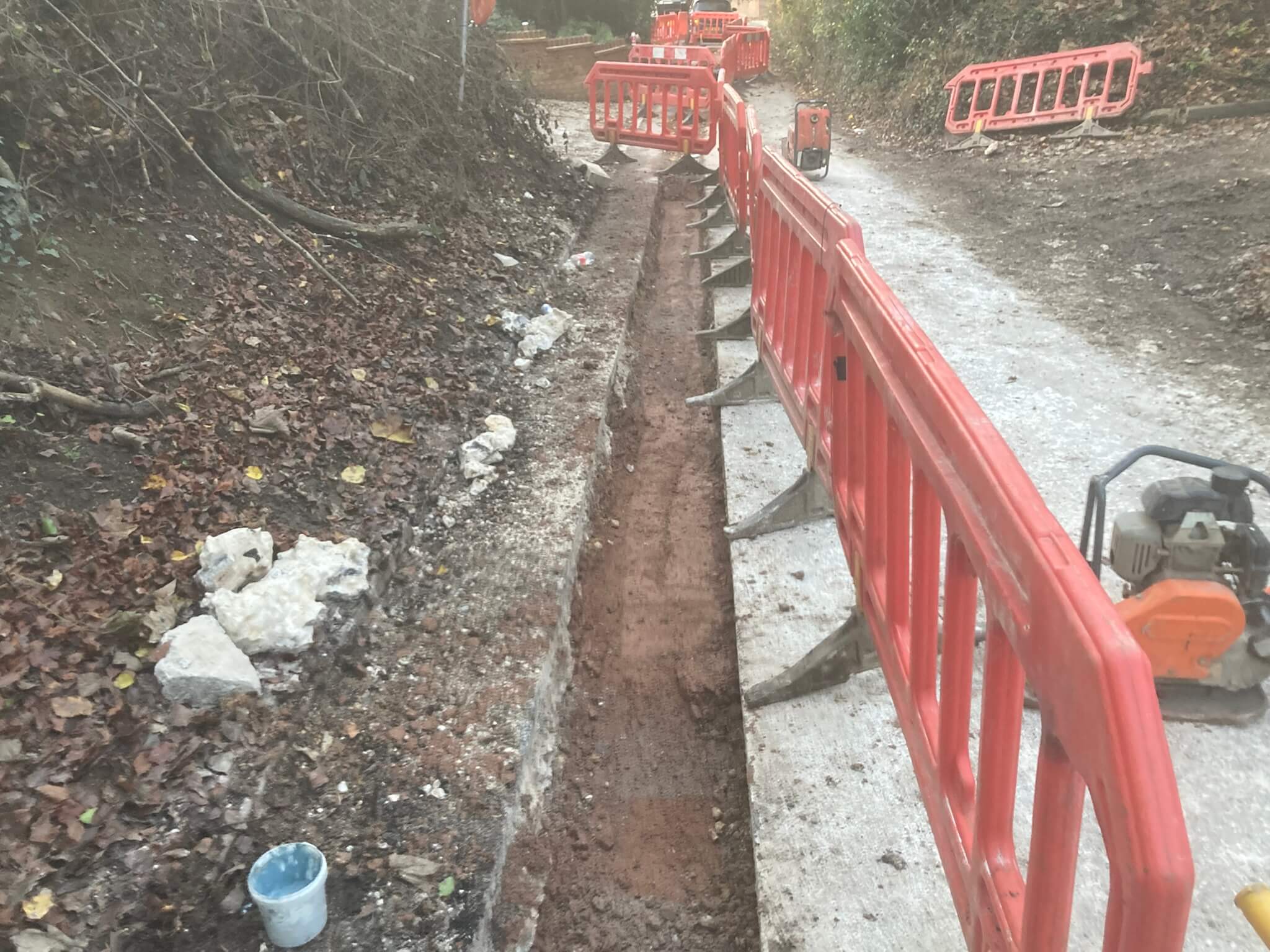
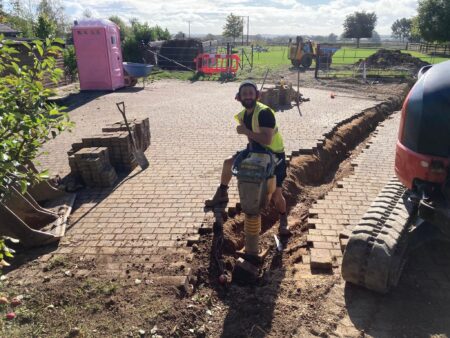
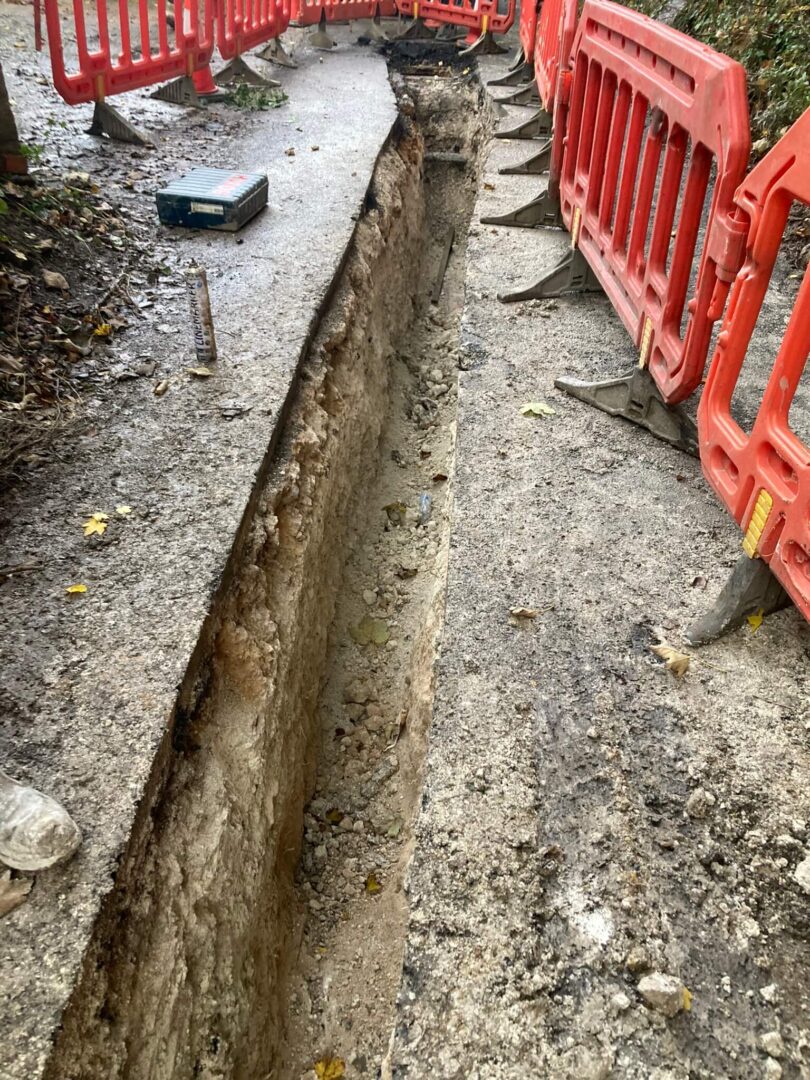
With the road closed, we started by digging trial holes to ‘prove’ the manhole locations. With the road being so narrow, it was congested with existing services, and all of them ‘mains’. We had a gas main to contend with, two water mains, and multiple telecommunications duct runs. We managed to sneak our pipework in between all of these services and the edge of the road. Some of the manhole locations has to be moved slightly, to get them in amongst other services.
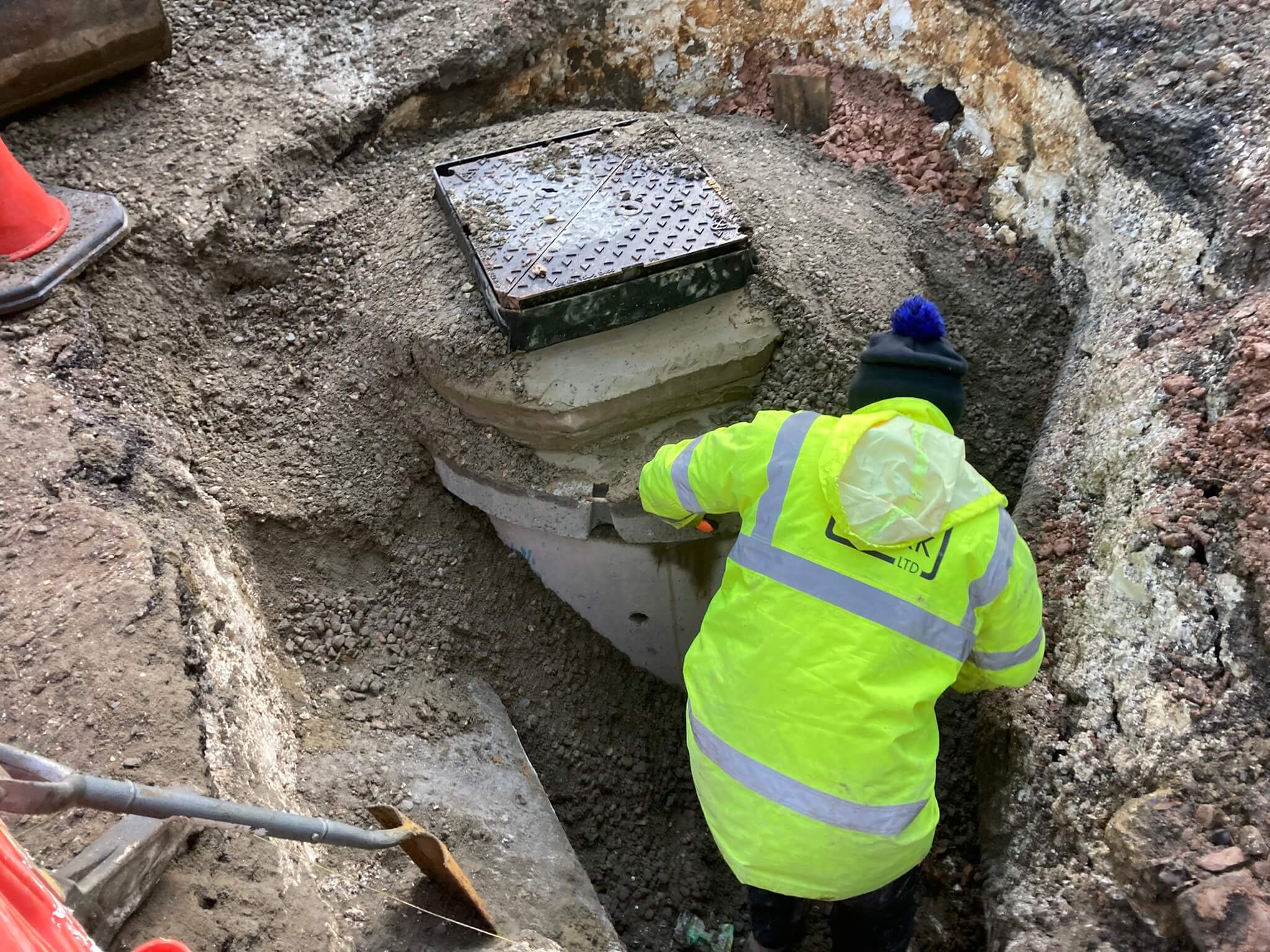
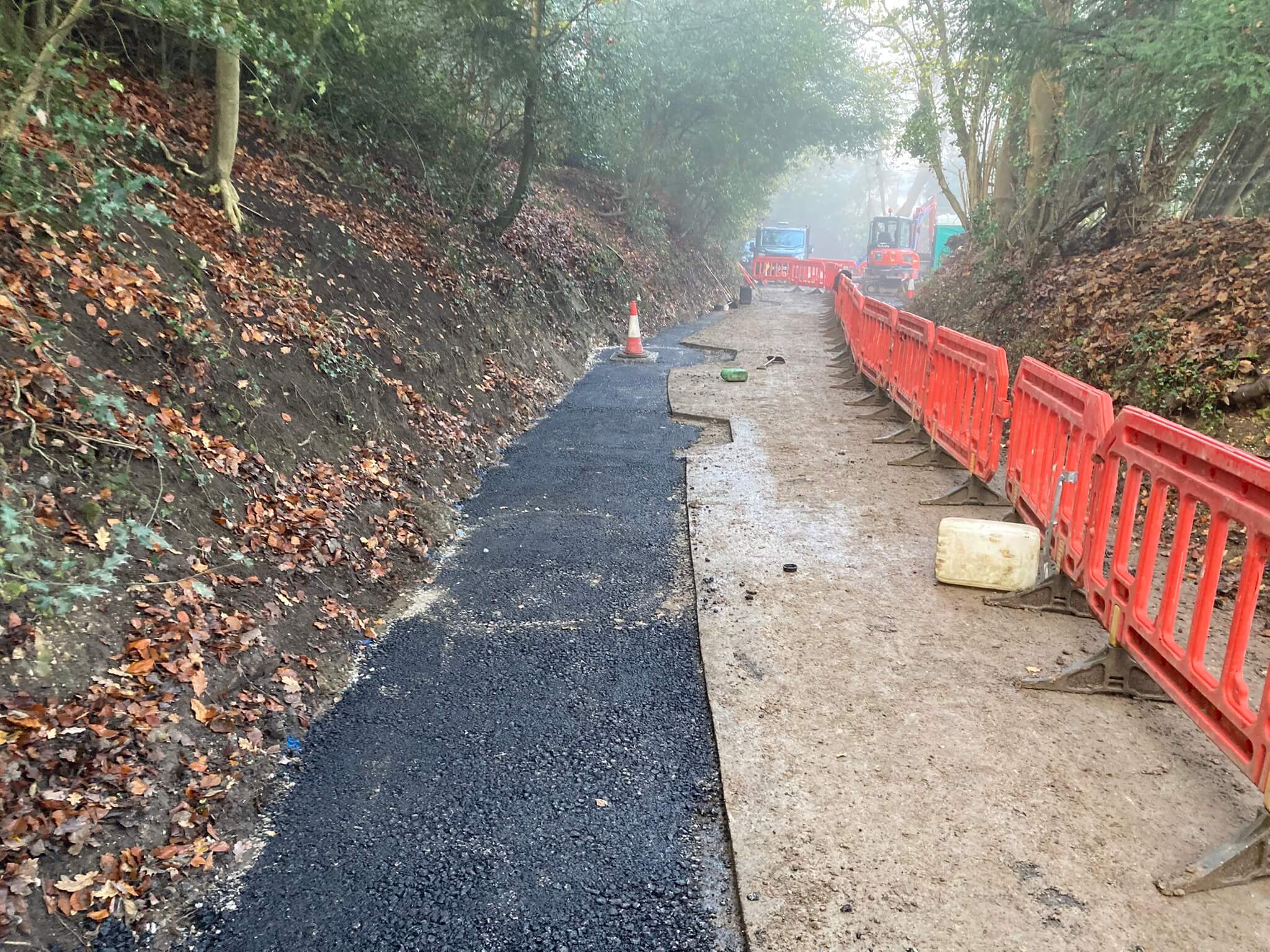
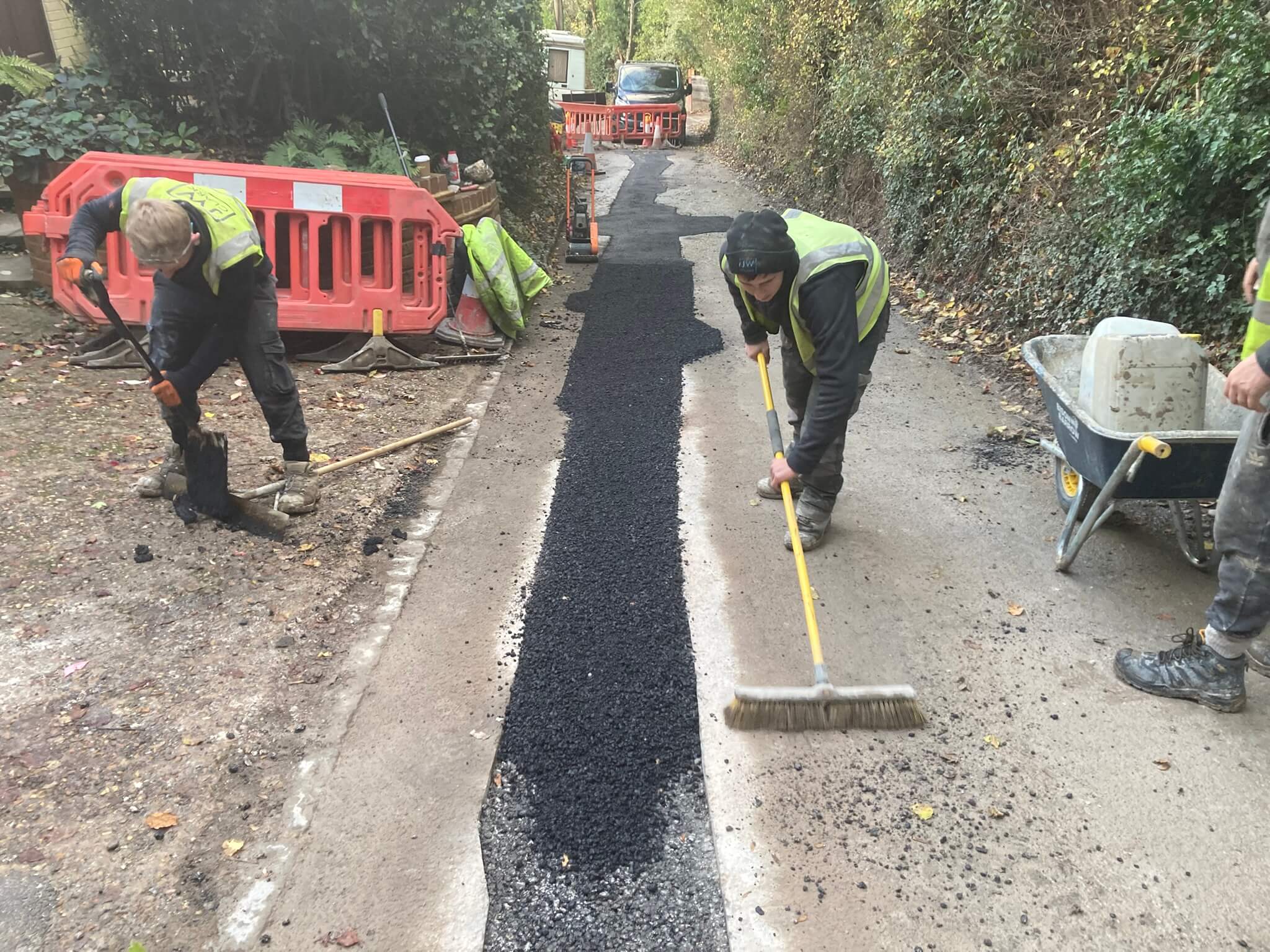
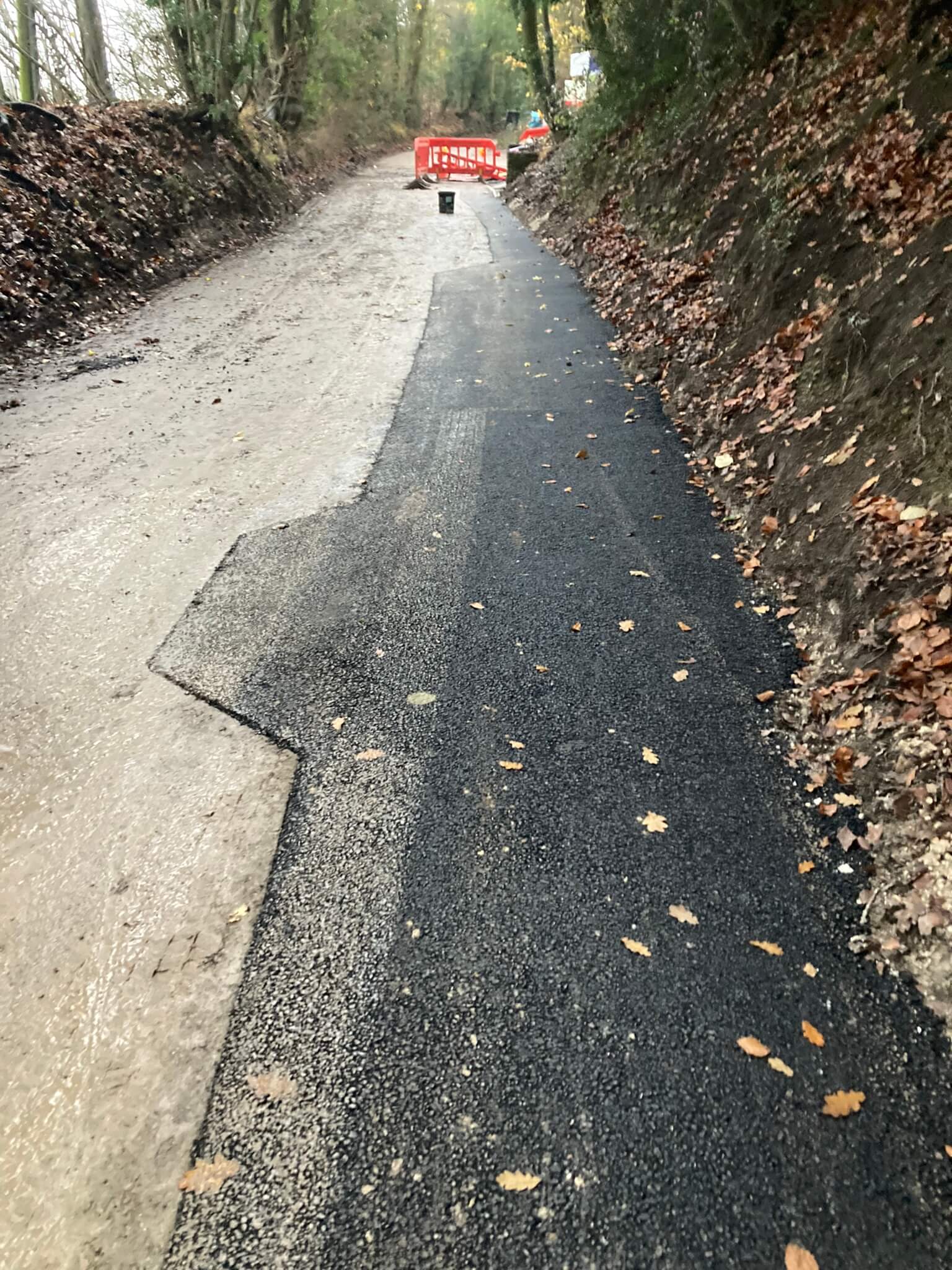
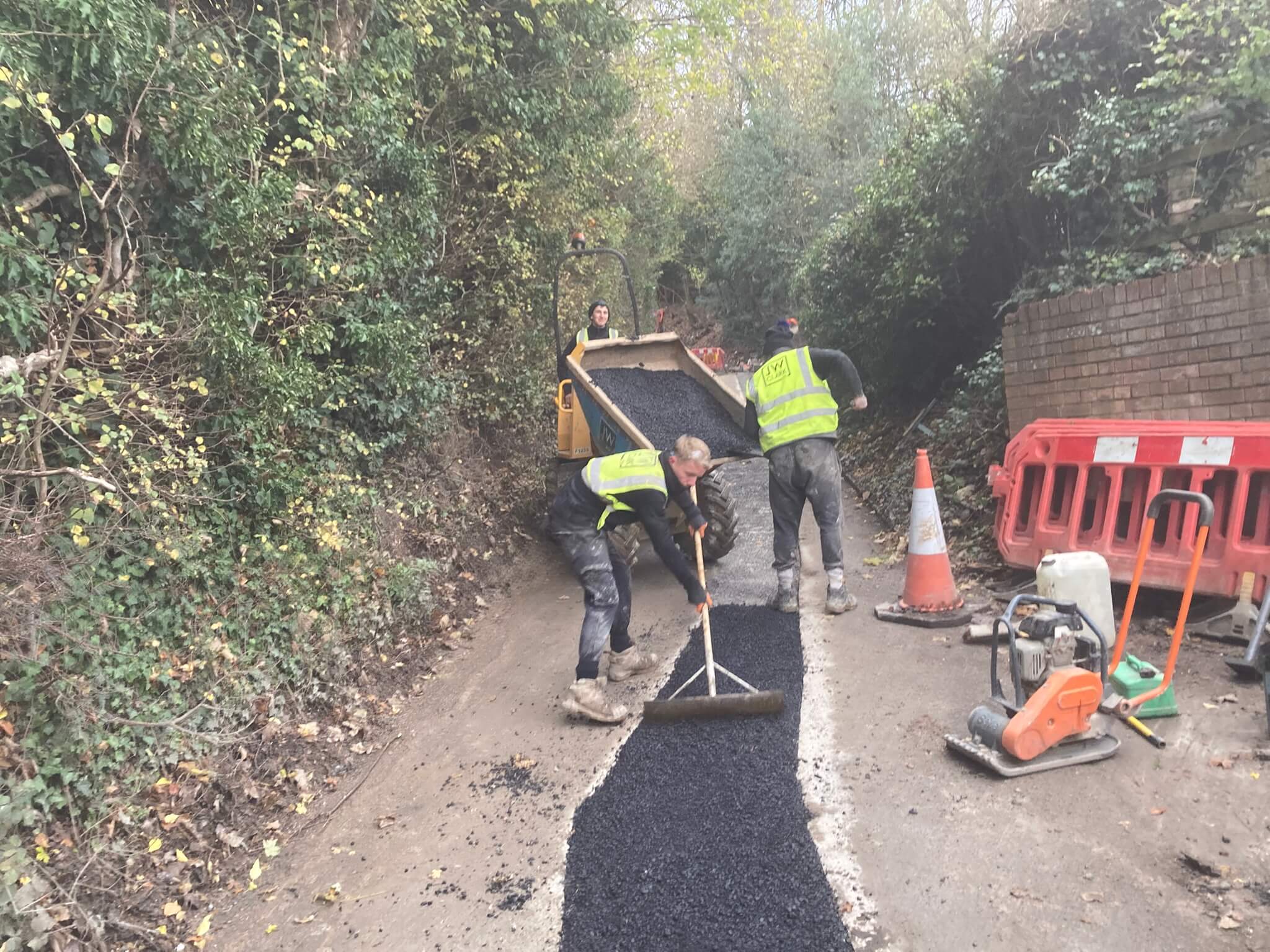
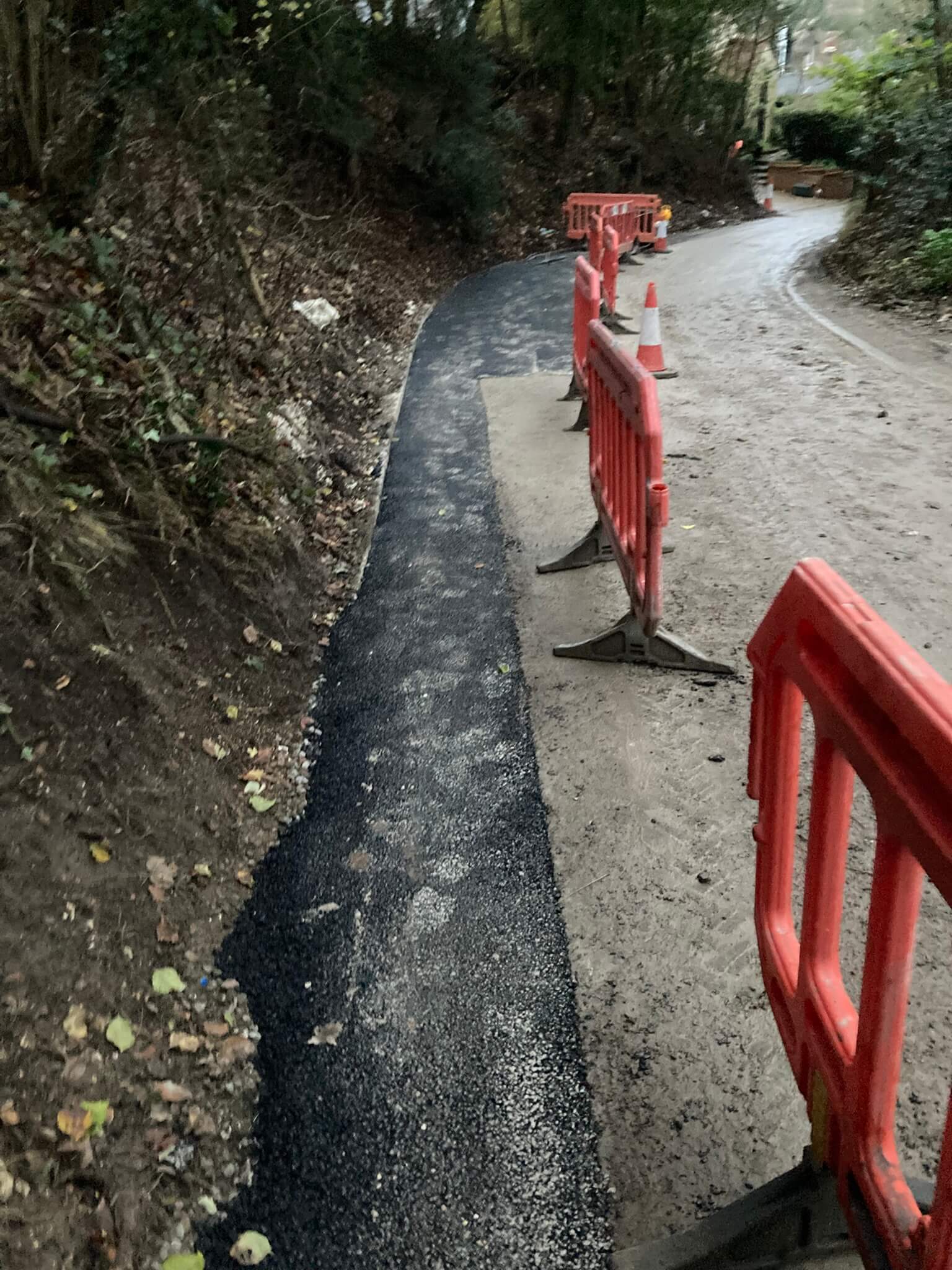
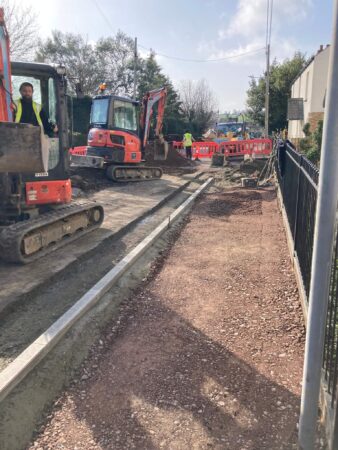
We started at the bottom of the hill and slowly worked our way up. We reinstated in sections, building manholes as we went and finishing with 150mm D400 manhole covers.
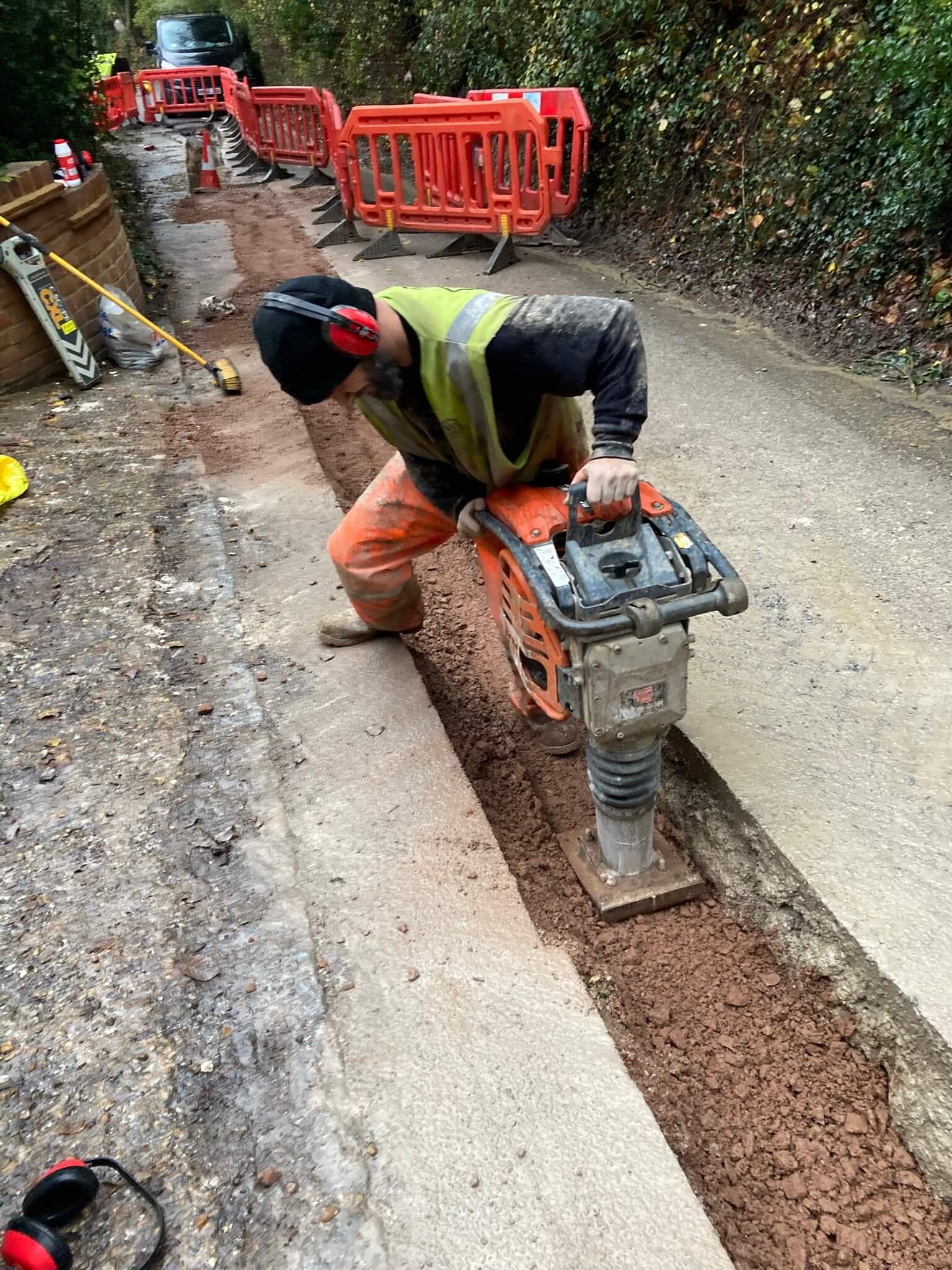
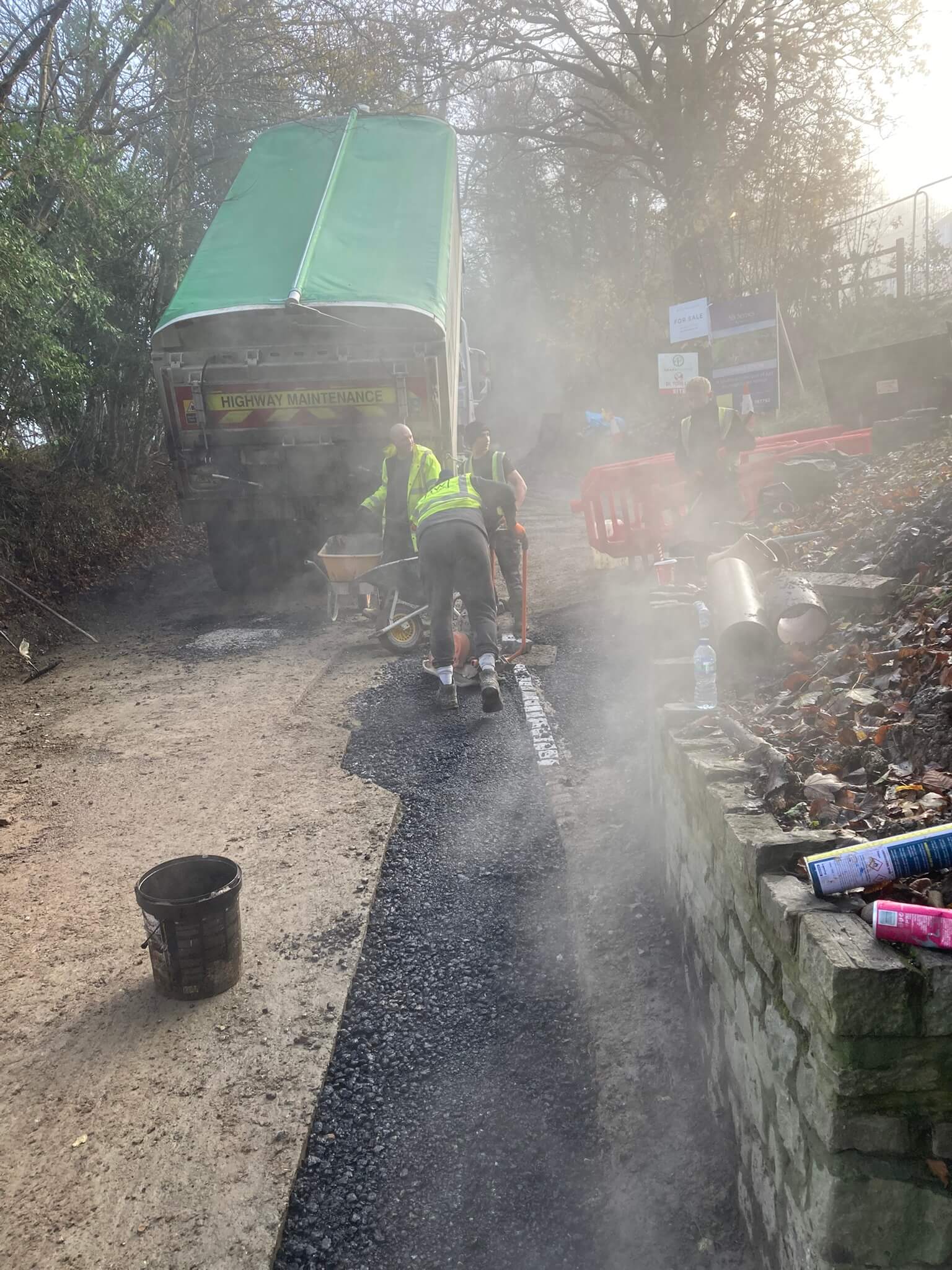
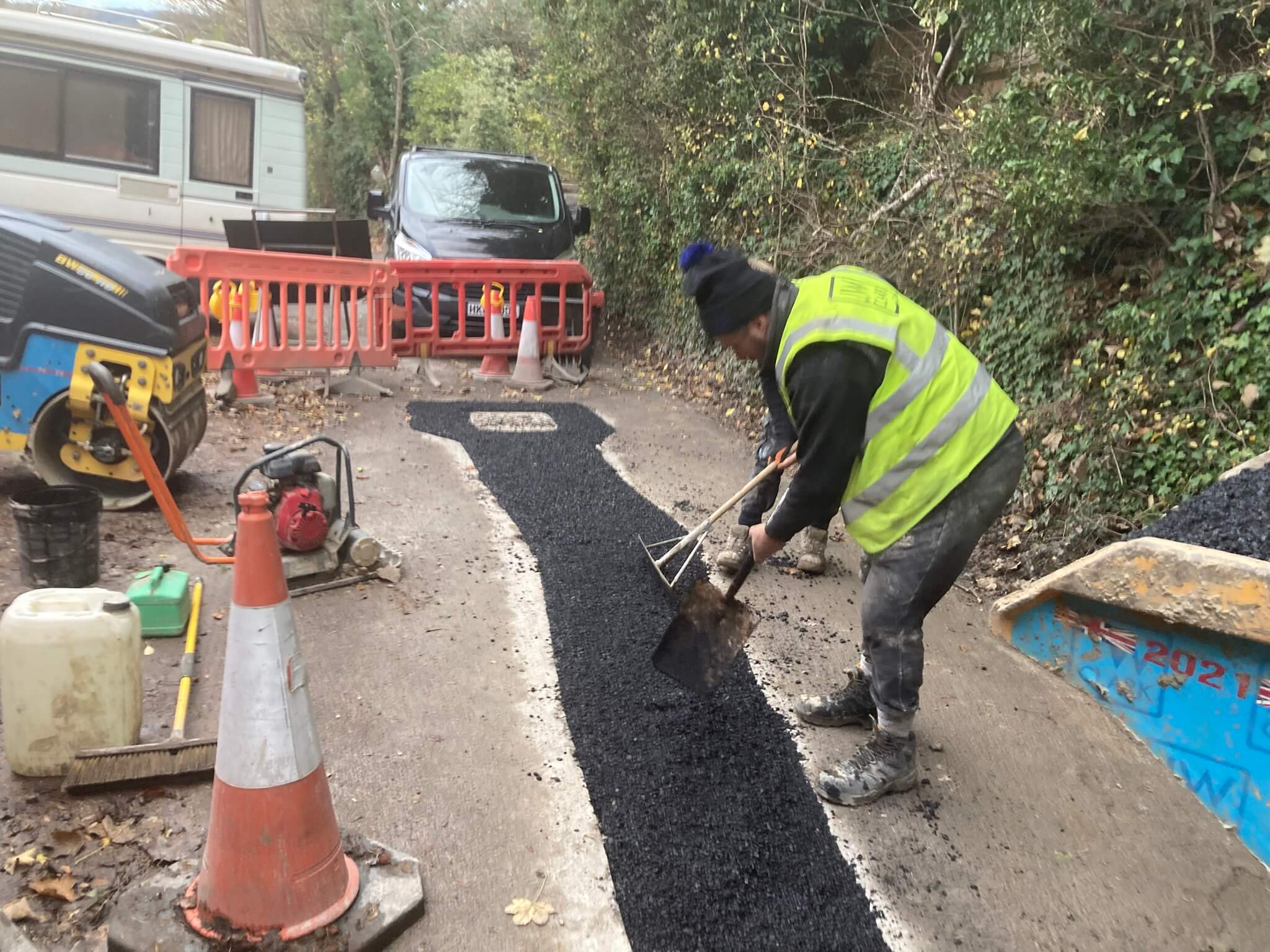
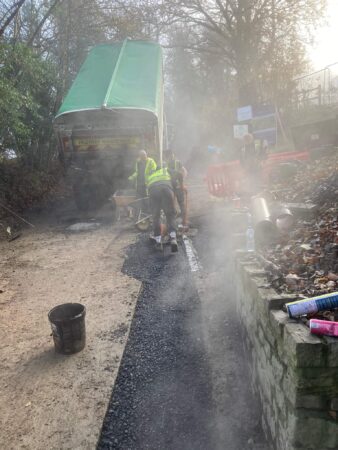
The road was a ‘composite’ road, i.e. there was concrete underneath the tarmac surface course, therefore we had a layer of concrete to put back between the sub-base and the top tarmac course. This added time to the job as the concrete not only had to be laid and compacted, but also had to ‘cure’ before tarmac could be laid on top. With the concrete cured, we finished the road with 10mm tarmac wearing course, as per the Highways spec for the relevant class of road.
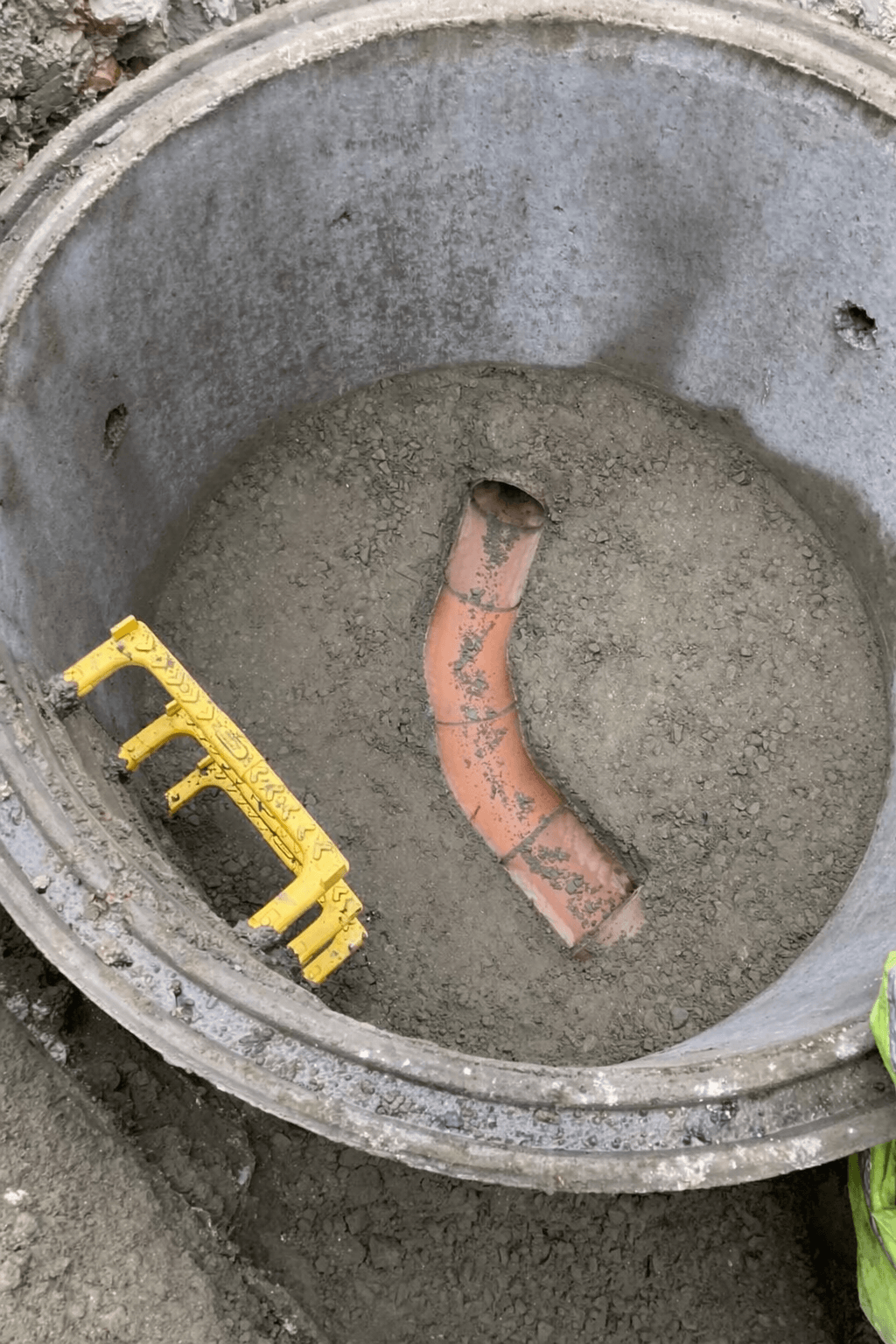
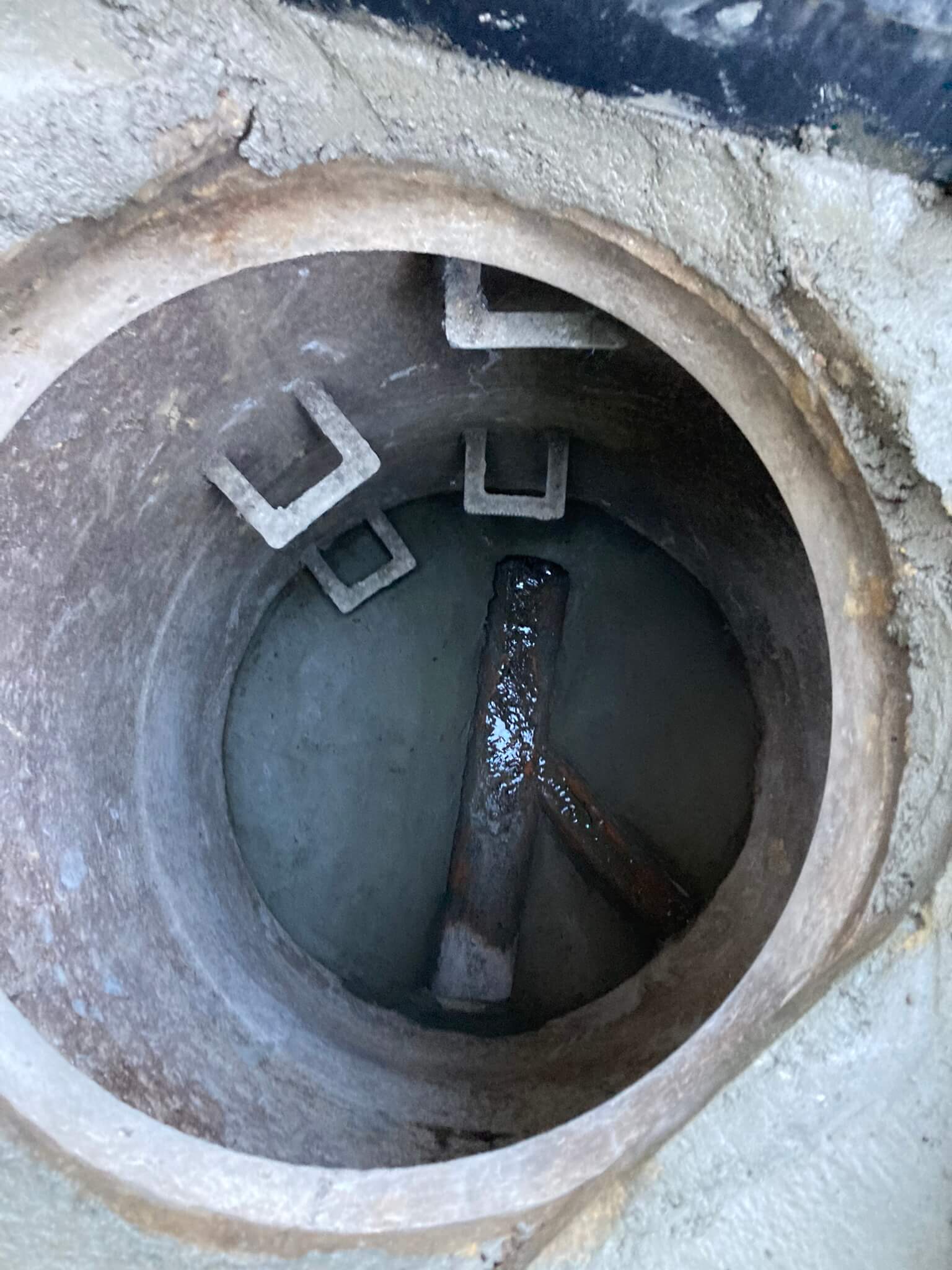
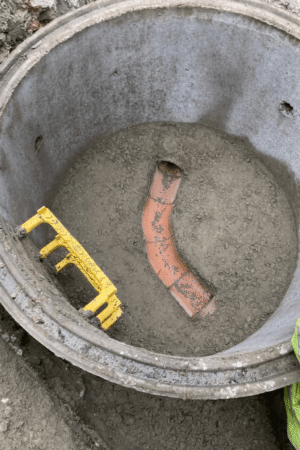
The picture to the right shows rough benching of one of the manholes, in advance of it being smooth-benched with a granite & cement mix, and then finished with a manhole ‘biscuit’ and D400 cover.
Manholes were not generally required for ‘change of direction’, but more so due to the length of run, with new manholes installed to enable rodding, and which may also possibly be used for additional connections by others in the future.
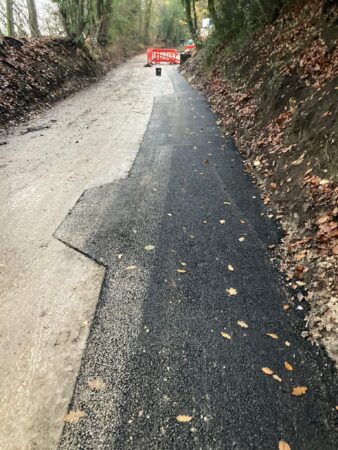
The project was a challenging one at times. Despite us not wanting to close roads for sewer connection works, and with all the inconvenience it causes for local residents, it is sometimes our only option. And when a road is closed, it does tend to make our job easier, and time taken to carry out the works can sometimes be shortened, as we have full use of the whole road to work in, as opposed to having to work alongside and manage existing traffic flows.
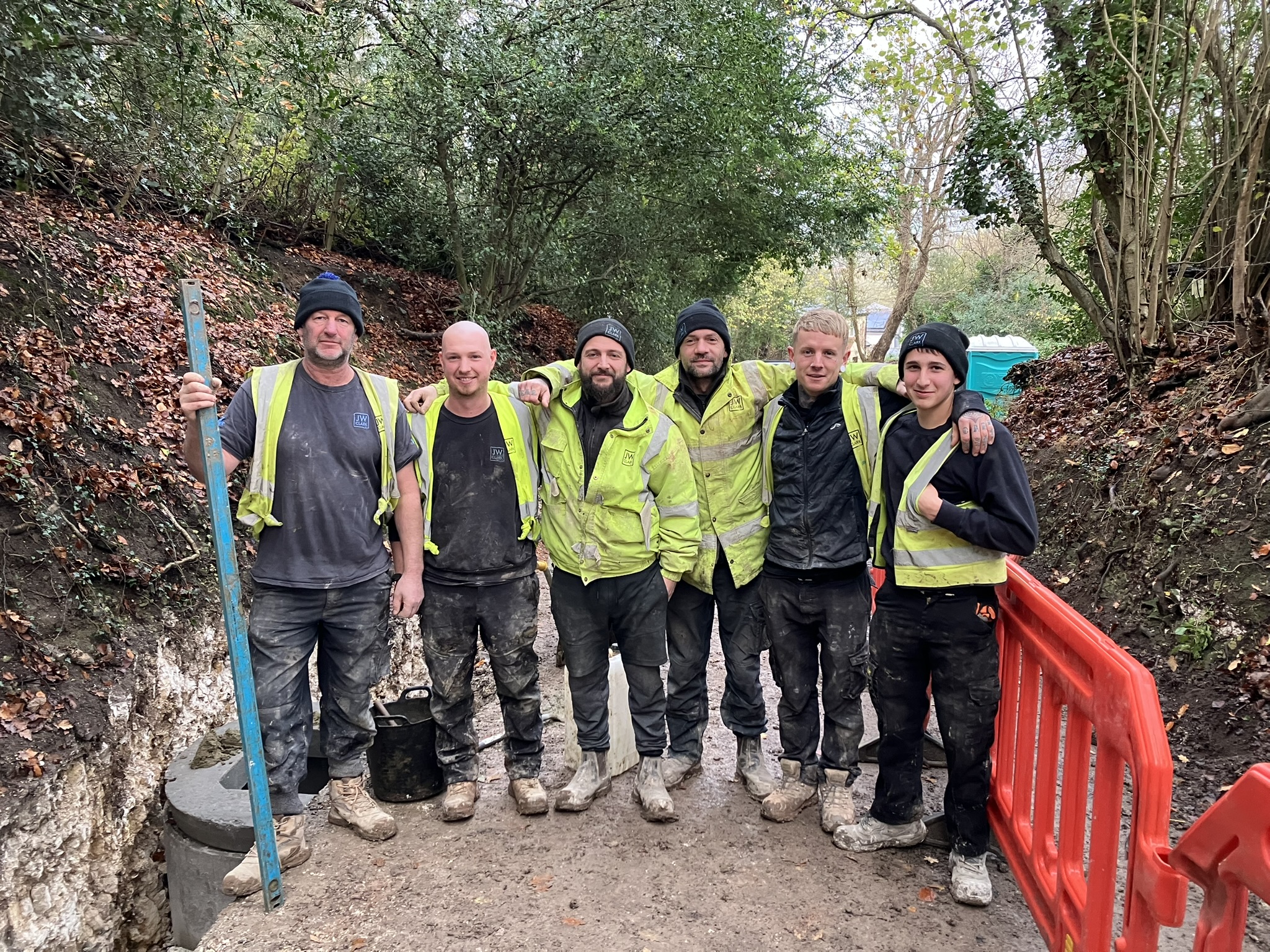
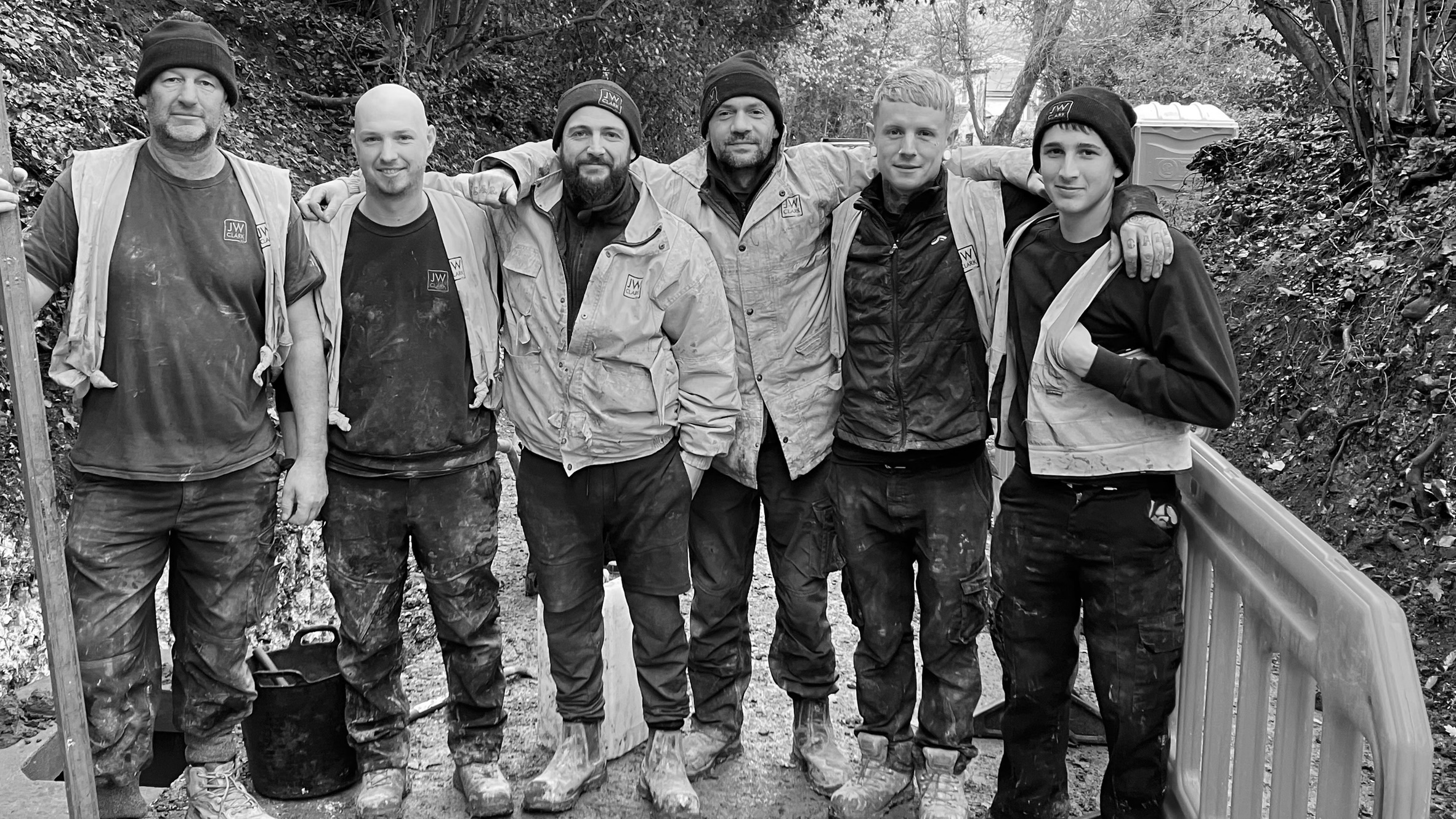
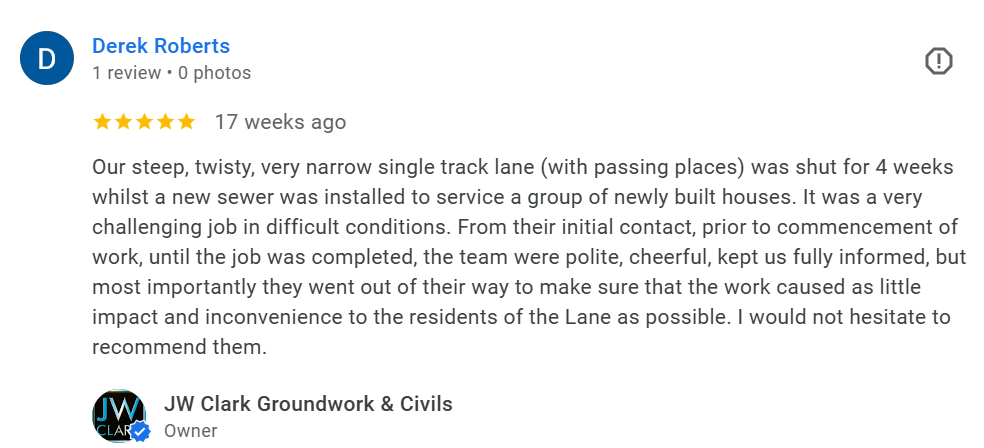
However on this job, despite the road being closed, we were still very restricted for room, due to how narrow the road was. That said, we got the job done, with the help of the great people who work for us. And we were also pleased to receive a 5-star Google review from one of the residents, who also brought us out cups of tea whilst we were working there!
Timeline
Time to quote for the works: Less than a week
Time taken to obtain Section 106 Licence from Thames Water: 3 weeks
Time taken to obtain Section 50 Licence from Highways: In excess of 2 months, various exchanges back and forth with Highways, site meeting was required and there were consultations with other stakeholders regards the diversion route etc
Leadtime to use S50 Licence: 4 months – due to the TTRO (Road Closure) and traffic-sensitive nature of the works
Time taken to do the work: 4 weeks
Total time: 31 weeks
Do you need a sewer connection needs doing? Click here to enquire.
Don’t leave it too late for a sewer connection, most people do! Read our article here: How long does it take to do a sewer connection?
Click here to see more of our case studies.