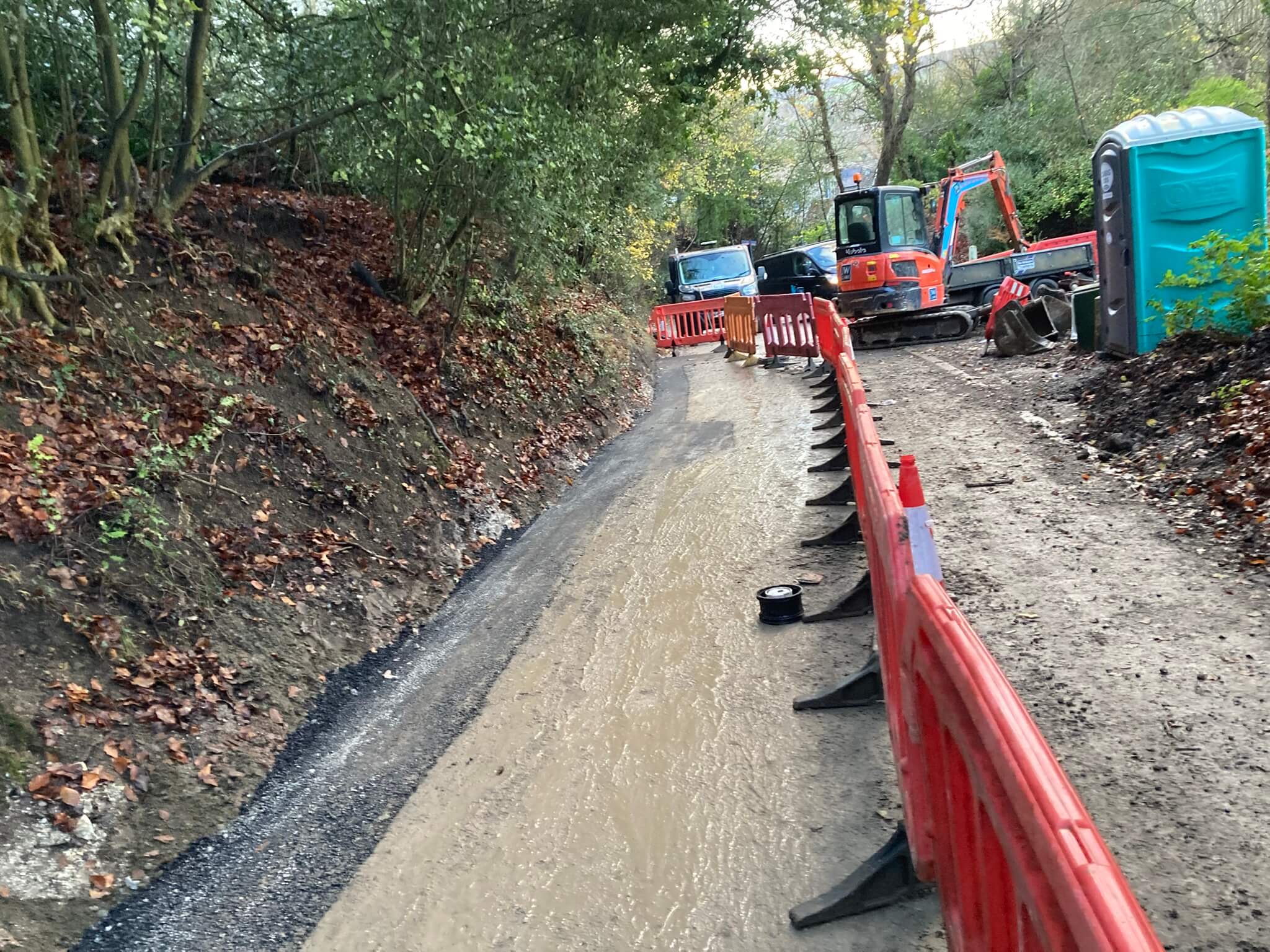
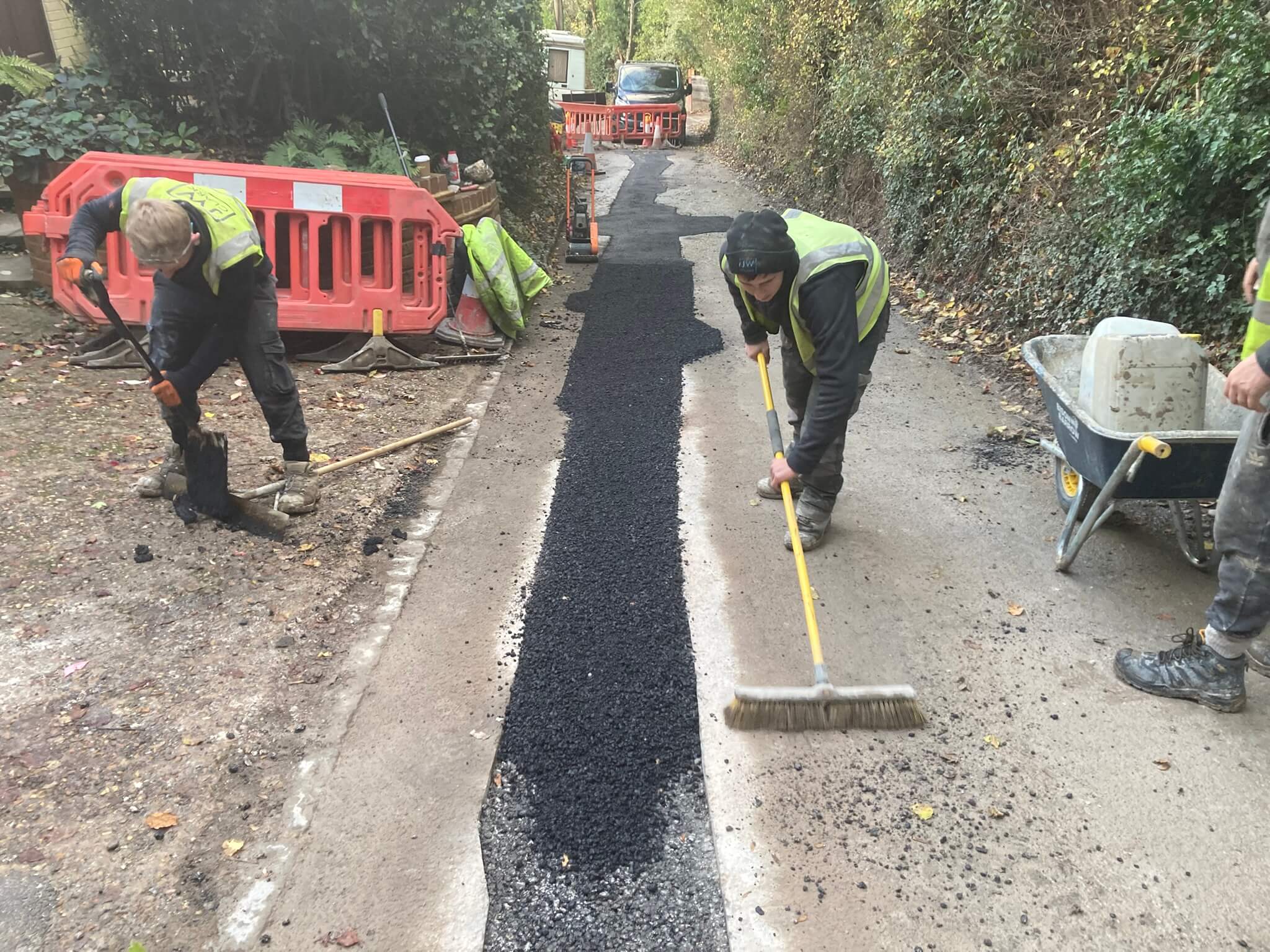
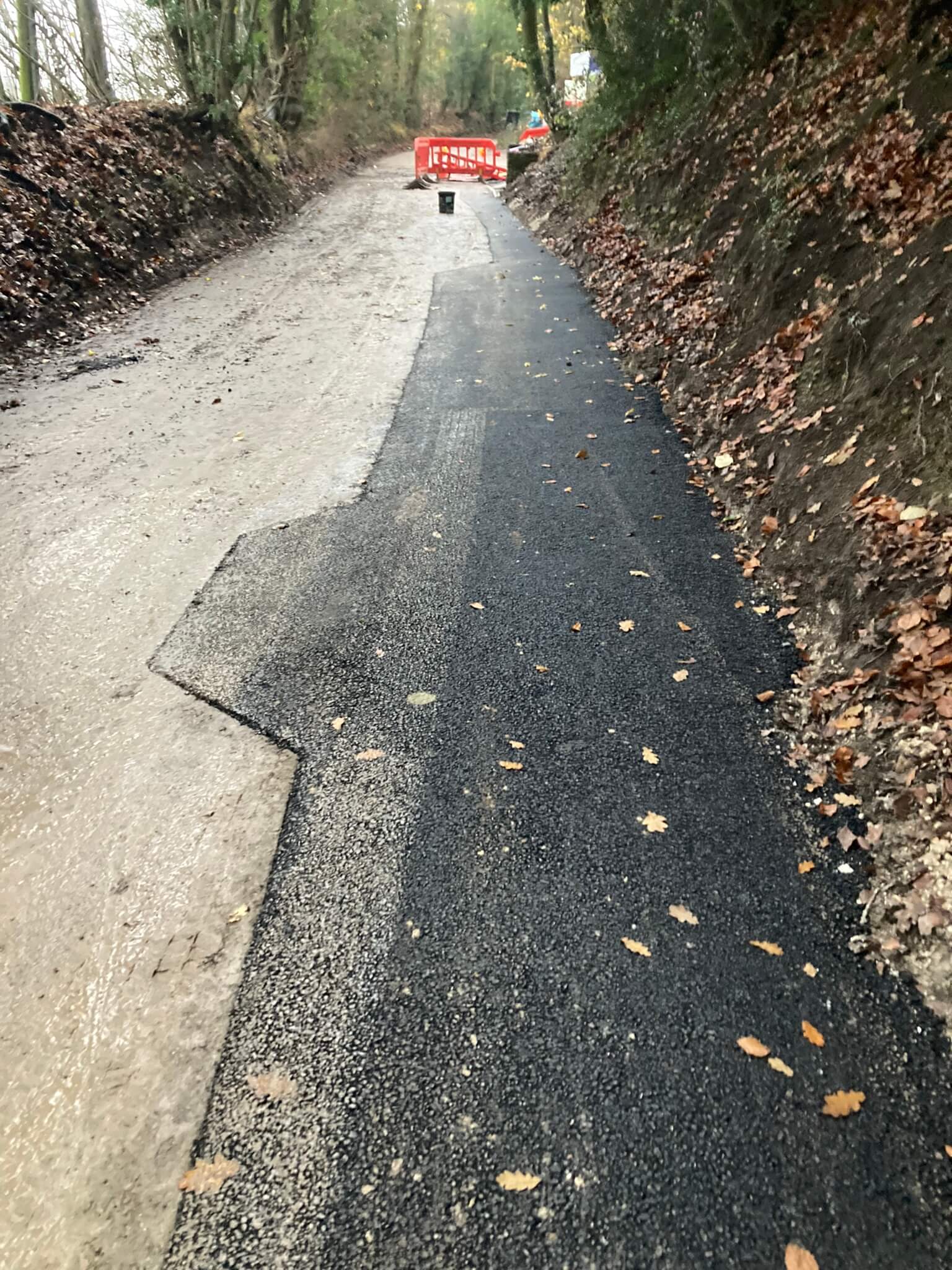
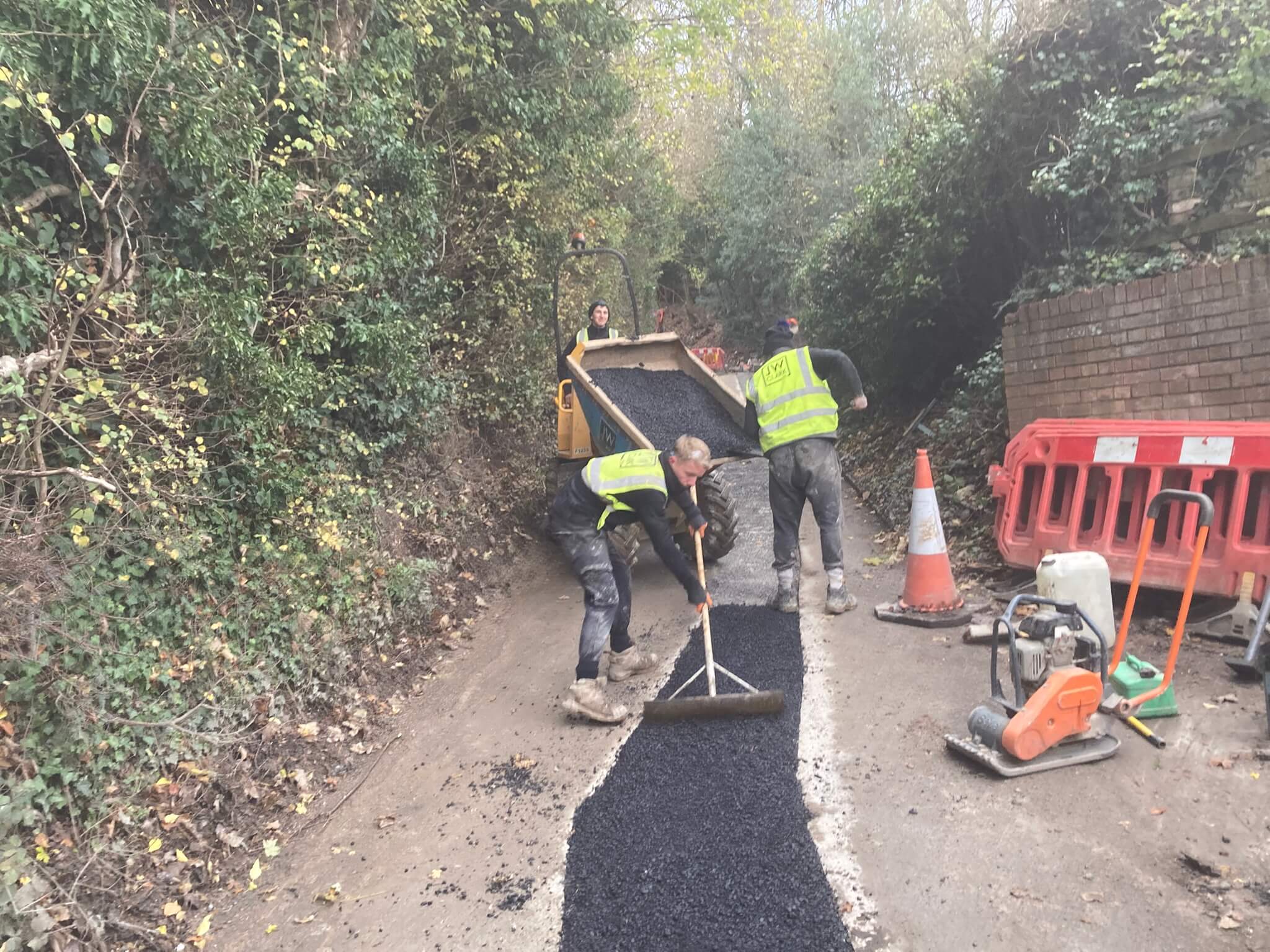
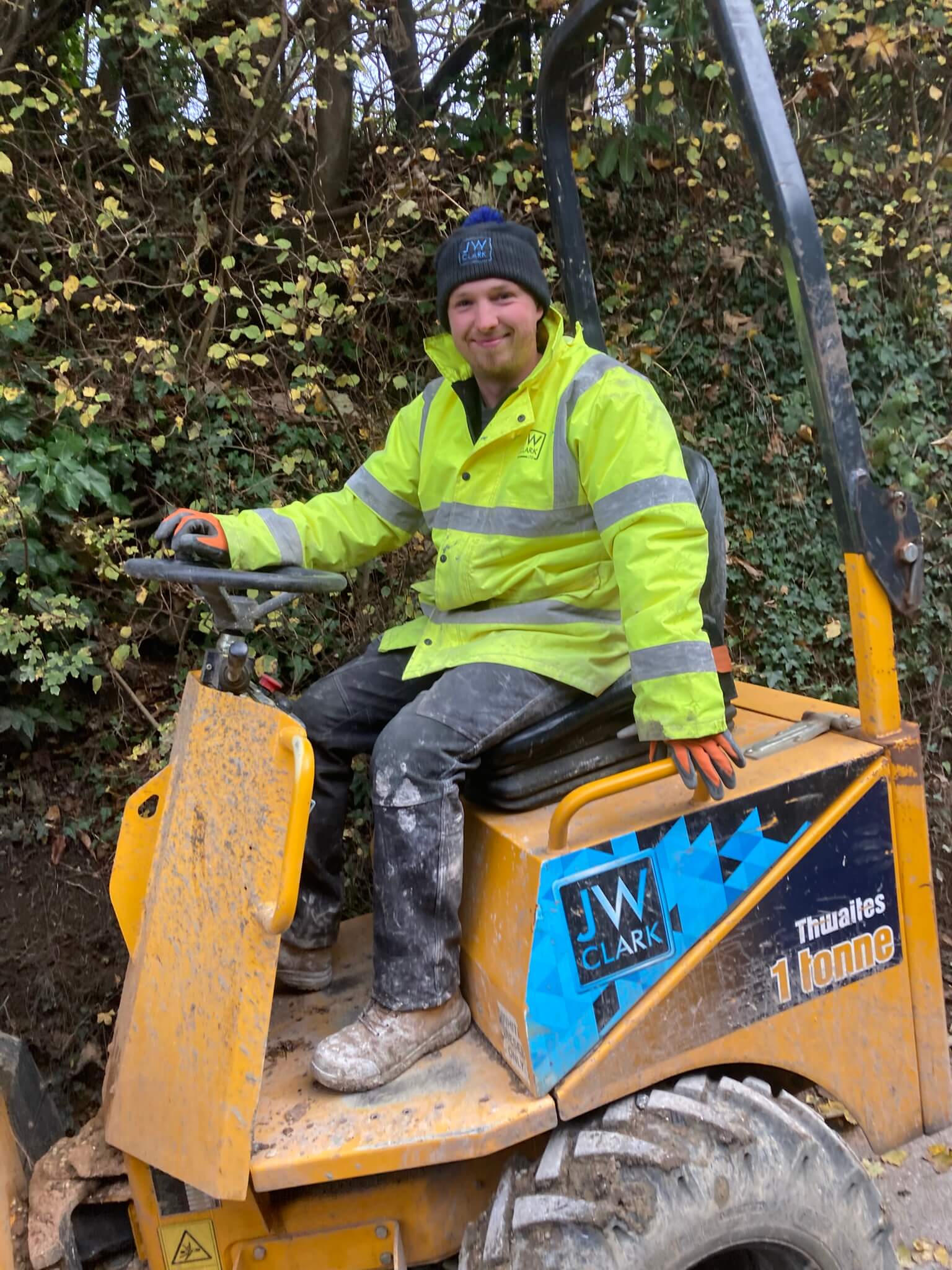
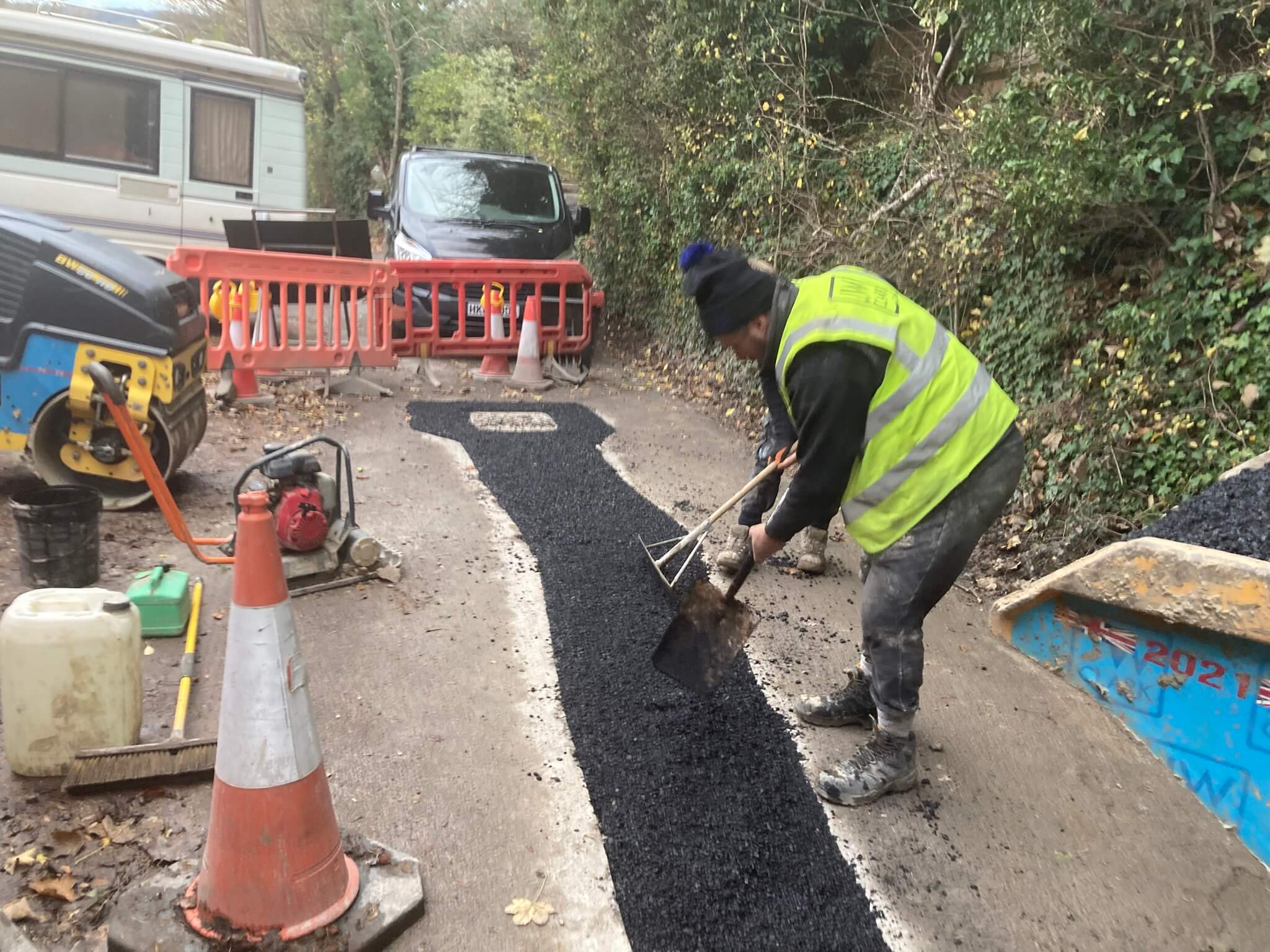
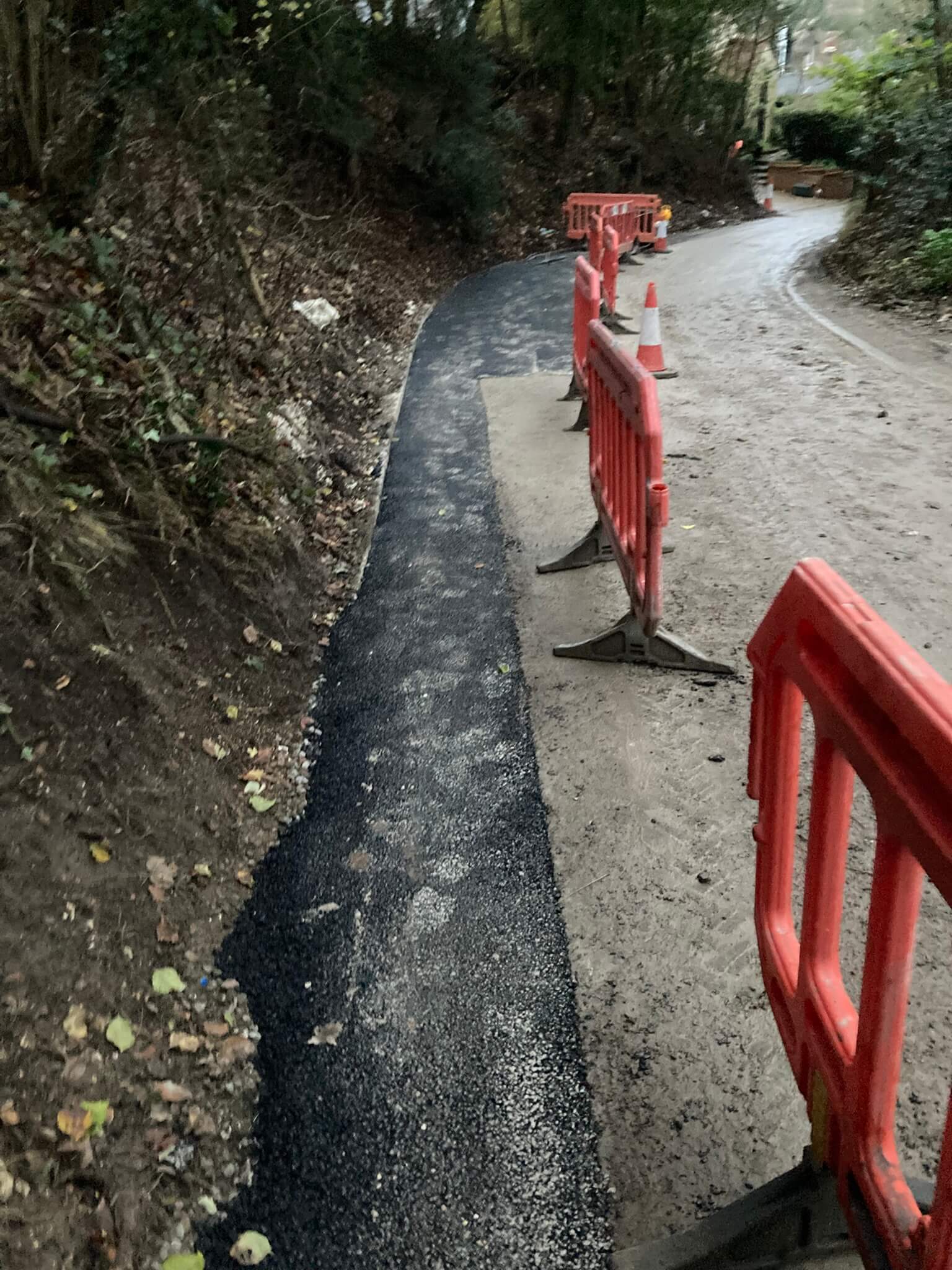
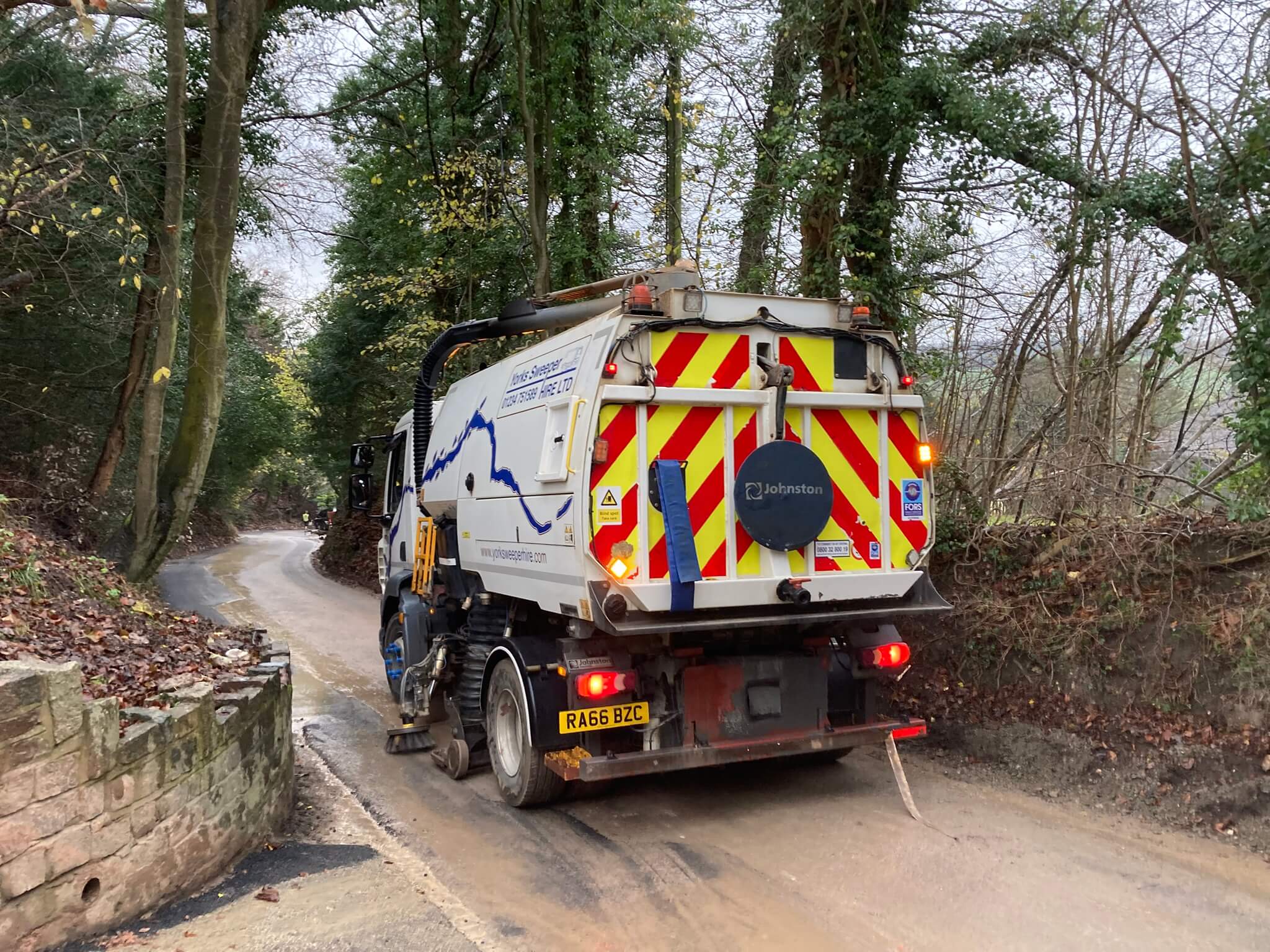
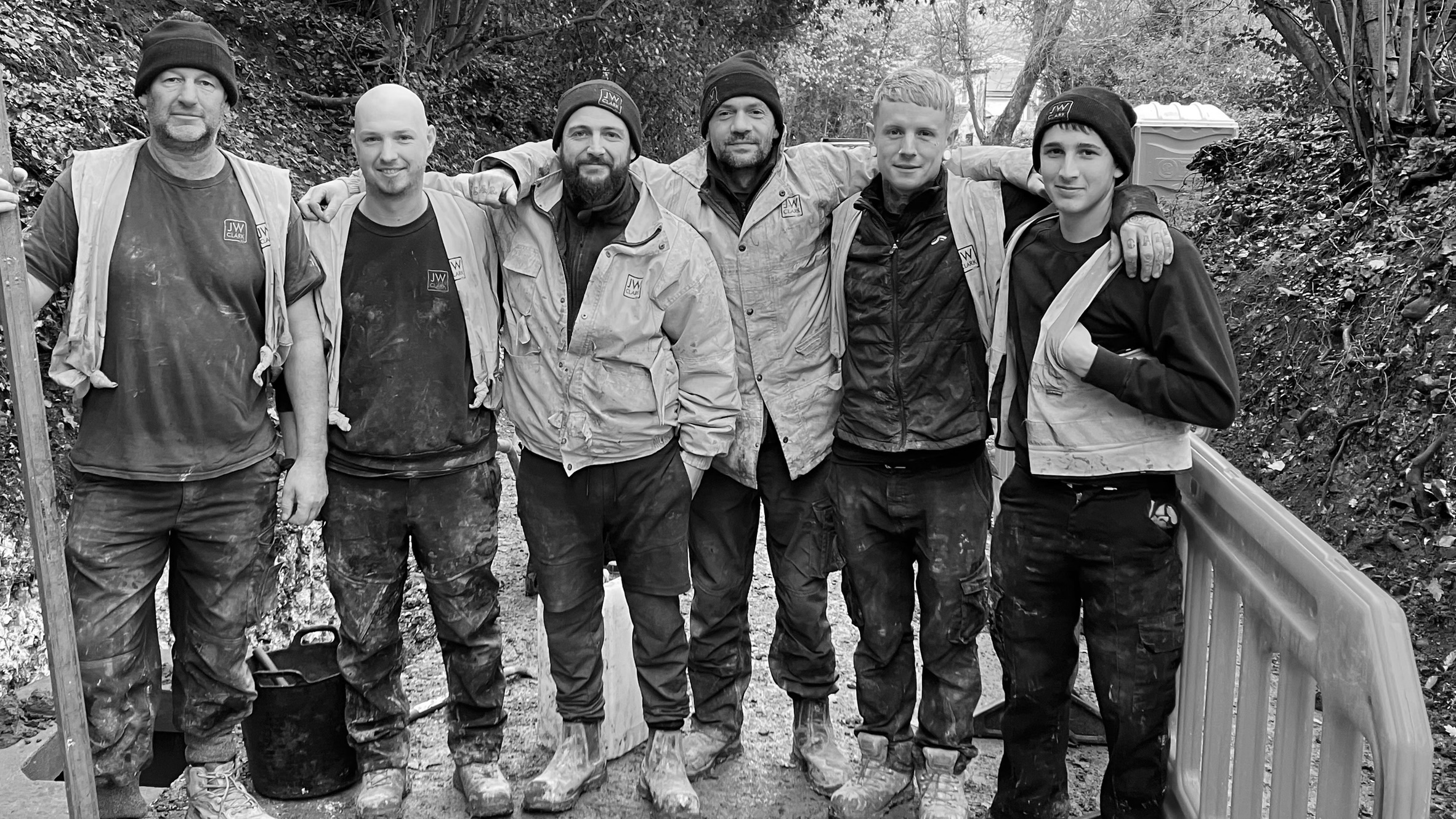
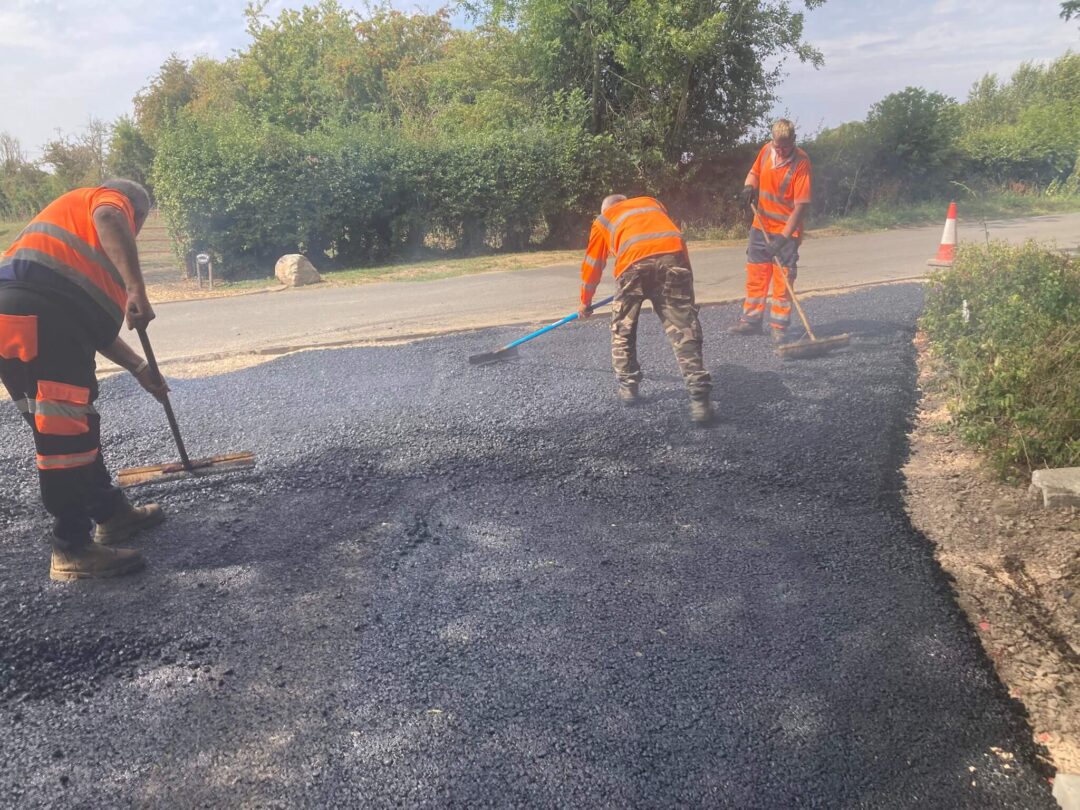
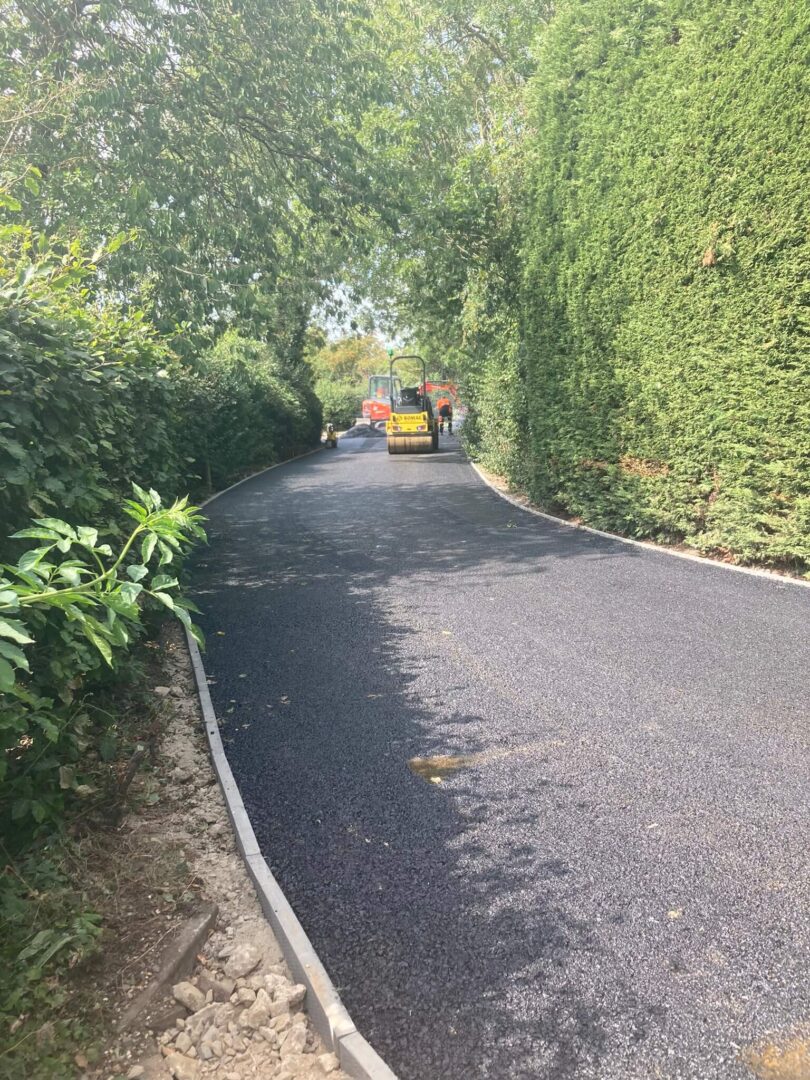
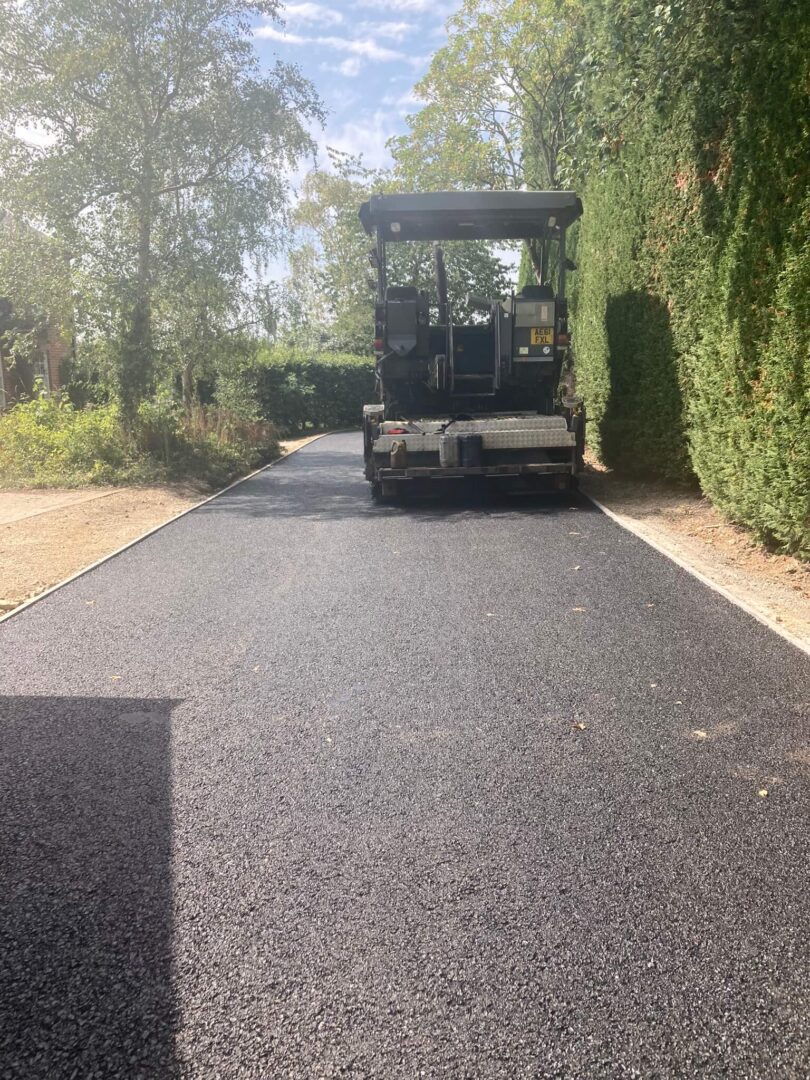
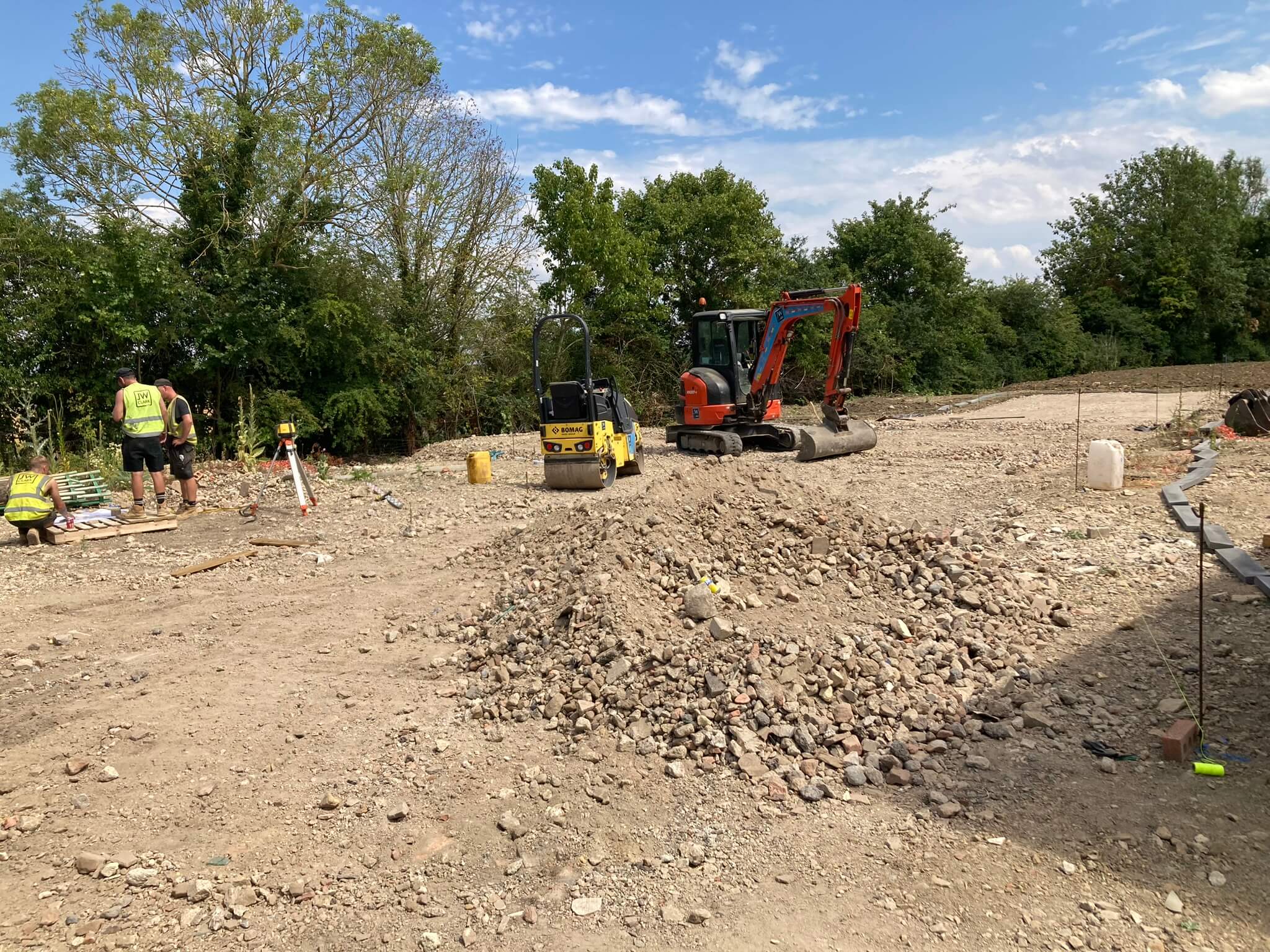
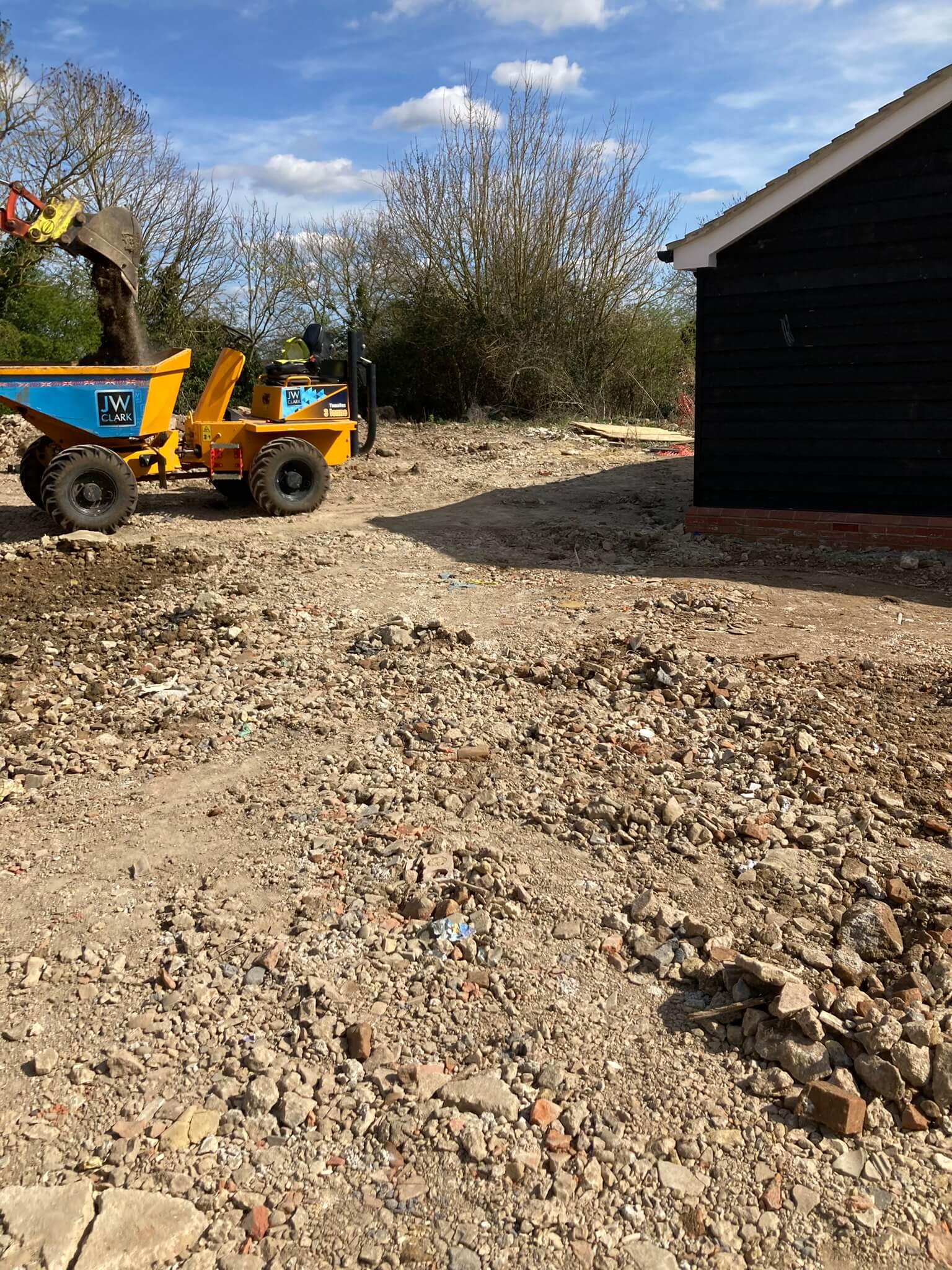
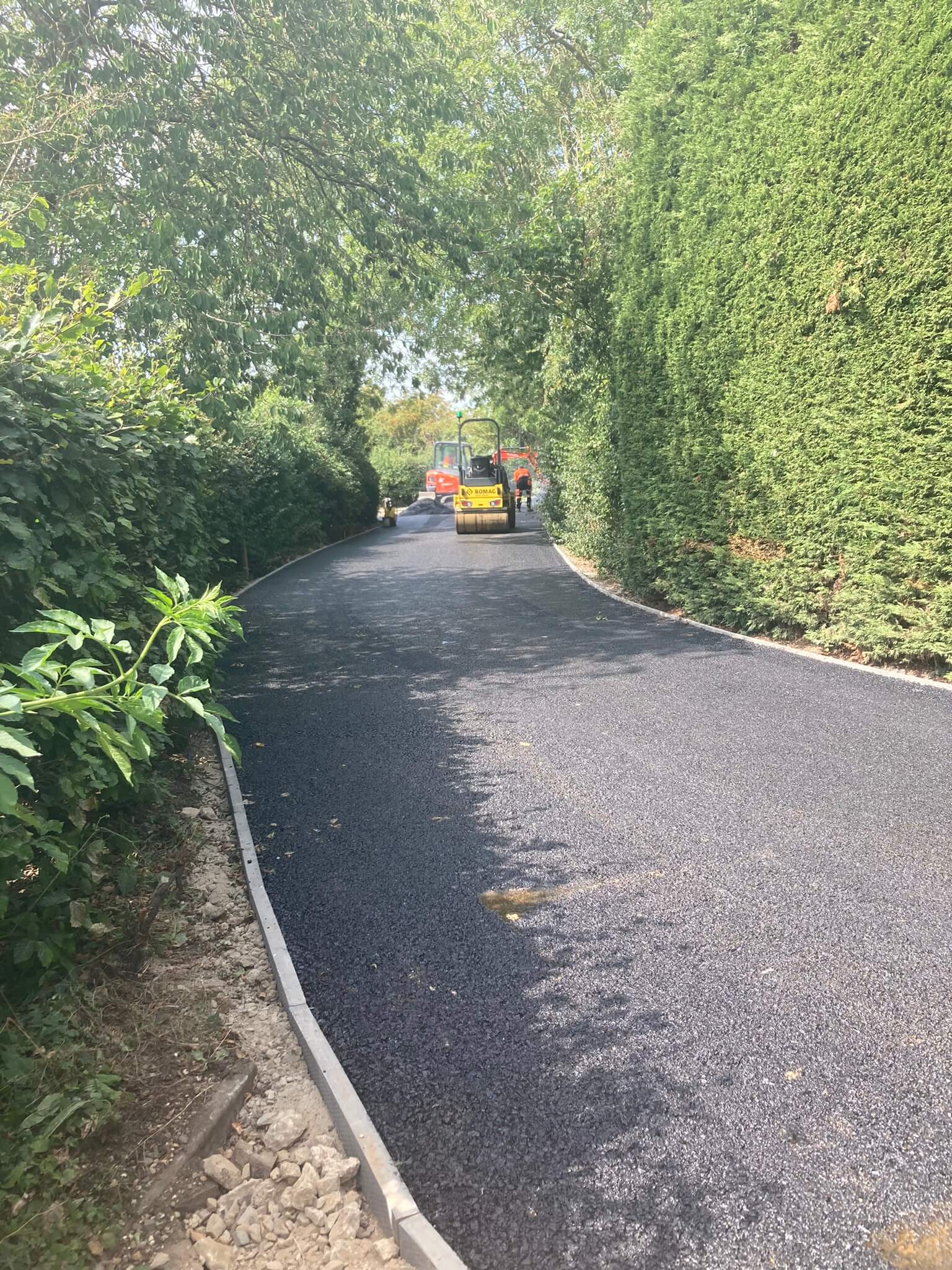
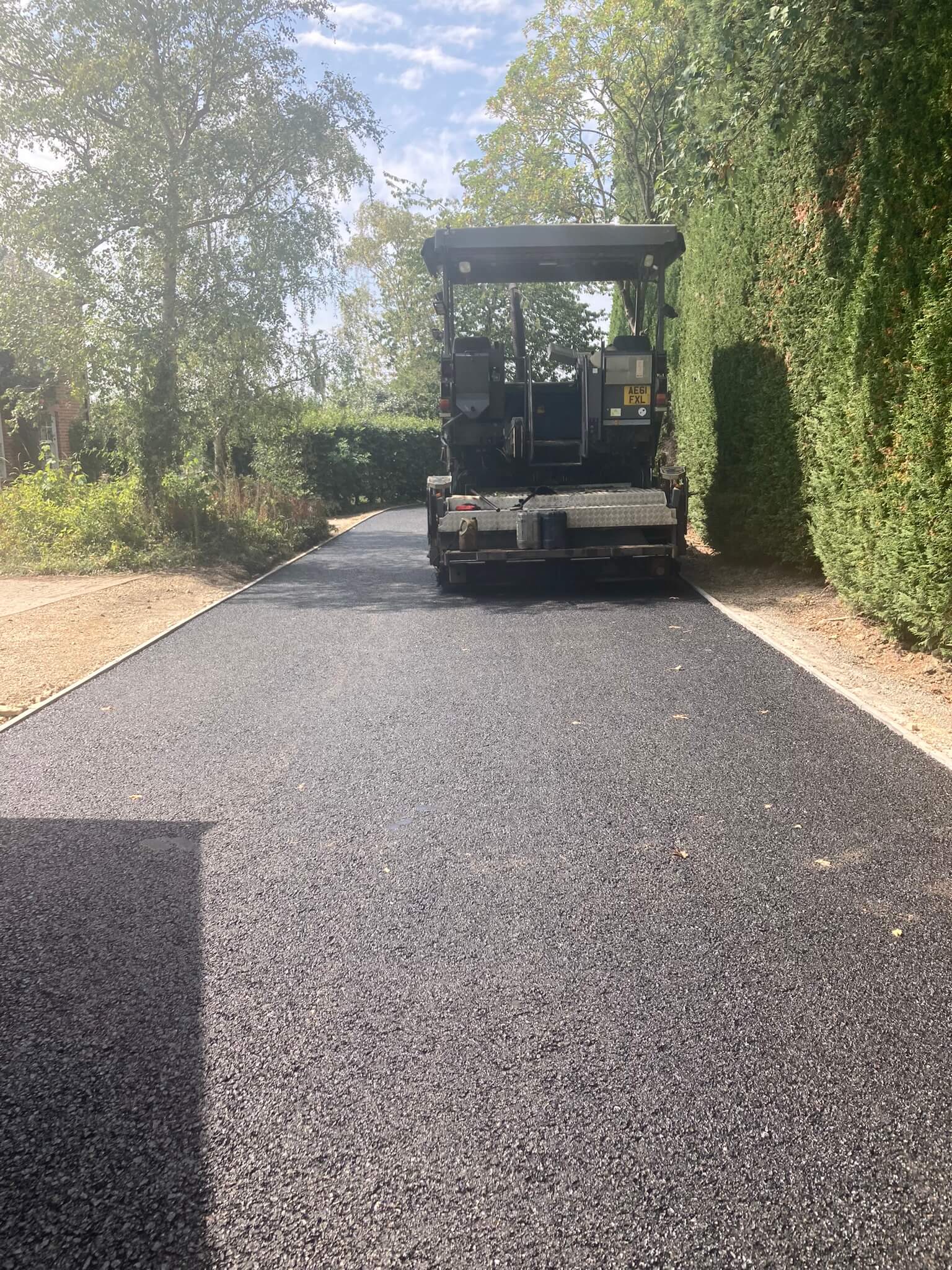
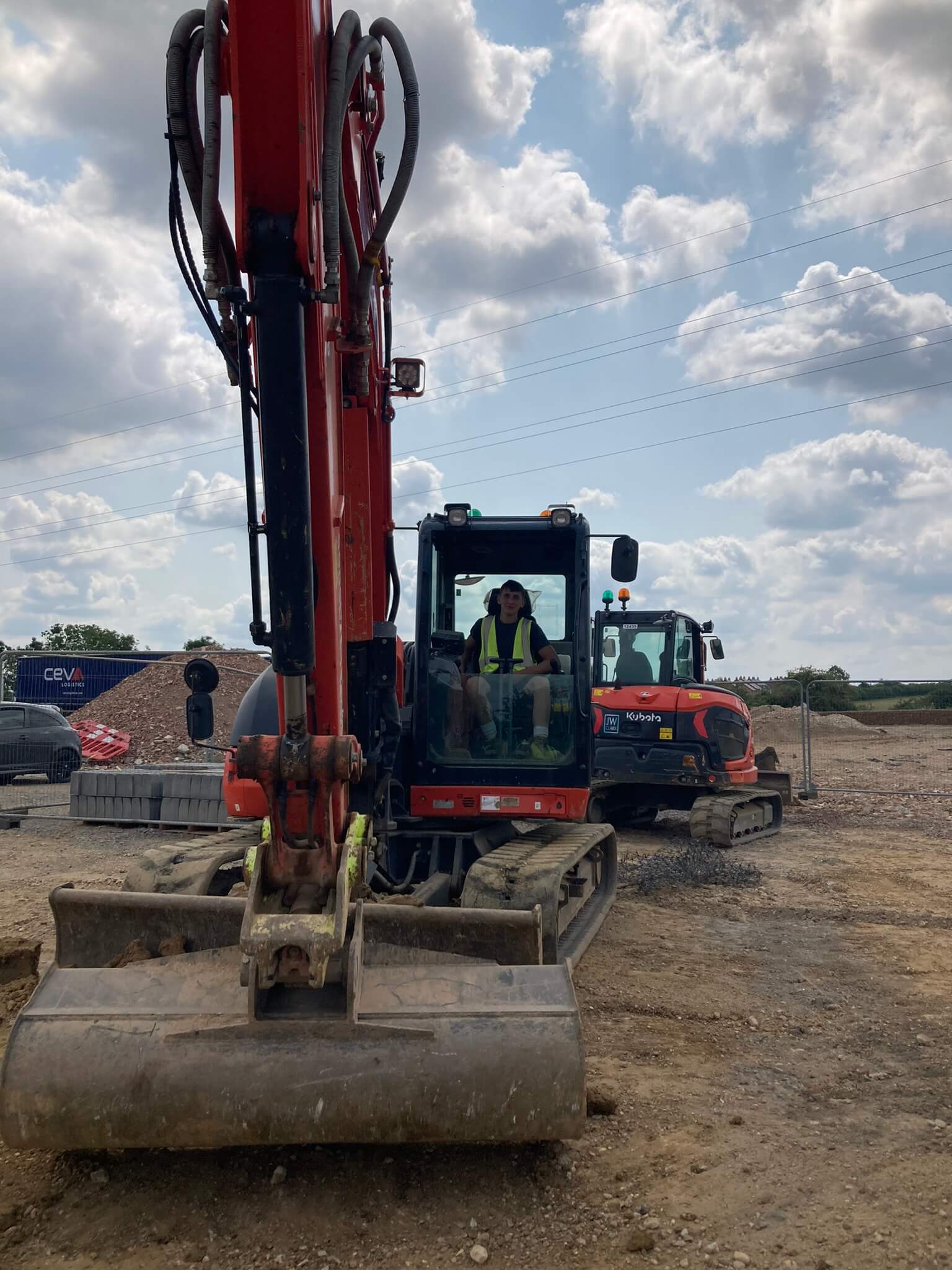
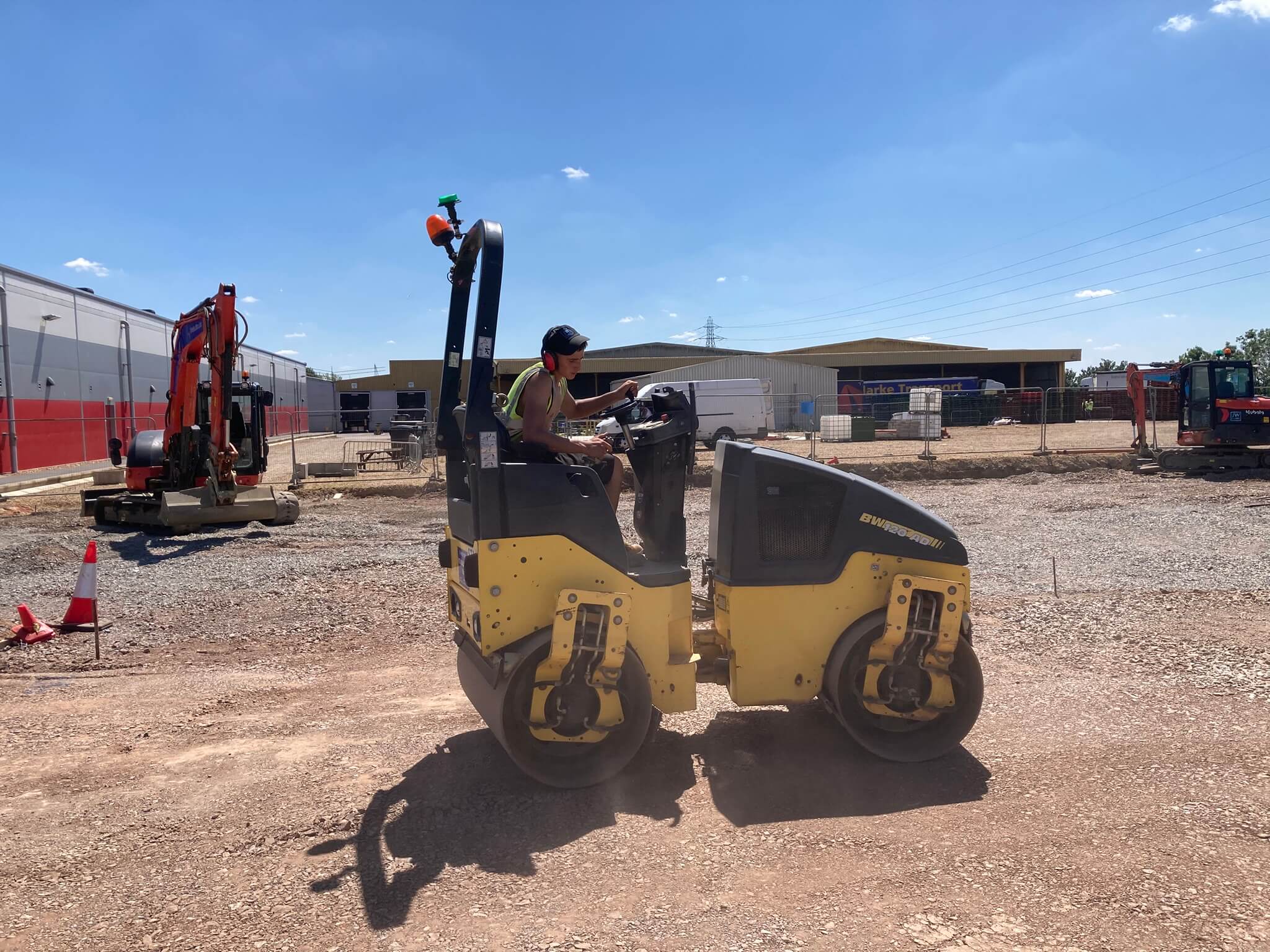
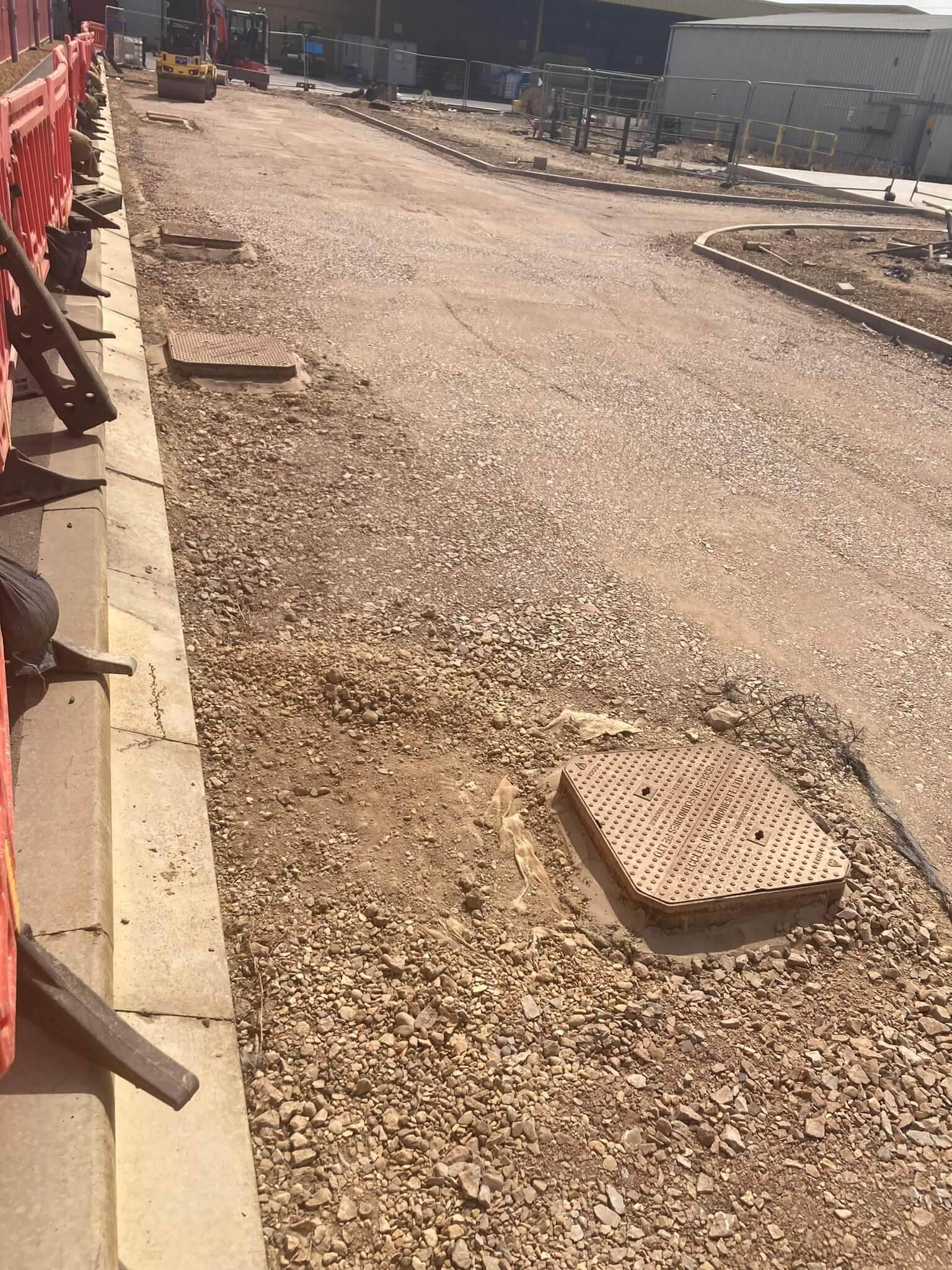
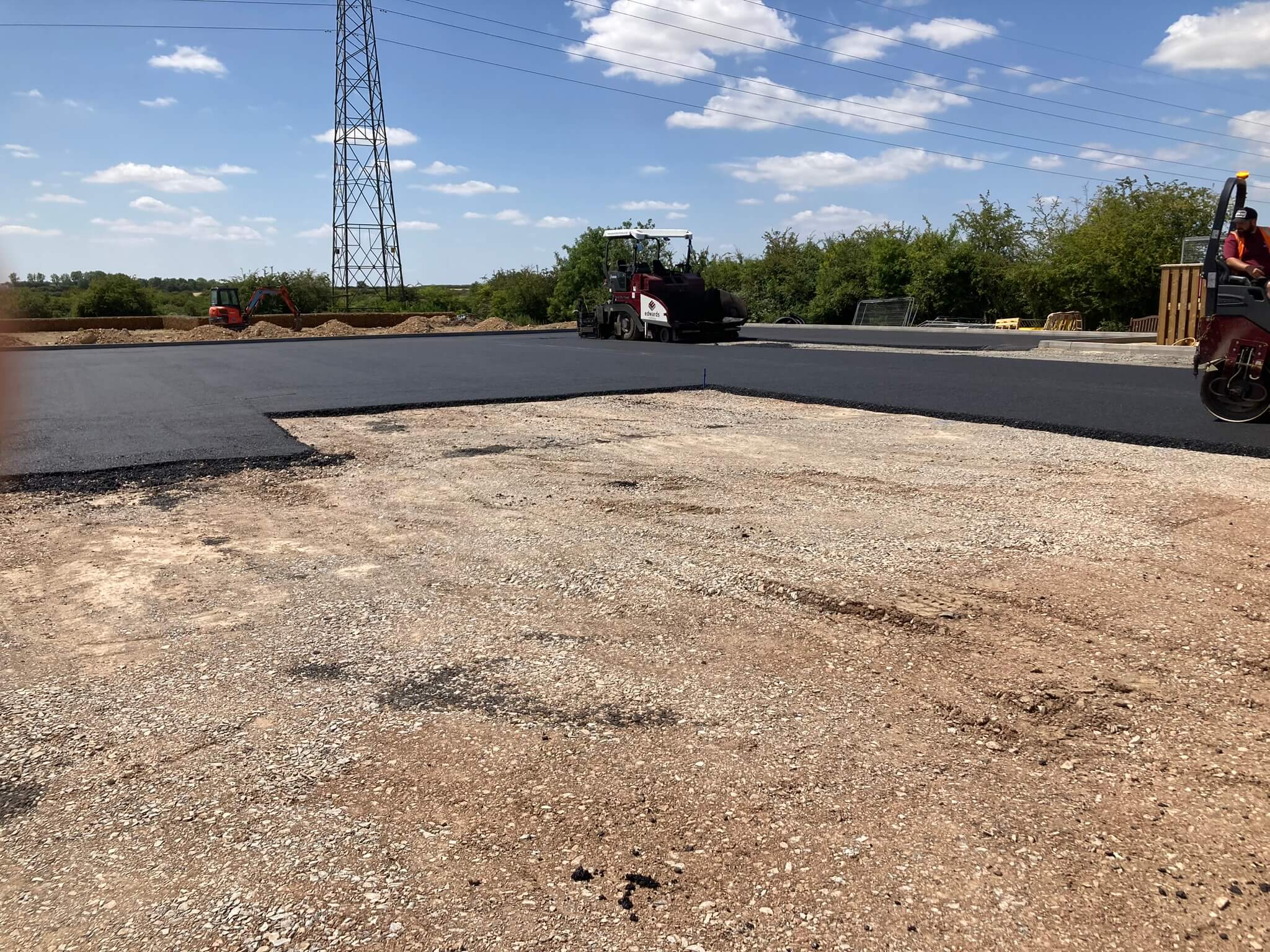
S278 Works & Sewer Connection, Great Paxton

Projects

S278 Works & Sewer Connection, Case Study, Gt Paxton

We were delighted to undertake these works for a great customer of ours, DGH Construction Ltd

Location
Gr Paxton, Cambridgeshire
Client
DGH Construction Ltd
Value
£xx,xxx
commercial contracts

Objective

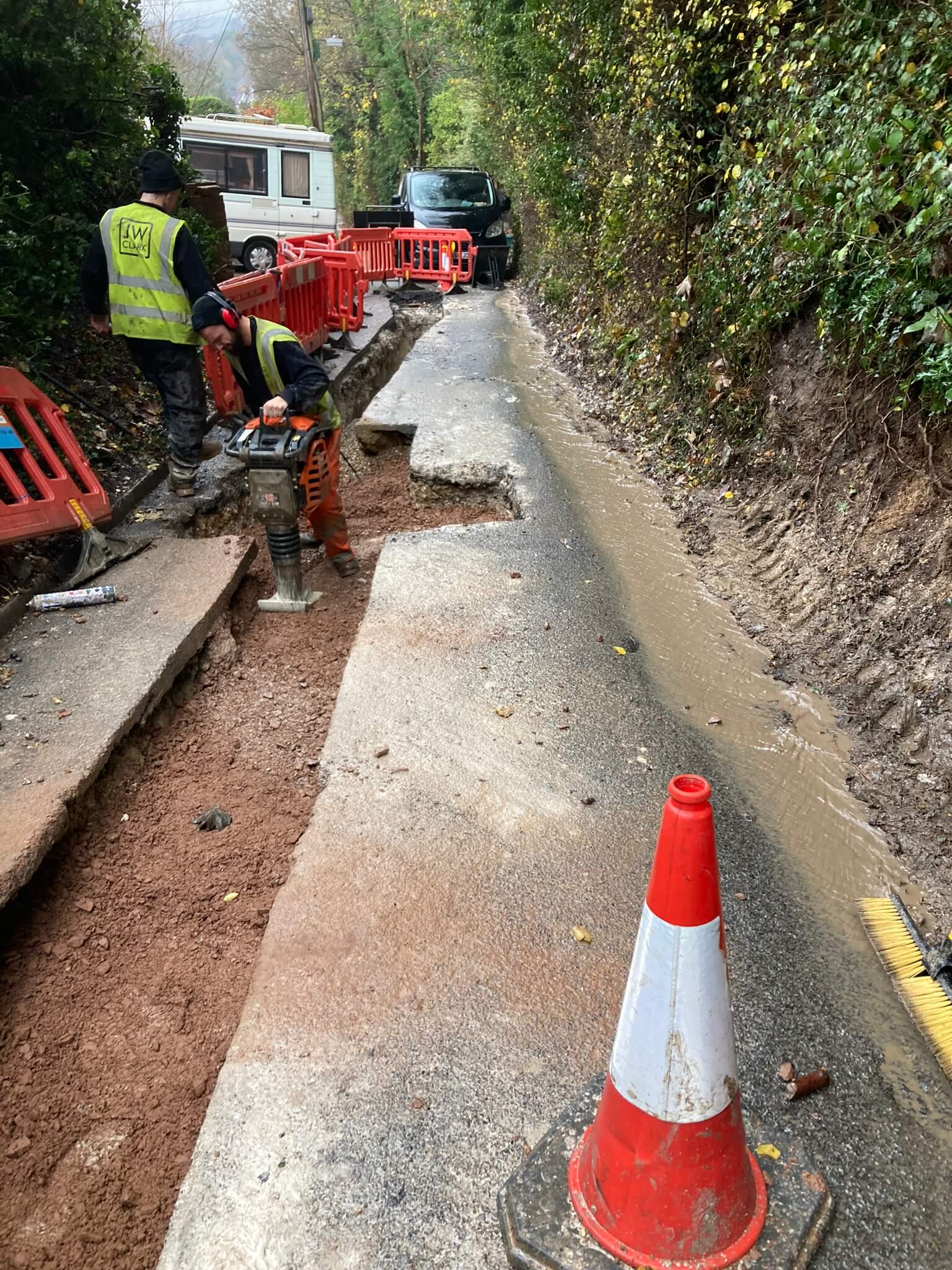
Our objective was to facilitate both Section 278 works and also an Anglian Water sewer connection, for a small one-off development on the main  road running through Gt Paxton, Cambs. 

About the project

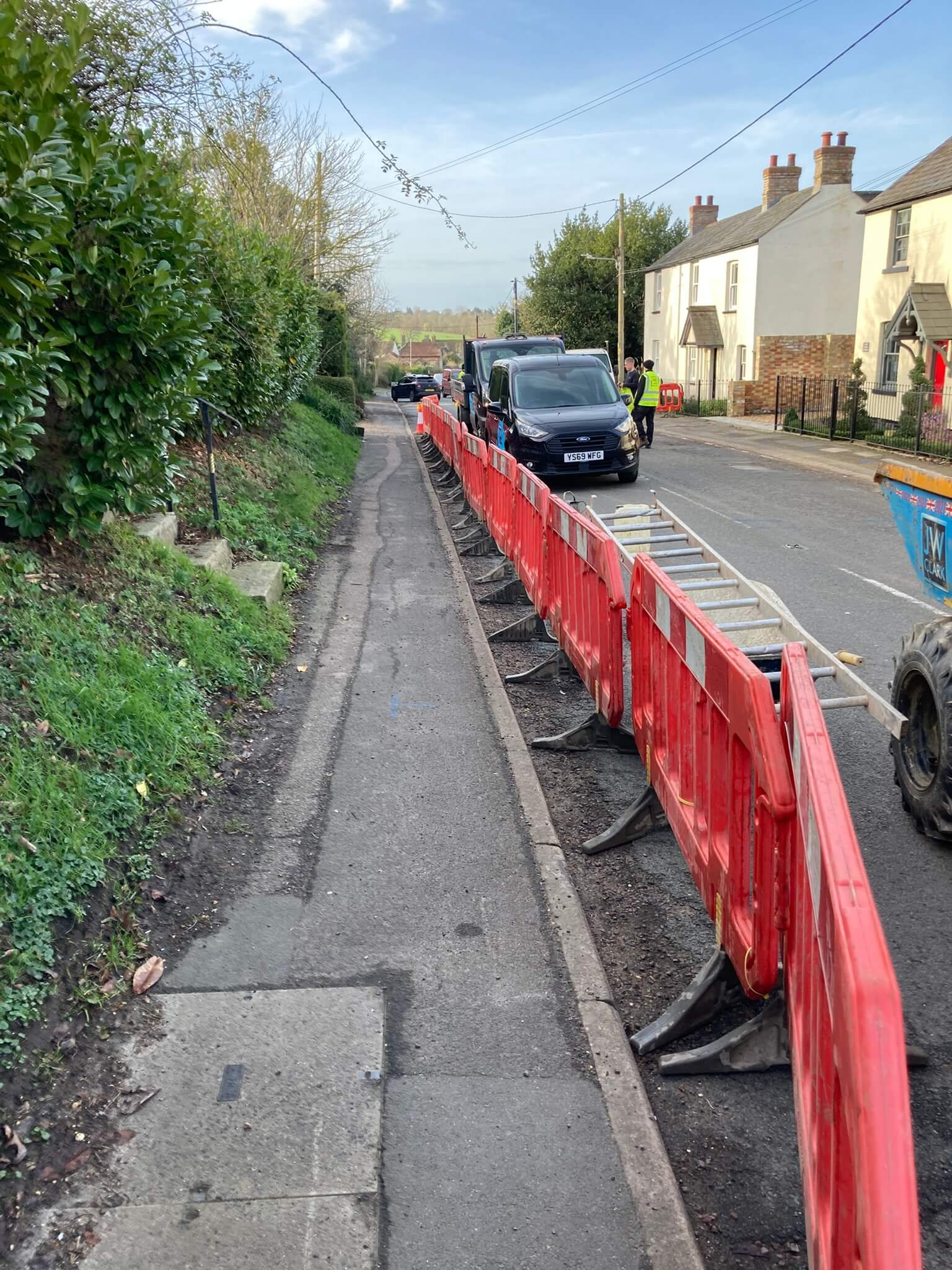
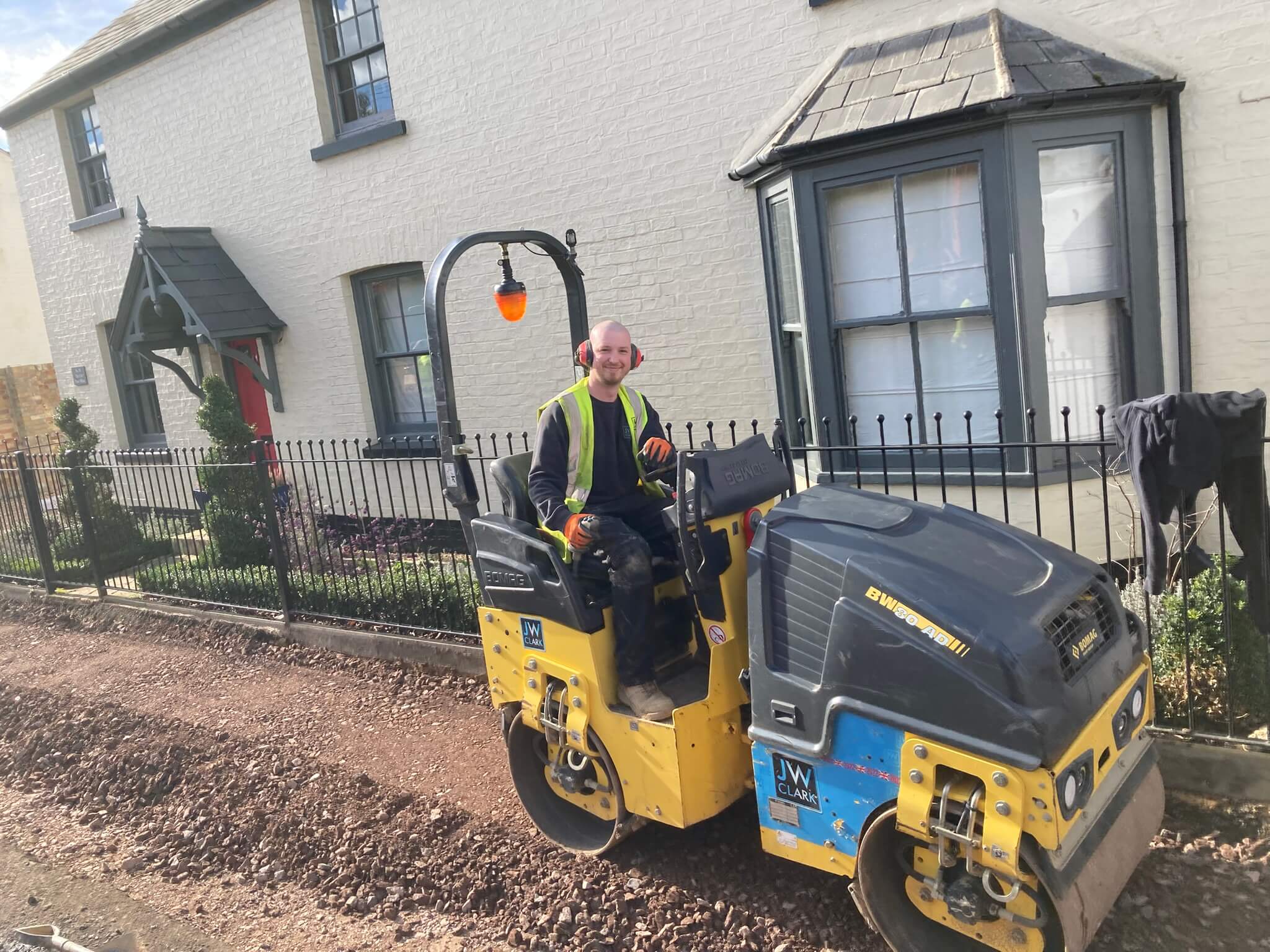
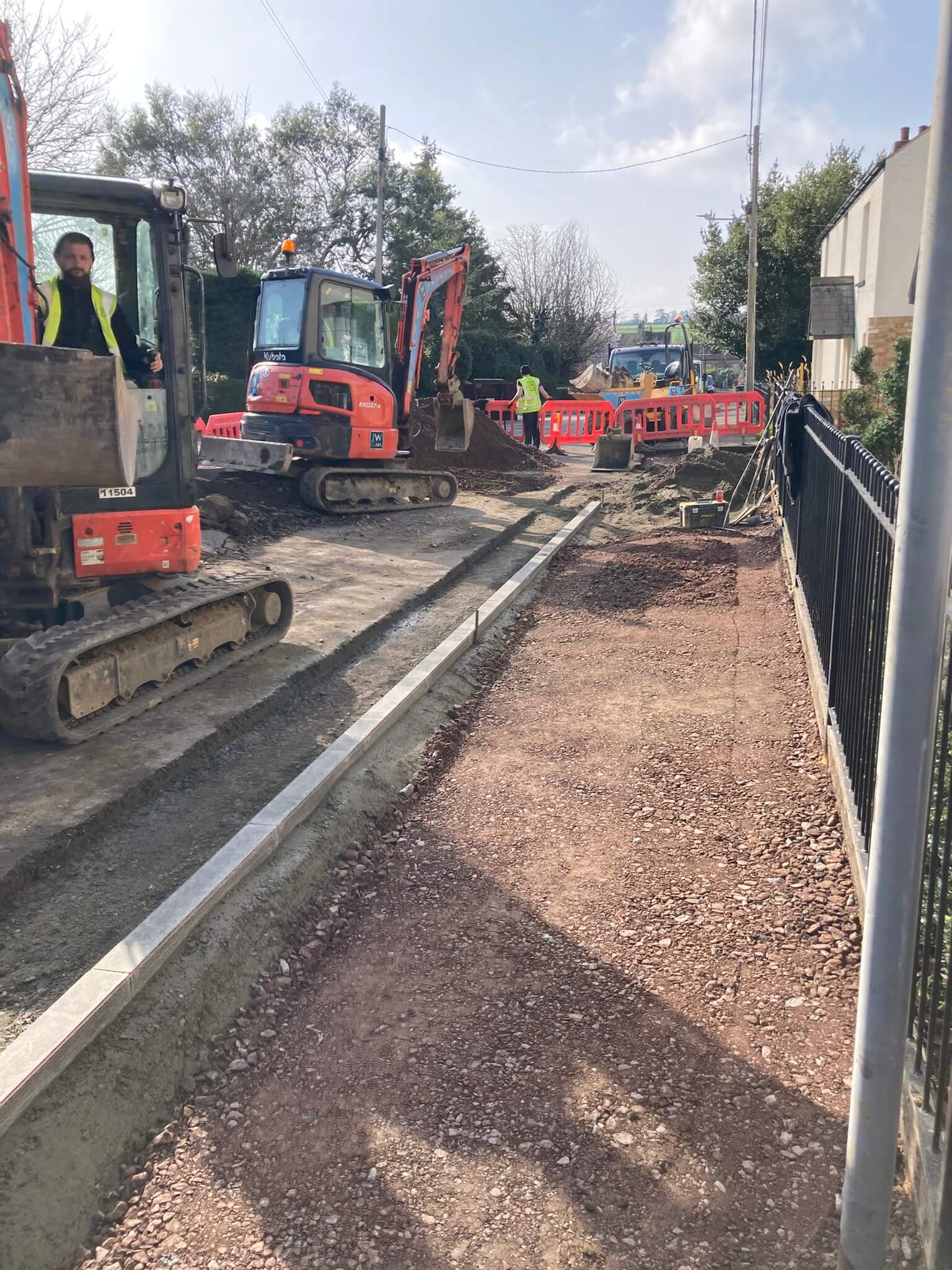
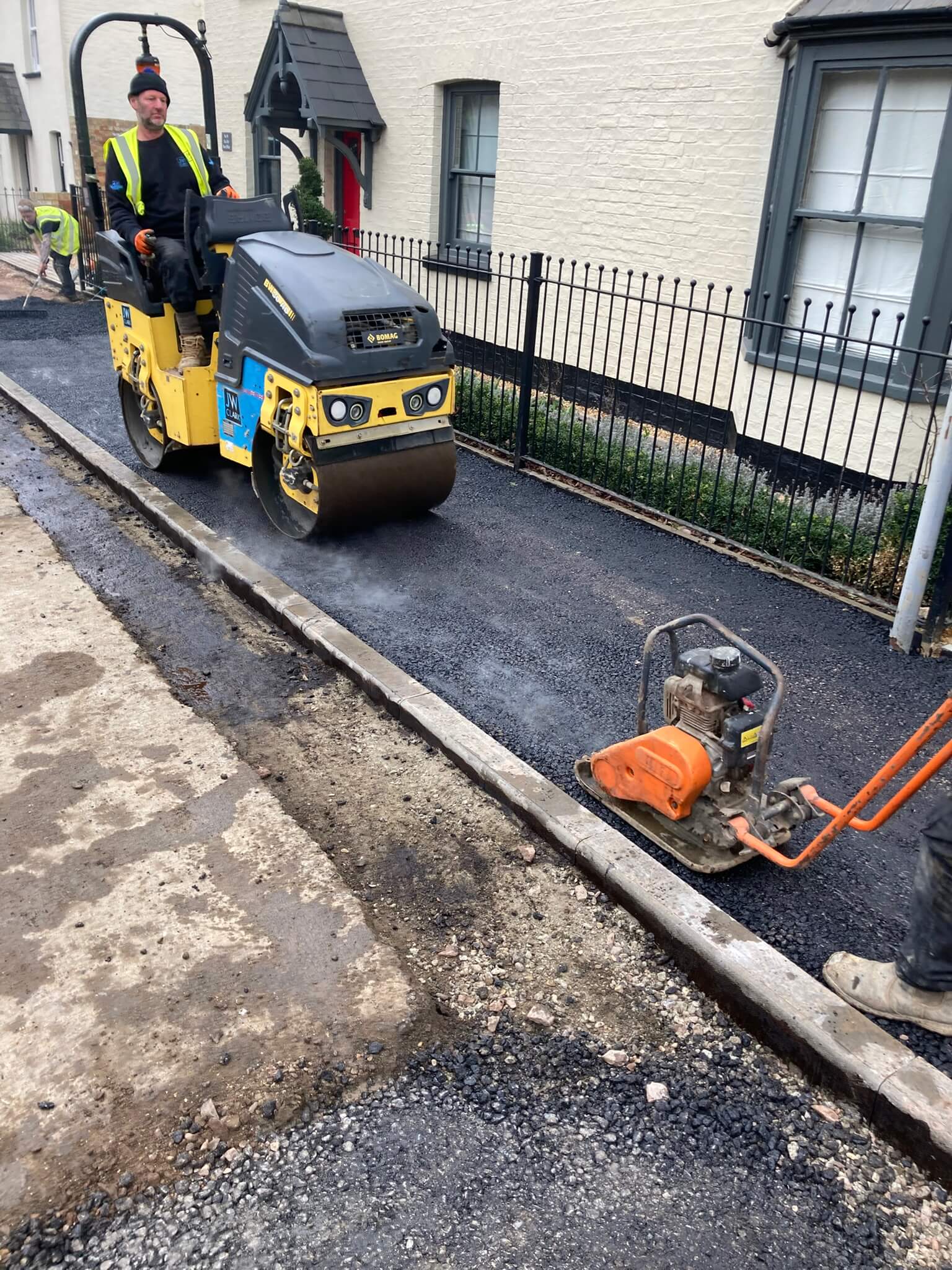
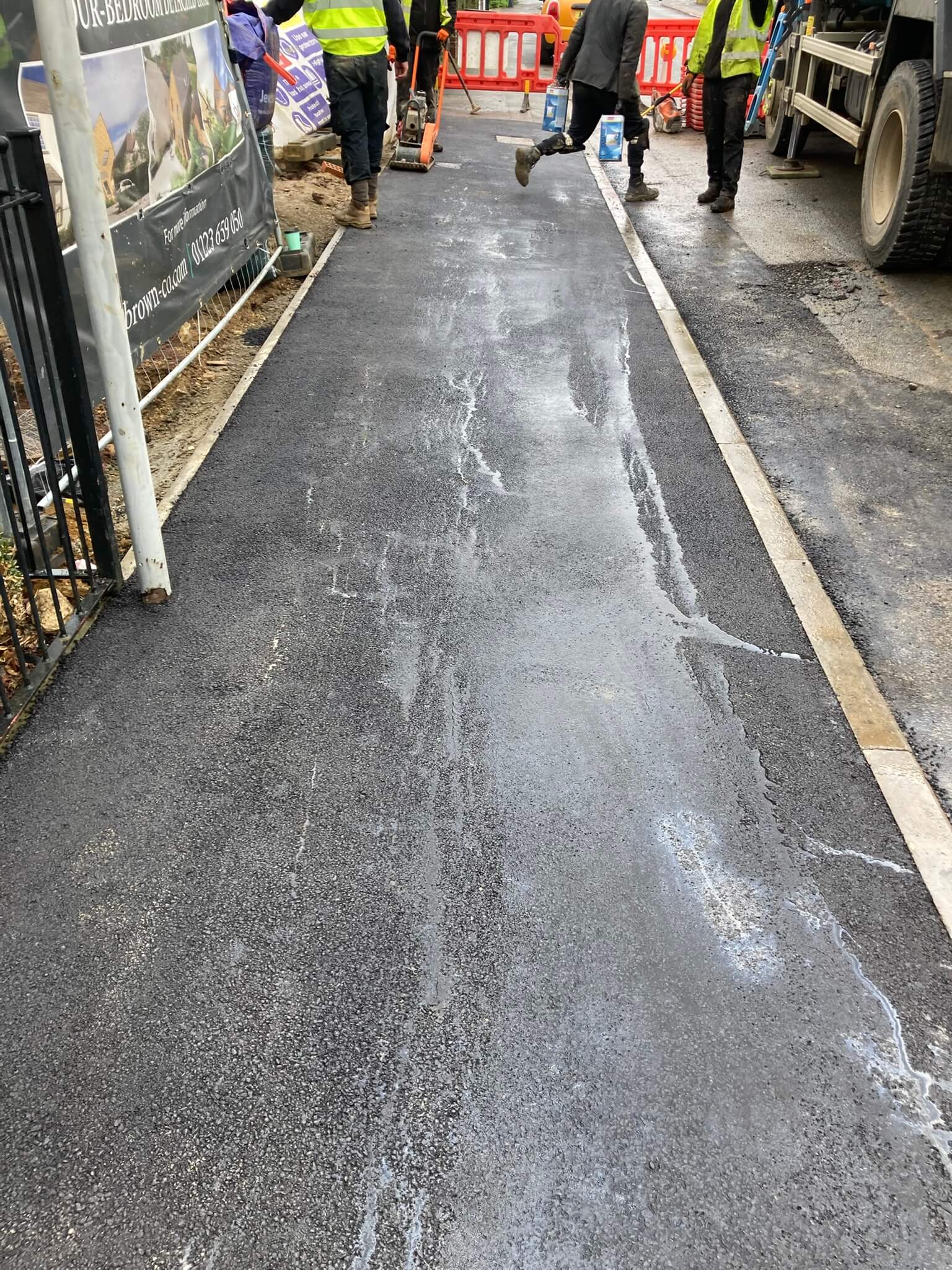
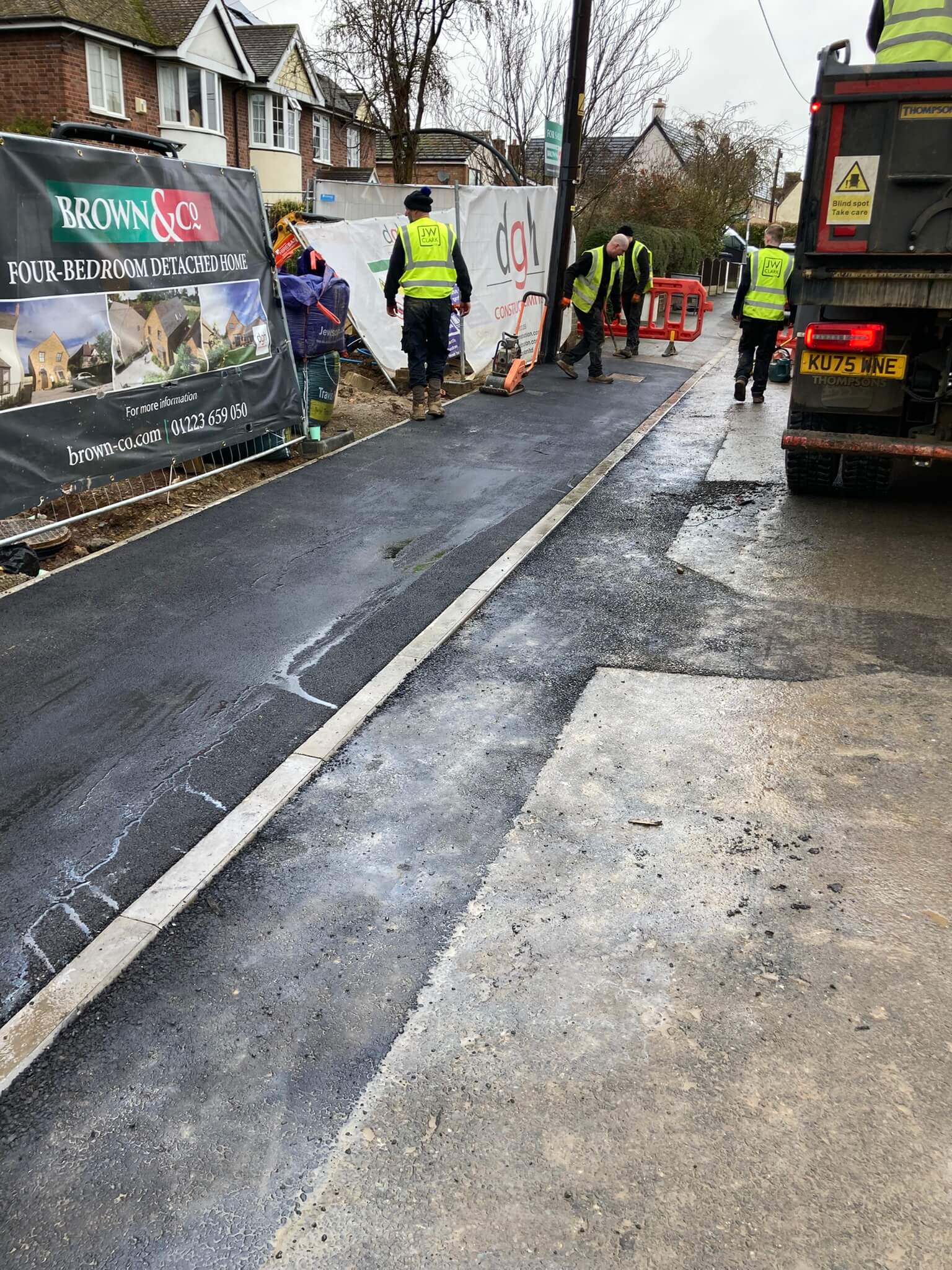
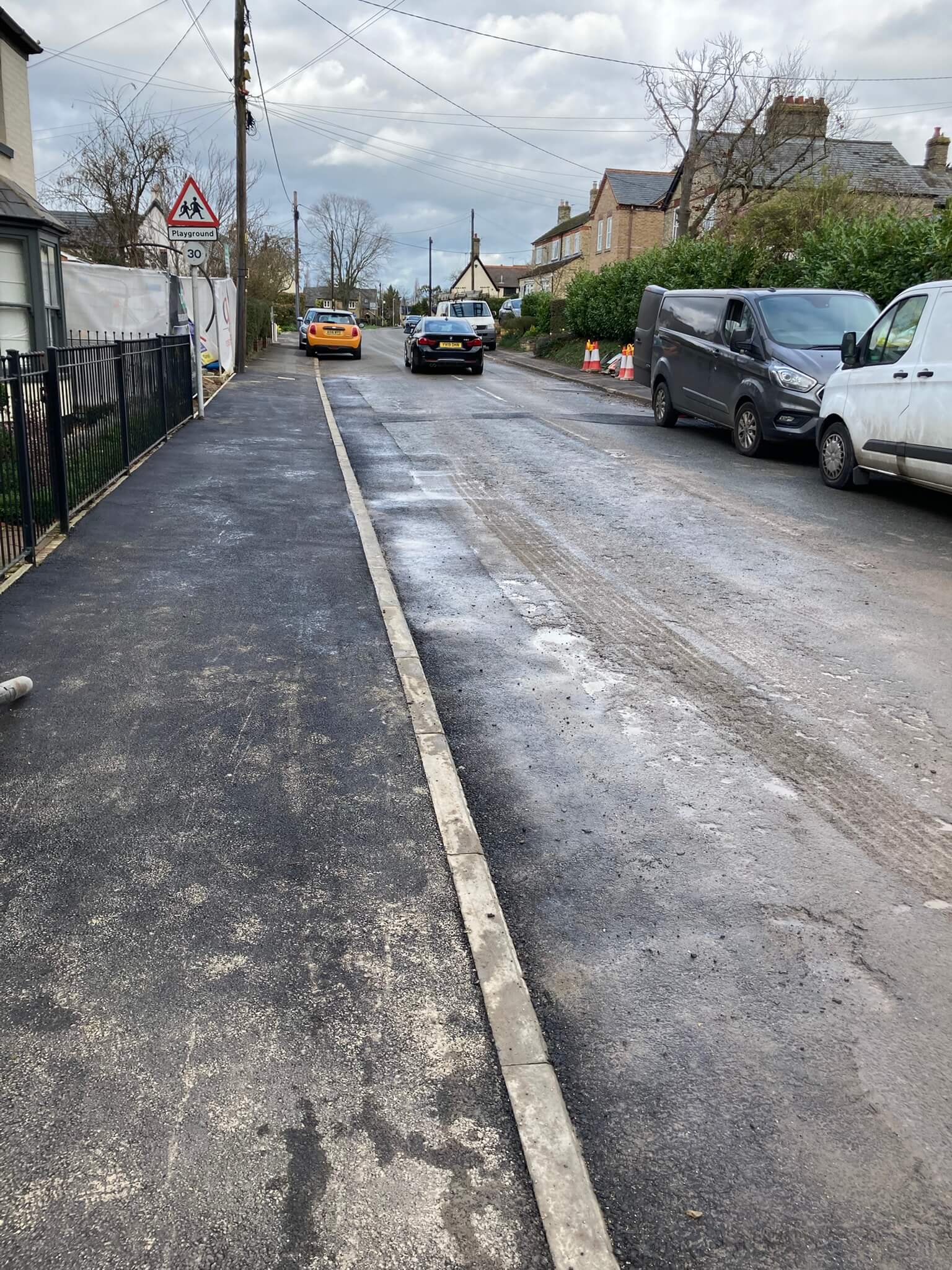
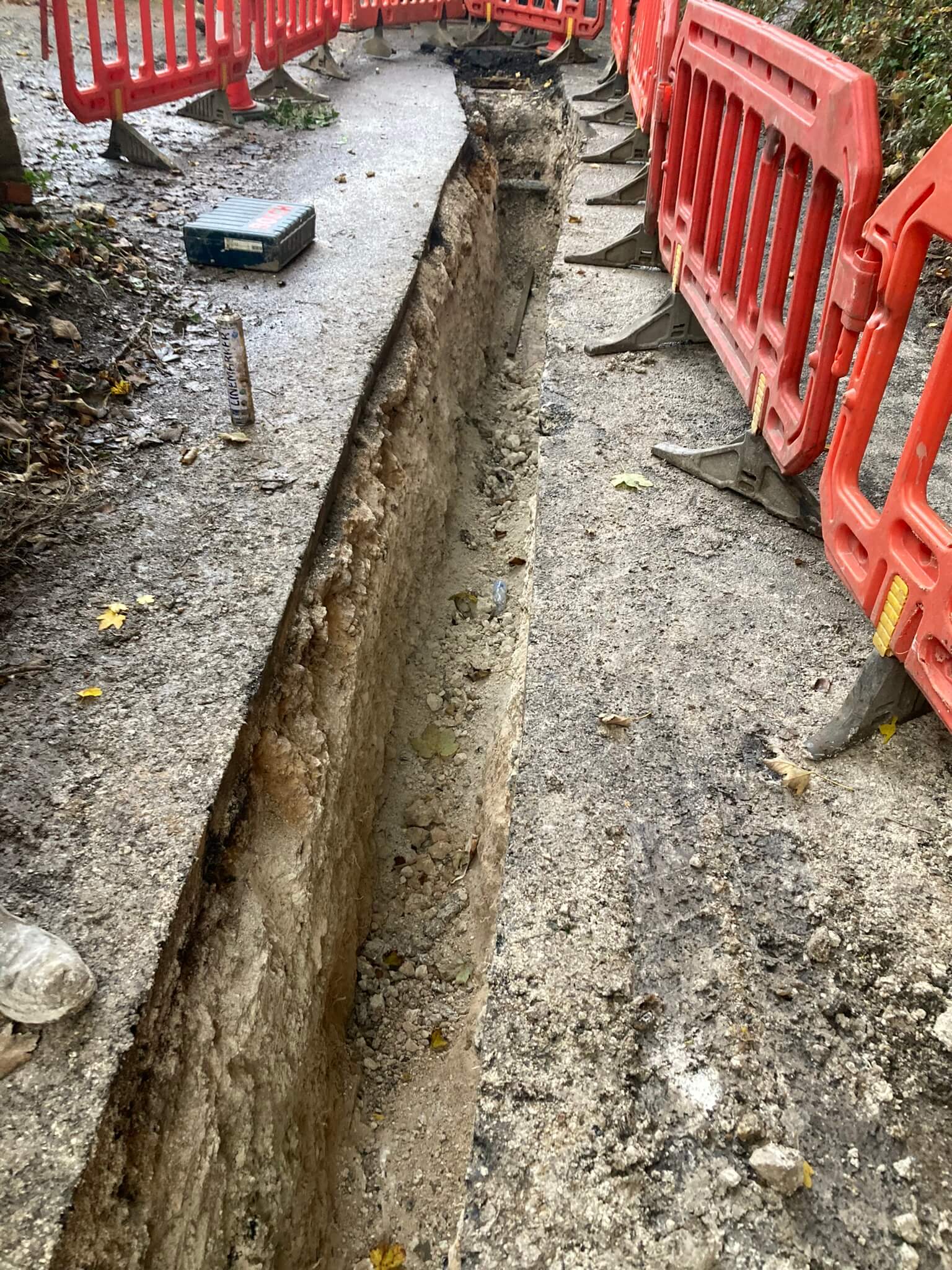
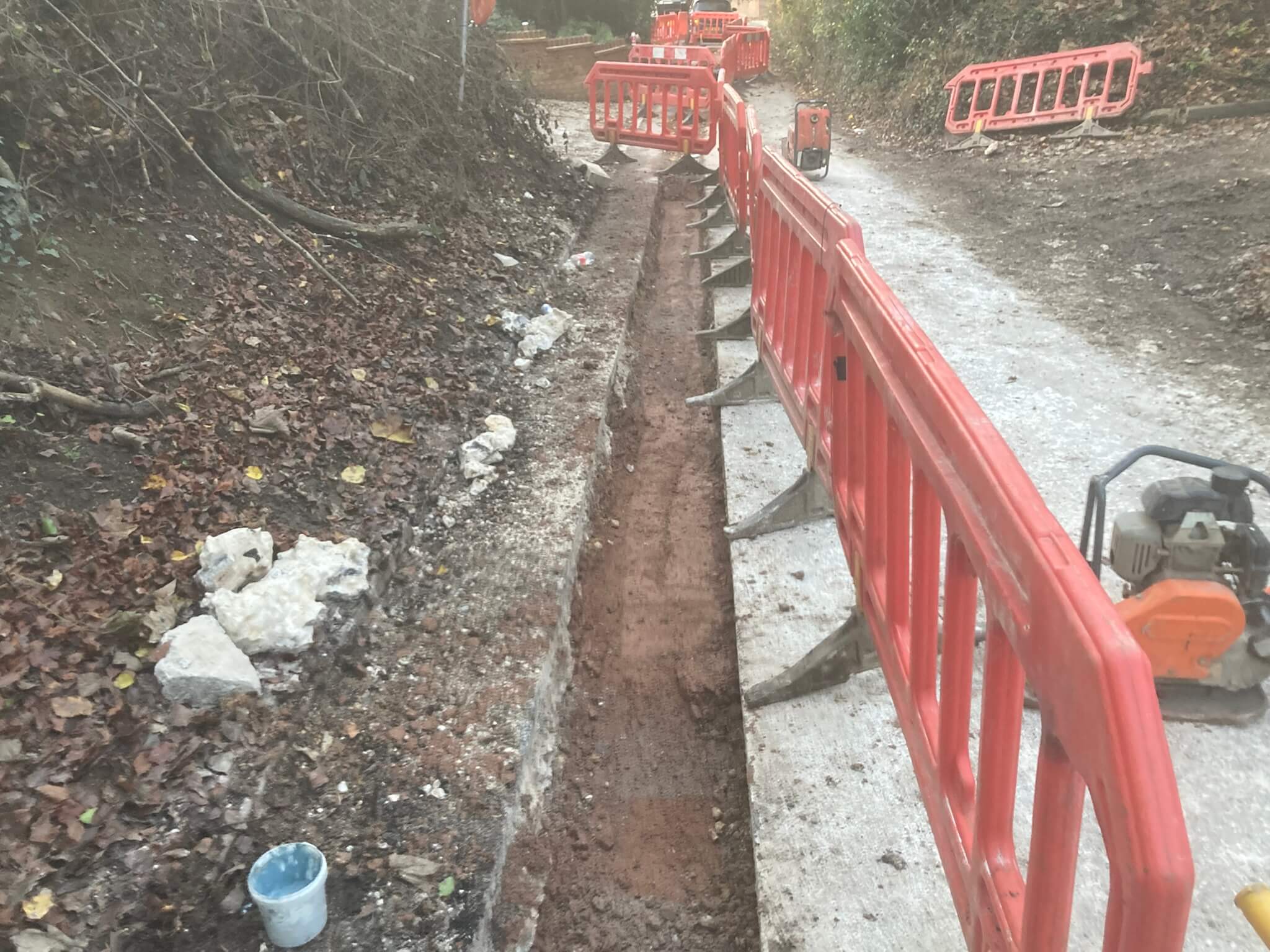
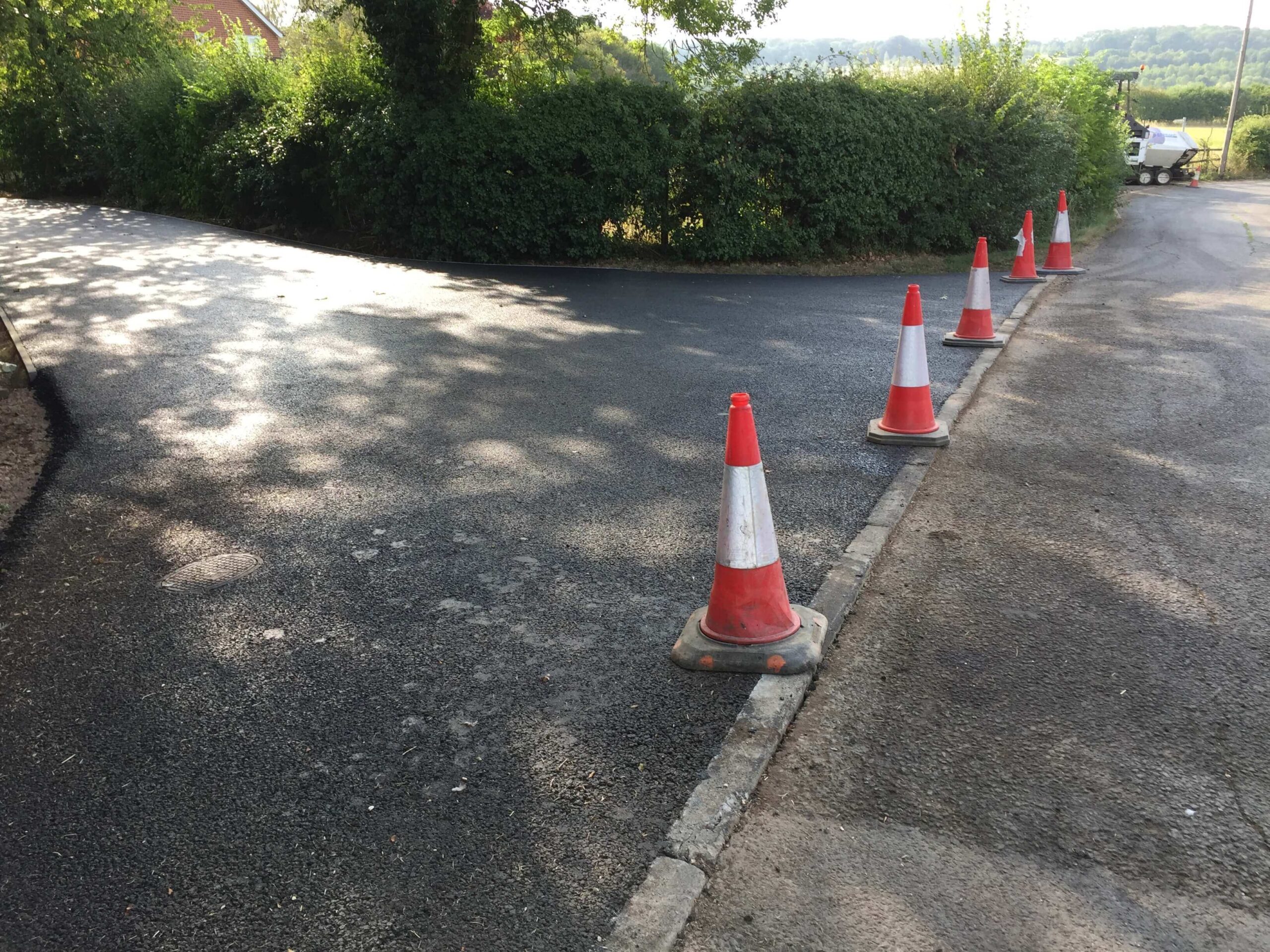
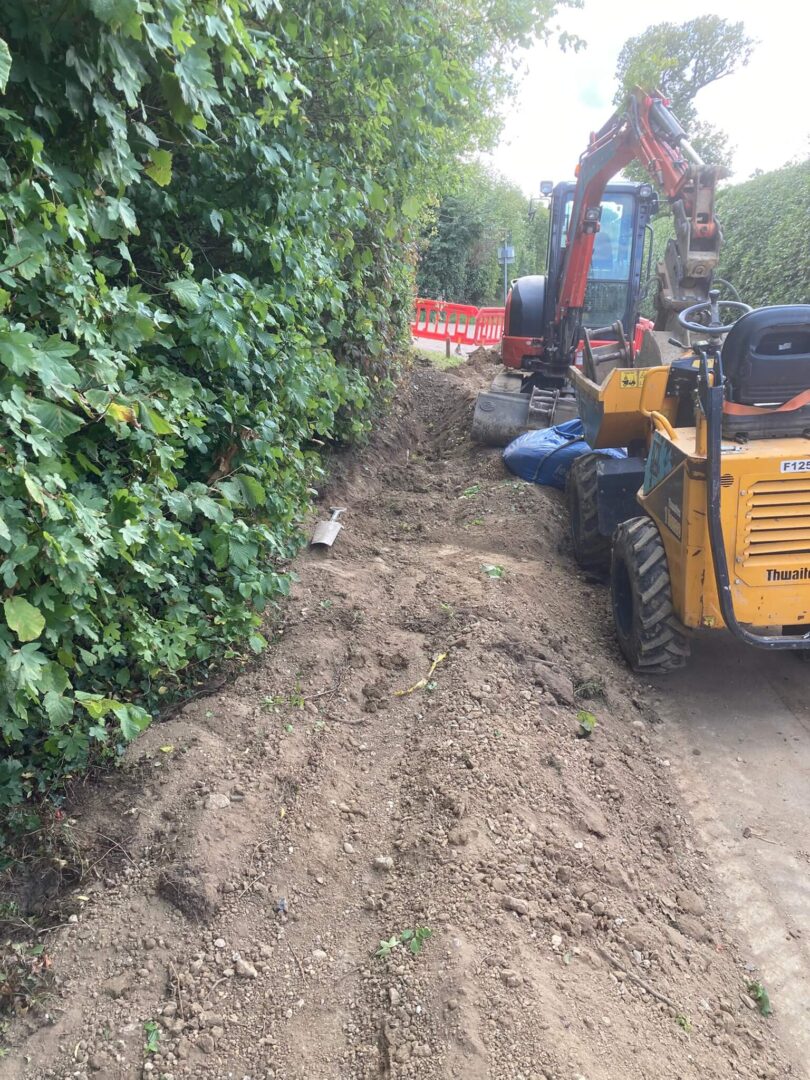
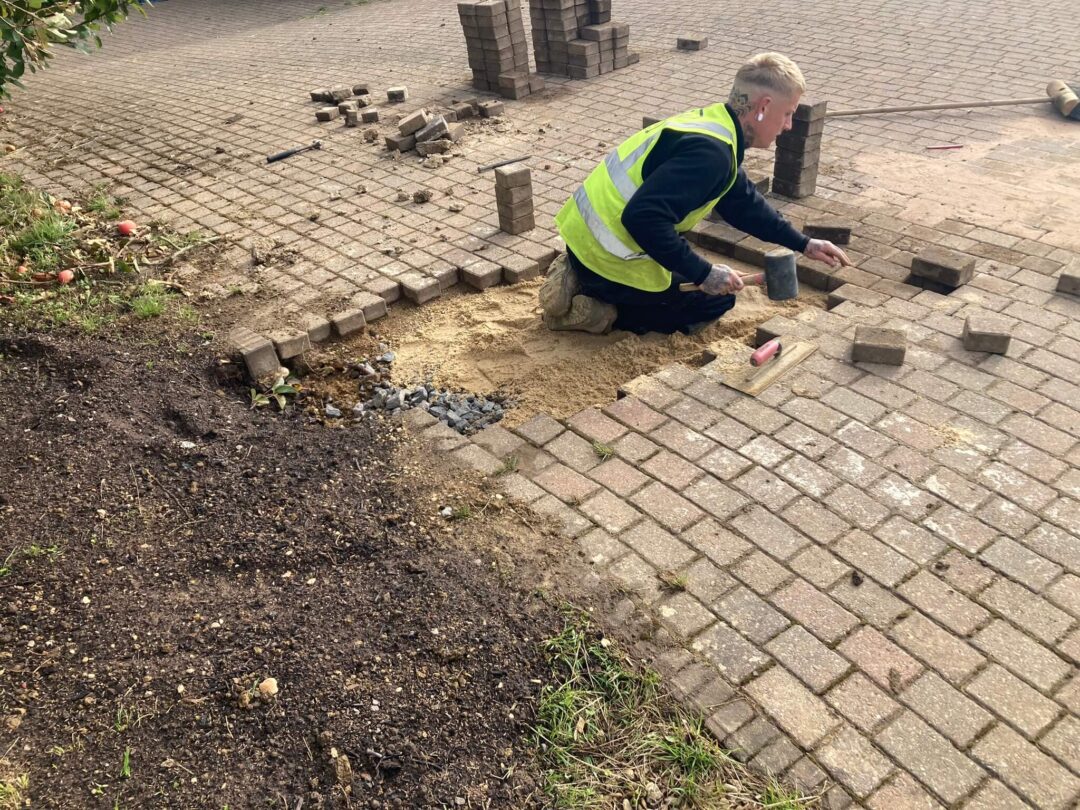
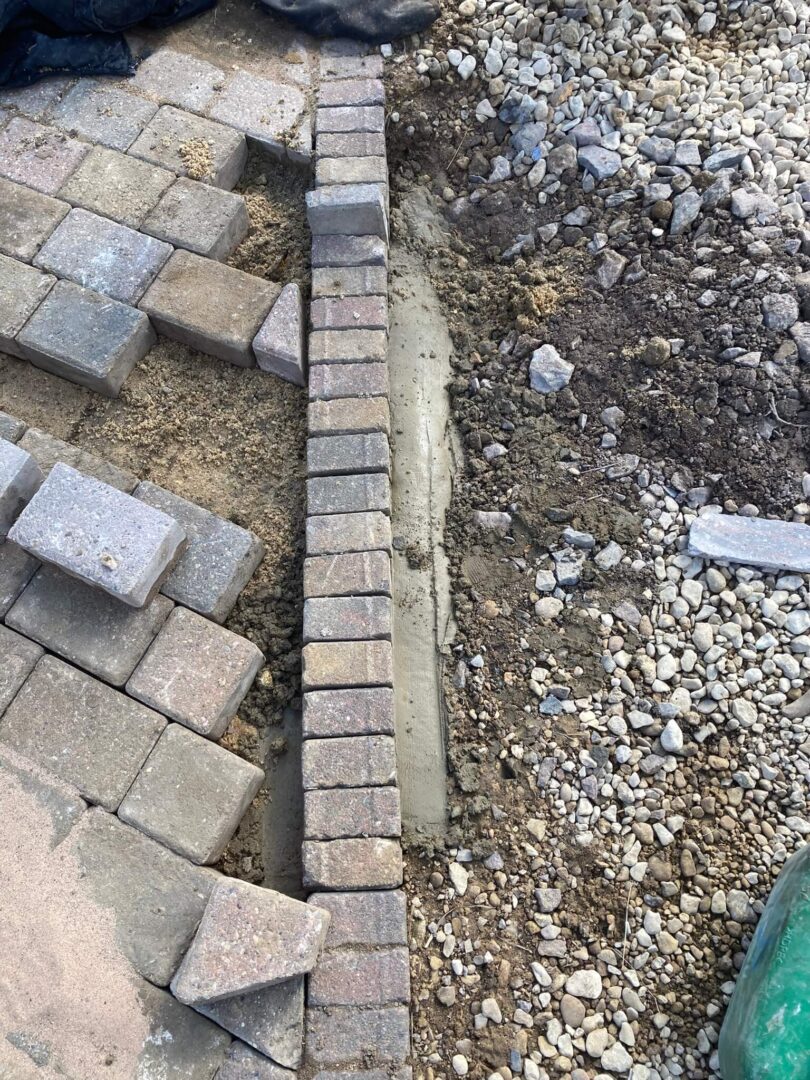
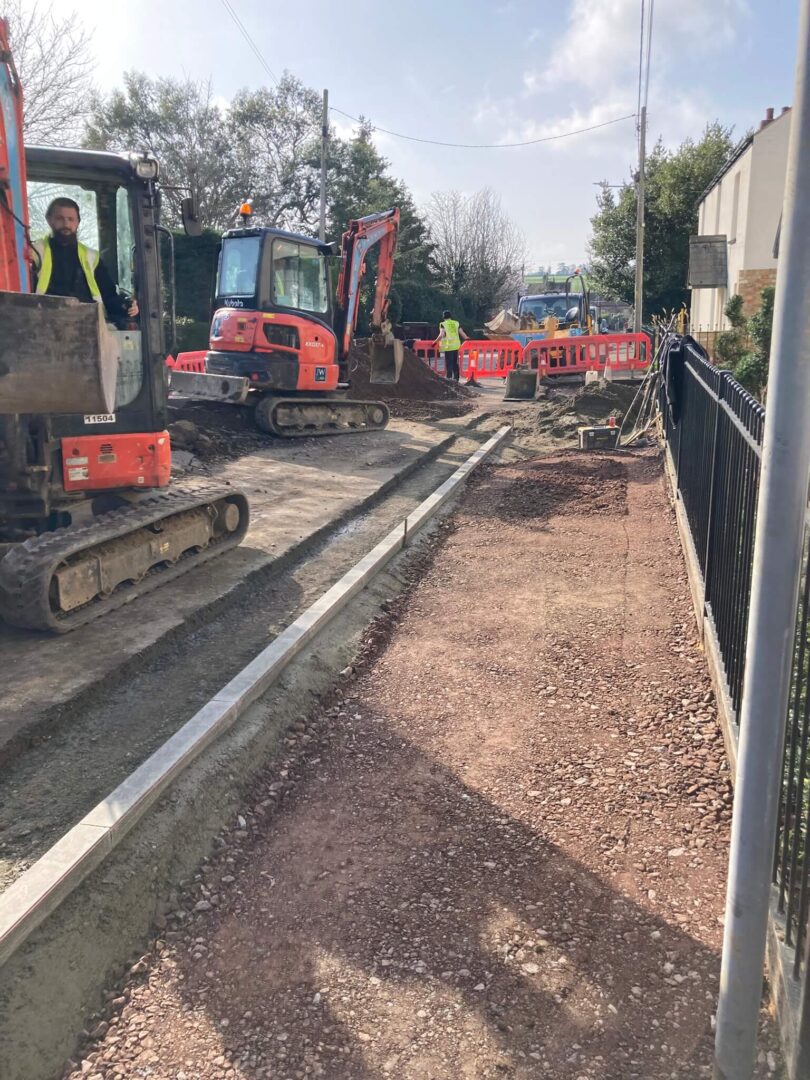
The groundwork within the site had already done by our customer, and the foul drainage brought to the site boundary. The surface water had been taken care of within the site by the customer’s own groundwork team. The path outside the site also had to be resurfaced as part of the agreement between the contractor, and Highways. This included taking out existing kerbs and relaying new 6×5 kerbs, along a 30-metre stretch of footpath, and required a Section 278 agreement, which our customer had already taken care of as far as the bulk of the admin work was concerned.

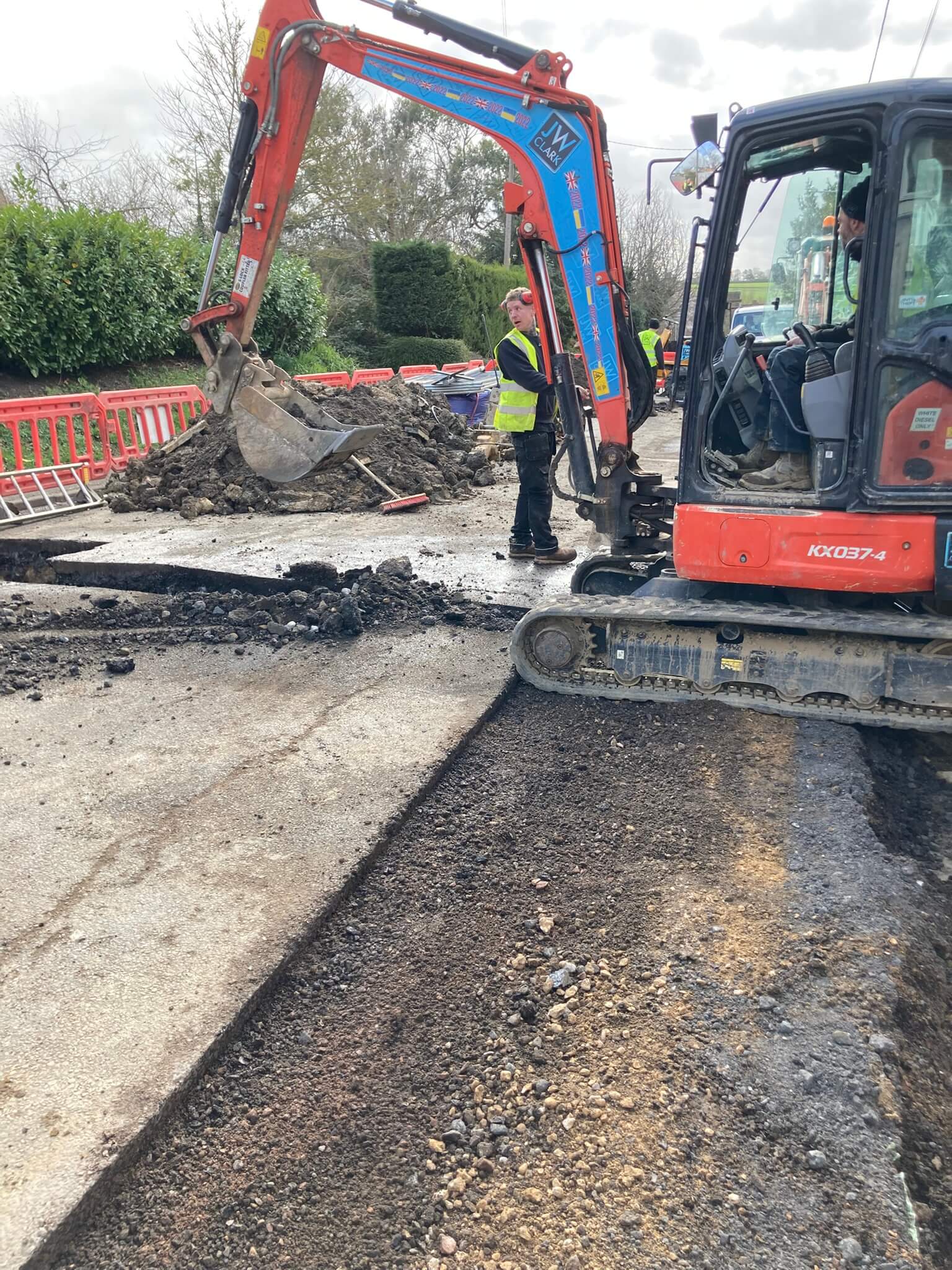
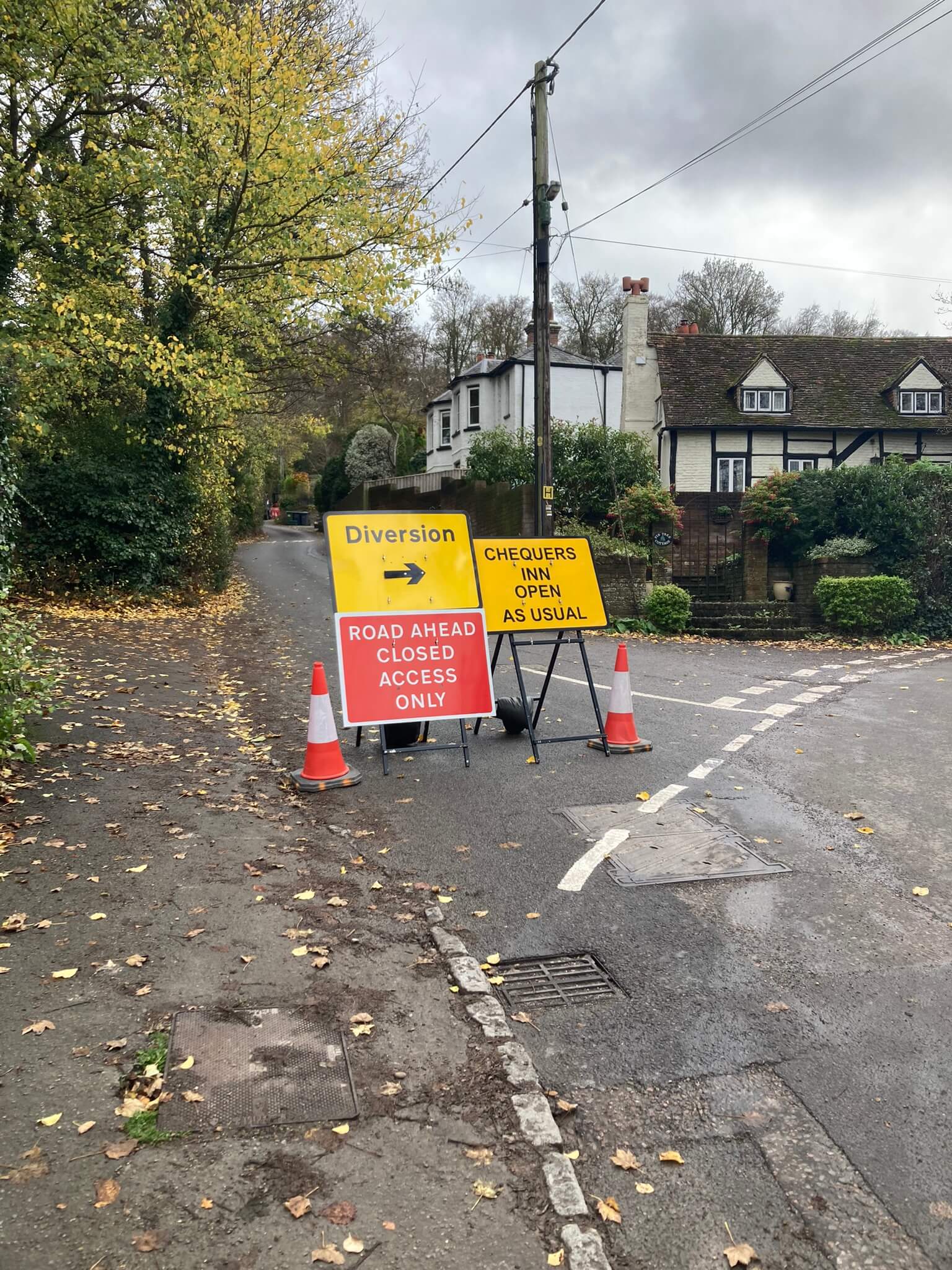
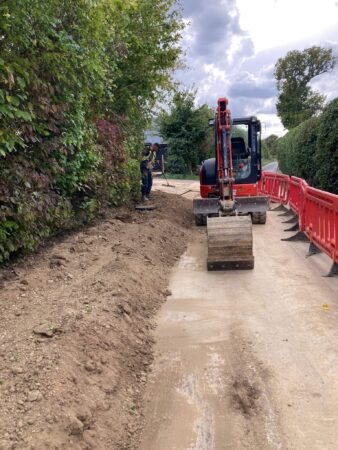
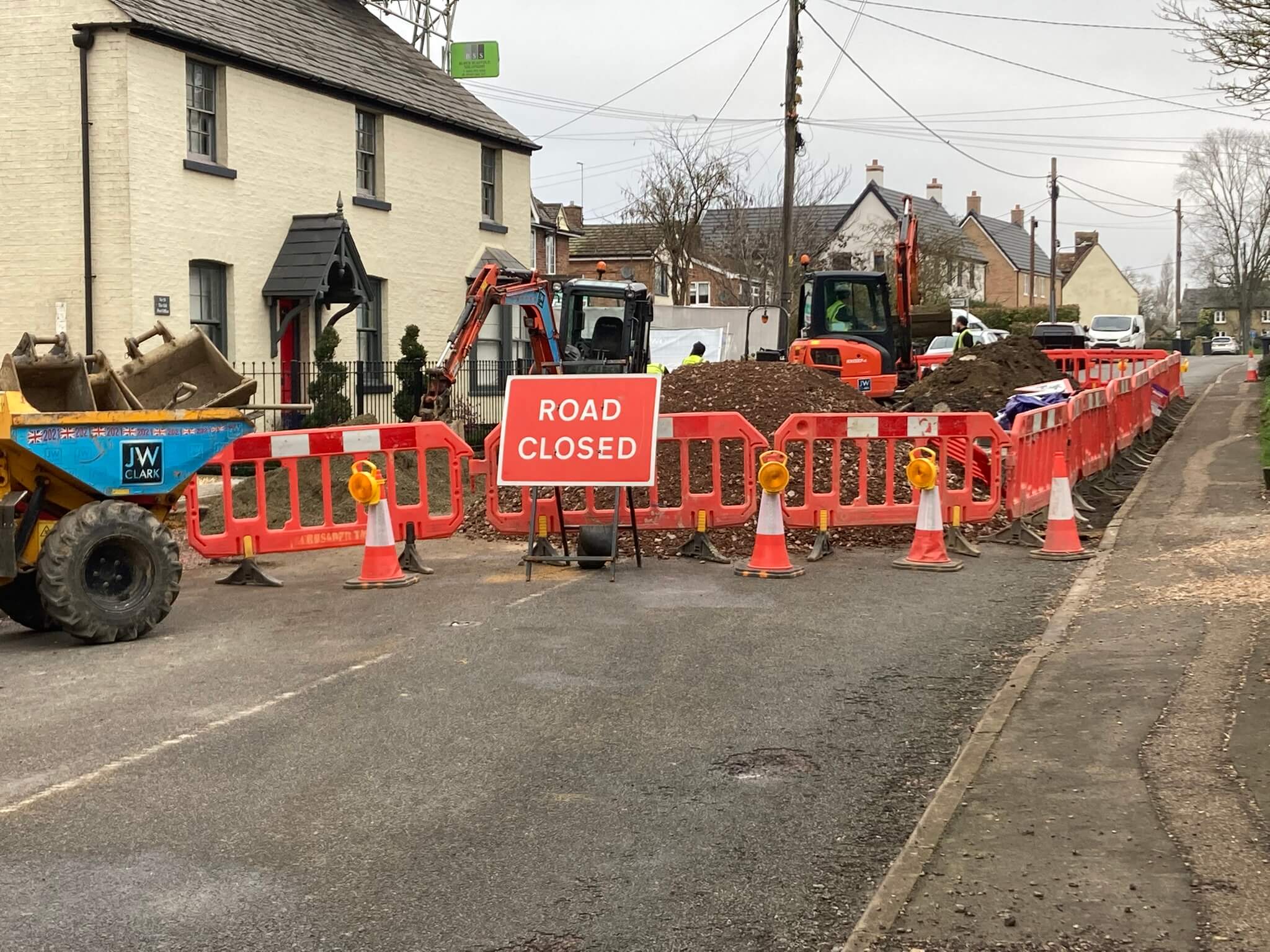
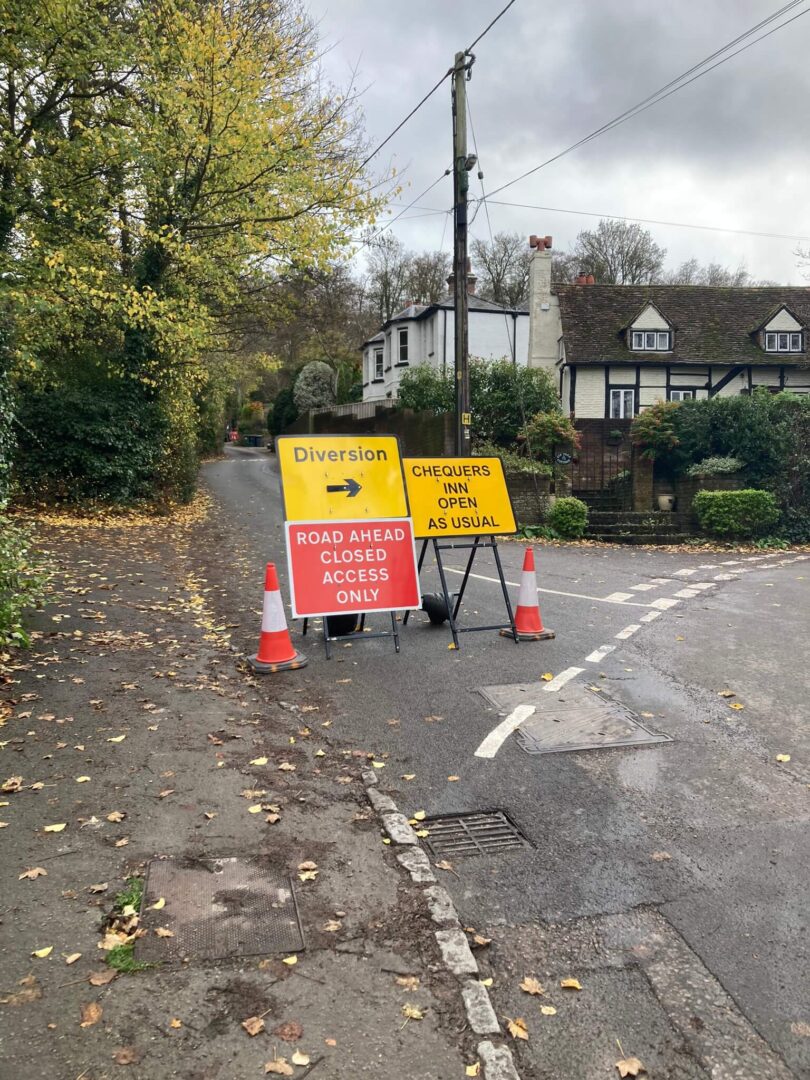
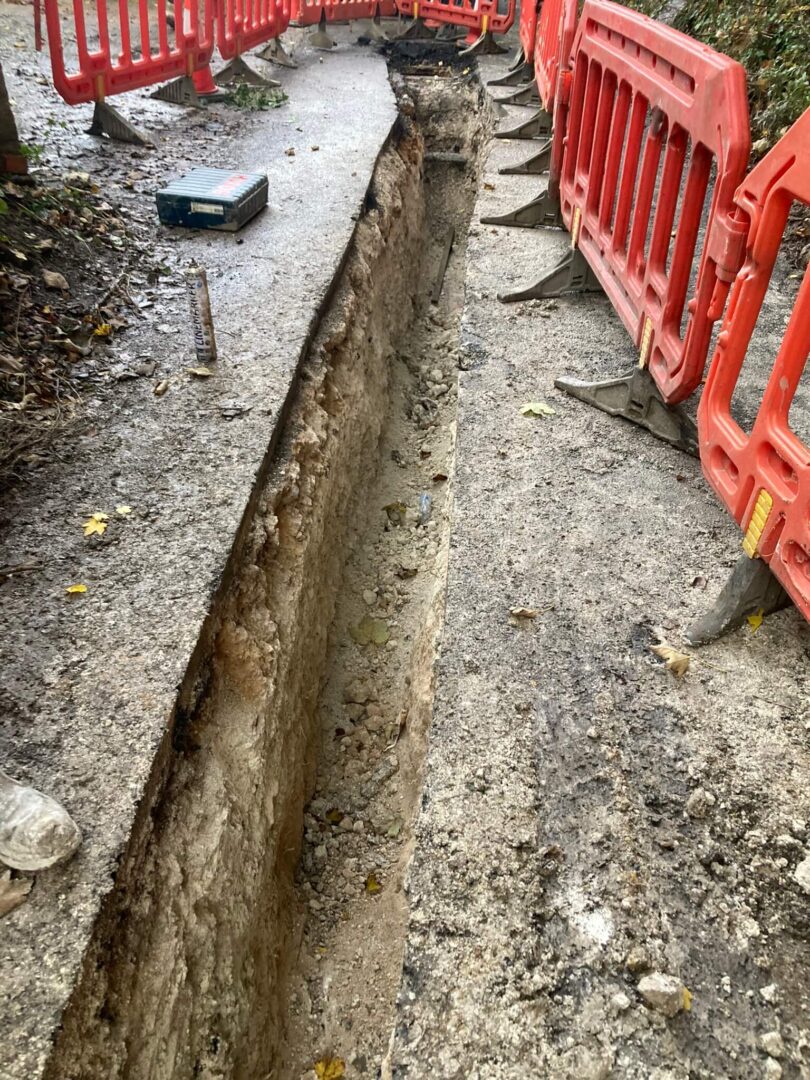
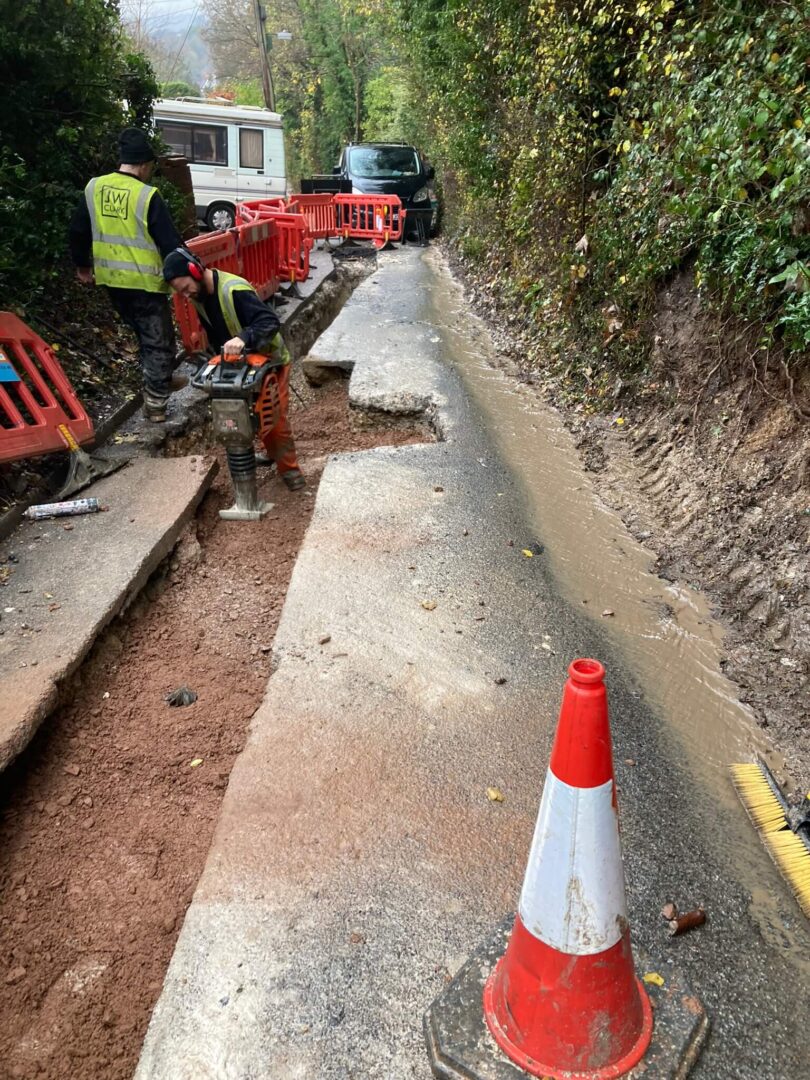
Despite the works being on the main road through Gt Paxton, we had no option but to close the road, and set up a diversion due to the width of the existing road. The excavation for the sewer connection alone, left less than 3m of clear carriageway for existing traffic, which is not enough from Highways’ point of view.

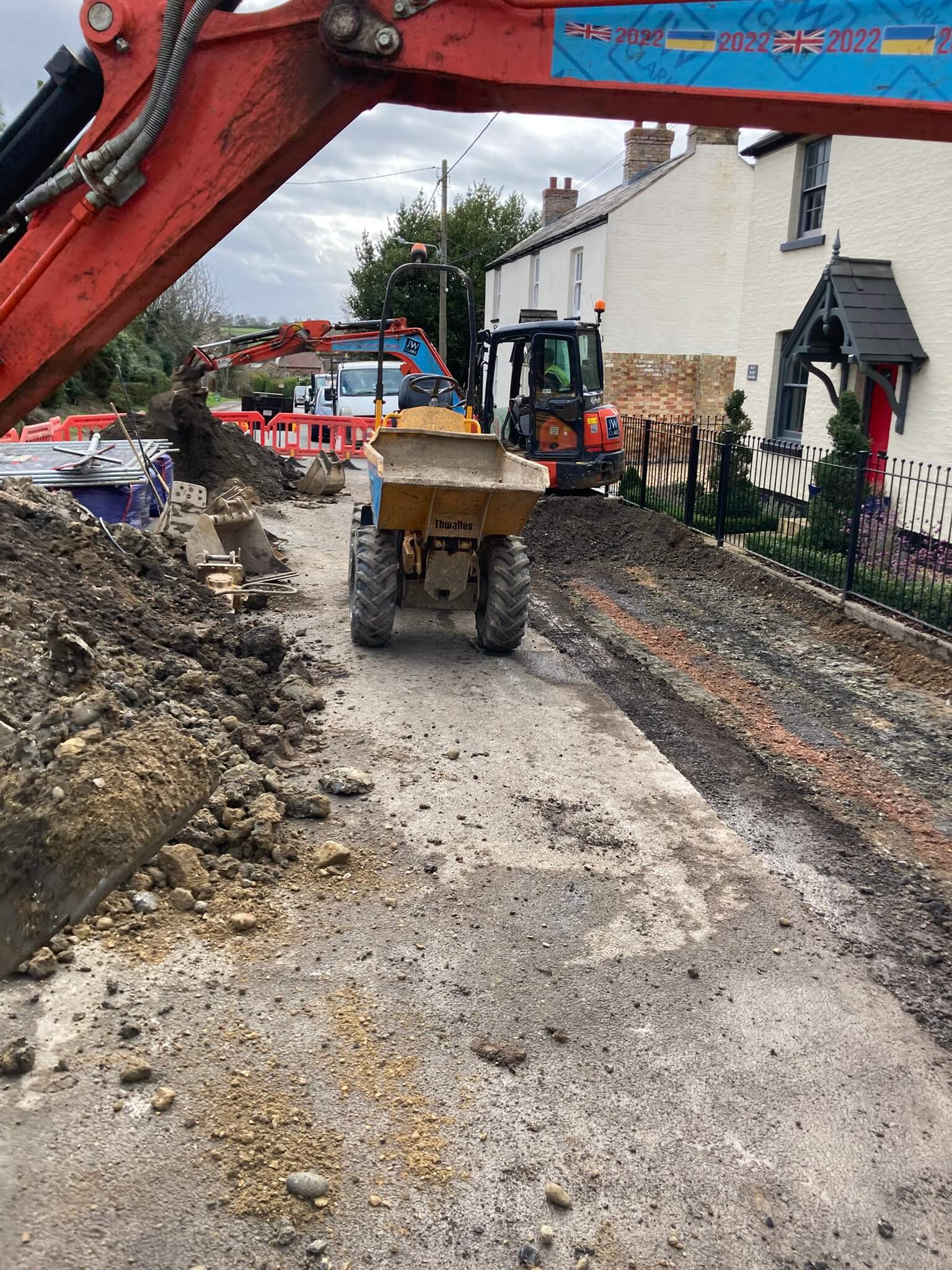
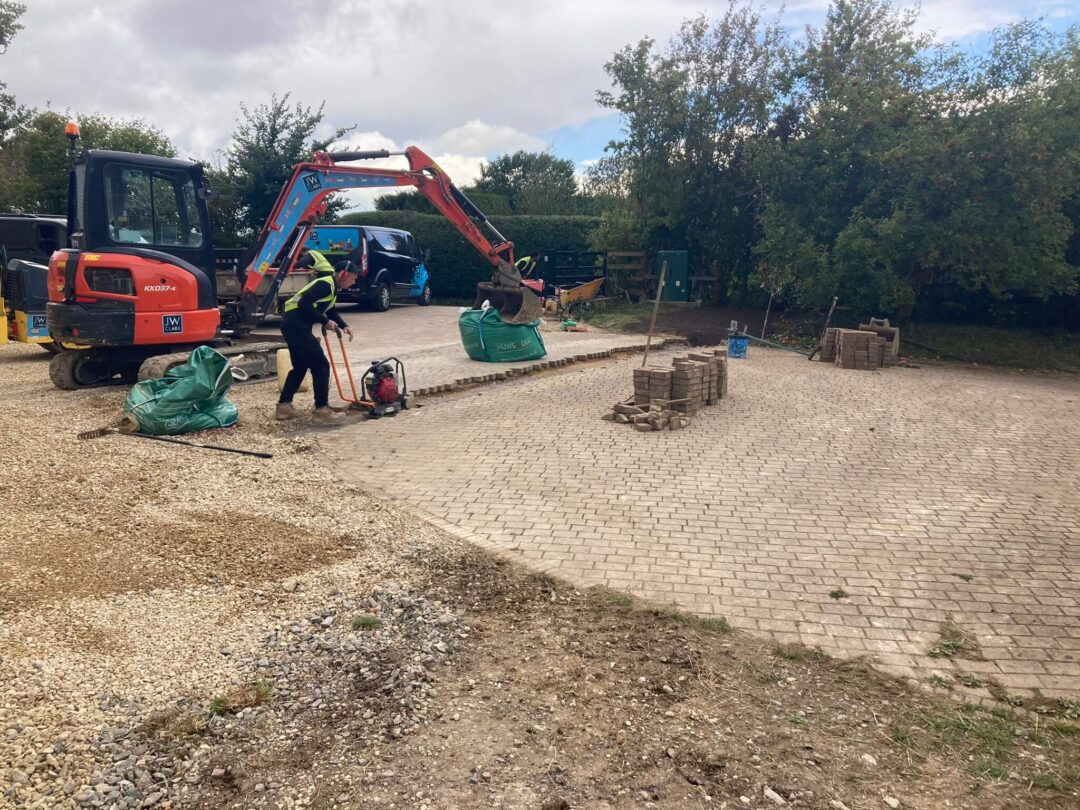
However, with the road closed, this also enabled us to carry out the works a lot quicker. We planned to have two teams on the project, one carrying out the sewer connection, and the other preparing for the S278 works. And then the two teams would come together at the end of the project for reinstatement of the sewer connection works and also the resurfacing of the new footpath.  
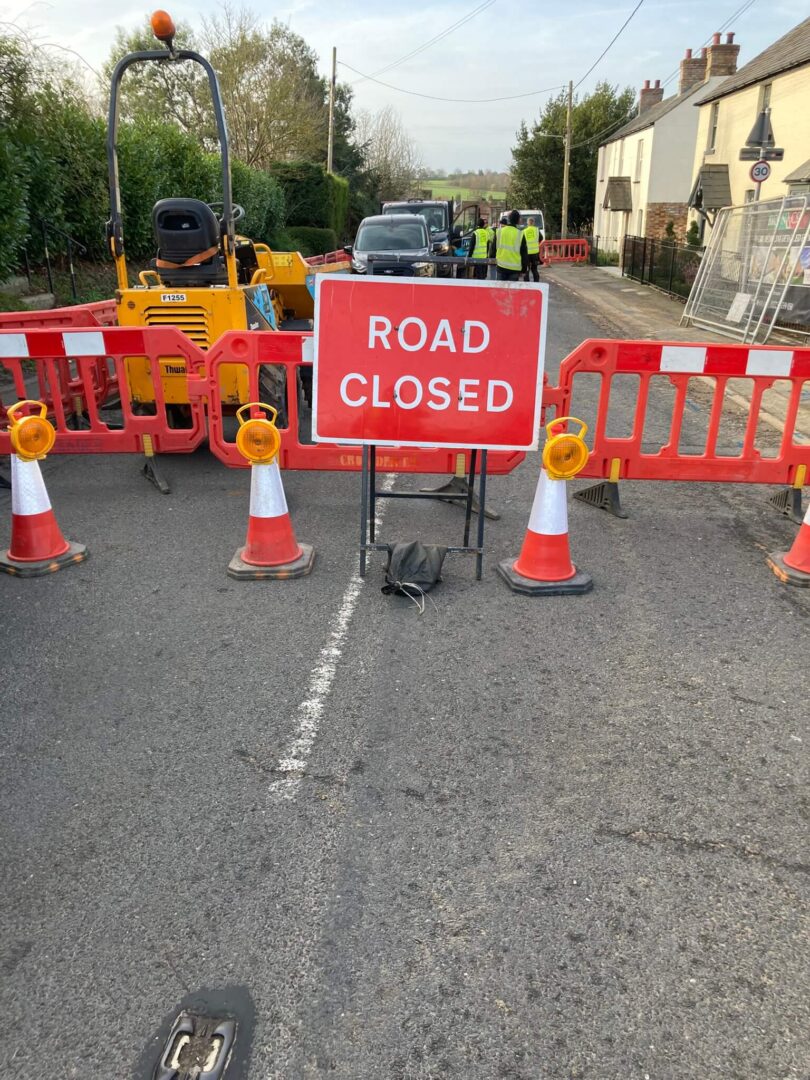
Although our customer had already done the bulk of the admin work in relation to the Section 278 works, we still had to apply to Highways to carry out the work, and this included traffic management applications, in this case a TTRO ( Temporary Traffic Regulation Order) which enabled us to close the road. As part of this application we have to have a physical diversion designed by a third party, for agreement by Highways. For the sewer connection, we had to apply for a Section 50 from Highways. Our customer already had already done the Section 106 to Anglian Water, which is the application to connect to their public sewer.

During the applications process, our customer suggested that we allow Anglian Water to collaborate with them, with regard to the ‘clean water’ connection for the site. This meant that we would work alongside them on the same road closure, in order that the road wouldn’t have to be closed a second time, for the Anglian Water works.
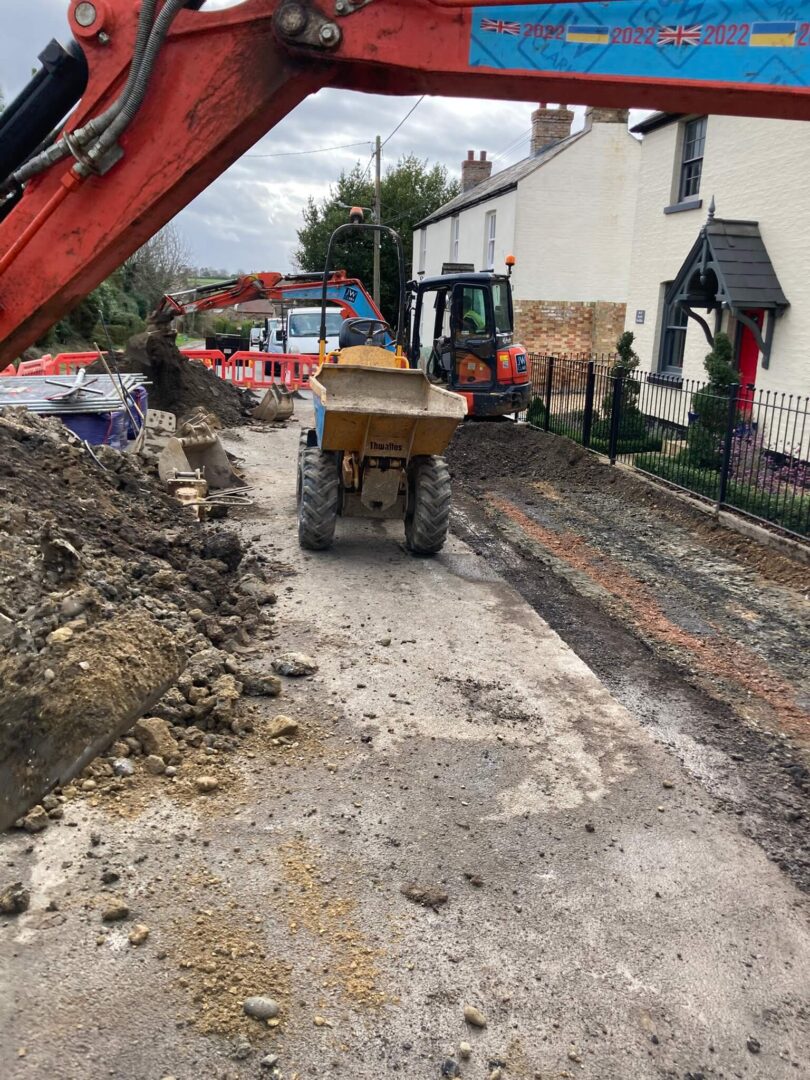
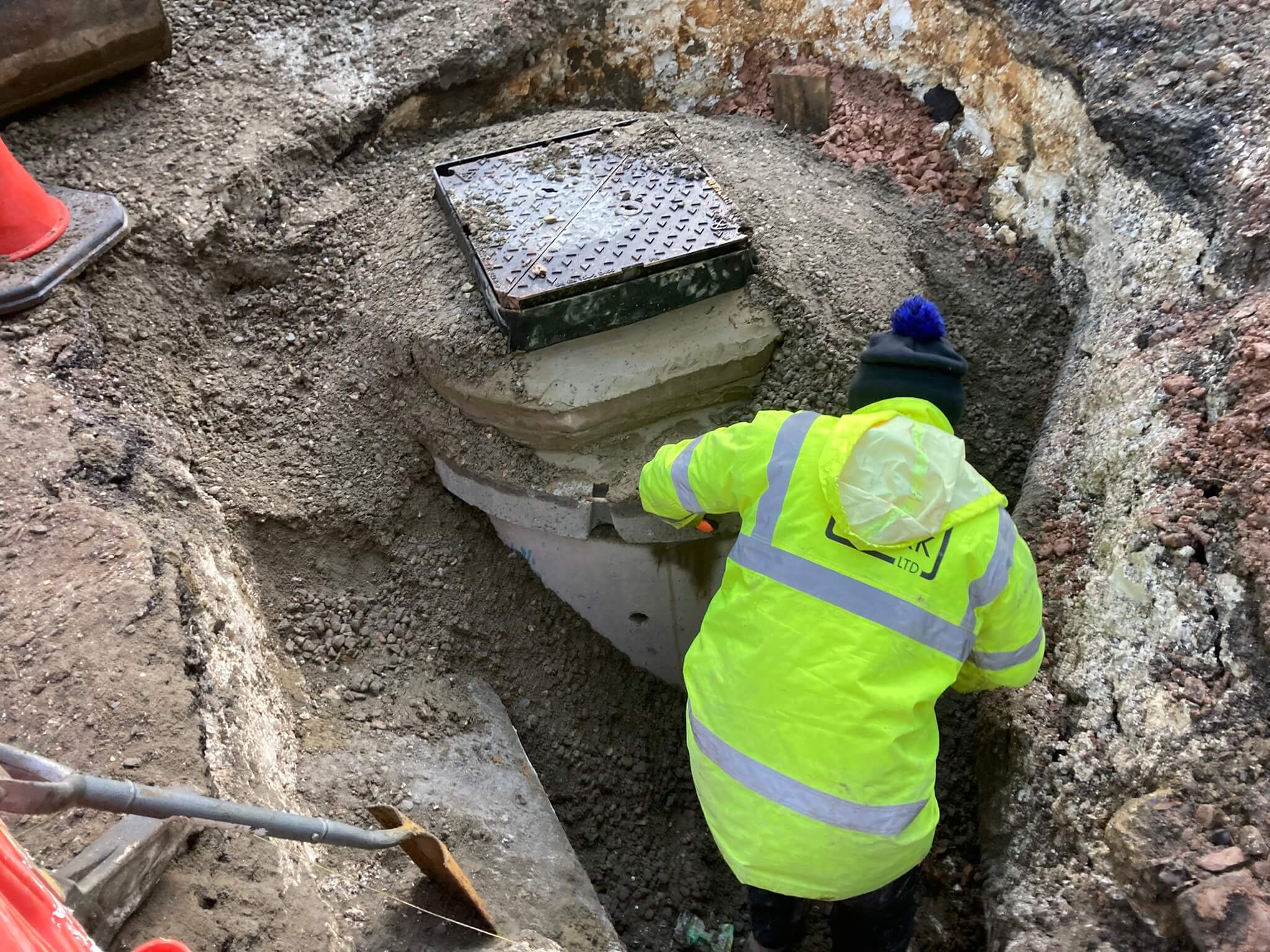
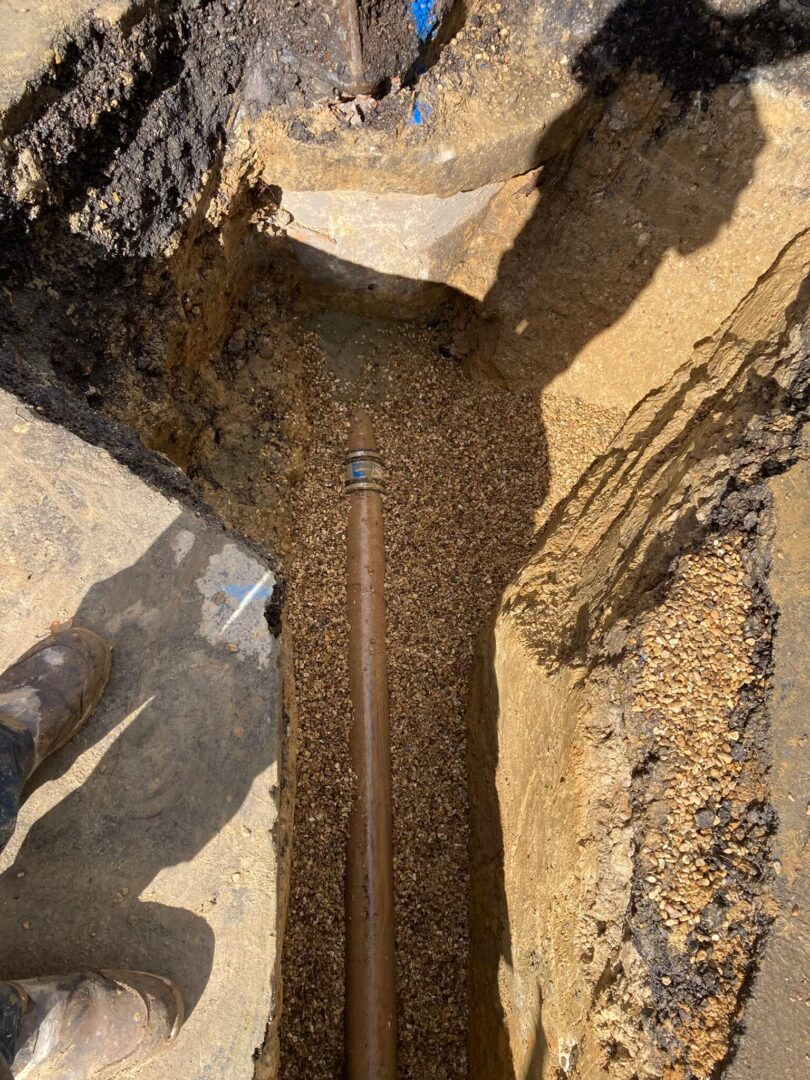
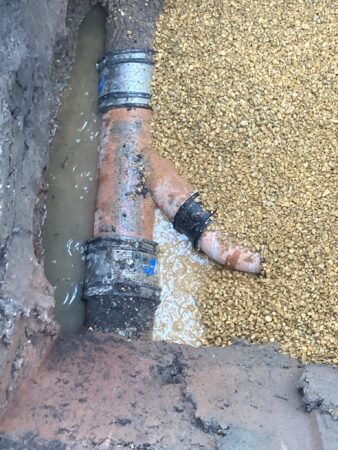
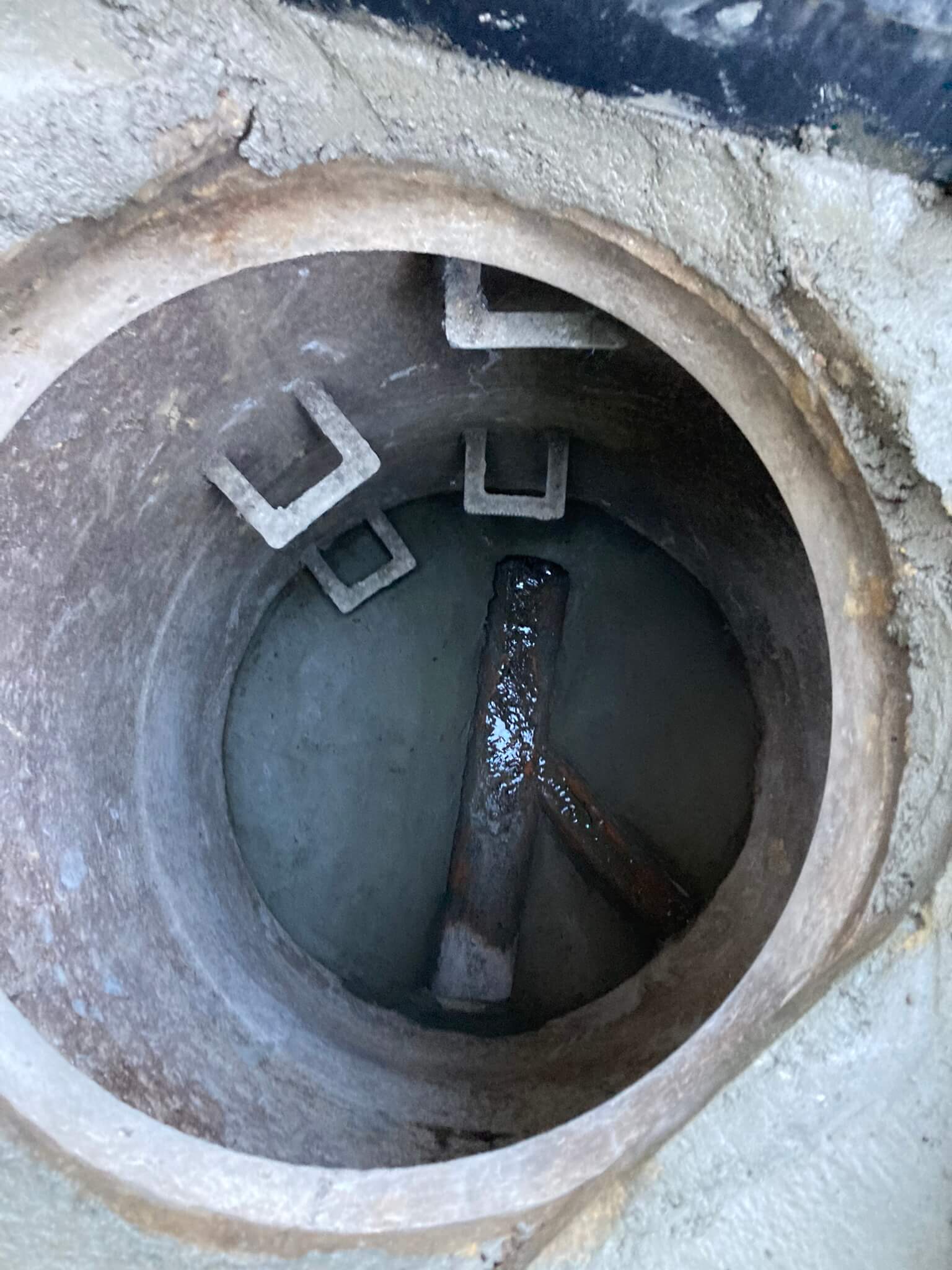
We managed to make the connection onto the public sewer on Day 2. The method of connection detailed in the Section 106 was ‘connection by junction insertion’, as this was only for one single property. 

With the connection made and approved by Anglian Water that same day, we continued to excavate for and lay pipework to the boundary with the site. 

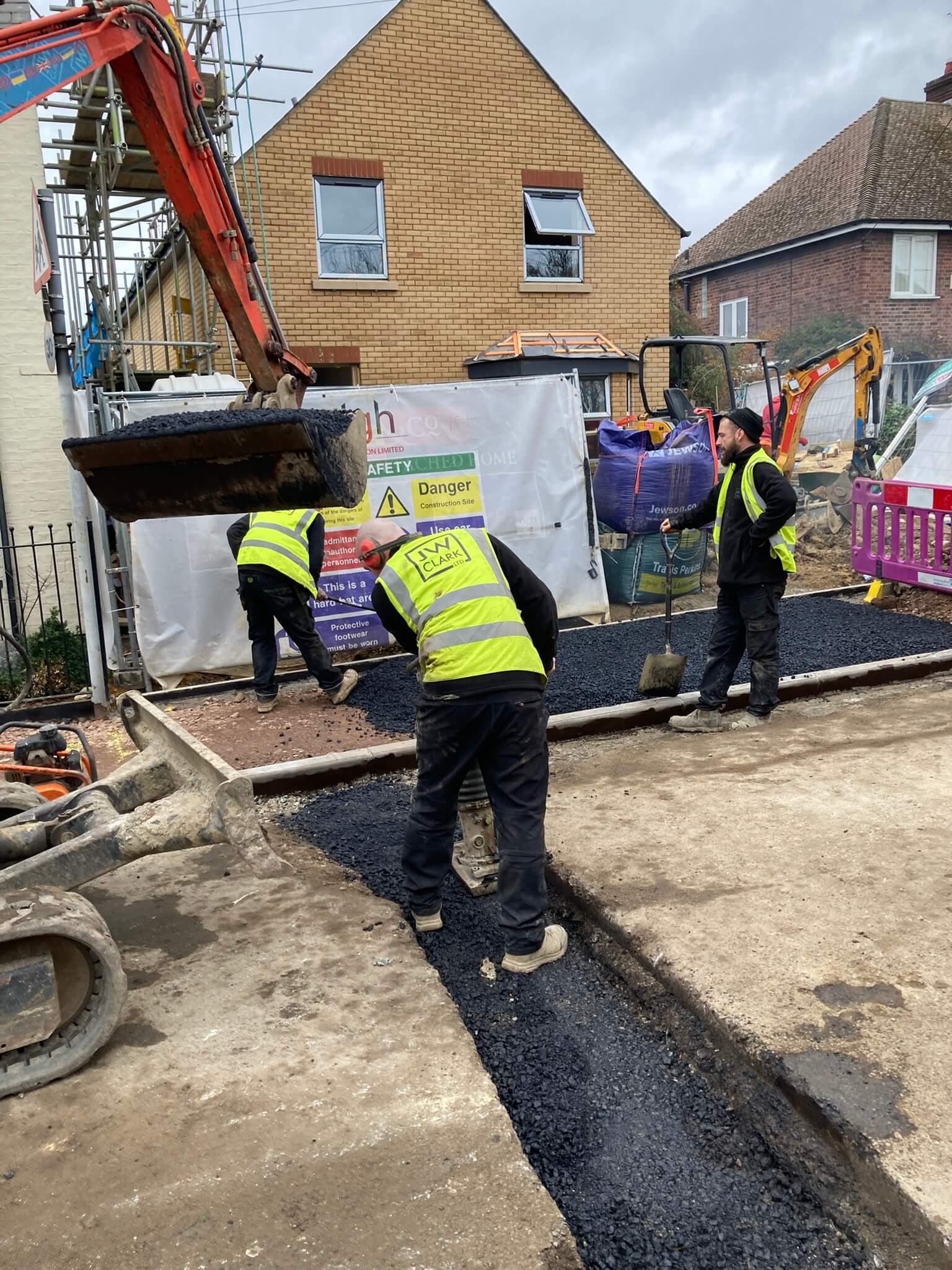
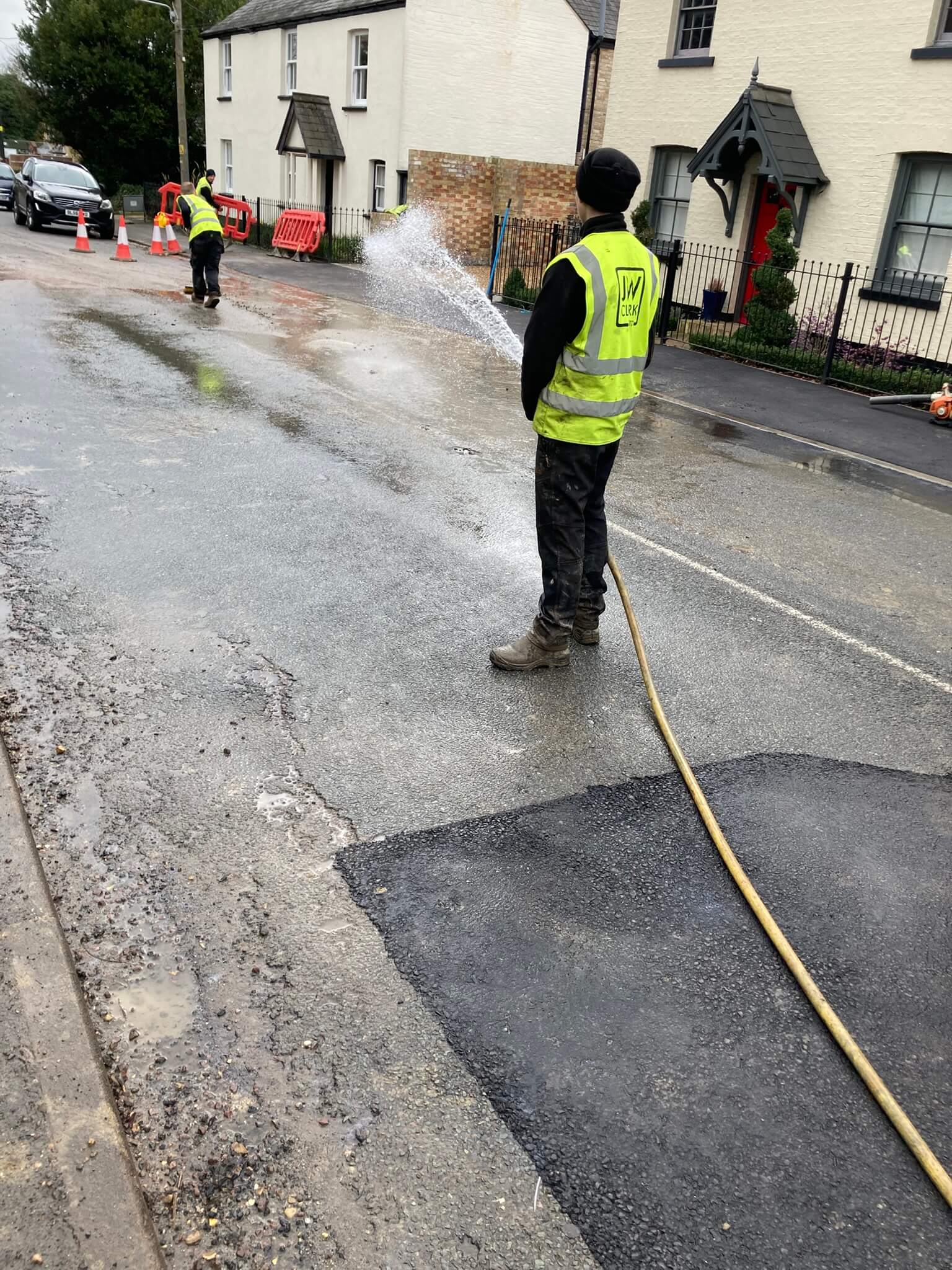
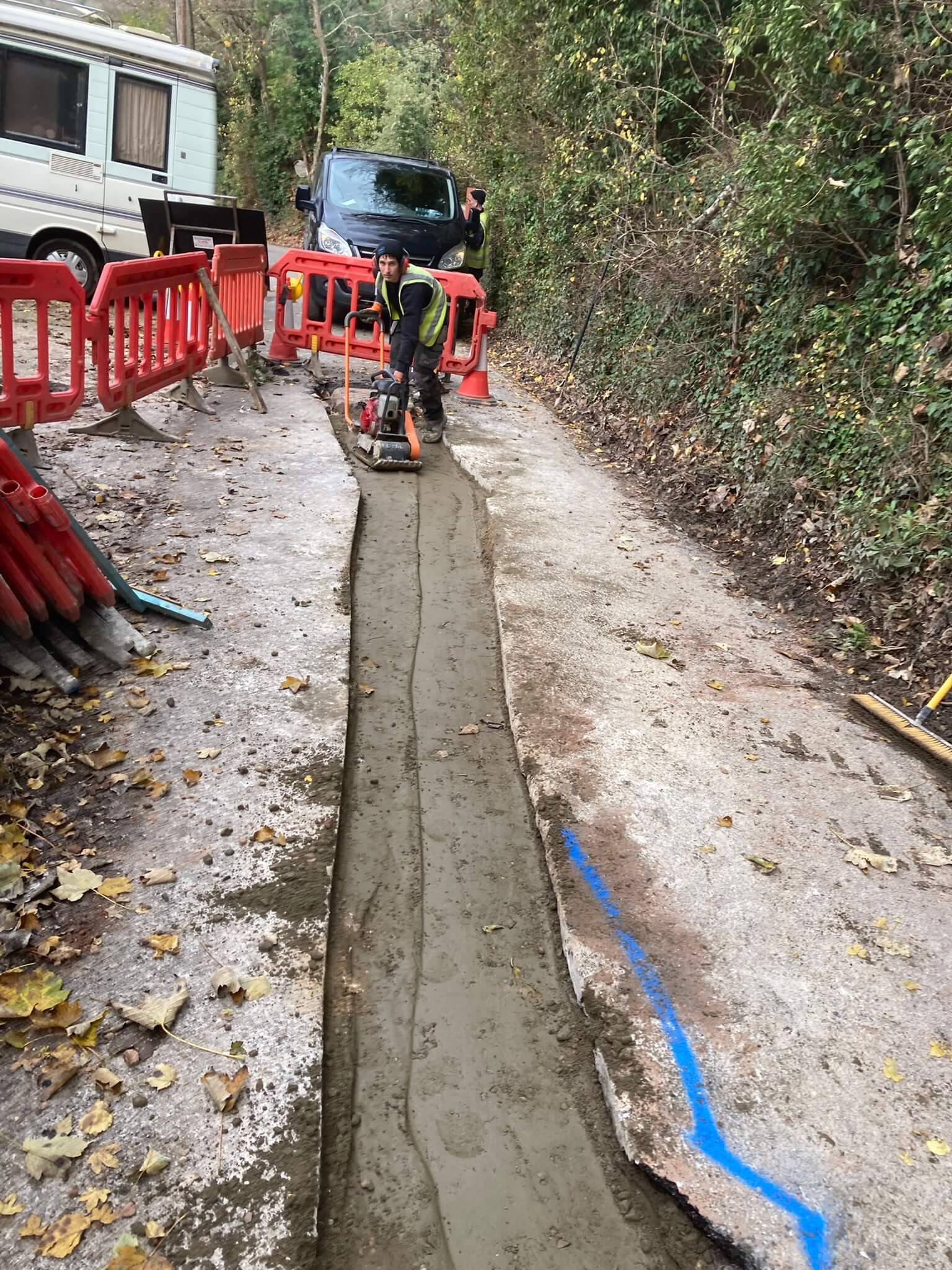
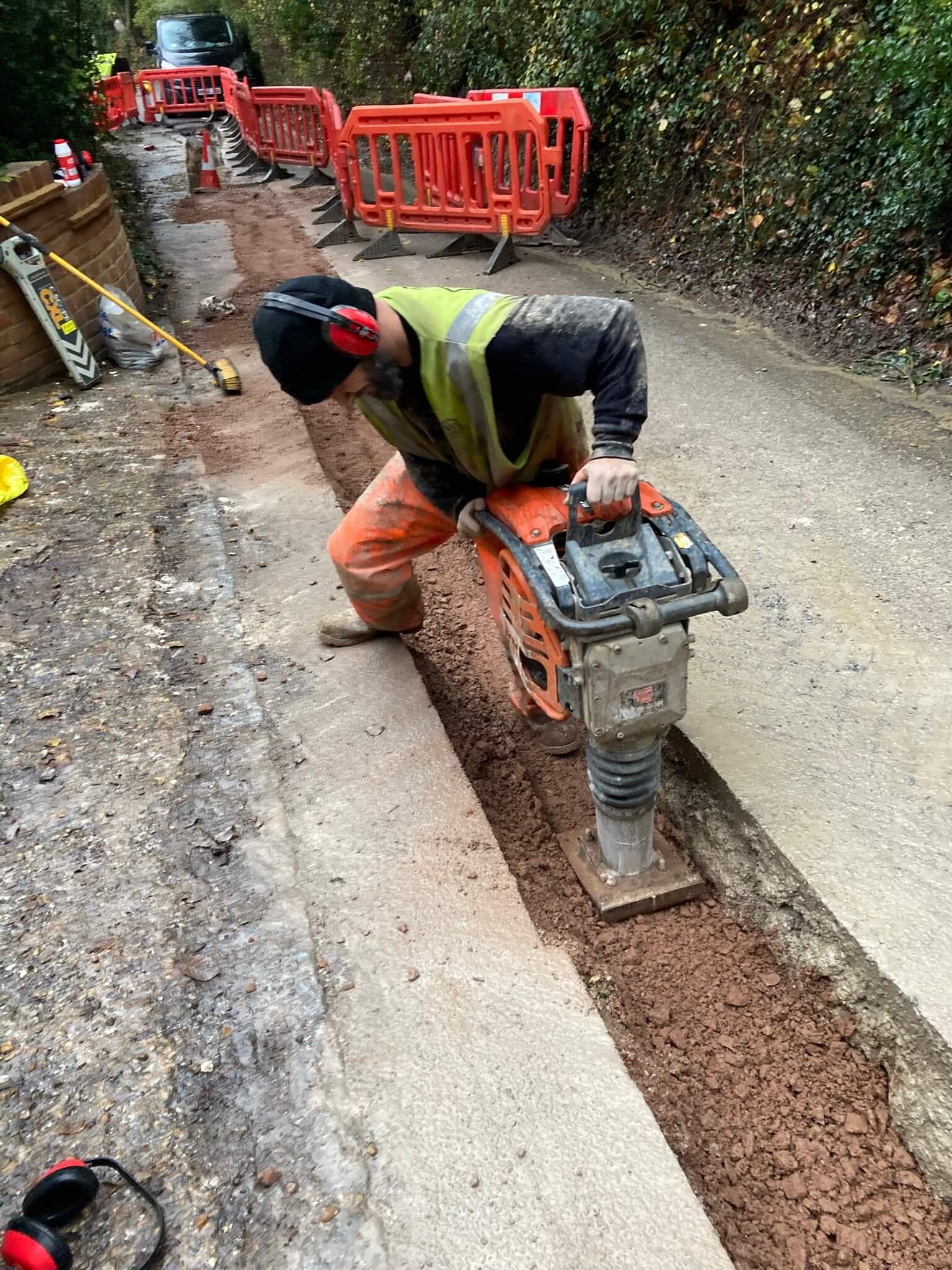
The connection to the public sewer and all pipework was complete by the end of Day 3. On Day 4 we backfilled and compacted to Highways’ spec, in preparation for final tarmac reinstatement on Day 5
 

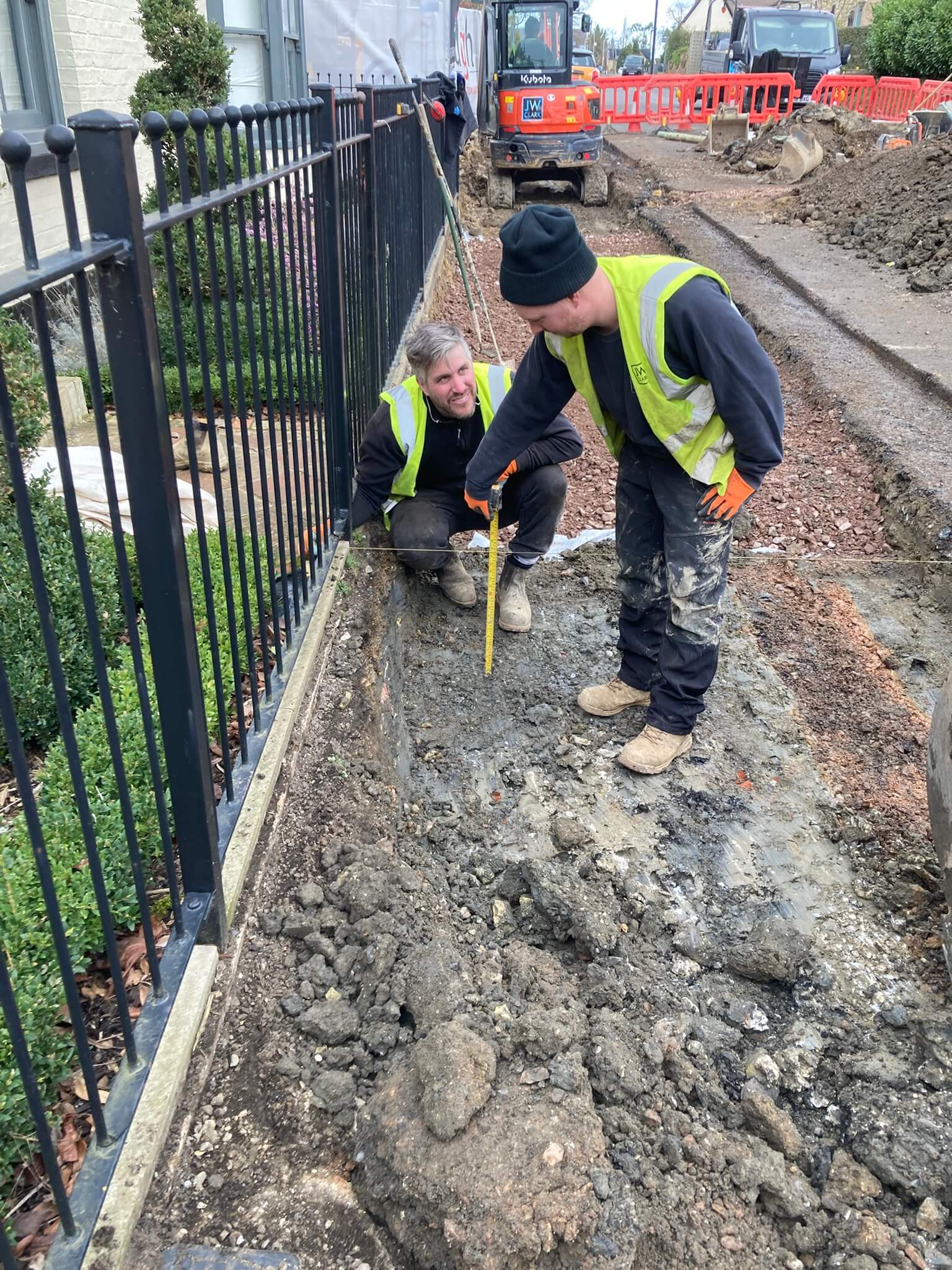
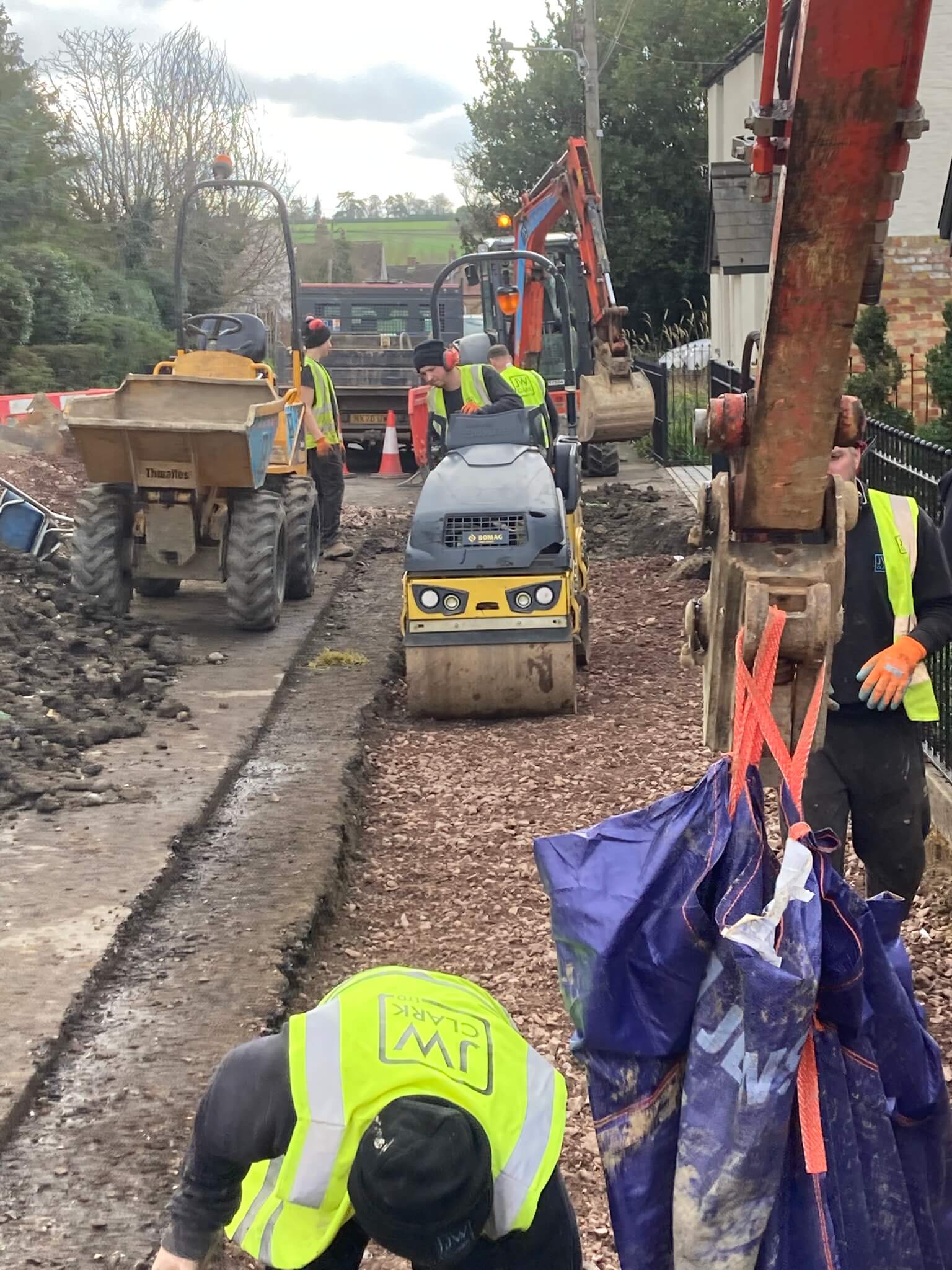
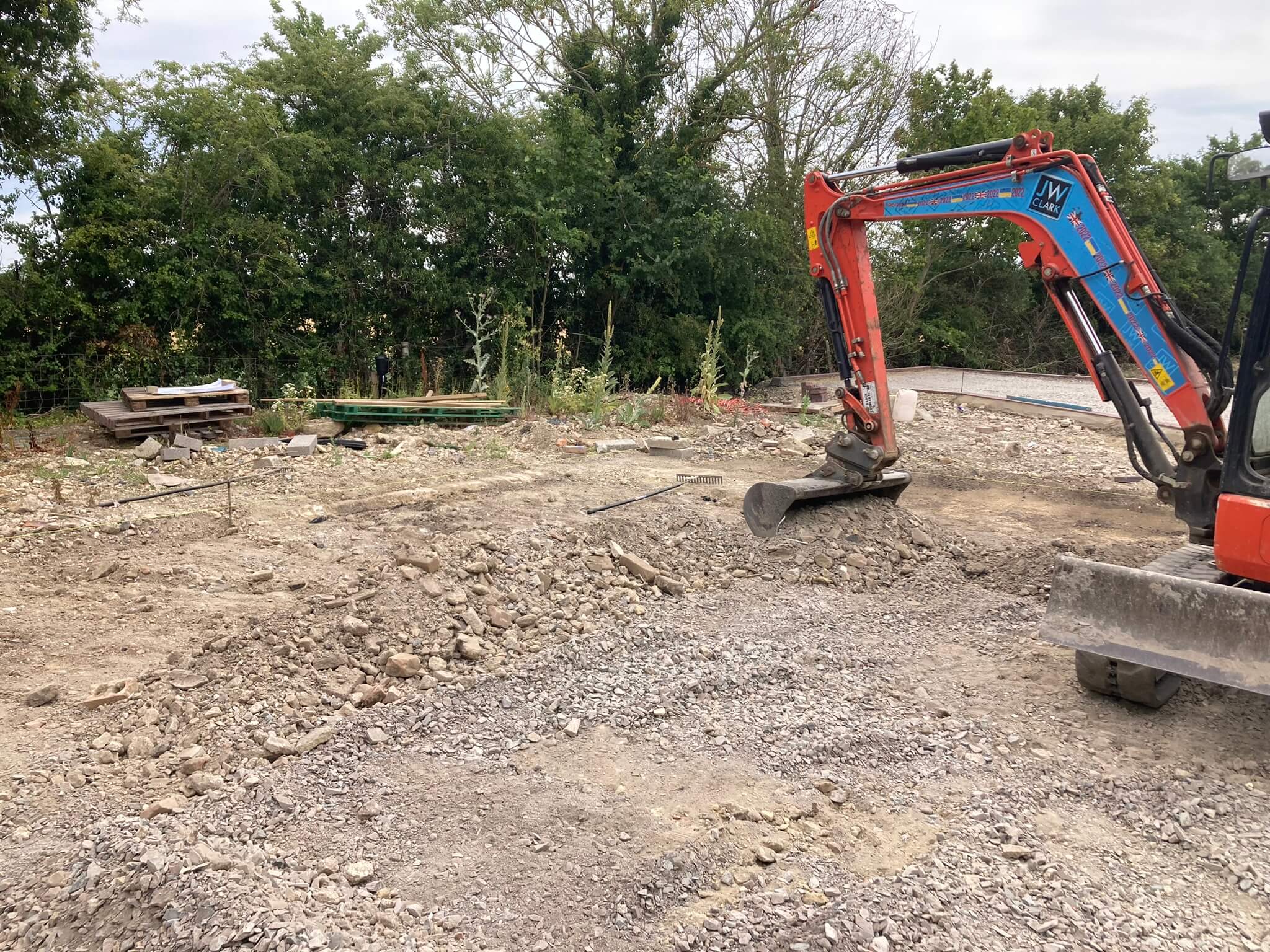
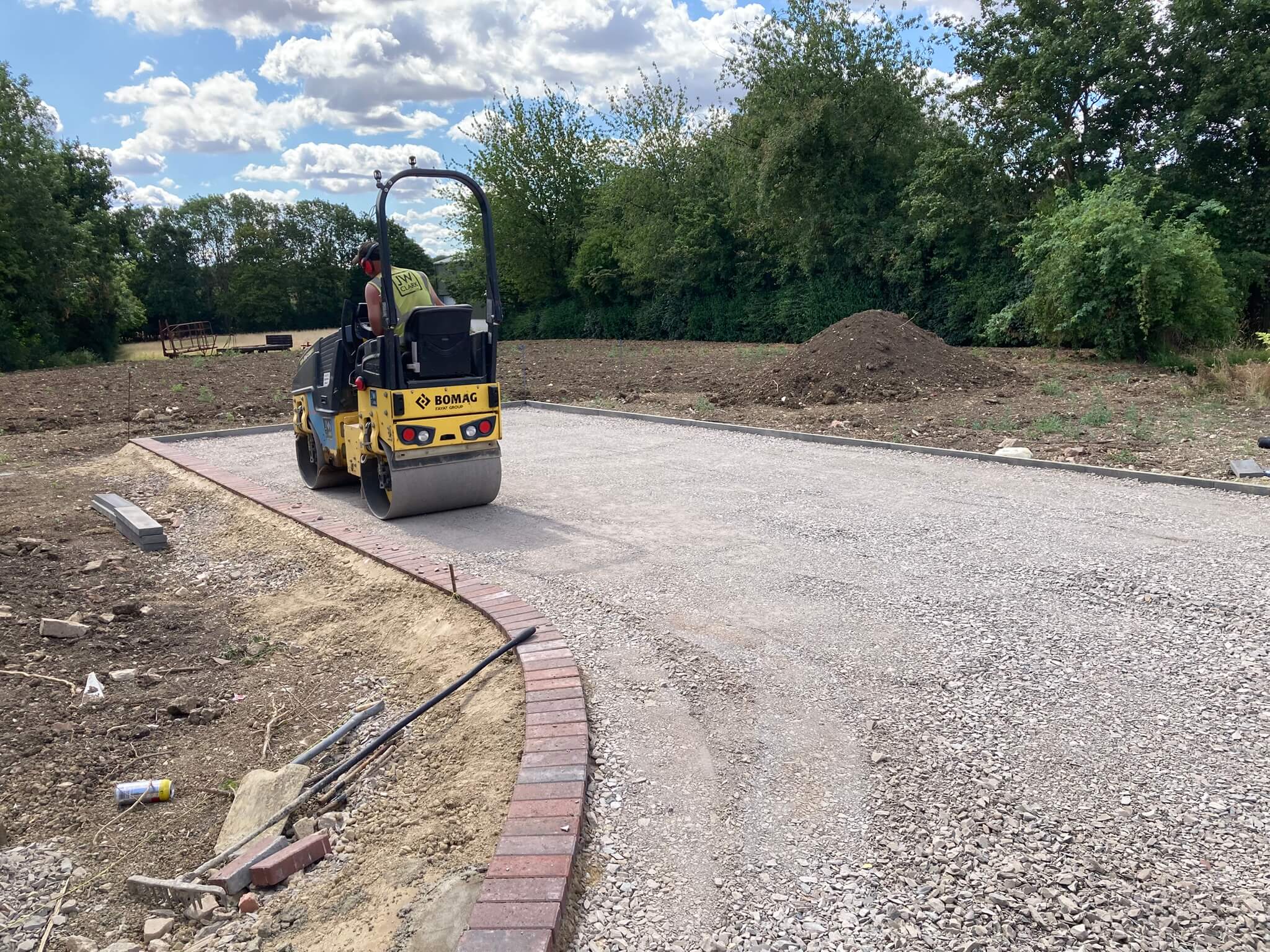
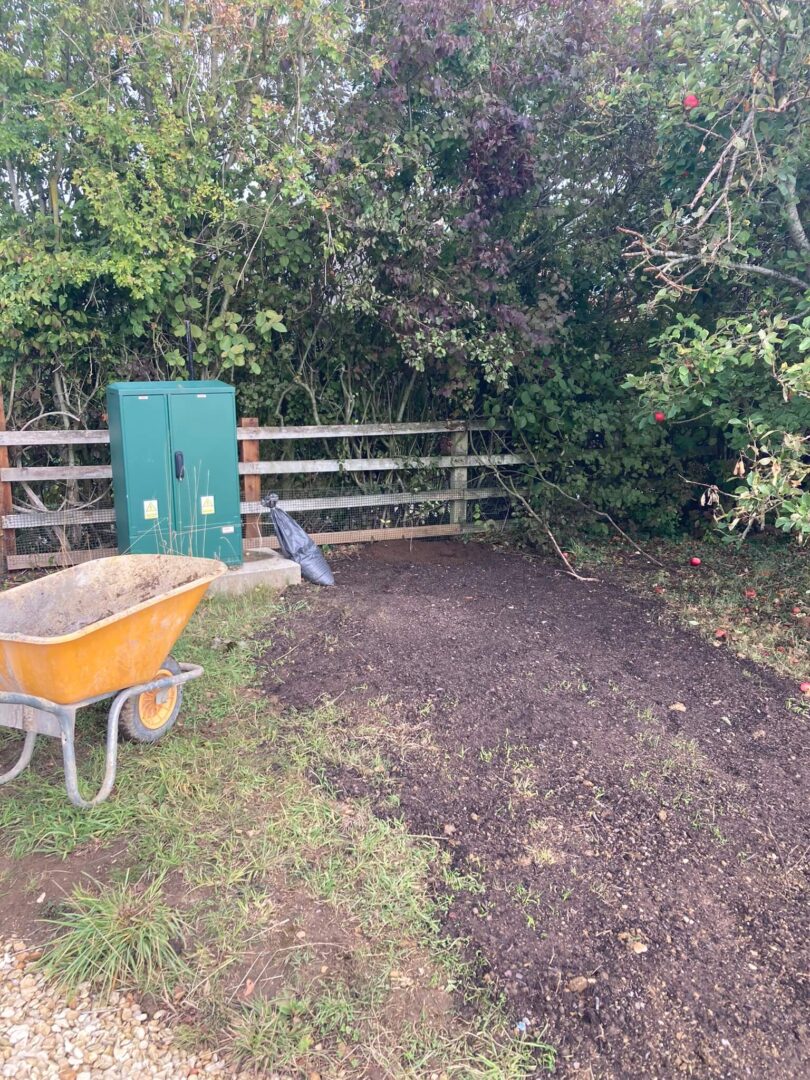
For the Section 278 works, we were required to remove the entirety of the existing footpath, and relay with 6×5 kerbs at the road. The sub base was taken out from underneath the old footpath to the required depth. Type 1 MOT granite was laid and compacted in layers in preparation for tarmac on top. 

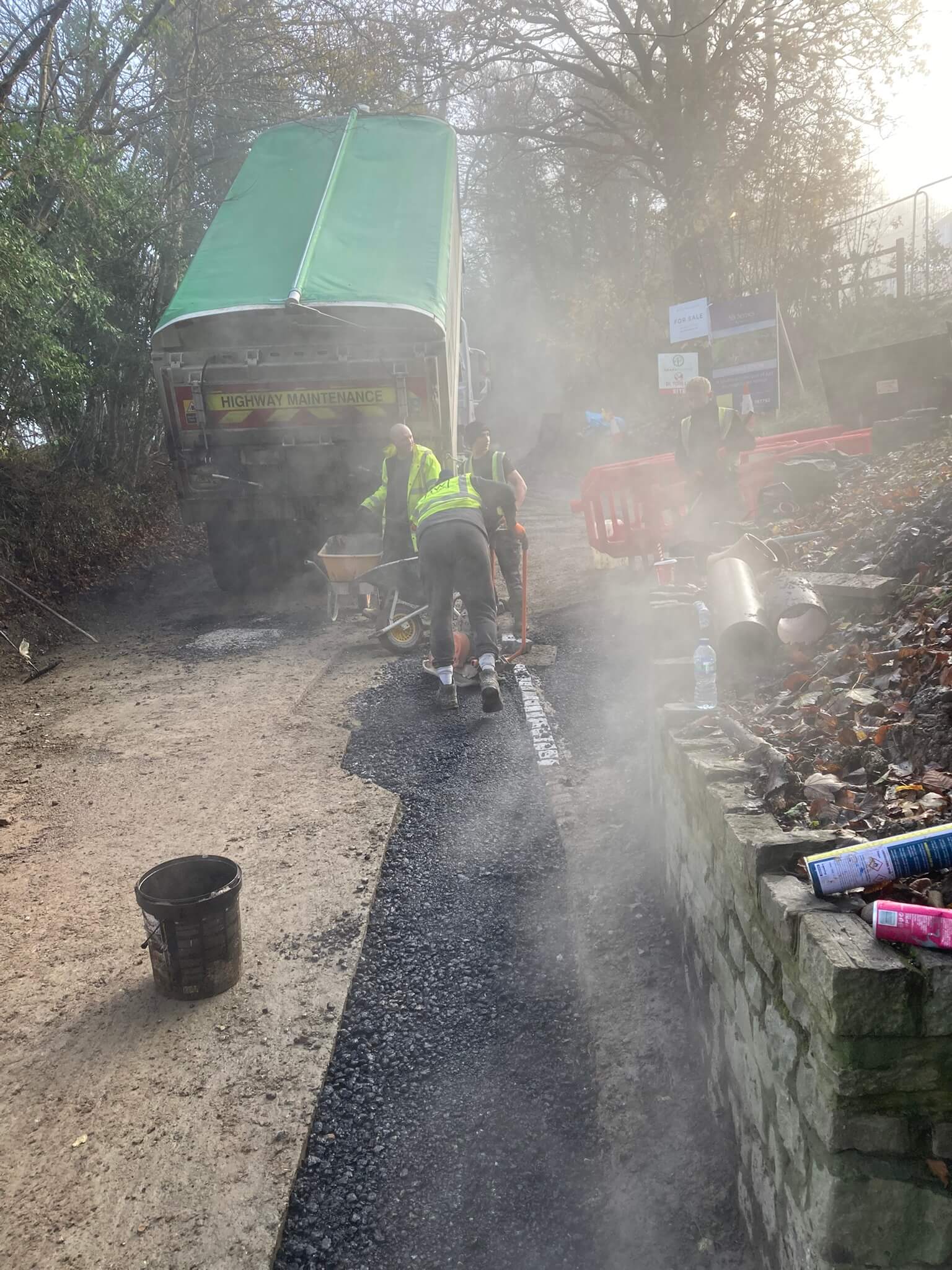
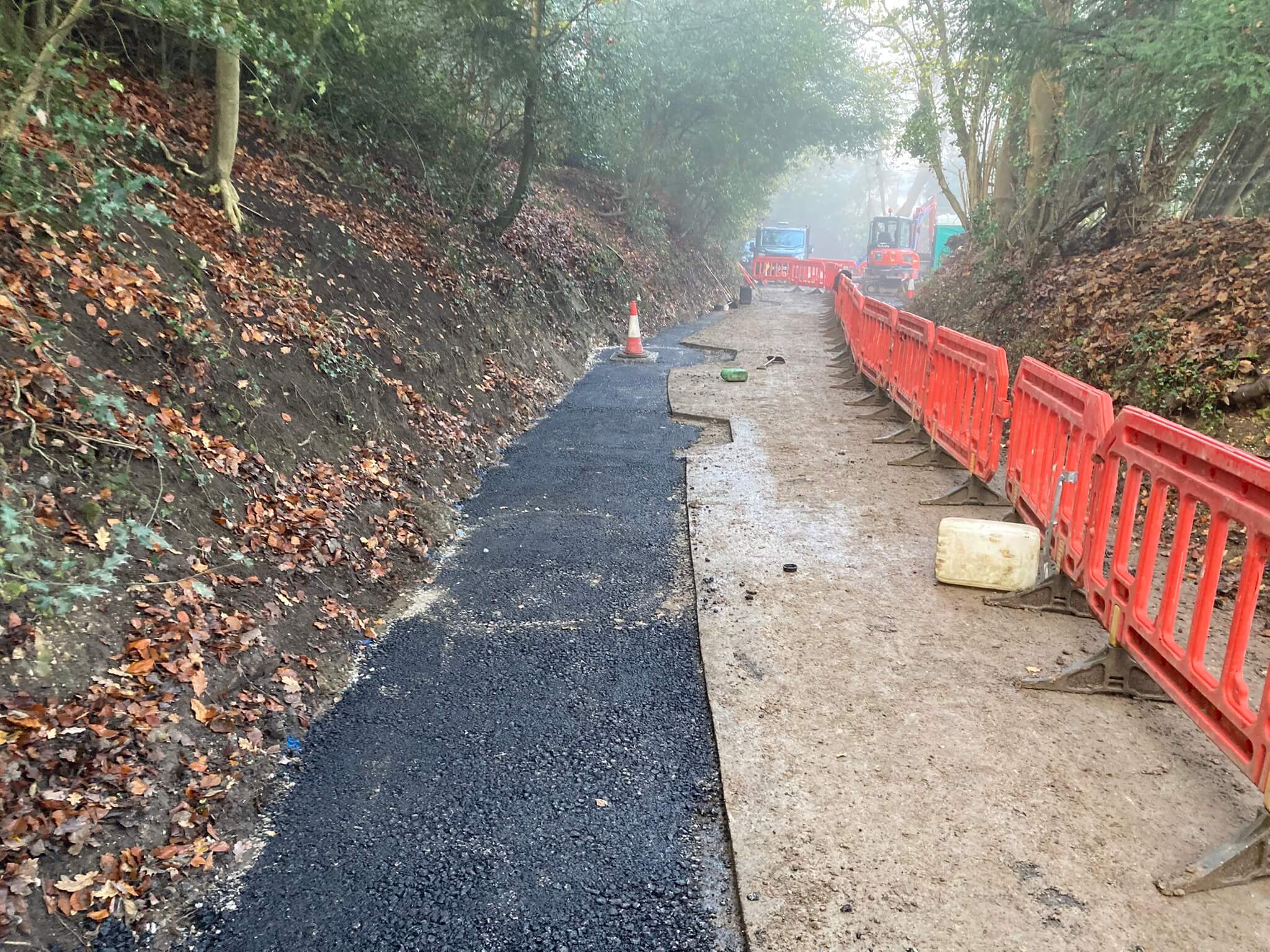
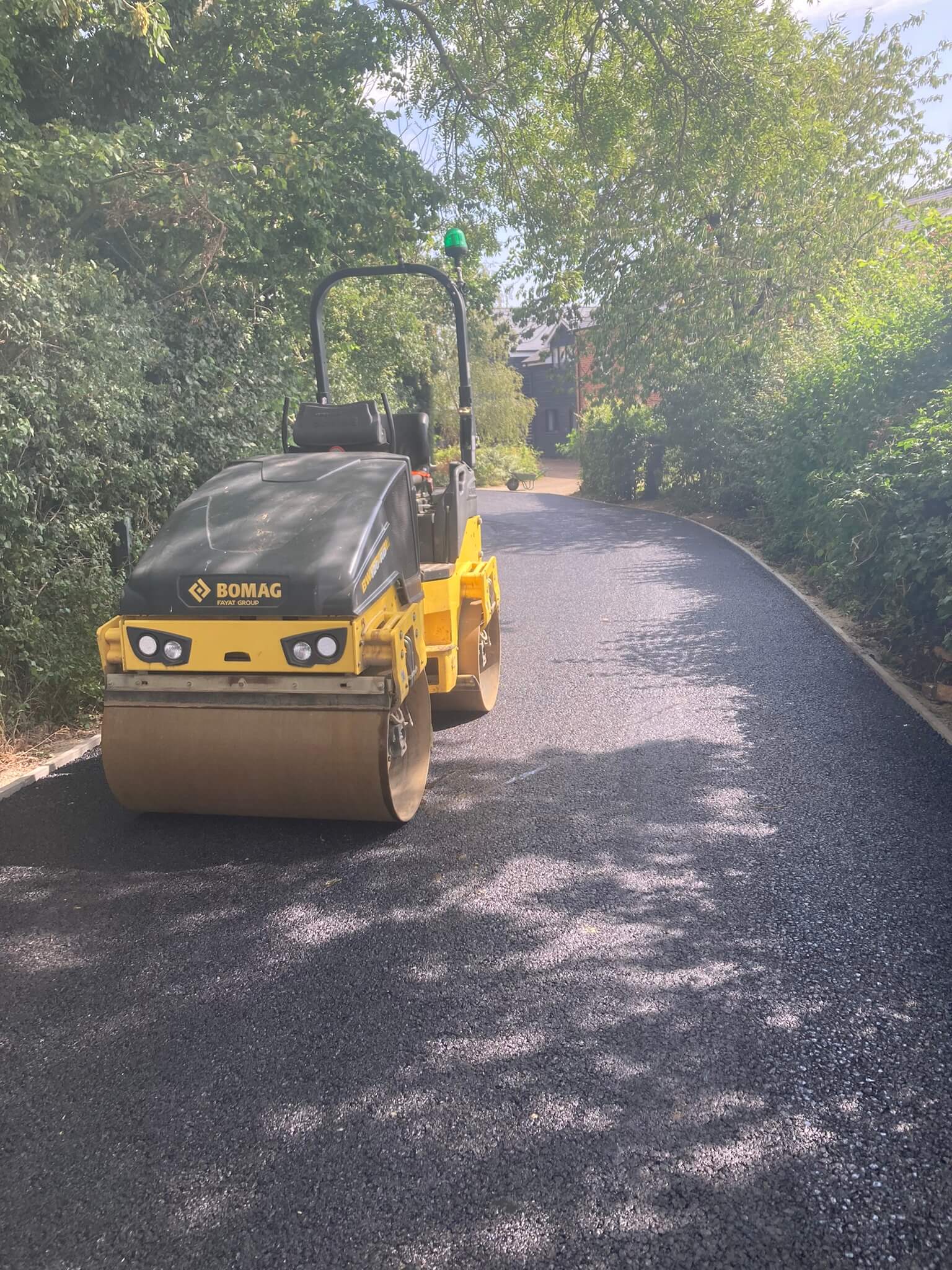
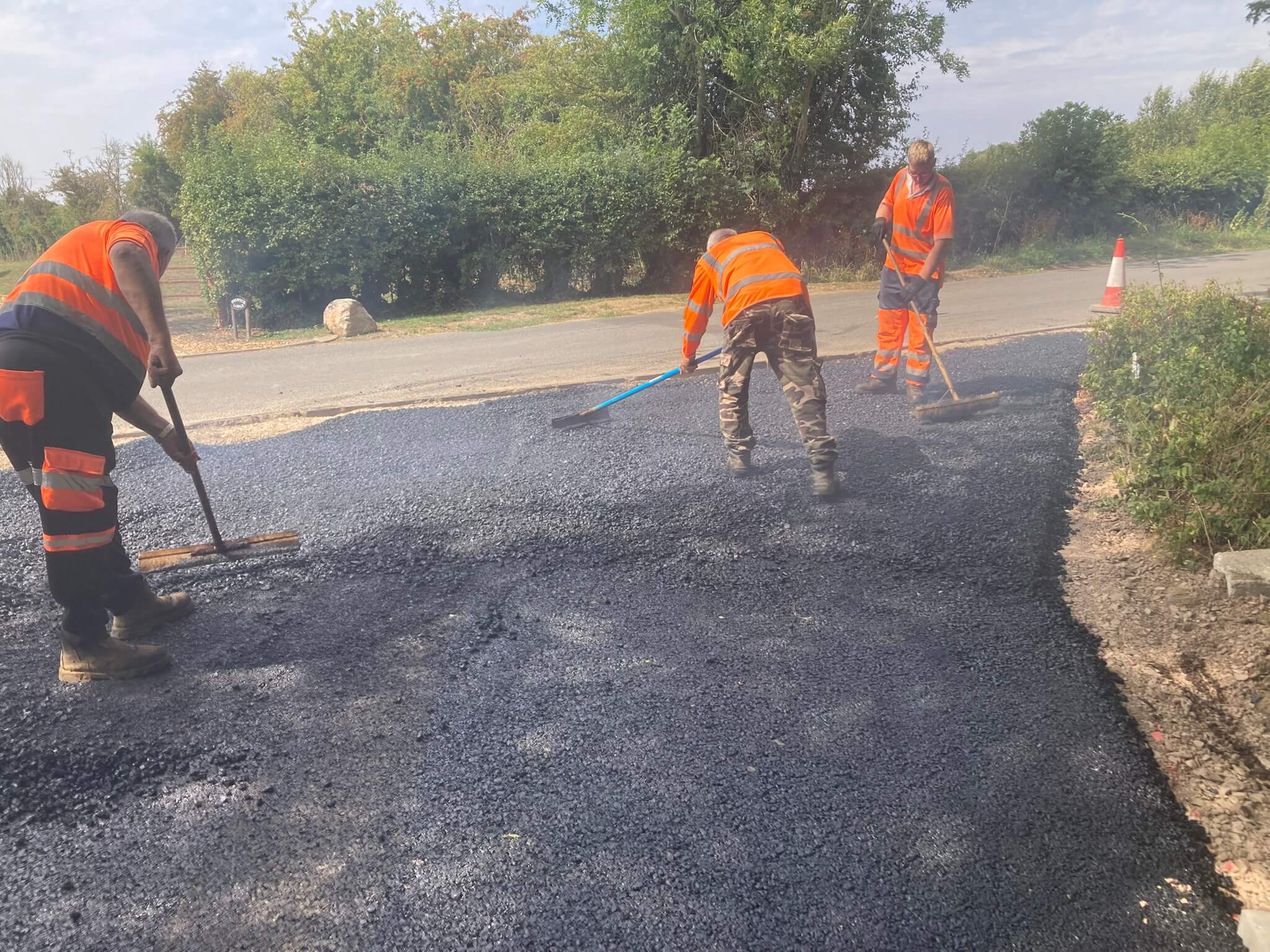
At this point the work was inspected and passed by the Local Highways Officer responsible for Section 278 works and tarmac was laid on day 5 for both the sewer connection and also the new footpath.

It was a pleasure to work with DGH Construction on this project and we look forward to working with them again. 
Timeline


Time to quote for the works: Less than 2 weeks

Time taken to obtain Section 106 Licence from AW: (Our customer already had this)

Time taken to obtain Section 50 Licence from Highways: 7 weeks – included talks between us and Highways regards traffic management

Leadtime to use S50 Licence: 5 weeks 

Time taken to do the work: 1 week

Total time:  15 weeks

Do you need a sewer connection needs doing? Click here to enquire.

Don’t leave it too late for a sewer connection, most people do! Read our article here: How long does it take to do a sewer connection?

Click here to see more of our case studies.

Sewer connection, Bourne End, Buckinghamshire

Sewer Connection, Bourne End, Case Study

We were delighted to carry out this new sewer connection for a great repeat customer of ours, DL Toro Ltd, in the lovely town of Bourne End, Buckinghamshire


Location
Bourne End, Buckinghamshire
Client
DL Toro
Value
£xxx,xxx
Transport-Truck-02

Objective

Our objective was to connect 5 new high-end properties to the public sewer. However the plots were 100 metres away from the existing public sewer. Therefore we the job required that we lay over 100 metres of new vitified clay pipework, with new manhole chambers along the way, and all in the Highway. The groundworks contractor for the site, DL Toro, tok care of all the works off the Highway and in private property.

The challenges....

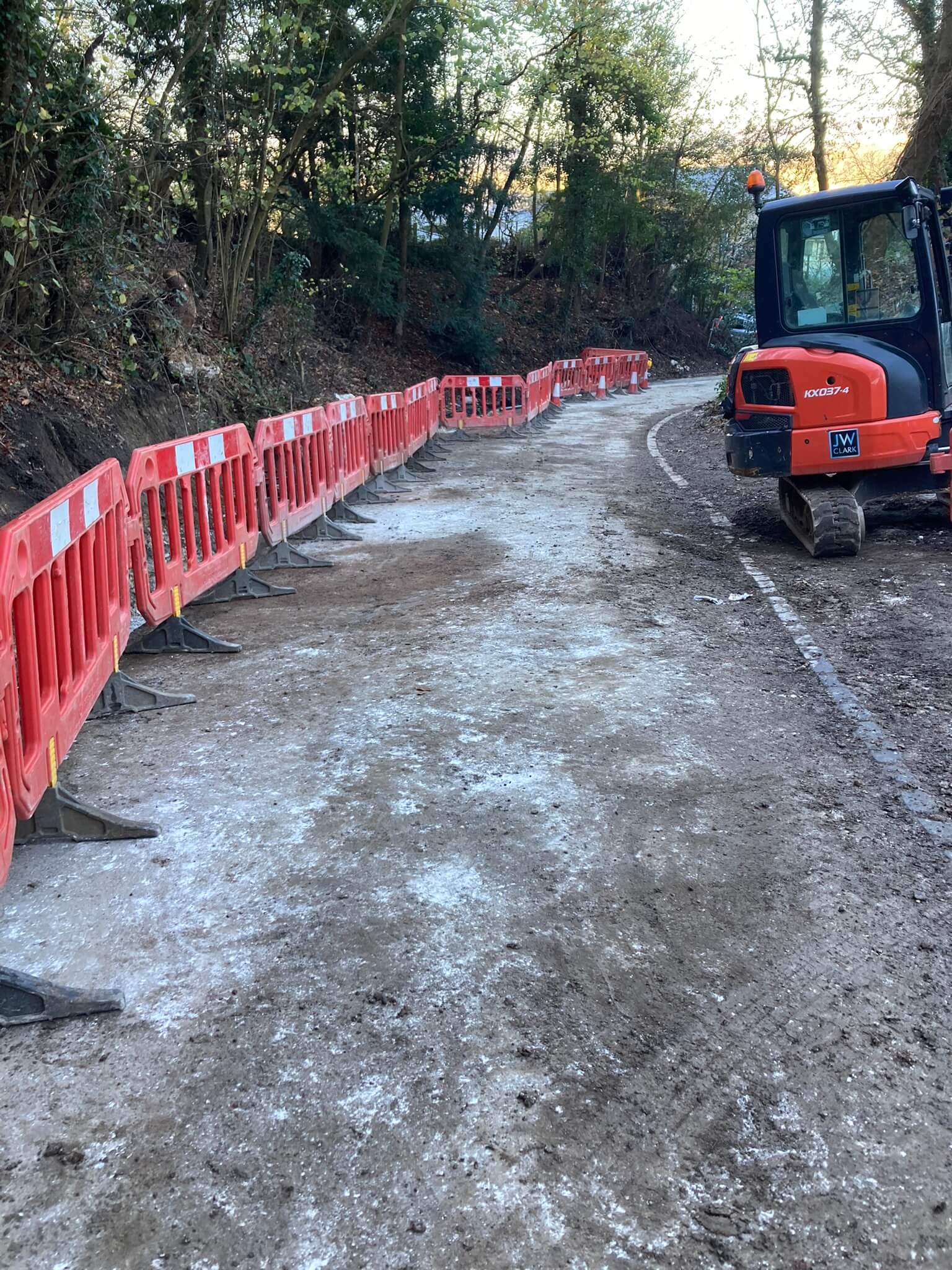
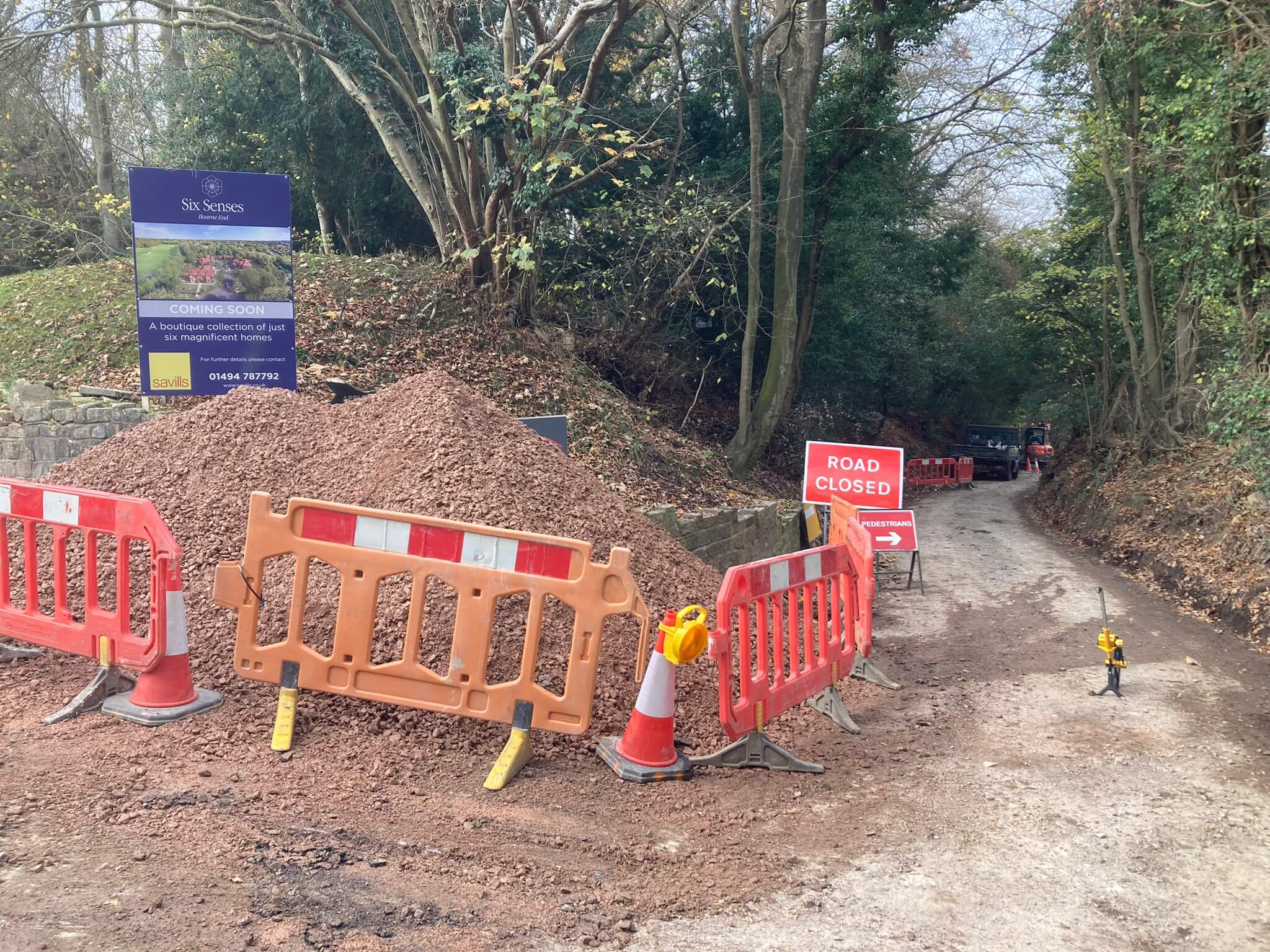
The public sewer that we needed to connect to, was at the bottom of a very narrow, single-track lane, and there was no way to carry out the works, without closing the road. As usual, we took care of all the permits for our customer, including the application to connect to the public sewer (the Section 106 application), the application to work in the highway (Section 50) and also a TTRO application – which is the application for a full road closure.

Highways agreed to our need to close the road, and a diversion route was agreed. In the days leading up to the start of the road closure, a local pub owner was particularly worried about any loss of trade, as his pub was at one end of the closure. We agreed with Highways and with our third-party traffic management company, that extra signage would be put out at either end of the diversion, advising people that the pub was still open for business.

Despite a large section of the road being closed for the duration of the works, we still had to give vehicular access to a handful of residents whilst the works were being carried out. To enable this to happen, we carried out the work in ‘sections’, and residents were able to access their properties from one direction and then from another direction, after trenches were backfilled and reinstated.

About the project

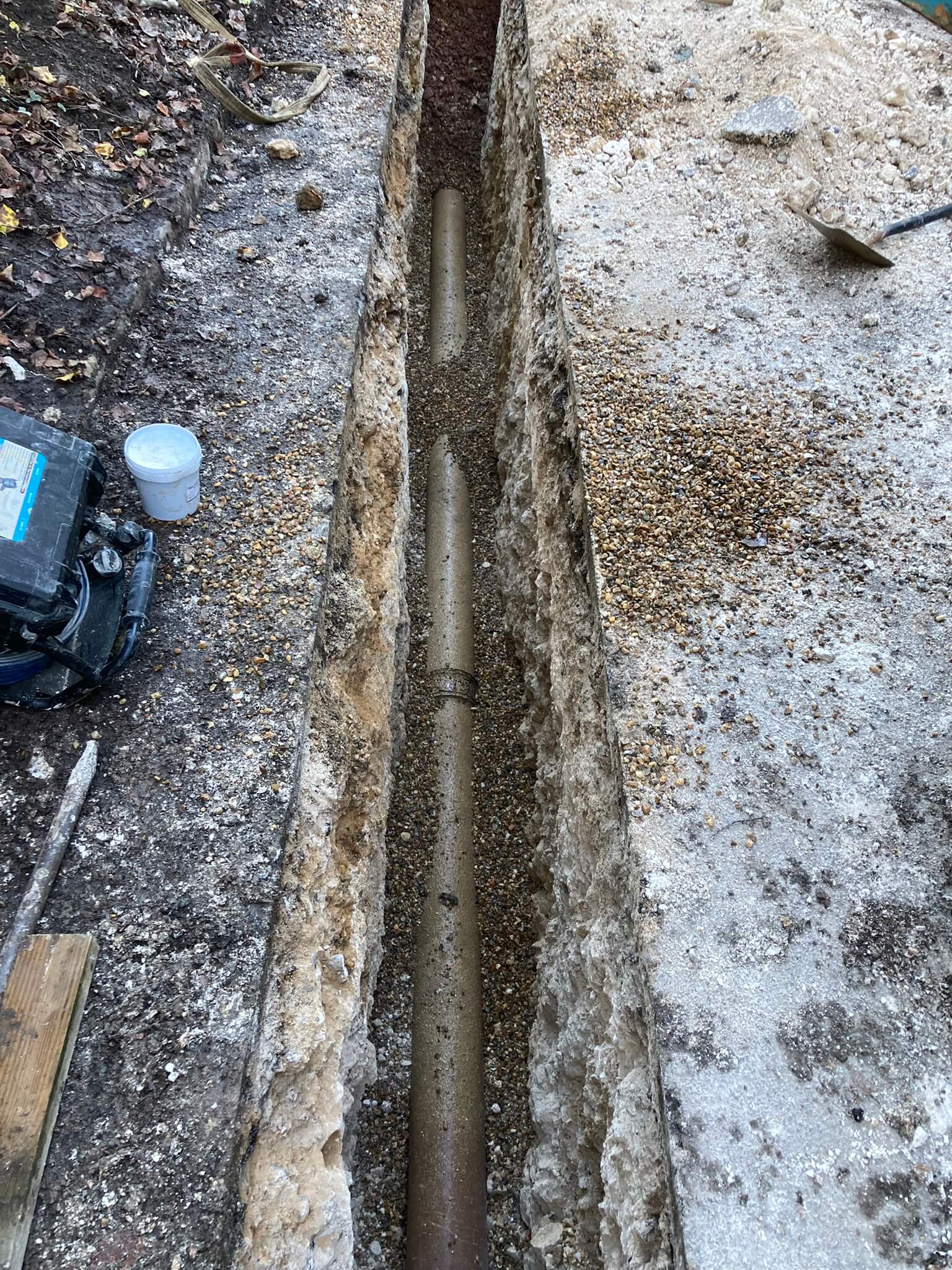
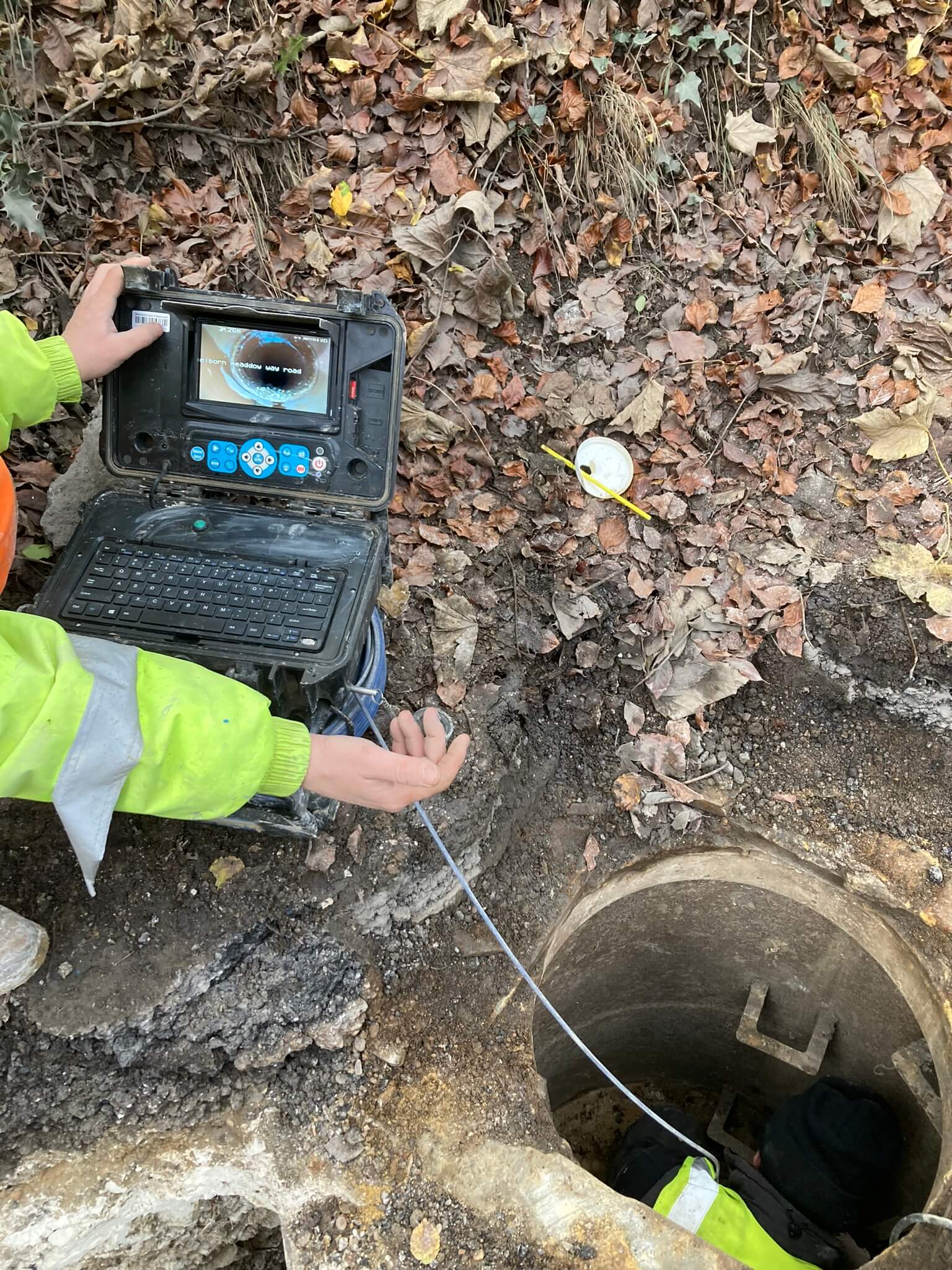
With the road closed, we started by digging trial holes to ‘prove’ the manhole locations. With the road being so narrow, it was congested with existing services, and all of them ‘mains’. We had a gas main to contend with, two water mains, and multiple telecommunications duct runs. We managed to sneak our pipework in between all of these services and the edge of the road. Some of the manhole locations has to be moved slightly, to get them in amongst other services.

We started at the bottom of the hill and slowly worked our way up. We reinstated in sections, building manholes as we went and finishing with 150mm D400 manhole covers.

The road was a ‘composite’ road, i.e. there was concrete underneath the tarmac surface course, therefore we had a layer of concrete to put back between the sub-base and the top tarmac course. This added time to the job as the concrete not only had to be laid and compacted, but also had to ‘cure’ before tarmac could be laid on top. With the concrete cured, we finished the road with 10mm tarmac wearing course, as per the Highways spec for the relevant class of road.

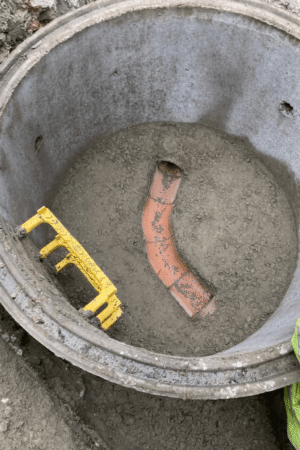
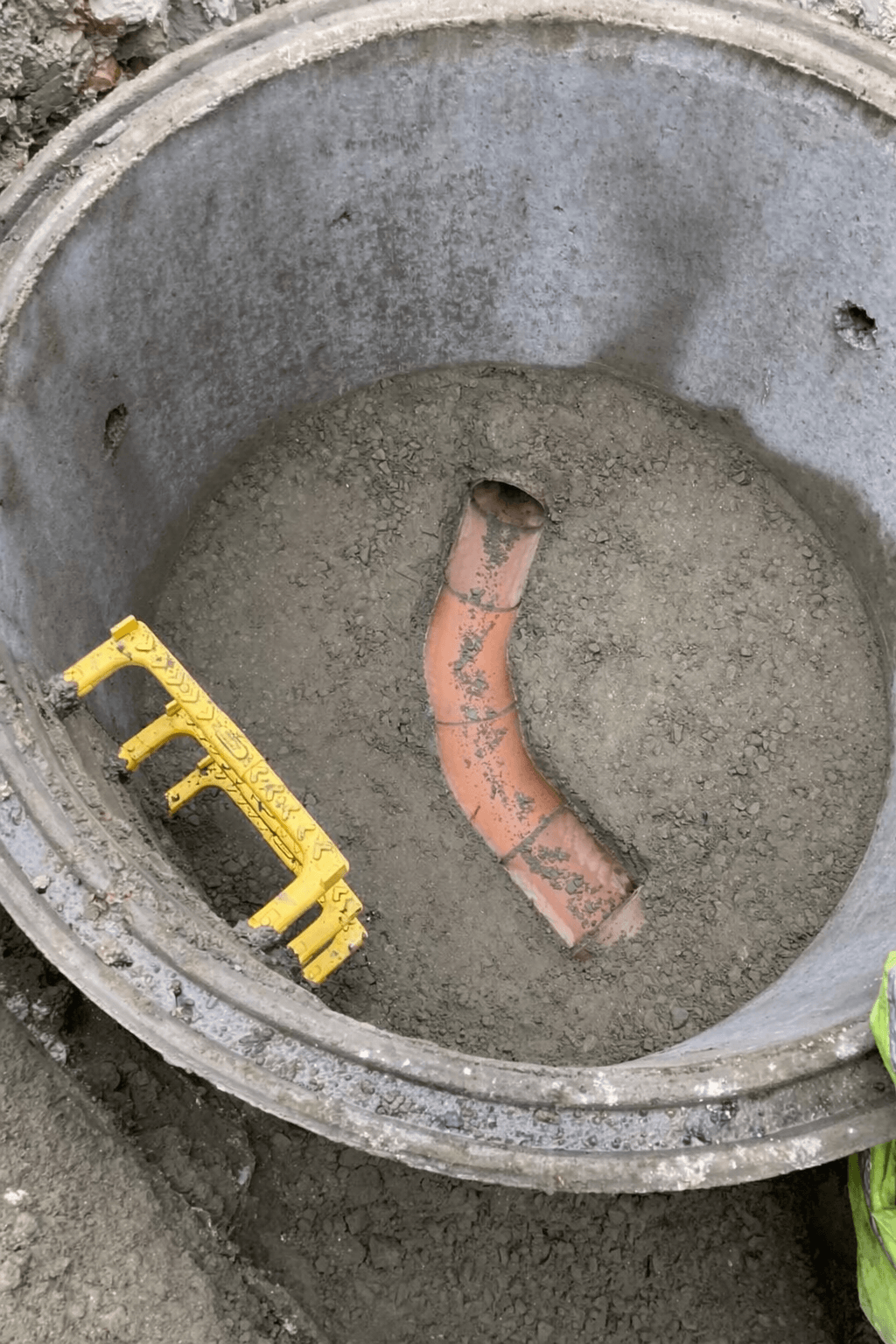
The picture to the right shows rough benching of one of the manholes, in advance of it being smooth-benched with a granite & cement mix, and then finished with a manhole ‘biscuit’ and D400 cover.   

Manholes were not generally required for ‘change of direction’, but more so due to the length of run, with new manholes installed to enable rodding, and which may also possibly be used for additional connections by others in the future.

The project was a challenging one at times. Despite us not wanting to close roads for sewer connection works, and with all the inconvenience it causes for local residents, it is sometimes our only option. And when a road is closed, it does tend to make our job easier, and time taken to carry out the works can sometimes be shortened, as we have full use of the whole road to work in, as opposed to having to work alongside and manage existing traffic flows. 

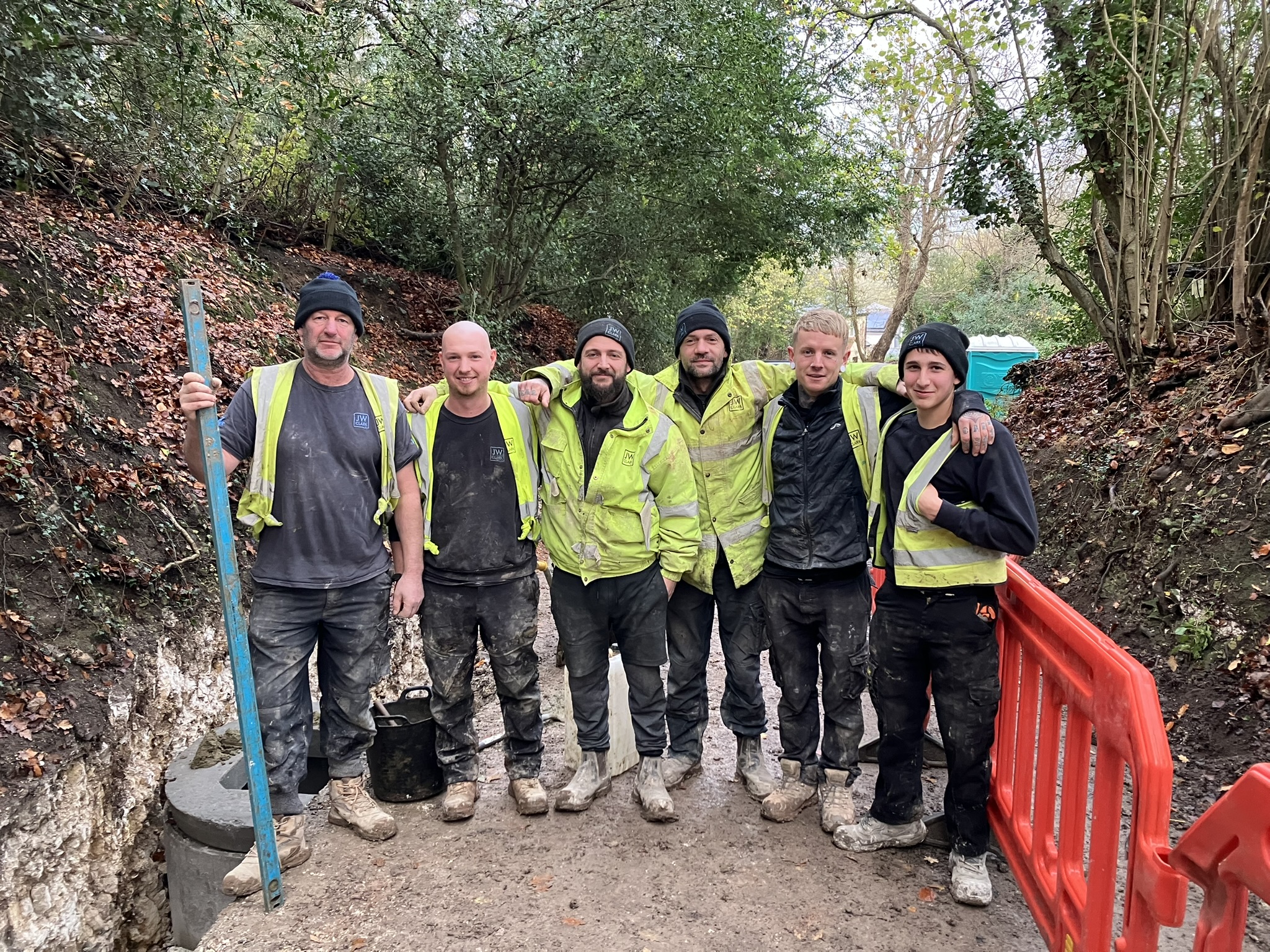
However on this job, despite the road being closed, we were still very restricted for room, due to how narrow the road was. That said, we got the job done, with the help of the great people who work for us. And we were also pleased to receive a 5-star Google review from one of the residents, who also brought us out cups of tea whilst we were working there!  

Timeline

Time to quote for the works: Less than a week

Time taken to obtain Section 106 Licence from Thames Water: 3 weeks 

Time taken to obtain Section 50 Licence from Highways: In excess of 2 months, various exchanges back and forth with Highways, site meeting was required and there were consultations with other stakeholders regards the diversion route etc

Leadtime to use S50 Licence: 4 months – due to the TTRO (Road Closure) and traffic-sensitive nature of the works 

Time taken to do the work: 4 weeks

Total time:  31 weeks

Do you need a sewer connection needs doing? Click here to enquire.

Don’t leave it too late for a sewer connection, most people do! Read our article here: How long does it take to do a sewer connection?

Click here to see more of our case studies.

Block paving, tarmac driveway & crossover, Stagsden, Beds

Projects

Block paving, tarmac & crossover Case Study. Stagsden, Beds

Having done the groundwork for this project, we were delighted to be asked to return to complete the external works including block paving & tarmac.

Location
Stagsden, Beds
Client
Private customer
Value
£xx,xxx
commercial contracts

Objective

Our objective was to prepare for paving from around the two barn conversions, up towards the Highway and then to finish off with resurfacing the existing vehicle crossover.

About the project

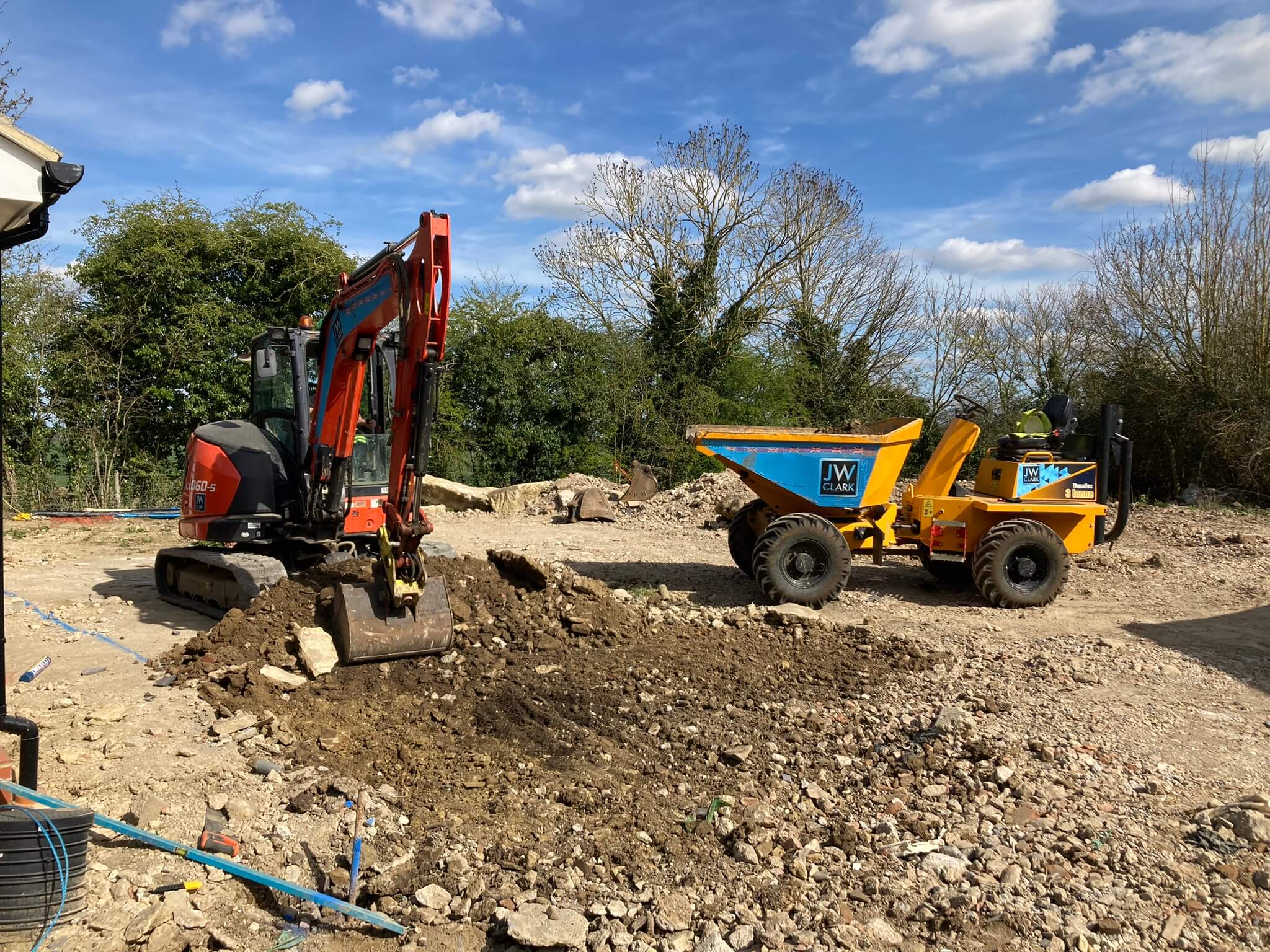
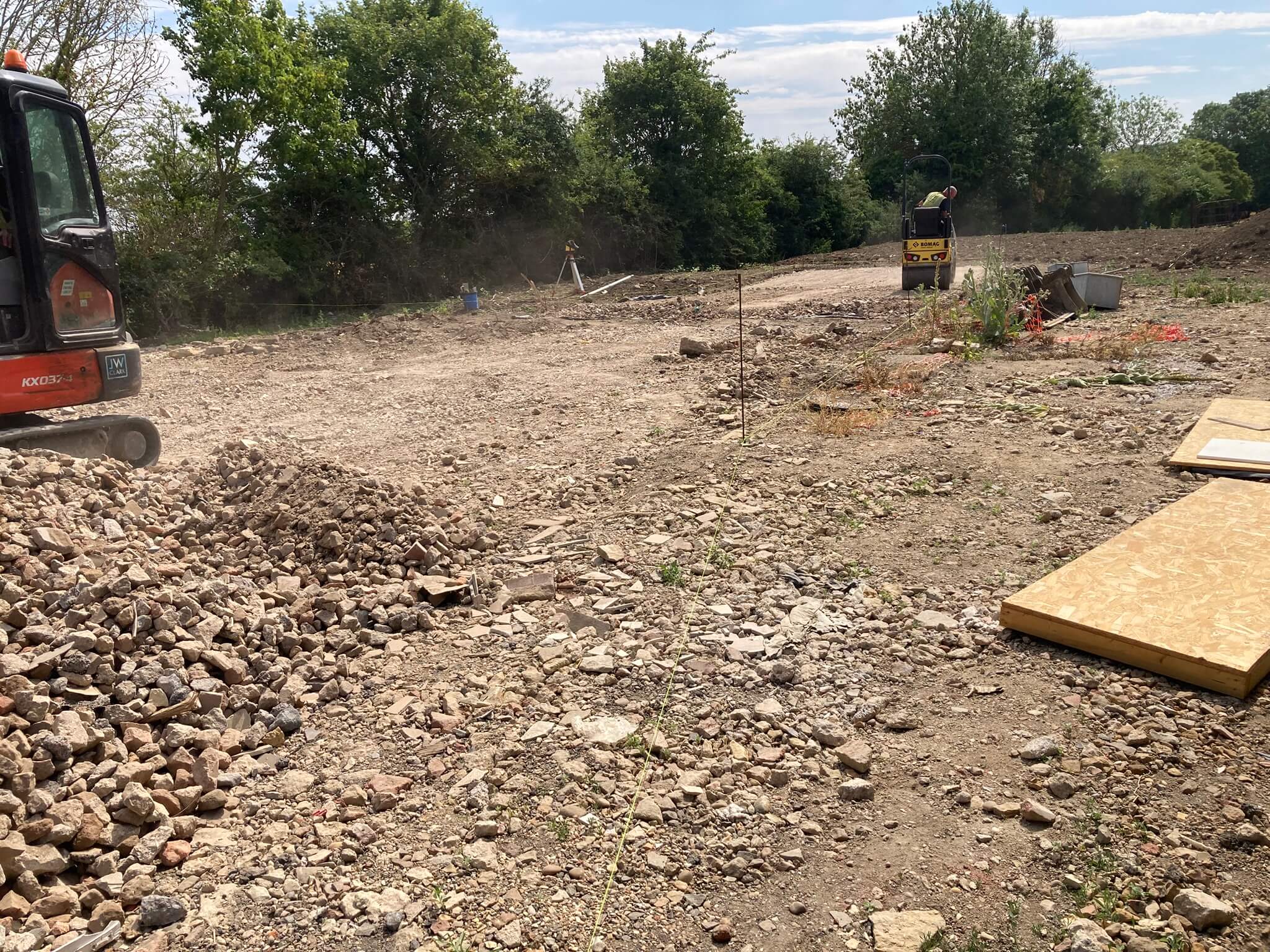
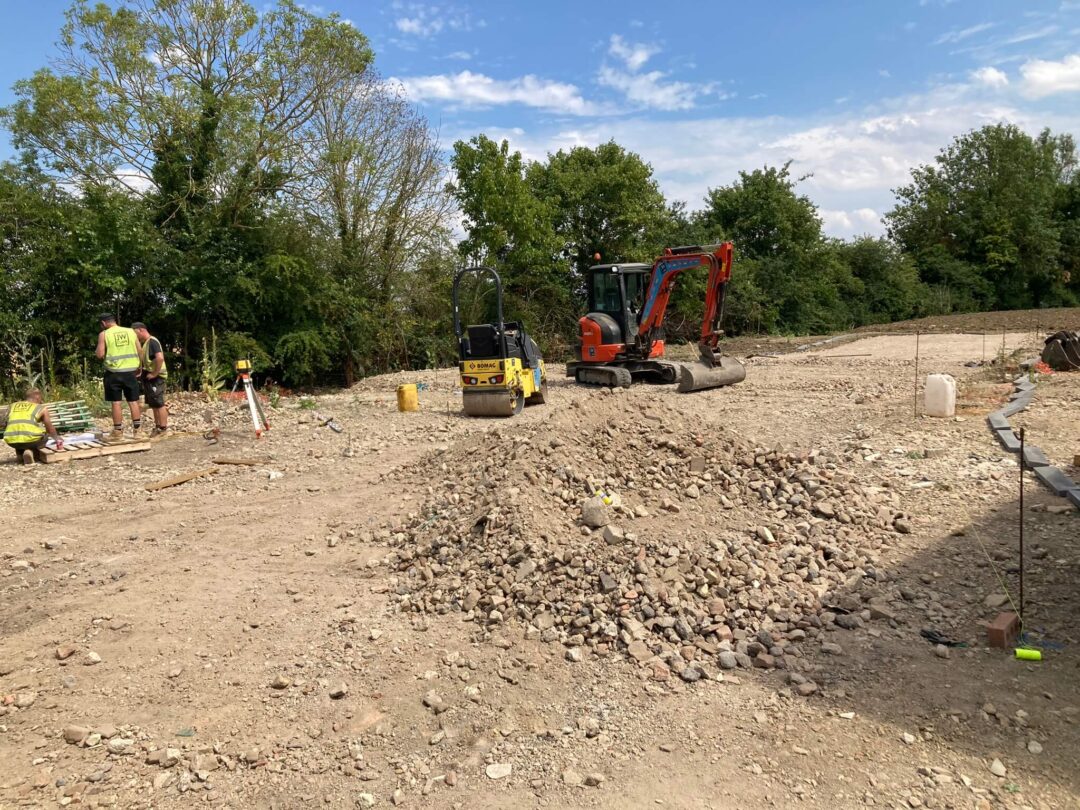
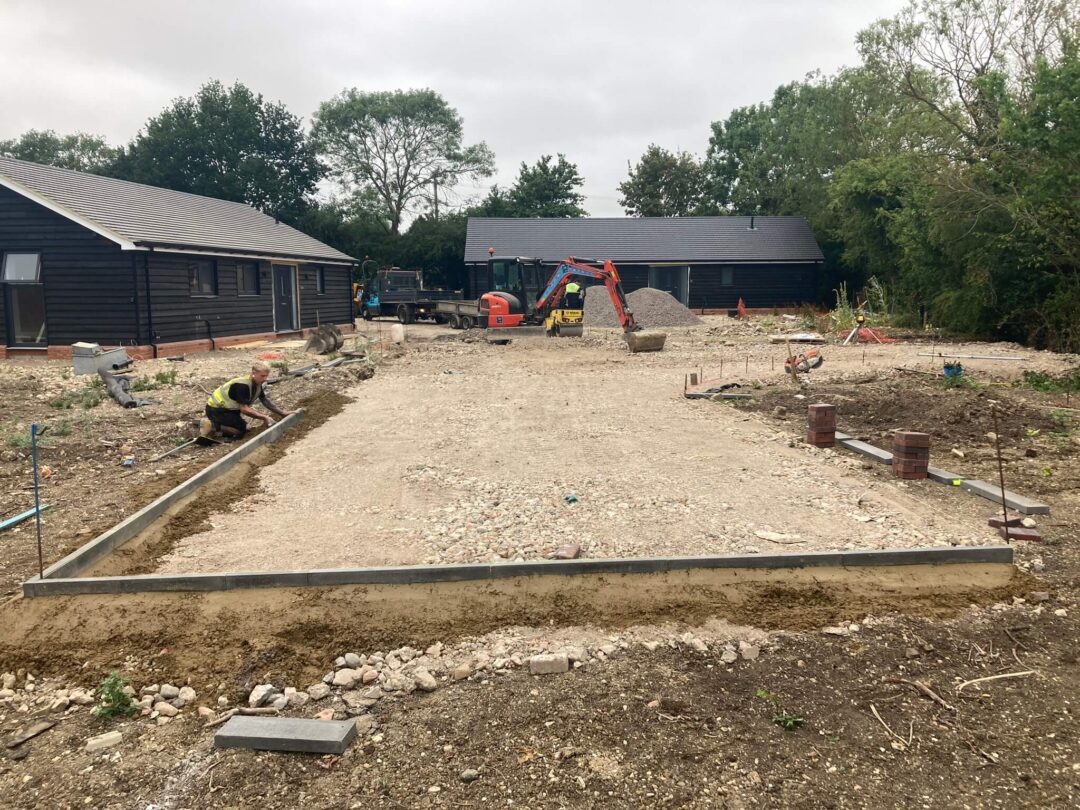
Having done the groundwork for the two new barns (click here for that case study) we were familiar with the site, and we’d previously left a lot of the levels close to where they had to be.

Our customer had good drawings showing exactly where different parts of the paving would start and finish. 

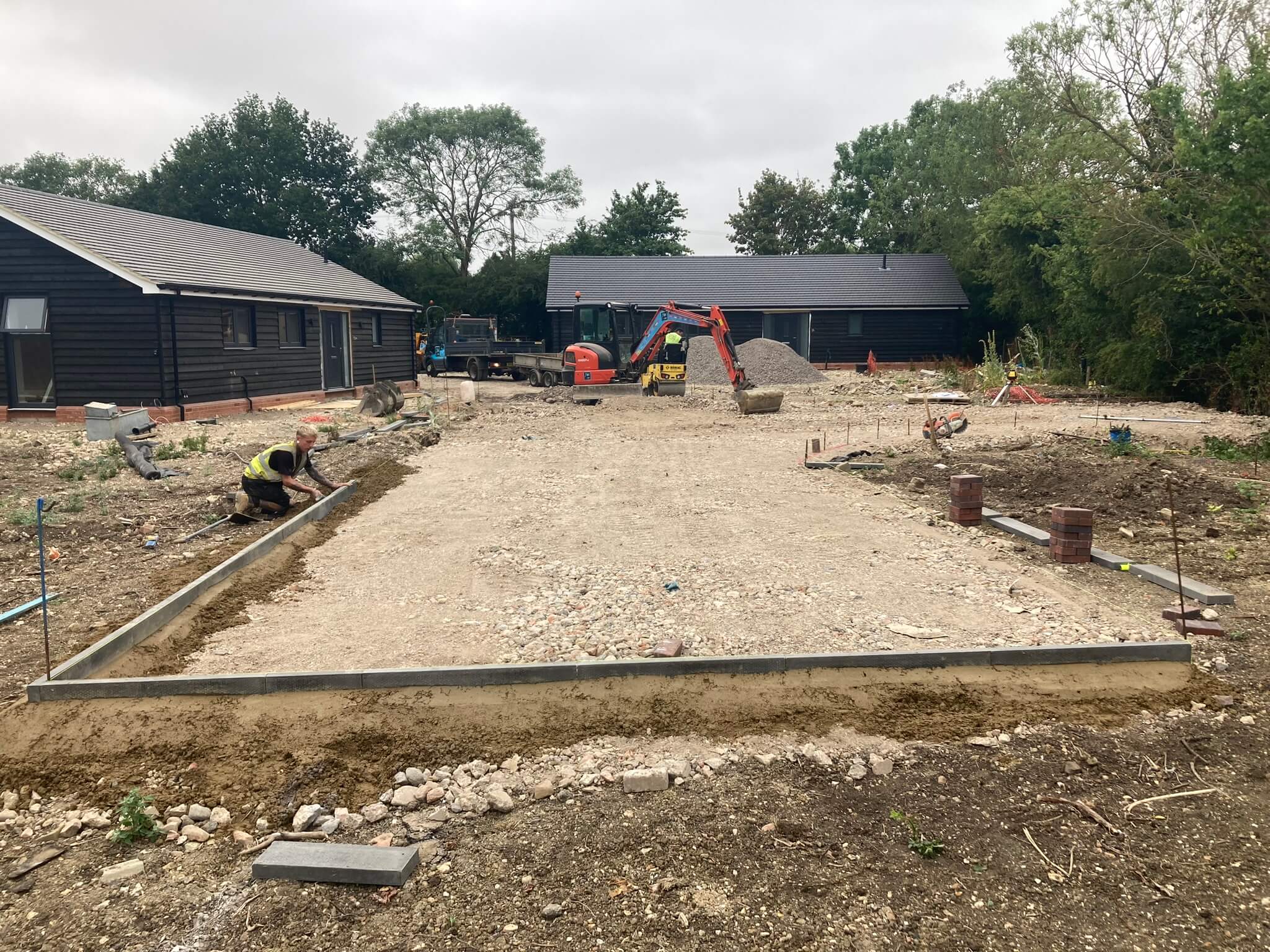
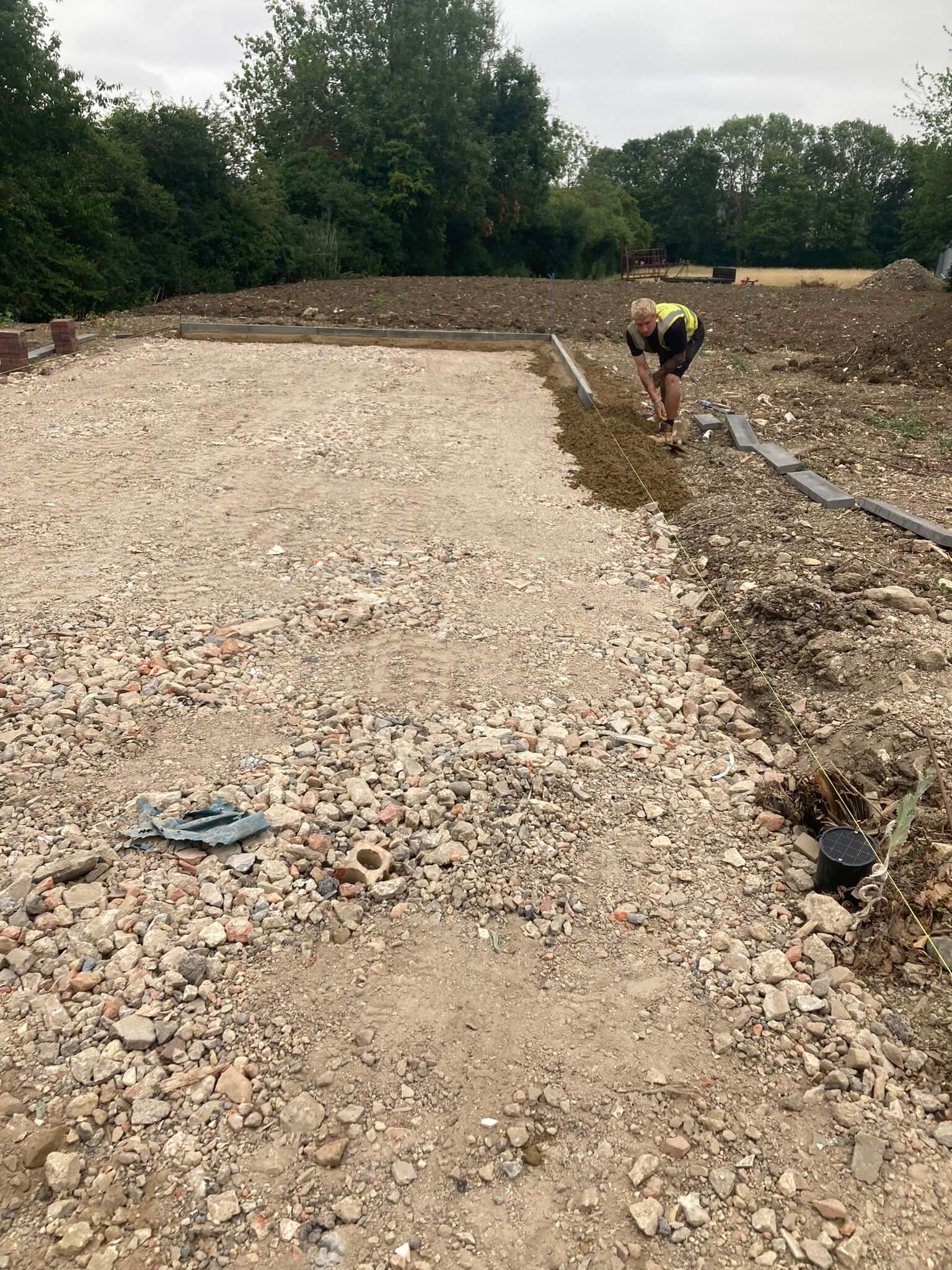
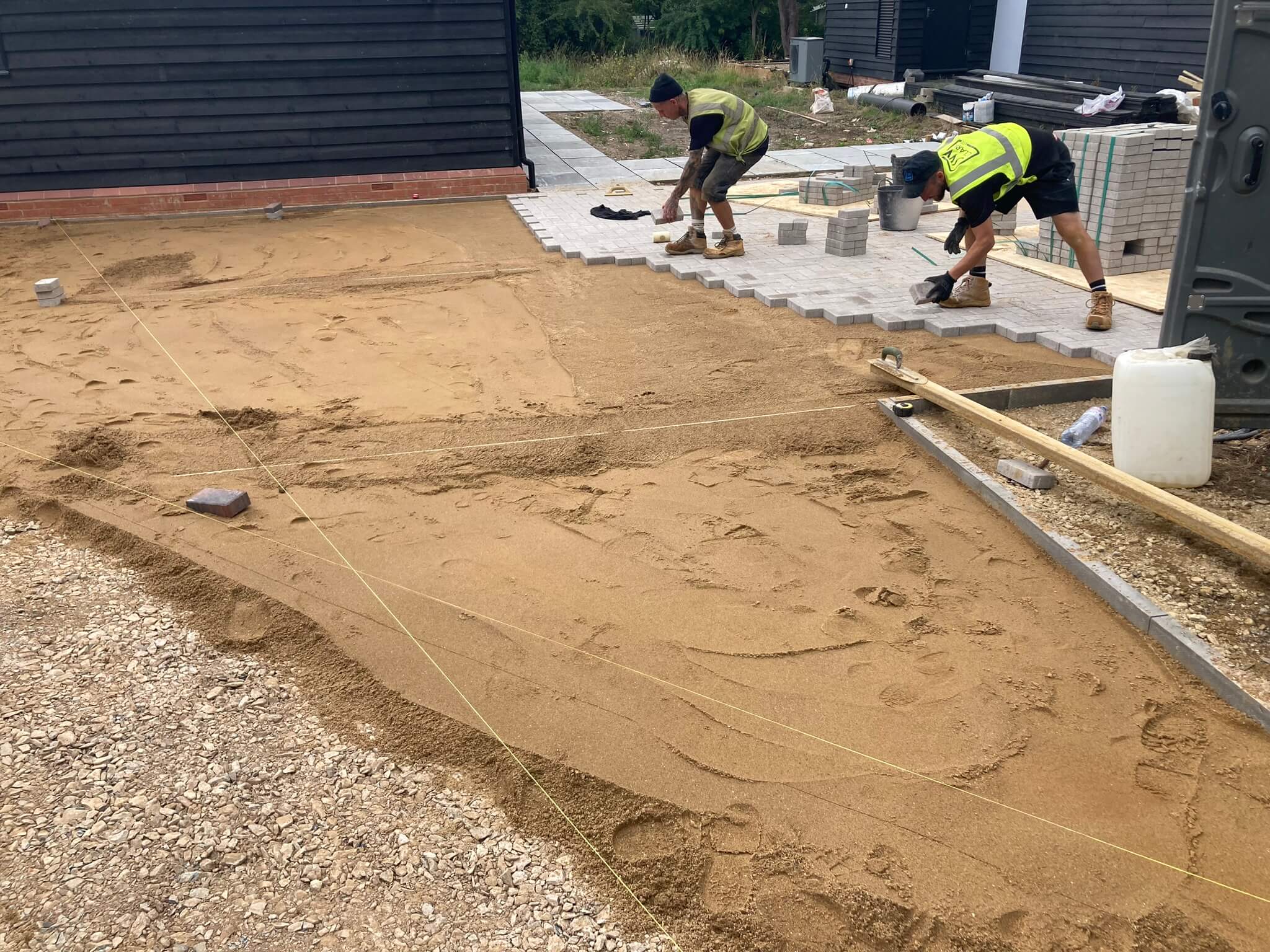
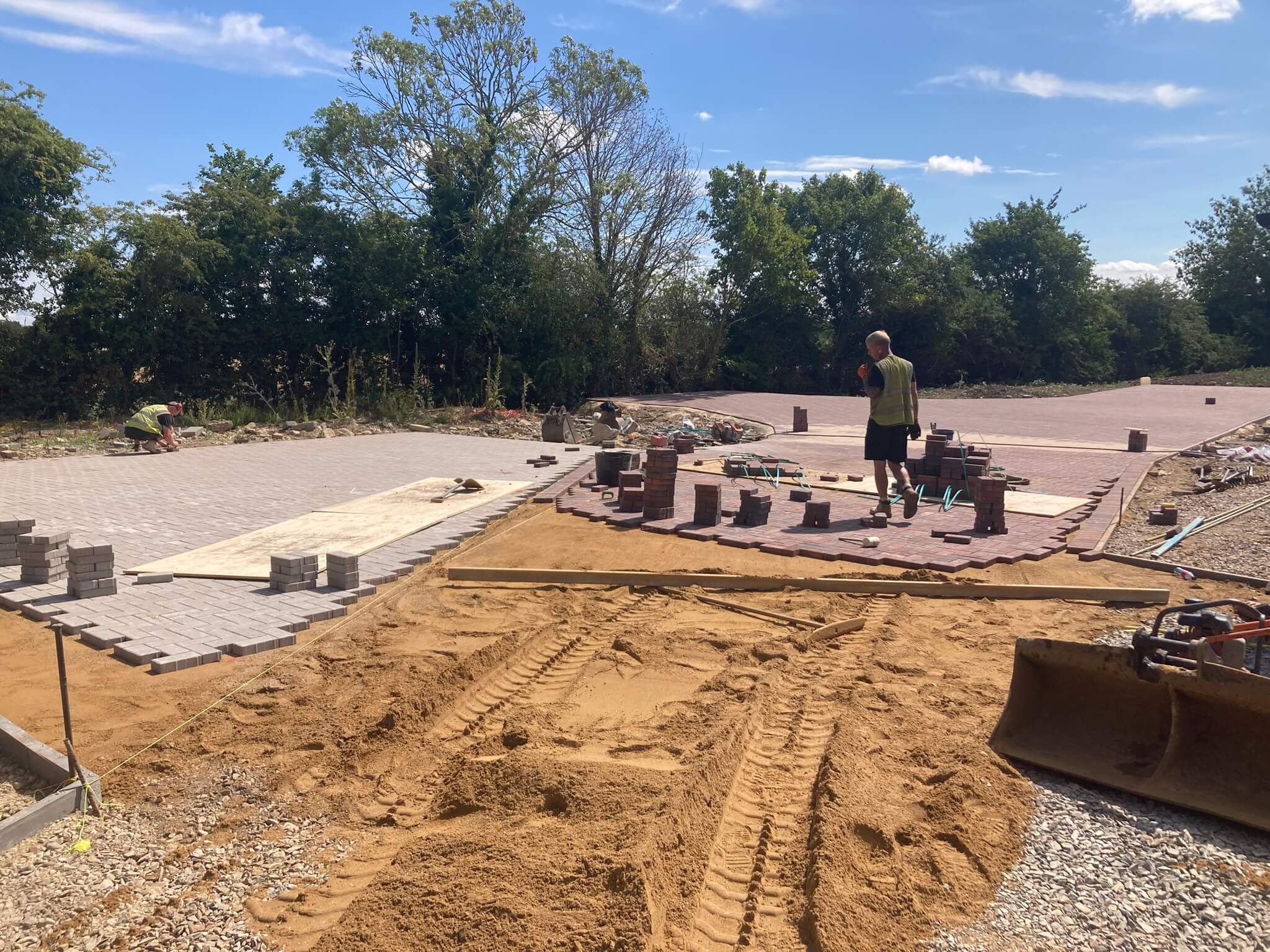
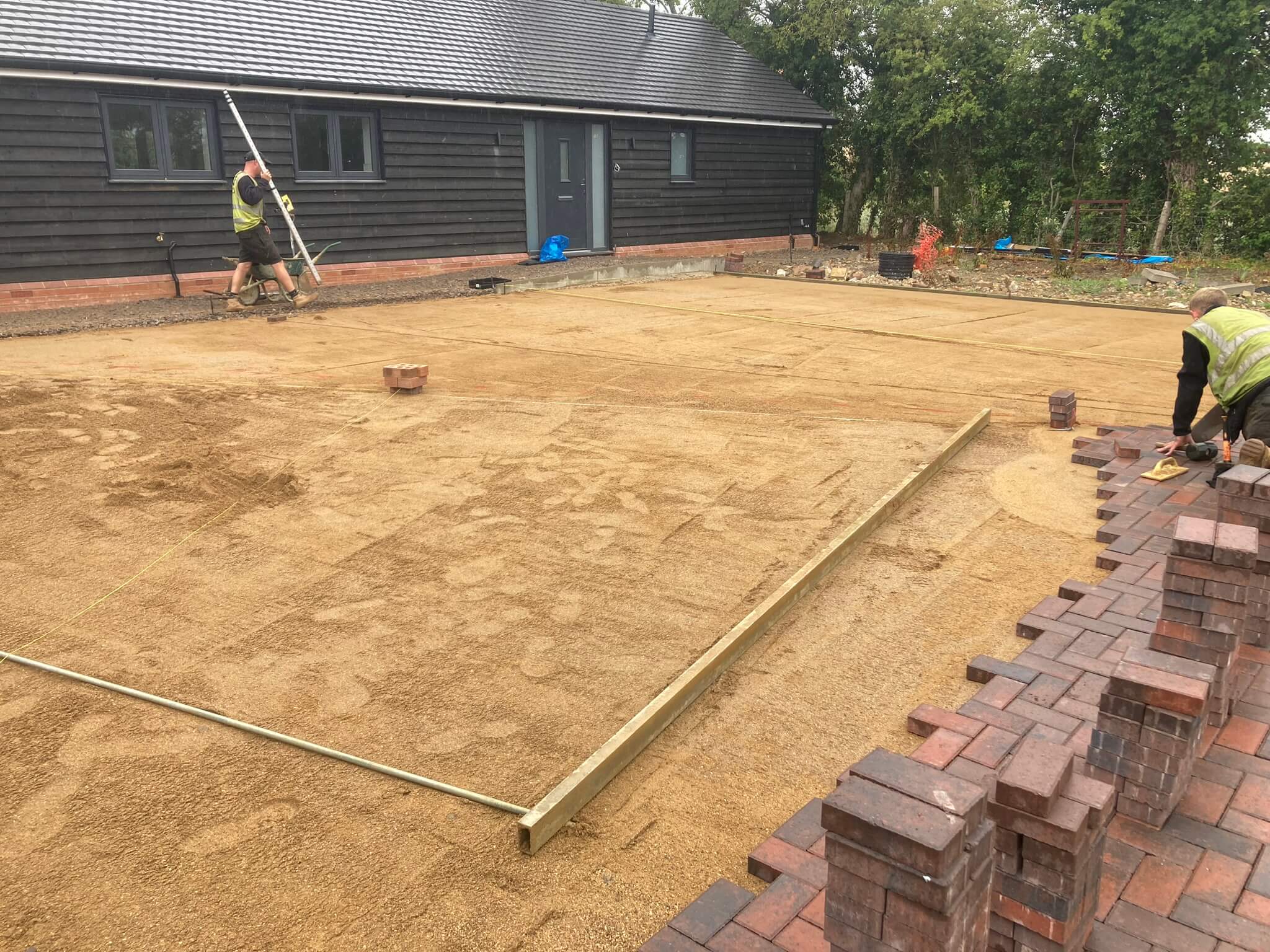
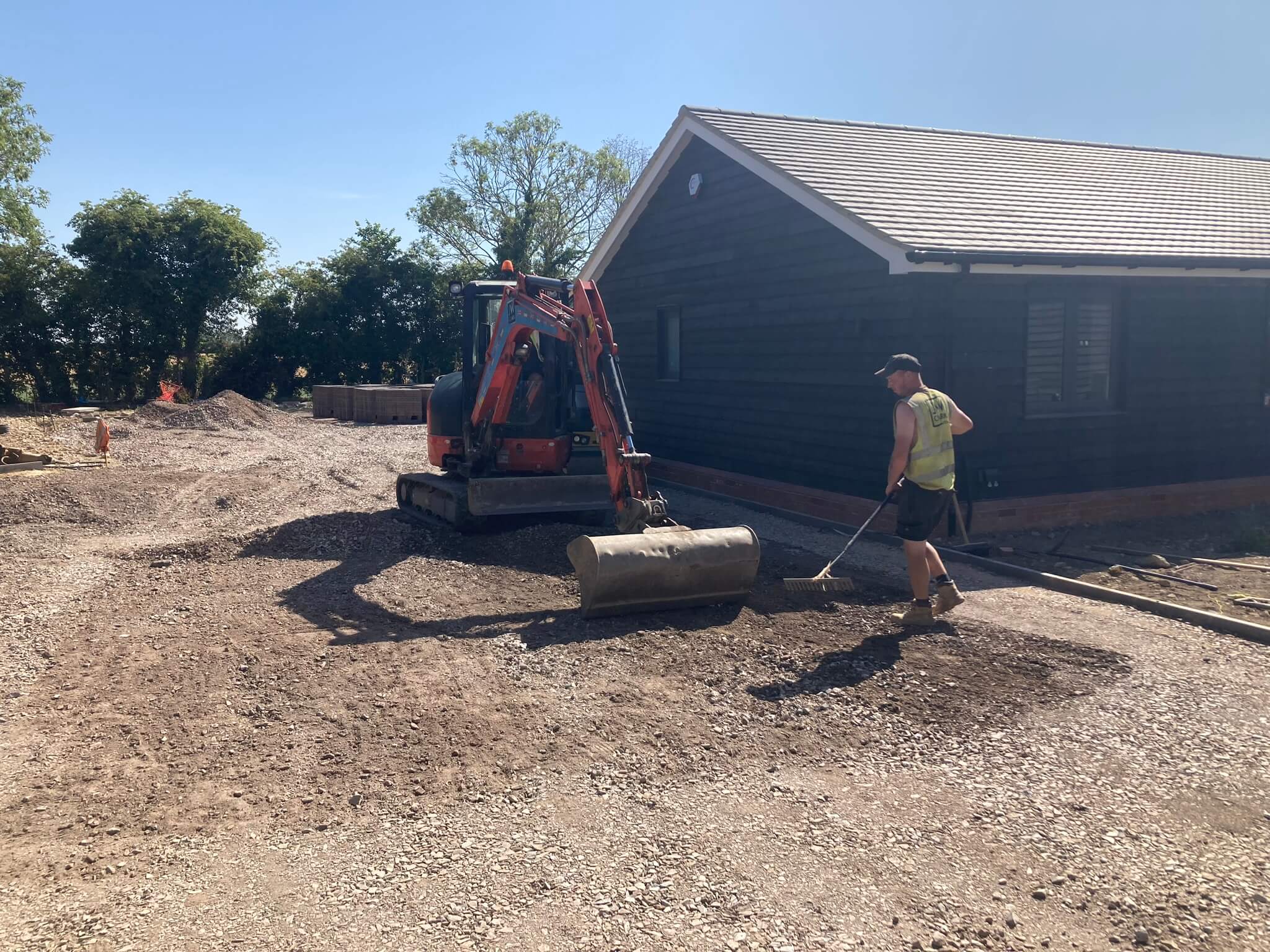
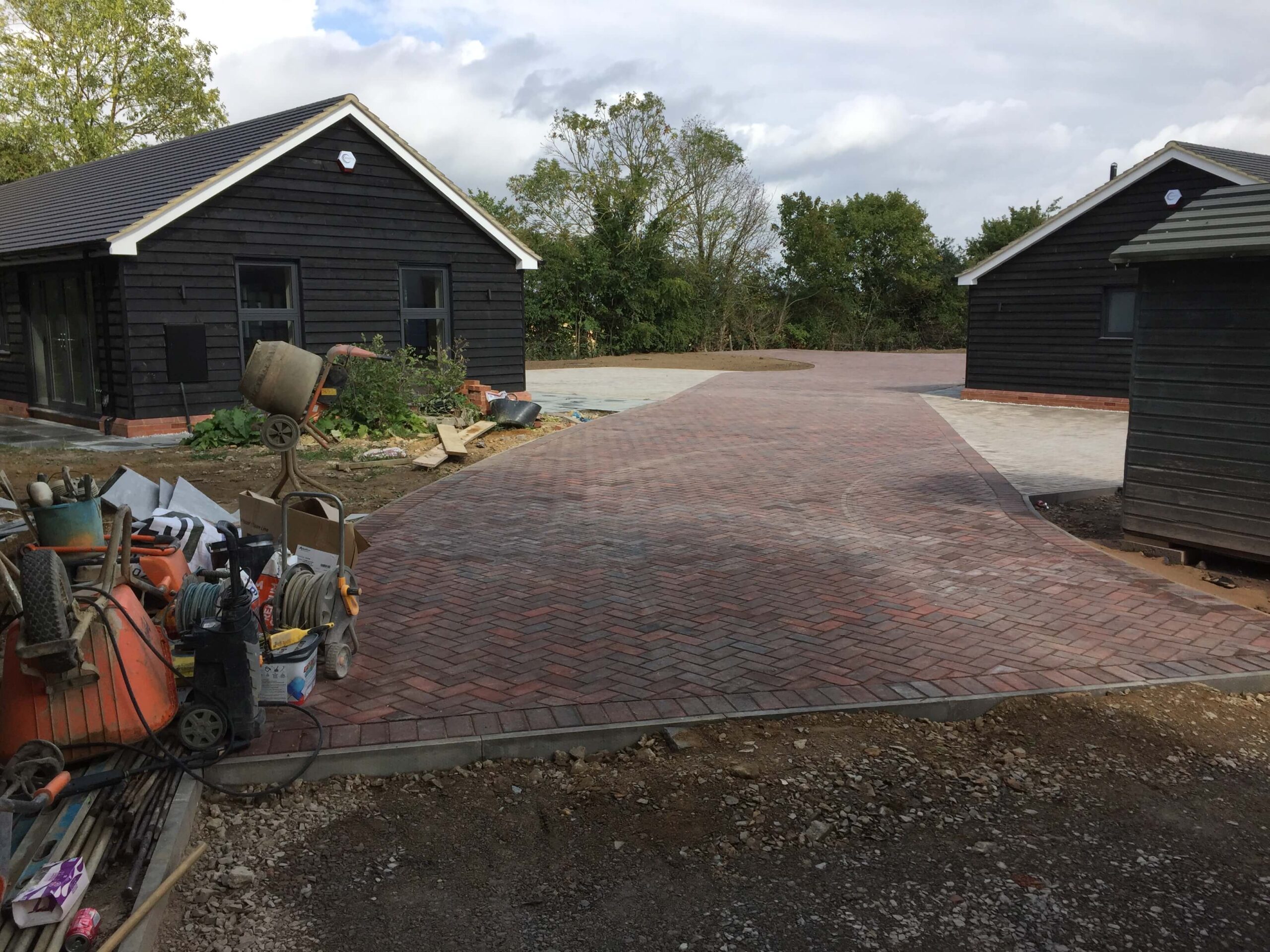
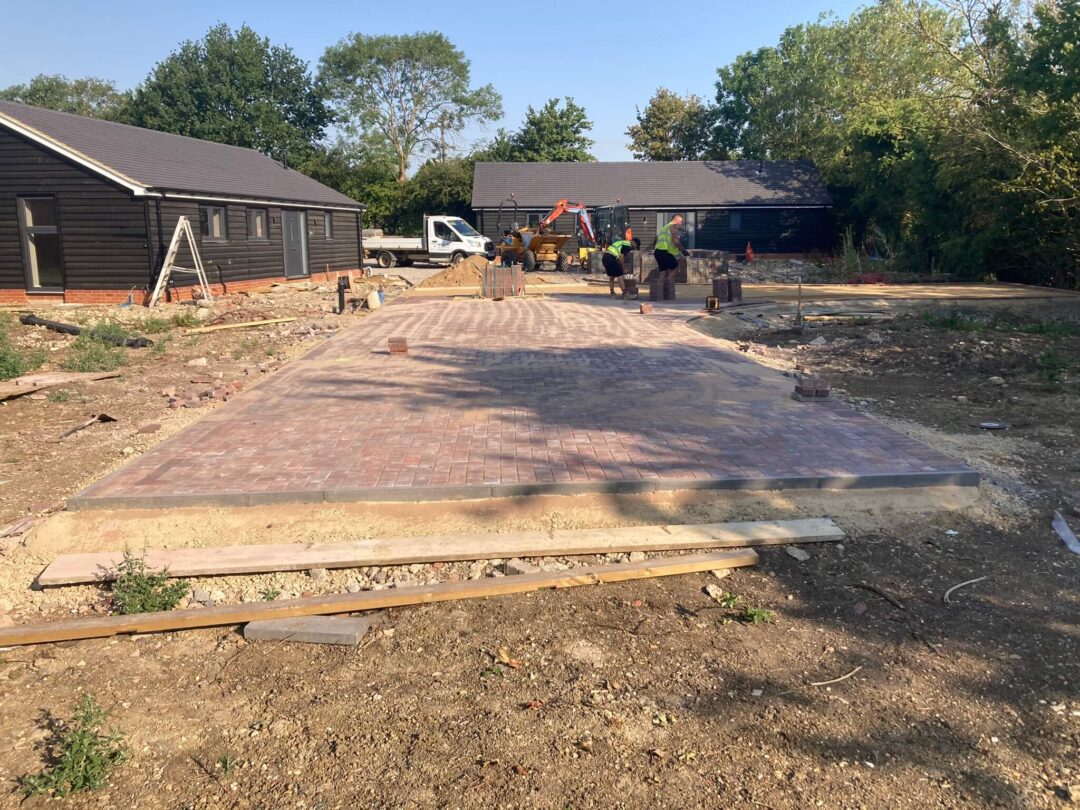
We started by working out levels so that paving fell in different directions, to help with drainage and avoid puddling in the paving. We were generally into a layer of hardcore having ascertained levels, but we still laid a geotextile membrane, before bringing in more 6F2 recycled hardcore, and the Type 1 Granite MOT. The majority of the paving was edged with standard ‘natural’ edging kerbs.

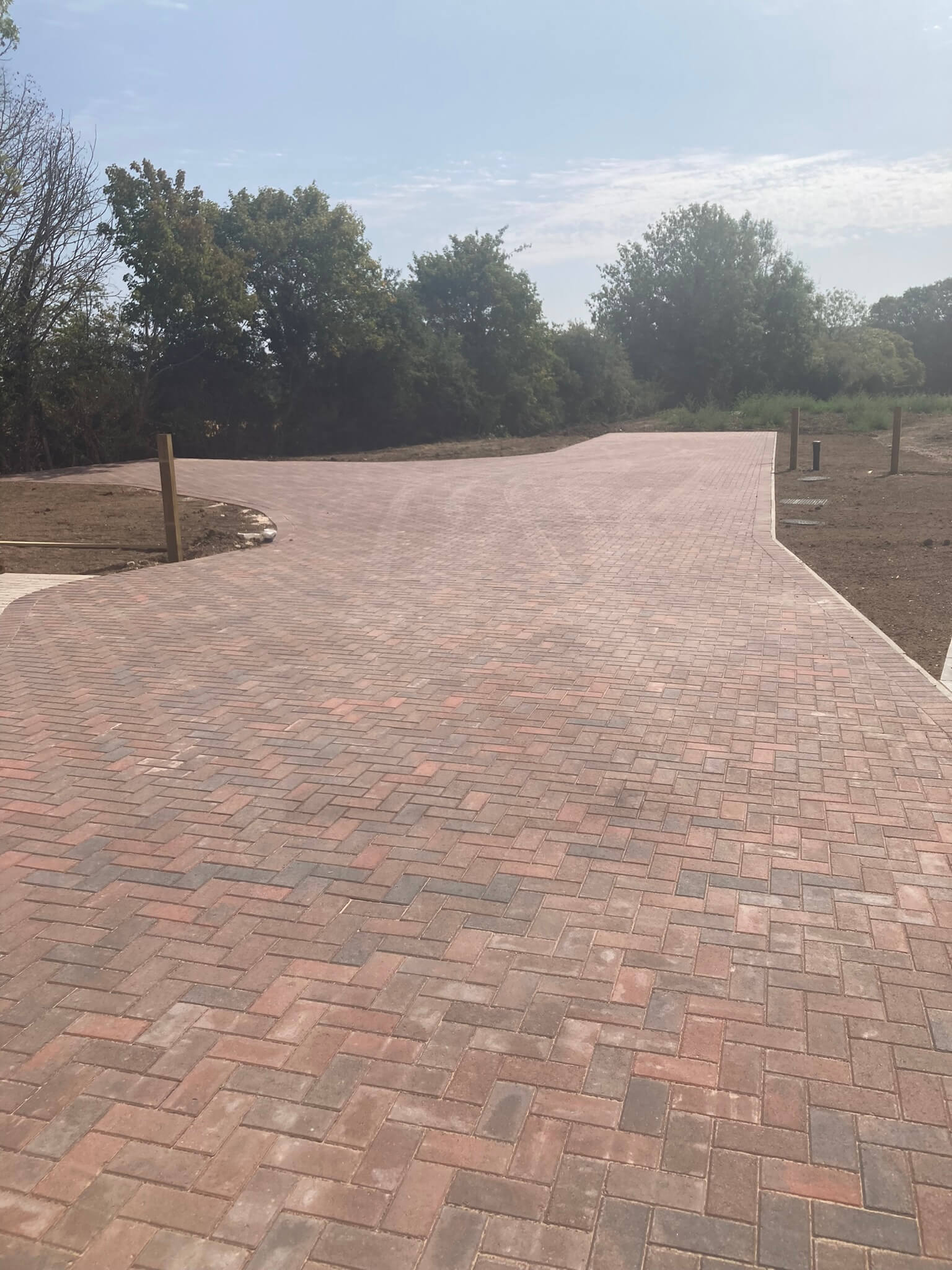
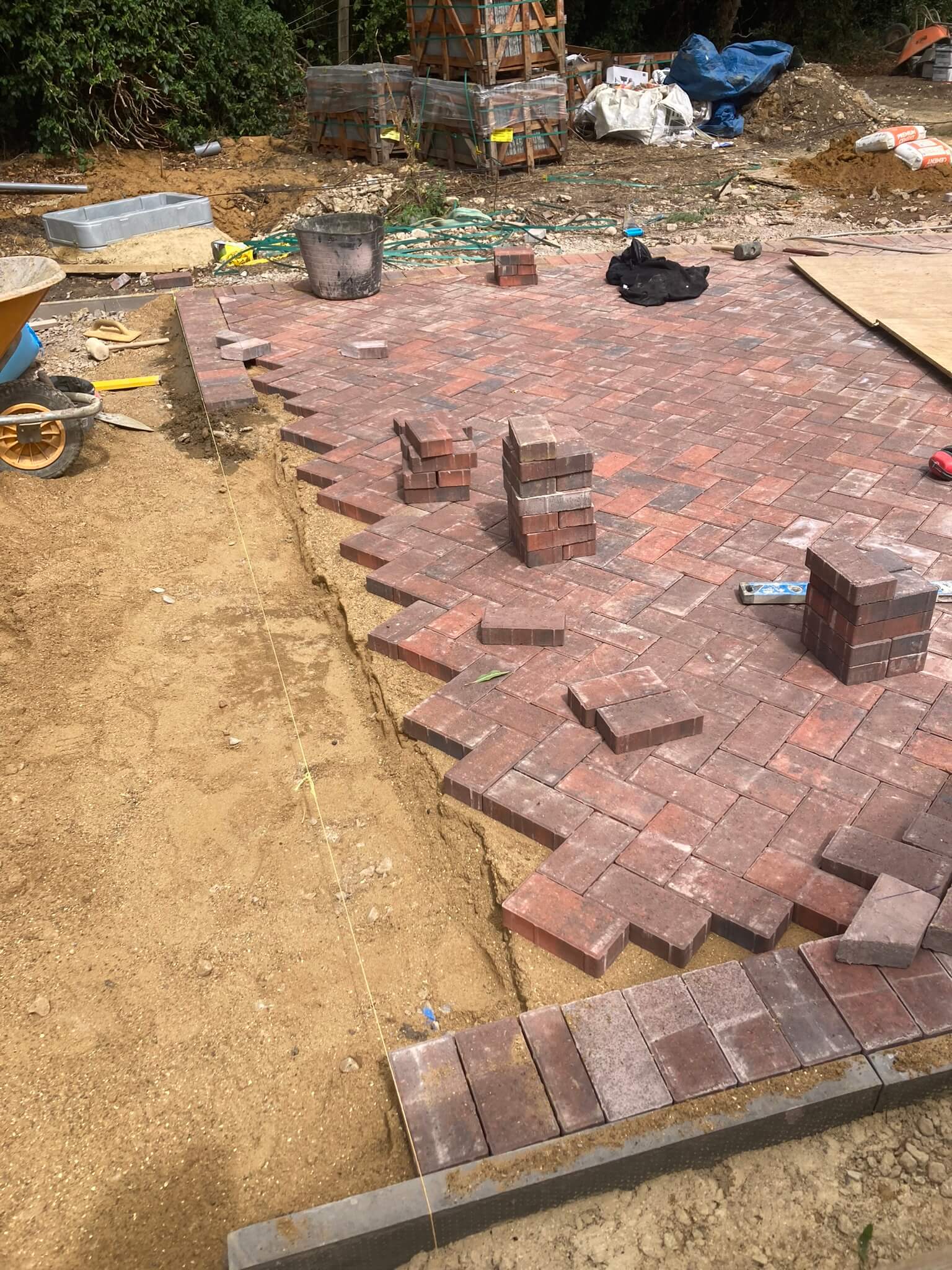
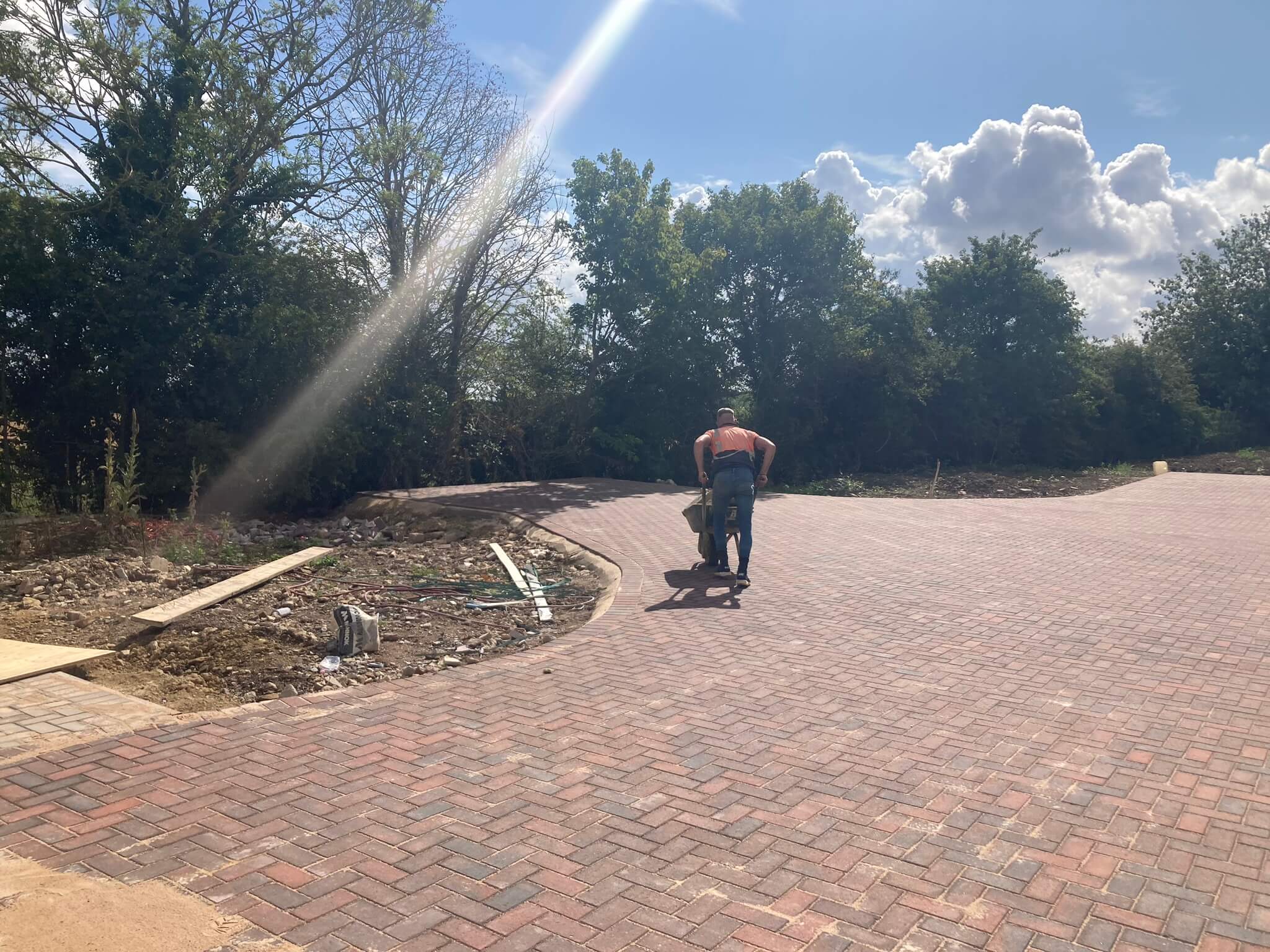
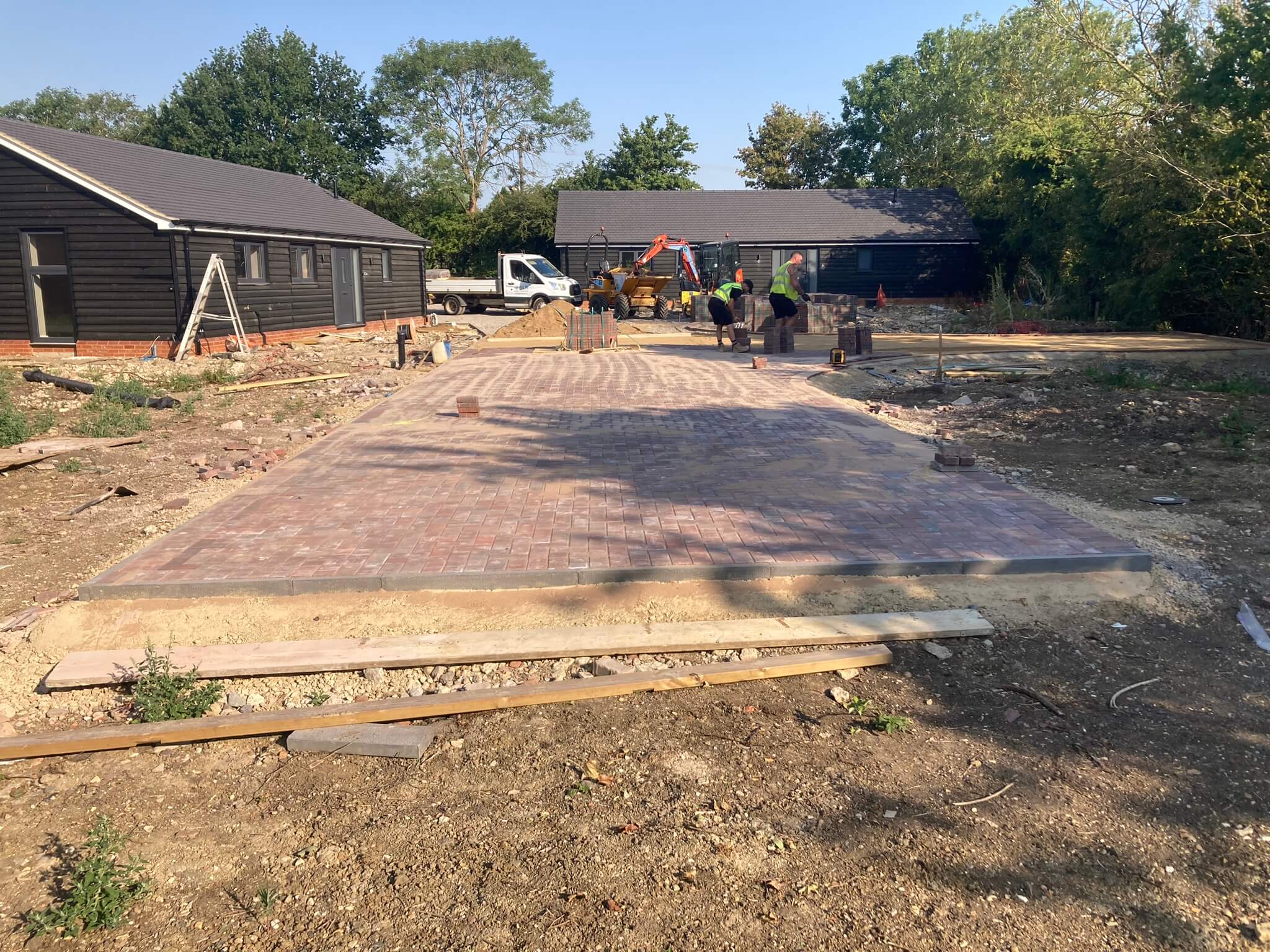
The main shared road between the two barns was done with red ‘brindle’ block paviours, with the parking areas for each property done in grey.

Between the shared block paved driveway and the Highway, the design detailed a tarmac road, with the same ‘natural’ edging kerbs to the sides. We constructed this from scratch with recycled 6F2 and then Type 1 MOT granite on top, and natural grey edging kerbs again to the sides.

The tarmac make-up was 70mm of 20mm base course and then 30mm of 6mm SMA wearing course to finish. ‘SMA’, which stands for ‘Stone Mastic Asphalt’ is a more durable grade of tarmac wearing course which better withstands turning on, by cars, particularly during warmer weather.

The whole project took 5 weeks from start to finish, we started in the site with the block paving, working our way out to the tarmac road and resurfacing the crossover as well.

With all the paving work done, we dropped back and filled borders and plating areas with 10mm topsoil in preparation for planting, by others.

It was a pleasure to carry out these works for our customer. We originally completed the groundwork for a new build for their father, many years ago, so it was great to be invited to do the groundwork for these two new-build barns (case study here). Six months later, we returned to install all utilities and services for the build, and finally came back on this visit to complete the paving.

Do you require a quote for similar works, click here to make contact

Click here to read more case studies on all aspects of groundwork & civils

Commercial Car Park and Access Road, Irthlingborough, Northants

Projects

Commercial Car Park and Access Road, Case Study

We were delighted to undertake these works for longstanding customer of ours, Whitworths in Irthlingborough


Location
Irthlingborough, Northants
Client
Whitworths
Value
£xxx,xxx
commercial contracts

Objective

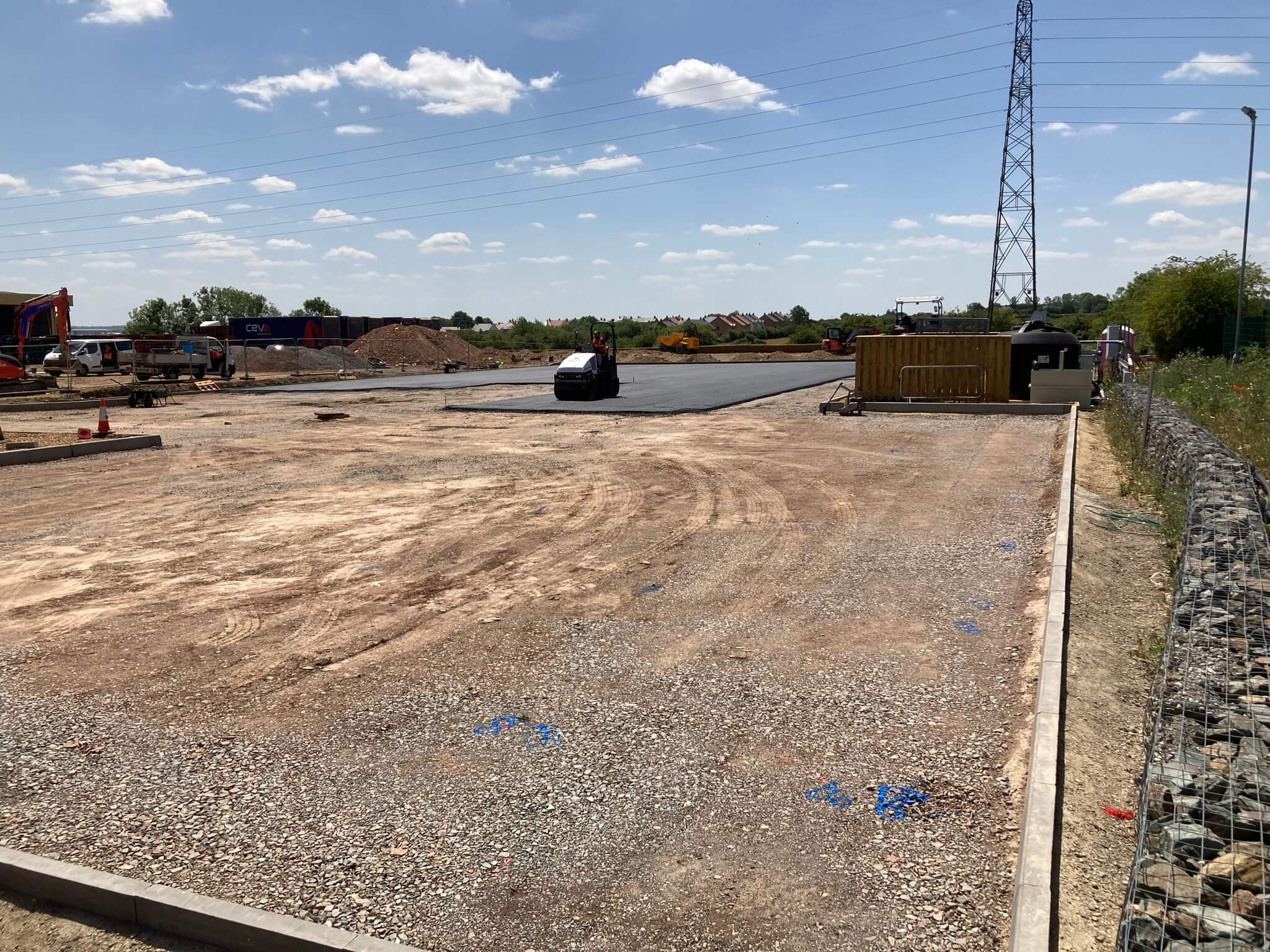
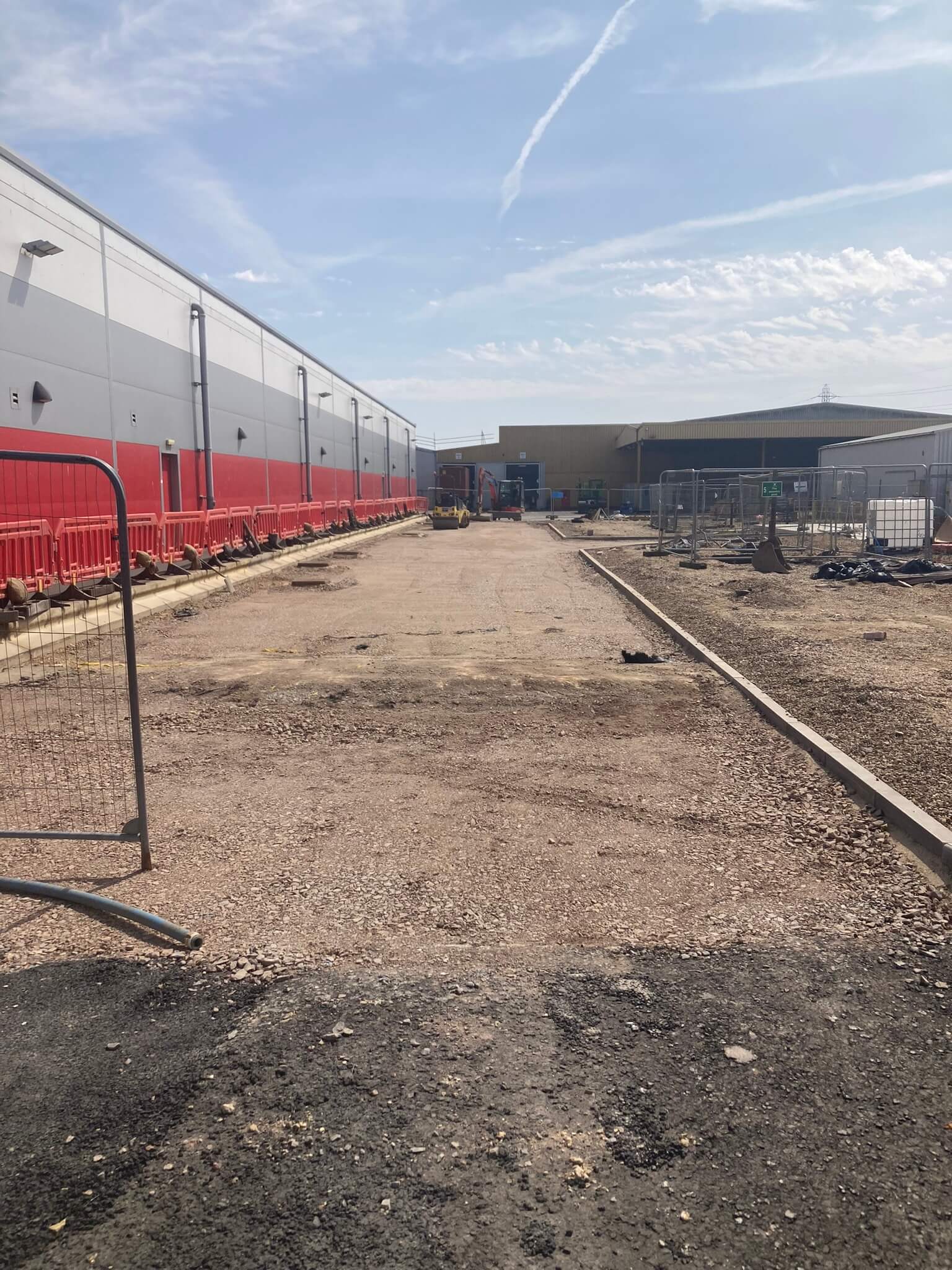
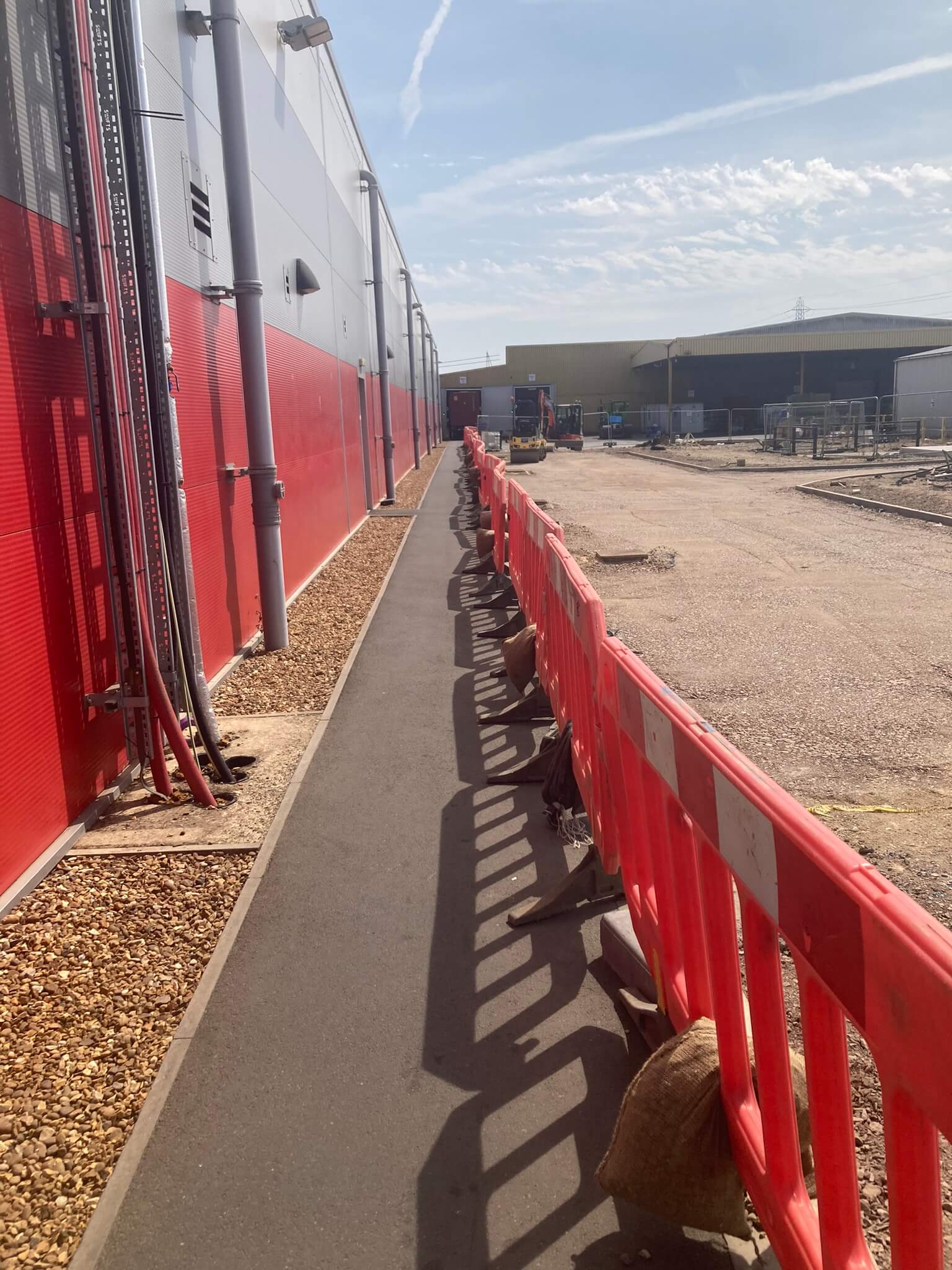
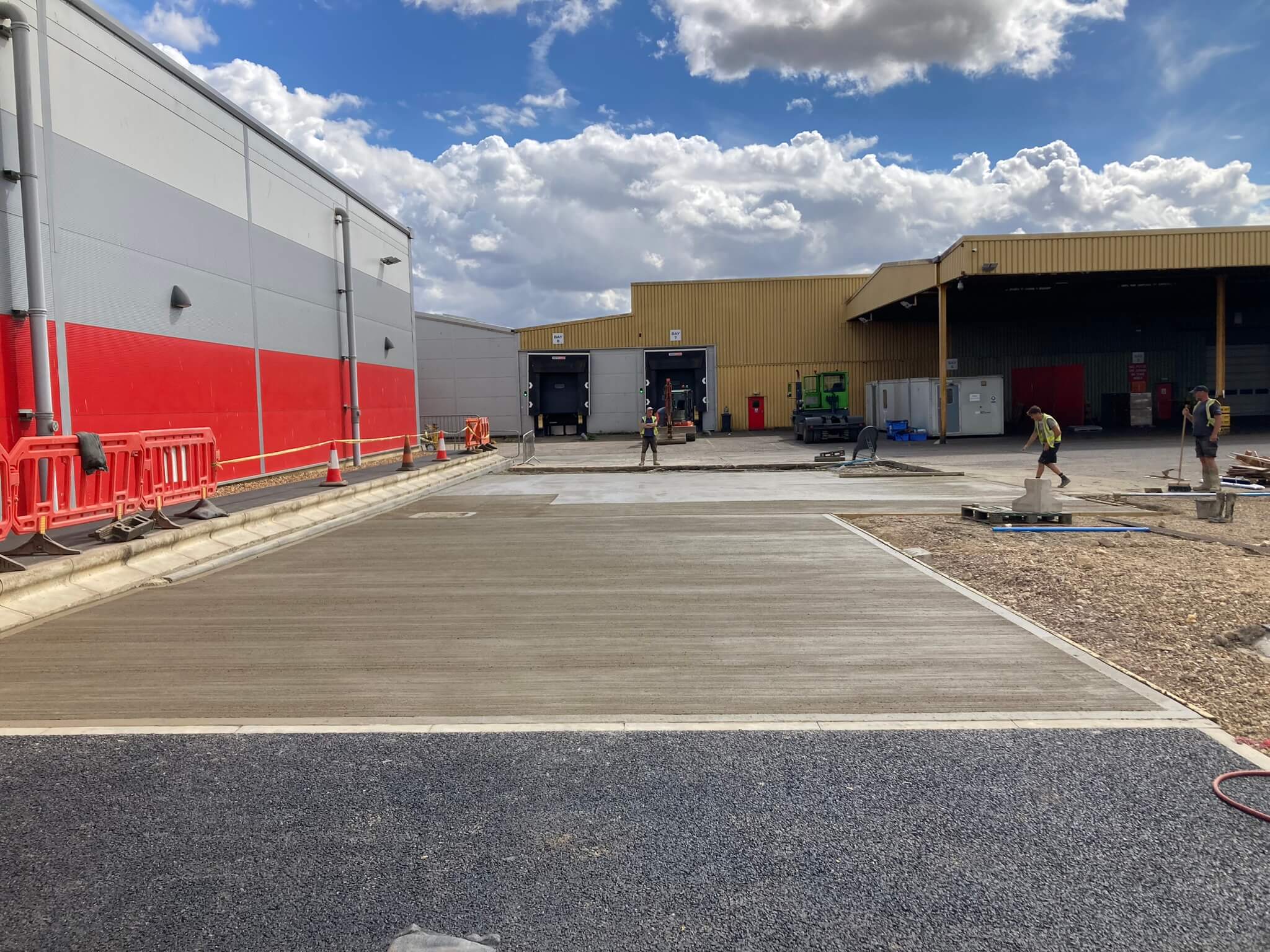
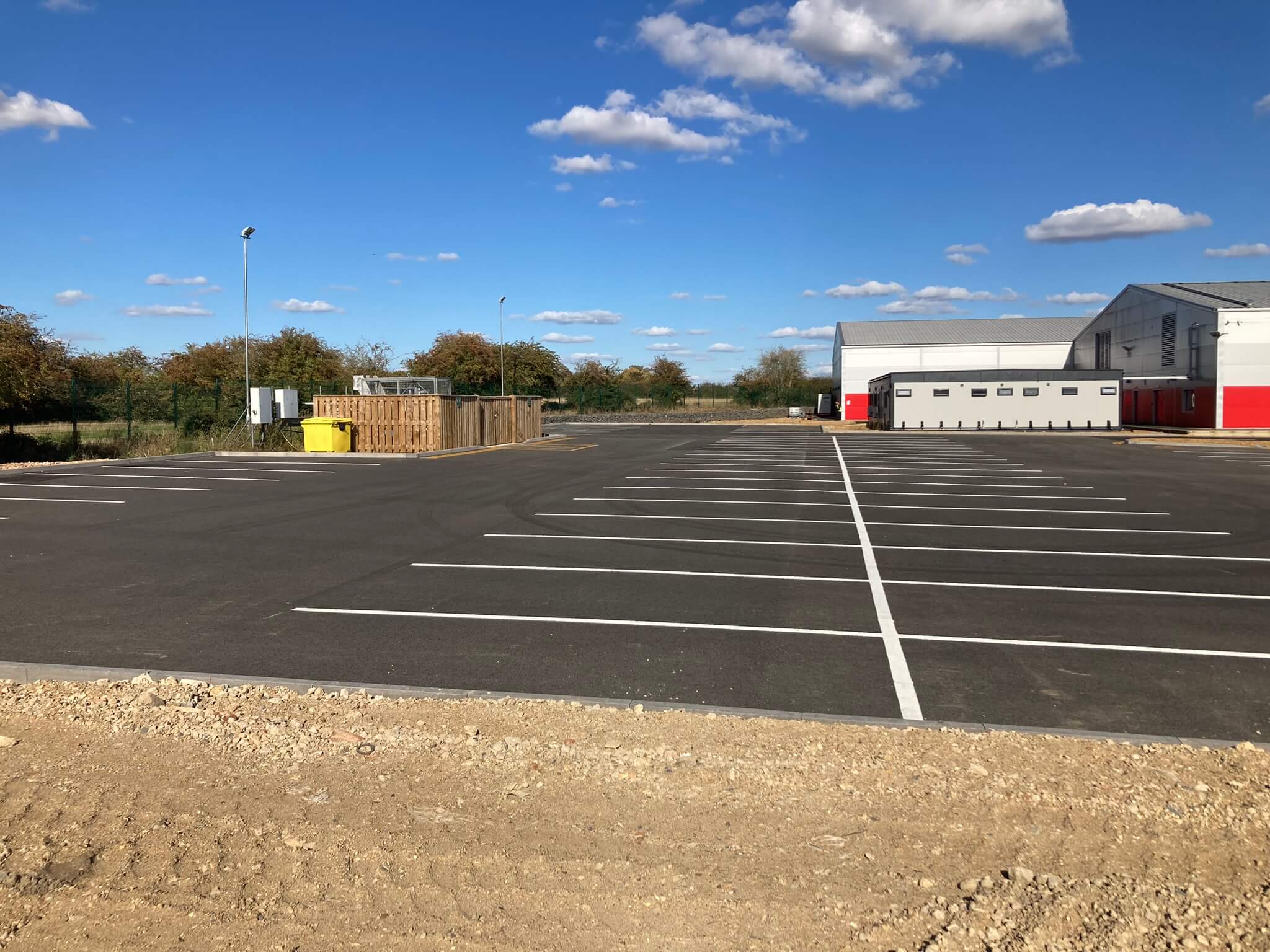
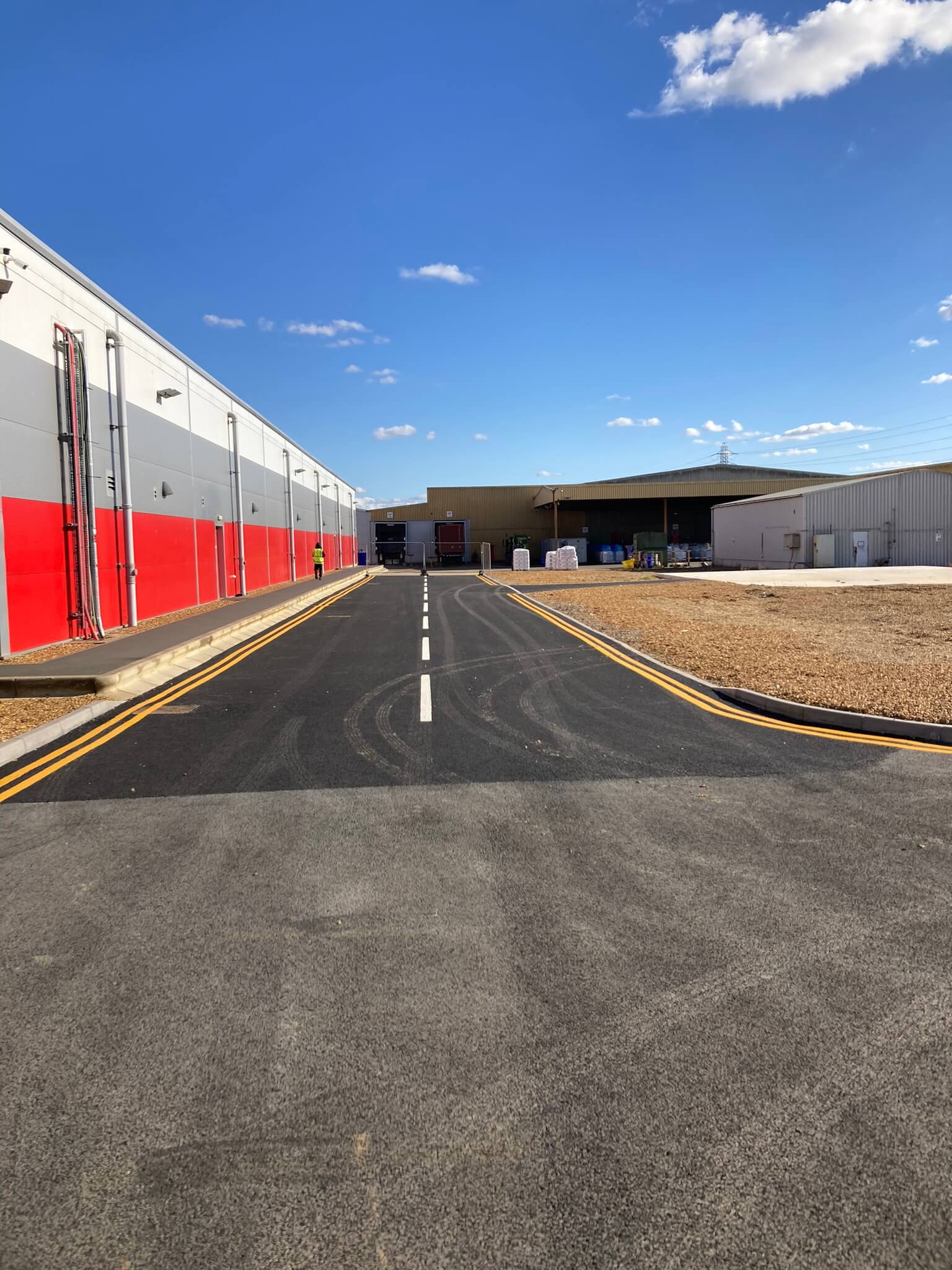
Our objective was to install a 7m wide concrete and tarmac road-way continuing on from an existing concrete area, linking up to a new car park at the back of the factory complex, to enable further parking for their expanding operation and also enabling employees to park closer to their place of work.

About the project

Our customer had already had some drawings put together, detailing how the roadway and car park would be built. Previous designs were cost-prohibitive however, and we worked with our customer over a long period of time, to come up with an alternative design to make the scheme possible.

The area in question was already hardstanding to an extent but was not suitable for smaller vehicles. The majority of the new road was to be tarmac, flexible construction, with a smaller concrete stretch at one end, where articulated lorries would also be likely to turn. The whole of the car park was tarmac, flexible construction with kerbs to the perimeter.

We started by clearing the site down the required level and gradients, and installing a mixture of HB2 & 6×5 kerbs to the perimeter. The existing sub base was good in most places, but still required a build up of 6F2 recycled hardcore, and then Type 1 Granite to finish, all continously rolled in layers to ensure zero settlement in the future.

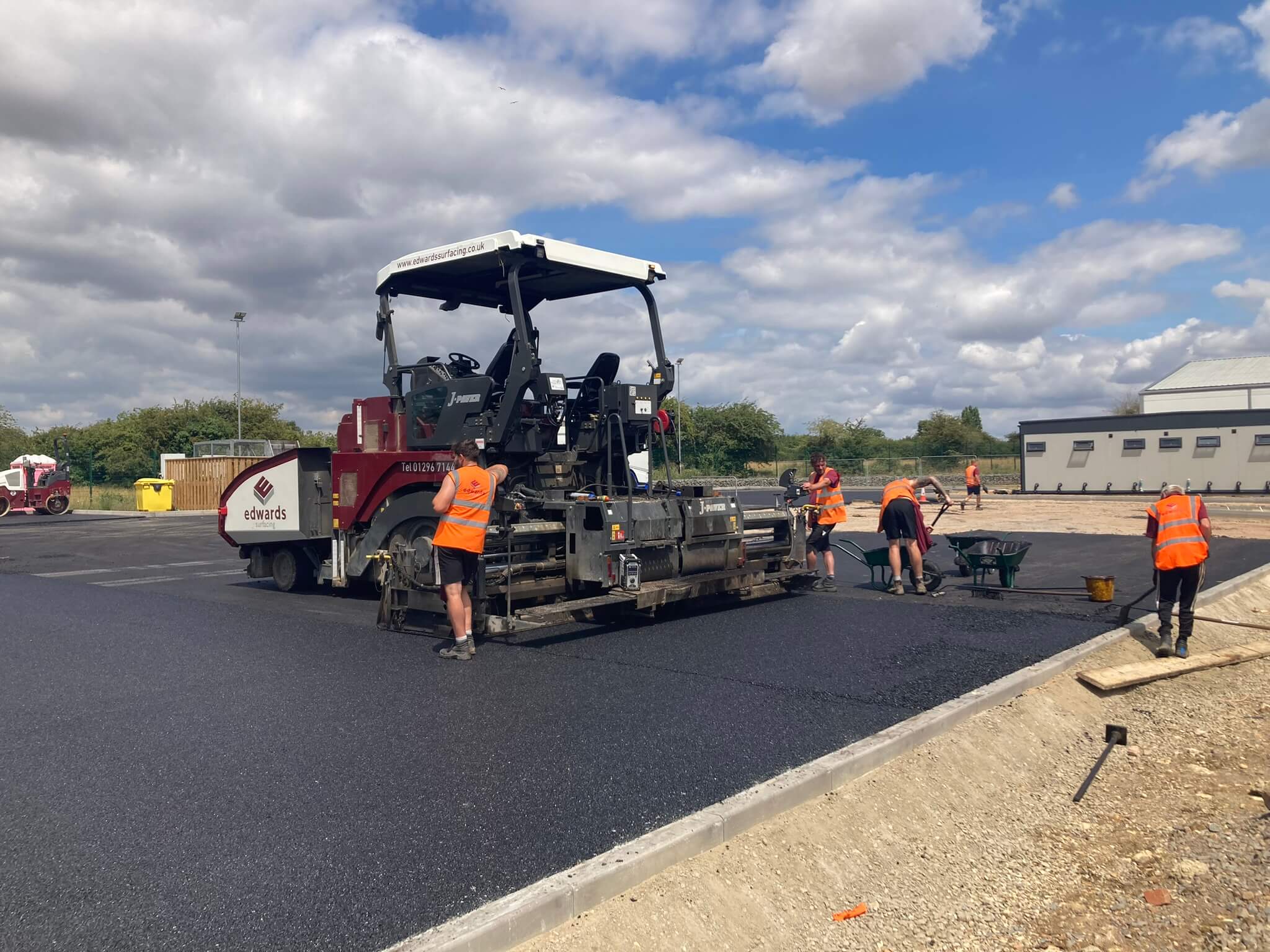
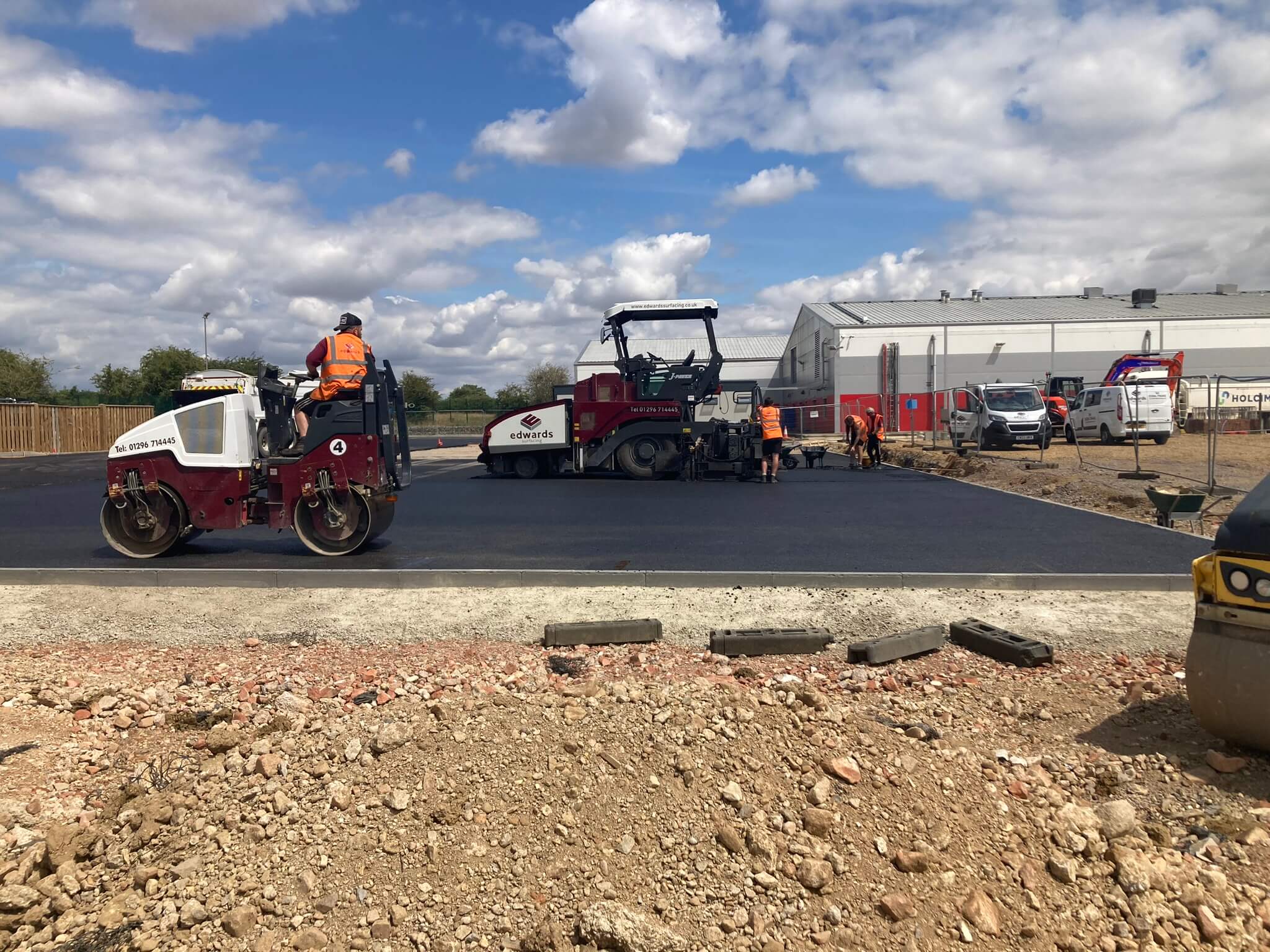
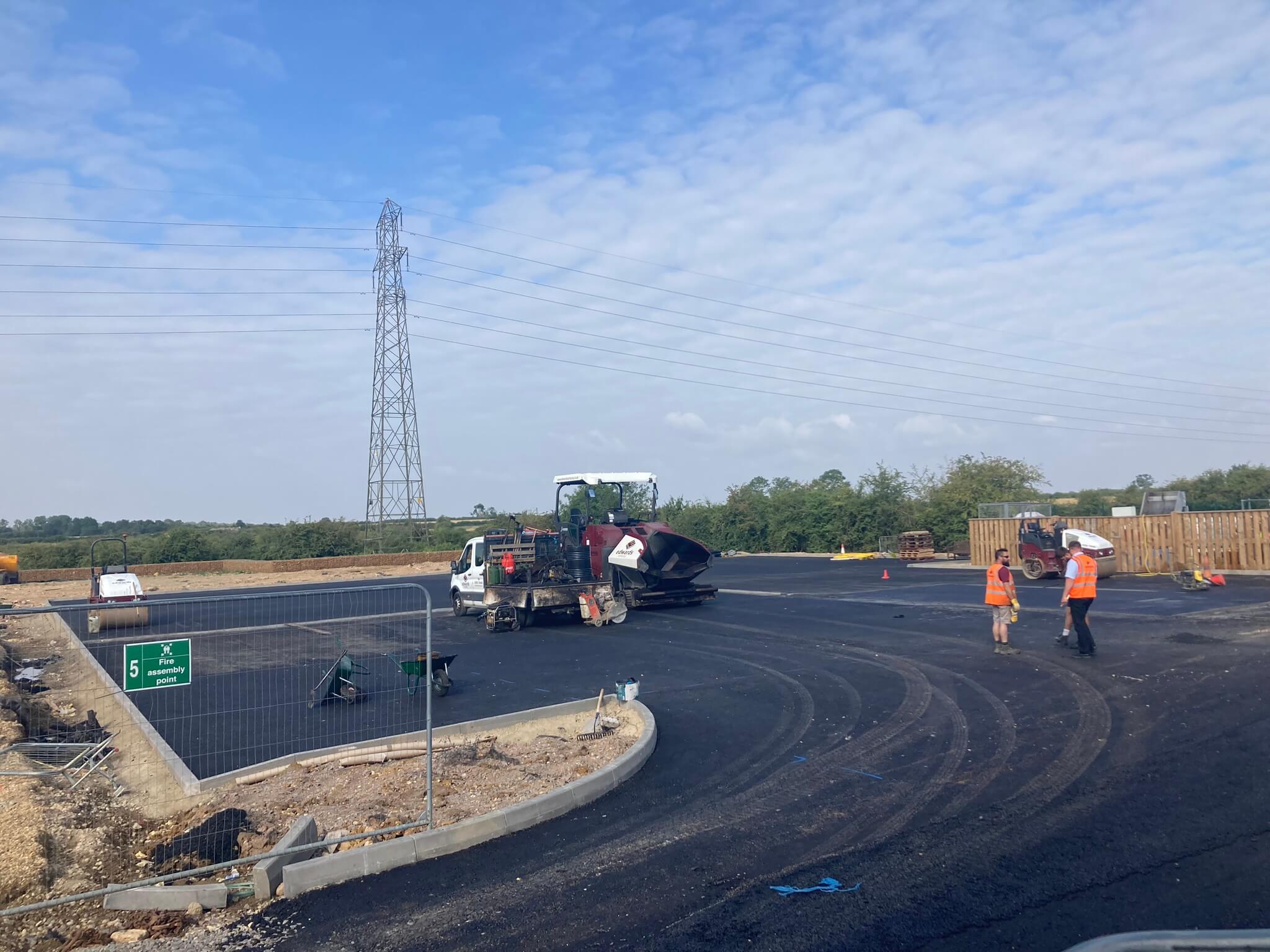
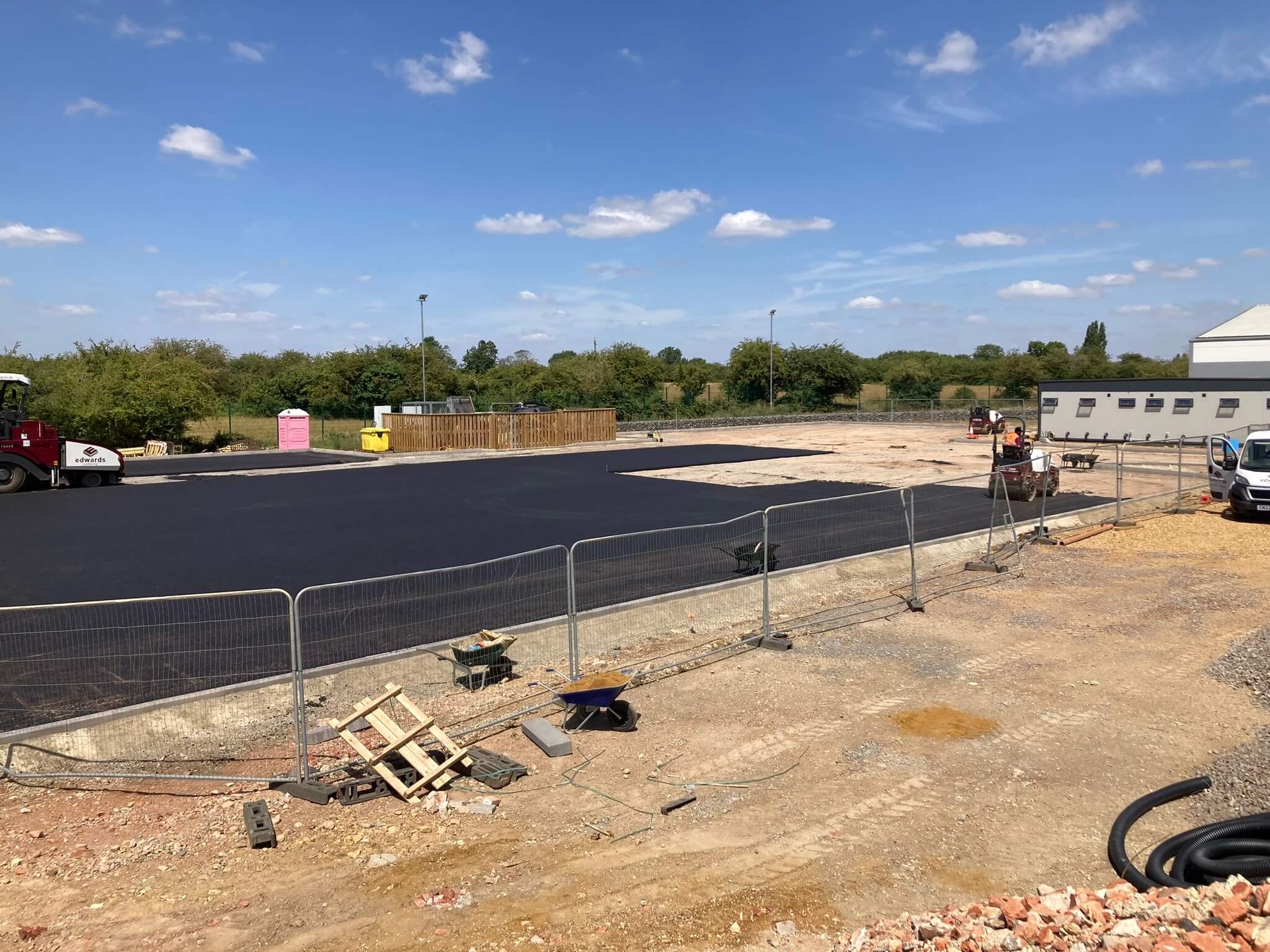
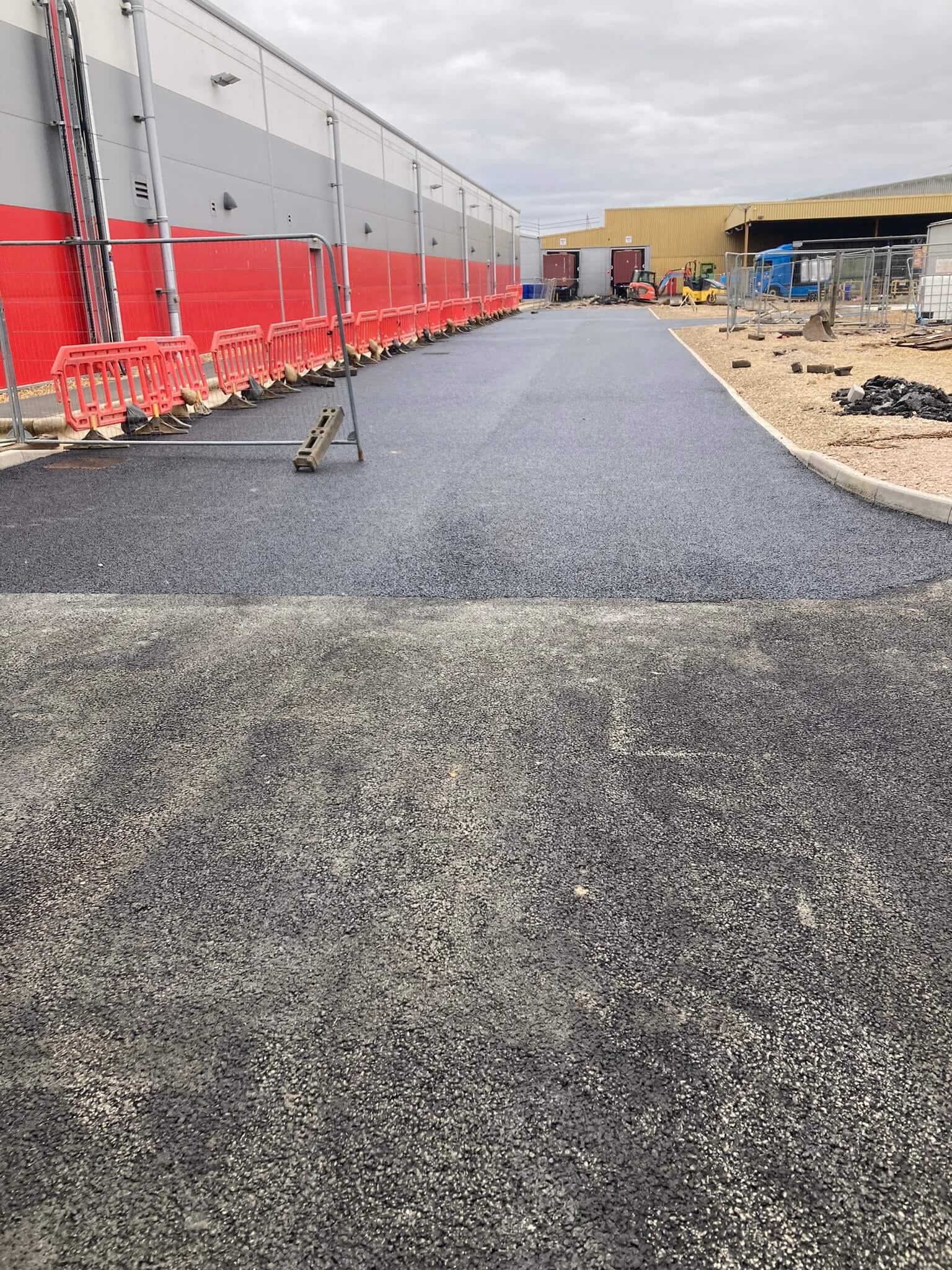
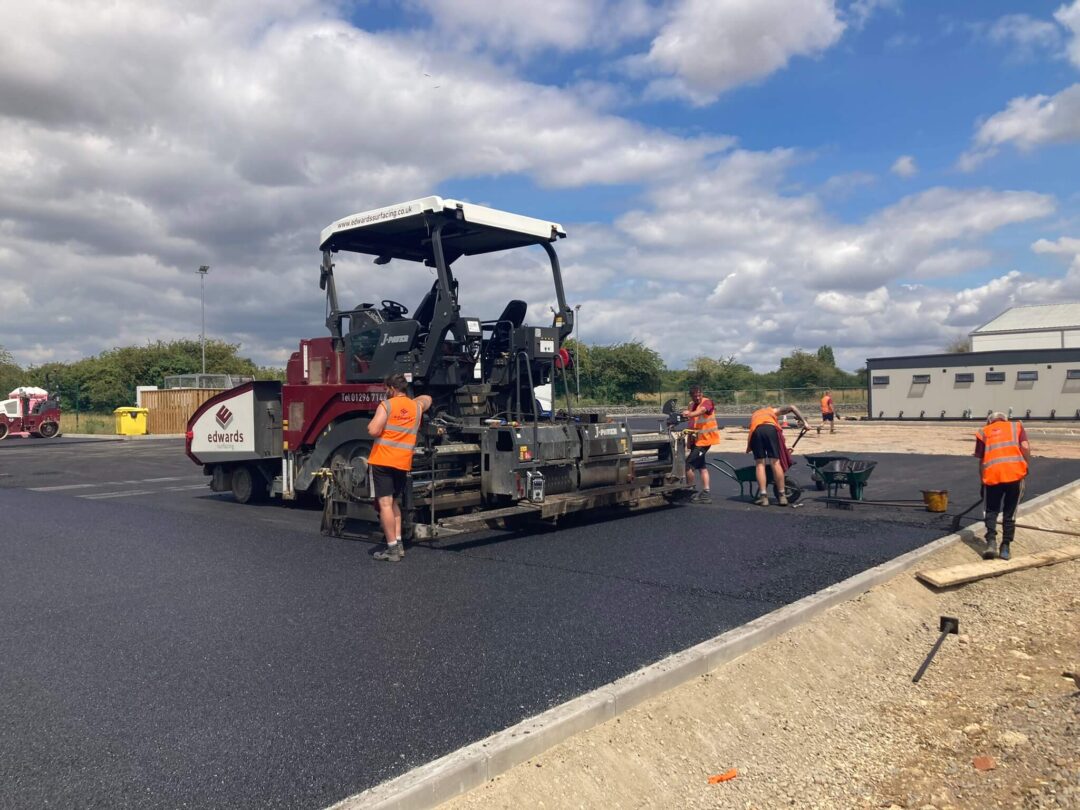
With Type 1 Granite trimmed to the correct levels, we instructed our tarmac surfacing contractor of choice, Edwards Surfacing, to install base course and 10mm SMA to finish the road and car park areas.

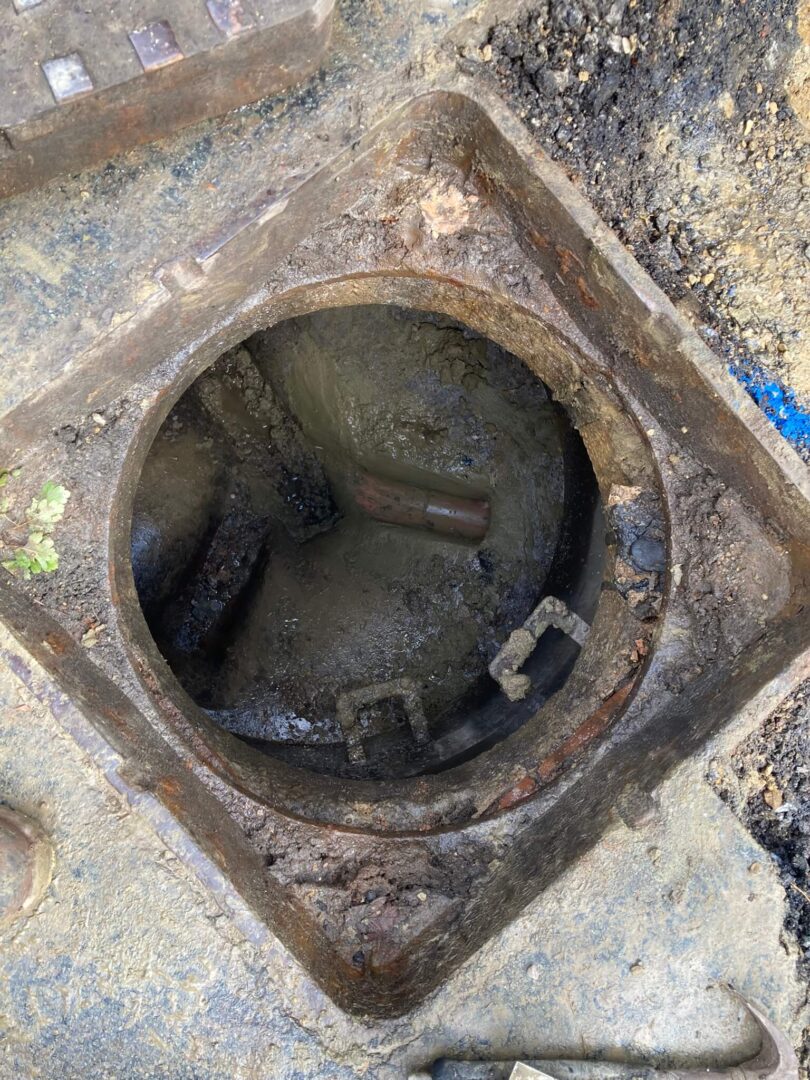
The whole project from start to finish took about 9-10 weeks, and included other aspects including drainage & alteration of manholes, installing new manhole covers etc. With all of the tarmac work complete, we finished the surfacing with line marking including for parking bays, and double yellow lines to restrict parking etc. It was great to be involved in this project, for a longstanding customer of ours, and on our doorstep in Irthlingborough.

Do you require a quote for similar works, click here to make contact

Click here to read more case studies on all aspects of groundwork & civils

Tunnelled Sewer connection, Enfield

Projects

Tunnelled Sewer connection, Enfield

We were delighted to carry out this double sewer connection for an existing customer of ours, albeit this one was a bit of a challenge – in more ways than one…!

Location
Enfield, London
Client
DL Toro
Value
£xx,xxx
Transport-Truck-02

Objective

Our objective was to connect 6 new properties to the public sewer in the main road running thorough Enfield, in London. The connections were for both foul and surface water, one in the middle of the road and one on the far side of the road.  

The challenges....

The sewers in the road that we had to connect to, were not particularly deep, the foul sewer being 3m deep and in the centre of the road, and the surface water being 2m deep, and on the far side of the road. The original Section 106 Approval that our customer had already arranged, had detailed new manholes to be built on both the surface water and foul sewers in the road. This would have meant a road closure lasting in excess of 2 weeks. Highways were unlikely to allow a road closure and diversion on a A-road, and for this length of time. We therefore approached Thames Water and requested the method of connection be changed to Junction Insertions, with the pipework being laid to two demarcation chambers built just inside the private shared driveway of the properties.

Thames Water agreed, and this would have shortened the work in the Highway to around 8 or 9 days, and might have allowed the works to be done under 2-way traffic lights instead. We had a meeting with Highways, but based on the width of the road, the location of both of the sewers to be connected onto, and also the depth of the excavations, it was still looking like it needed to be a road closure. But Highways weren’t keen on a road closure for this length of time, at such a busy location in London. Transport For London were also reluctant.

Highways suggested a shaft on one side of the road, and for it to be tunnelled to the other side of the road. However, existing services on the side of the road nearest the site, made a shaft in the road near-on impossible. Our only option left was to sink a shaft for tunnelling, in private property. But this meant denying the residents vehicular access for the duration of the works, which would take well in excess of one month. Our customer spoke to the neighbour, and a boundary fence was taken down between the new shared driveway and next door, enabling the residents of the new properties access via the neighbour’s driveway.

About the project

With the residents’ cars diverted and the front driveway gates locked shut, we lifted block paviours and put to one side. We excavated for the tunnelling shaft, 3m deep, and just over 2m wide in both directions. The excavation was quite wet at the bottom, around 2.5m down. We formed a concrete base at the bottom of the excavation and formed a sump, where we installed a pump that ran 24 hours per day and for the duration of the job.


We used trench sheets and heavy timbers to make the excavation safe. From here the tunnel was slowly excavated at a rate of just over 1m per day, with the top of the heading about 2m down from the road level. We found the foul pipe at the bottom of the tunnel, half way across the road, and the surface water at the top, and on the far side. The junctions were fitted and pipework laid back towards the site.


The tunnel was backfilled and packed with dry concrete as the pipes were laid back to the site. The tunnelling work took just under three weeks to complete. After that we excavated for and laid the small amount of pipework back into the two demarcation chambers. With the pipework all connected, the excavation was backfilled with gravel and type 1 compacted in layers, and the block paving reinstated.

Despite the initial challenges with method of connection, and then resistance from the authorities to close the road, we were able to complete these works and with pretty much no inconvenience to the general public, but just a little bit of hassle for the residents whilst the works were taking place. The nature of the works wouldn’t ordinarily have warranted a tunnelling solution, these weren’t particularly deep connections, but this was our only option if the road couldn’t be closed. 

Timeline

Time to quote for the works: Less than a week

Time taken to obtain Section 106 Licence from AW: Our customer already had this, but we had to liaise with TW to get the method of connection changed, which added another two weeks to the process 

Time taken to obtain Section 50 Licence from Highways: In excess of 2 months

Leadtime to use S50 Licence: 2 weeks – due in part to TTRO (Road Closure) 

Time taken to do the work: 5 weeks

Total time:  17 weeks

Do you need a sewer connection needs doing? Click here to enquire.

Don’t leave it too late for a sewer connection, most people do! Read our article here: How long does it take to do a sewer connection?

Click here to see more of our case studies.
Sewer connection, Wicken, Northants

Projects

Sewer connection, Wicken, Northants

We were approached by a private customer, who had a Treatment Plant in his back garden, but which was not working to current regs, and who wanted connecting to the public sewer in the Highway.

Location
Wicken, Northants
Client
Private customer
Value
Circa £22k
Transport-Truck-02

Objective

Our objective was to make a connection into the public sewer, in the Highway and 35 metres away from the property down the road. We then had to lay pipework across the road, up the grass verge and into the private property, and to a point where existing foul drainage could be re-routed from the old septic tank and into the public sewer.  

About the project

Our customer already had a treatment plant in his garden, which was serving his relatively new property. However the effluent was struggling to soak away in whatever drainage system had been installed for the treatment plant. Also, under new regulations that came into effect in 2020, you are no longer permitted to install a replacement treatment plant in the event that a public sewer exists in close proximity, and there was indeed a foul sewer in the carriageway outside the property.

If you need a sewer connection doing, please contact us as early as possible, there are many reasons why the lead-time for a sewer connection can be up to a year or more. For more information click here.

We acted on behalf of our customer to facilitate the Section 106 application to Anglian Water, as we usually do. We put a basic drainage plan together, which we submitted to Anglian Water and which was accepted.

With the approval ‘in hand’, we were then able to apply for the section 50 to Highways. With the road being so narrow, it was clearly going to require a road closure. Unfortunately this adds 3 month leadtime onto the whole process, and also adds extra cost.

We started our works at the connection point, the existing manhole. This was the ‘start of the run’ prior to our new connection, but it was still well in excess of a metre deep. In our favour, our customer’s property was on a higher level, so we were easily able to get the fall. We core-drilled into the manhole, and also broke out and re-formed some of the benching in the manhole. The pipework was laid across the narrow road and into the verge, and from there it continued up the verge, still in the Highway, all the way to our customer’s property about 35 metres away.

At the boundary with the property, we installed a manhole where the new drainage run turned at near-on 90 degrees. From here we continued into private property.

The existing Treatment Plant was another 20 metres away into private property. This required us to excavate and lay pipework in block paving and in unmade ground in a paddock.

We made the connection into the existing system by tapping into the final manhole in private property, just before the existing Treatment Plant. The customer asked that we decommission the Treatment Plant by filling it with some of the excavated material. To enable us to do this, we asked that he have the Plant emptied one last time, which we arranged.

The block paving was reinstated, as was the verge and grass areas, and in less than 2 weeks our customer was now off his old Treatment Plant and onto the public sewer.

Timeline

Time to quote for the works: Less than a week

Time taken to obtain Section 106 Licence from AW: 2 weeks  

Time taken to obtain Section 50 Licence from Highways: 4 weeks

Leadtime to use S50 Licence: 12 weeks – due in part to TTRO (Road Closure) 

Time taken to do the work: 10 days

Total time:  20 weeks

Do you need a sewer connection needs doing? Click here to enquire.

Don’t leave it too late for a sewer connection, most people do! Read our article here: How long does it take to do a sewer connection?

Click here to see more of our case studies.
Sewer connection, Golder’s Green, London

Projects

Sewer connection, Golder's Green, London, Case Study

We were approached by a private customer, who had been referred to us by another private customer, to undertake both a foul and surface water connection for an existing property.

Location
Golder's Green, London
Client
Private customer
Value
Circa £23k
Transport-Truck-02

Objective

Our objective was to make two new connections onto the public sewer, both foul and surface water and connect to an existing property. The connections were made in the centre of the road, and pipes laid back to the boundary with private property. We connected the new pipework into the existing sewerage system within private property which included us making some alterations to the existing system.

In addition, we lifted an existing paved area and re-laid all the slabs.

About the project

Our customer already had a connection into a neighbouring property, but required two connections to be made into the public sewers in the Highway instead. This included both the foul and surface water sewers. The surface water sewer was in the centre of the road, at a couple of metres deep. The foul was closer to the pavement, but was in excess of 3m deep.

We facilitated to Section 106 to Thames Water, which included us putting together a basic drainage drawing, which detailed where the pipework was within the property, and also how we planned to connect to the two sewers and by which method. For the surface water we were able to fit a saddle connection and for the foul we had to fit a junction insertion.

If you need a sewer connection doing, please contact us as early as possible, there are many reasons why the lead-time for a sewer connection can be up to a year or more. For more information click here.

Our Section 50 application to Highways included some legal suspensions of parking spaces, in order that we could clear cars in advance of the work taking place. With the site set up on day one, we brought our own 3.7 tonne mini digger to site, complete with breaker.

As is the condition with a Section 50 Licence, we were obliged to source all drawings for utilities that might be present within the area to be excavated. We also sprayed up where we expected services to be, having done a CAT scan of the area.

We sawcut and broke out for the pit in the road, where we would make the two connections.

We were lucky to have very few services in the road and located both the foul and surface water sewers on day one. Over the next couple of days we carefully excavated around both sewers, breaking concrete away from the surface water sewer, as is of the case.

We sheeted the excavation as we went, using trench sheets, acrows and timbers.

We made the connections onto both sewers and these were inspected and passed by the Thames Water Inspector. We then proceeded to excavate further and to lay pipes towards the pavement.

In the pavement we encountered a lot more services, including a cast iron pipe which we think was a water main, also a couple of electric cables, BT ducts, a small BT cable which we were lucky to avoid, and also some fairly shallow Cable TV ducts. We had to hand dig around all of these services, after which we continued to lay pipework, for foul and surface water, into private property.

In private property we had to remove and reinstall the demarcation manhole for the foul, which included turning it to face the new direction out towards the Highway. From this new demarcation manhole we laid plastic 110mm pipework to connect up to the clay pipework we’d laid up to the boundary.  


For the surface water we had to lay new 110mm plastic pipework from the downpipes on the house, to a new demarcation chamber that we installed, and from here will laid pipework up to that which we’d laid to the boundary in clay.

As part of the quote to our customer, we had included to lift and relay about 20 paving slabs which were uneven, creating a trip hazard. We re-laid these on a wet sand/cement bed, and pointed up around the two demarcation manholes.

With the excavations backfilled and compacted in the Highway, we reinstated with tarmac, and in the pavement we re-laid the large slabs that were there previously. The job took us 8 days from start to finish, including the work in private property. We finished by jet washing in private property and in the Highway, removing all signage and barriers from site, and taking our plant and machinery home for a well-earned rest!

Timeline

Time to quote for the works: Less than a week

Time taken to obtain Section 106 Licence from TW: 2 weeks  

Time taken to obtain Section 50 Licence from Highways: 4 weeks – included talks between us and Highways regards traffic management, suspended parking bays, and we also had a site meeting with the representative from Highways

Leadtime to use S50 Licence: 6 weeks 

Time taken to do the work: 8 days

Total time:  15 weeks

Do you need a sewer connection needs doing? Click here to enquire.

Don’t leave it too late for a sewer connection, most people do! Read our article here: How long does it take to do a sewer connection?

Click here to see more of our case studies.
S278 Works & Sewer Connection, Kettering

Projects

S278 Works & Sewer Connection, Case Study, Kettering

We were delighted to undertake these works for longstanding customer of ours, Parrott Construction

Location
Kettering, Northants
Client
Parrott Construction
Value
£xx,xxx
commercial contracts

Objective

Our objective was to facilitate Section 278 works and an Anglian Water sewer connection, for an affordable housing development in Kettering, Northants. Our customer was Parrott Construction, a long standing customer of ours, established way back in 1958…!

About the project

The bulk of the admin work had already been done by our customer, including drawings and design, which had all been approved by Highways. But even with this process complete, we had to start the process of applying for roadspace and organising traffic management etc. With the width of the road in mind and the space we needed to carry out the works, we agreed a road closure with Northants Highways. However, as there was no footpath on the other side of the road, we had to allocate 1.2m of the road for a pedestrian walkway. We also had to apply for a Section 50 Licence, to connect to the public sewer, although the work would be carried out under the same traffic management as the S278 works.

With the road closed and the pedestrian walkway set up, we broke out and removed all of the old footpath, including the kerbs and kerb brace, in preparation for full construction of the new footpath and kerbs. 

Type 1 MOT was laid to the correct specification as required by Northants Highways, new kerbs laid and the base course laid for the new footpath.

As well as the Section 278 works, we also installed a connection to the public sewer for the new properties. This was for foul only, with the surface water having been taken care of within the site boundaries by our customer. As with all the sewer connections we undertake, we liaise with Anglian Water from start to finish including arranging all inspections and final sign-off. 

Both the base course and the 6mm topping was laid by hand, due to the nature of the works. The road closure was taken down within hours of our work having being completed, and the site cleared the next day. Our work was inspected by Highways two weeks later and passed in its entirety. The works on the site were completed by our customer within days of our own work being done, and tenants were in within a week of all work being completed. It was great to work on this exciting, local project, and for a customer with whom we have had such a great and longstanding relationship.

For any similar works or for any general groundwork enquiries, please don’t hesitate to contact us. And click here to read more of our case studies.  
Treatment Plant Installation, Finedon

Projects

Treatment Plant, Finedon, Case Study

Location
Finedon, Northants
Client
Private customer
Value
Circa £12k

We were approached by our customer in Finedon, Northants, who had a treatment plant already, but it was borderline-compliant, and in any case he wanted to move it as part of an extensive reorganisation and redesign of his garden.

Sewer Connections - Building-Site-Scene - JW Clark

Survey work in advance

As part of the initial survey we downloaded the local Water Authority Asset Plan to make sure there wasn’t a public sewer in the Highway, within the vicinity of the property. Quite often a customer will have a septic tank or treatment plant dating back many years, but a public sewer may have been laid in the Highway since. Under a new law that came into force in 2020, if a public sewer exists within a reasonable distance, you cannot install a treatment plant instead.

We also took some levels on site to ascertain the proposed treatment plant inlet and outlet depth, as these are determined by the levels of the existing underground drainage on site. With these to hand, we ordered the treatment plant from Marsh Industries, we’ve had a relationship with Marsh for over 20 years, and they are our go-to supplier for all treatment plants & pump chambers etc.

With the treatment plant dispersing into a watercourse, we had to make sure that we could get the fall by gravity, from the outlet on the treatment plant, to the watercourse. Unfortunately our survey put the outlet level at the very bottom of the watercourse, which would not have been suitable – in the event that the watercourse rises during wetter months, water from the watercourse would have flooded the treatment plant and put it beyond use until the water level went down again.

We installed an 8-person treatment plant, with the property being a 5-bed house. We were lucky enough to find the ground to be very dry, despite us being at the bottom of a hill and next to the stream. The excavation work was done on Day 1, and the treatment plant was delivered on Day 2. We concreted a base for it and installed the plant with a full concrete surround. The customer did not want to lose use of his sewerage system, and therefore we kept his old septic tank in operation for as long as we could whilst the work was being undertaken. The plant was in and concreted by the end of Day 4, after which we did the switchover and laid the pipework to the watercourse. On Day 5 the customer had his septic tank emptied one last time, after which we put it beyond use by filling it with inert material from the treatment plant excavation, and capping it off. 

We instructed an electrician to commission the new plant, and as a pumped-outlet unit, it had an external blower under a green hood, for which we had to form a small concrete base. The electrician installed a feed to this concrete base, which in turn fed the blower within the hood arrangement. From here a second feed was laid into the plant, for the pumped outlet – when the level in the final chamber of the plant gets to a certain level it pumps out to the watercourse.

We installed a carbon vent for the plant, which we fixed vertically adjacent to the blower housing. With the new plant connected up and working, and the old septic tank decommissioned, we set to reinstate the areas of the garden where we had been working. The garden was being landscaped after this phase of the project, and so minimal reinstatement was required.

Our customer was kind enough to leave us a 5-star review on Google afterwards.  Click here to see our Google reviews

Riverside Park, Higham Ferrers

Projects

Riverside Park, Higham Ferrers, Case Study

We were delighted to undertake these works for Higham Town Council in conjunction with North Northants Council 

Location
Higham Ferrers, Northants
Client
Higham Ferrers Town Council
Value
£xx,xxx
commercial contracts

Objective

Our objective was to rejuvenate 400 metres of pathways that had become uneven and unsafe. The paths were put down many years ago with road plainings, and our job was to resurface with Type 1 MOT granite and granite dust

About the project

It was very important to the Council that we keep the park open for the duration of the works. The park sits between two housing estates and is used for more than just recreational use. With the weather being reasonably dry at the time, we opted to close short sections of the paths at a time, and divert people onto the grass. We put signage up and offered to assist people around our works should they require.

The paths had been laid at 1.5m wide originally, but some were down to less than a metre wide, with grass and vegetation having encroached in from both sides. Our first job was to scrape off the vegetation, and to hopefully find an existing path underneath, which hadn’t been contaminated too much. Generally the paths were okay, and in the main they just needed blinding with Type 1 MOT to smoothen out the levels.
We then applied a thin layer of 0-4mm granite dust to the paths, which we compacted in, with a ride-on roller. Lastly we laid topsoil and grass seed to either side of the paths.
There was also a small ‘bridge’ formed with railway sleepers, where a natural stream ran underneath, during wetter weather. We replaced this using oak timbers, to give it a long lifespan going forward. And on top of the timbers we fixed wire mesh, to stop them becoming slippery when wet.

It was a pleasure to carry out these works, on behalf of North Northamptonshire Council and Higham Ferrers Council, we had plenty of compliments at the end of the works, and it was great to work on this project on our doorstep and to have made such a cosmetic difference.