Commercial Car Park and Access Road, Irthlingborough, Northants

Projects

Commercial Car Park and Access Road, Case Study

We were delighted to undertake these works for longstanding customer of ours, Whitworths in Irthlingborough


Location
Irthlingborough, Northants
Client
Whitworths
Value
£xxx,xxx
commercial contracts

Objective

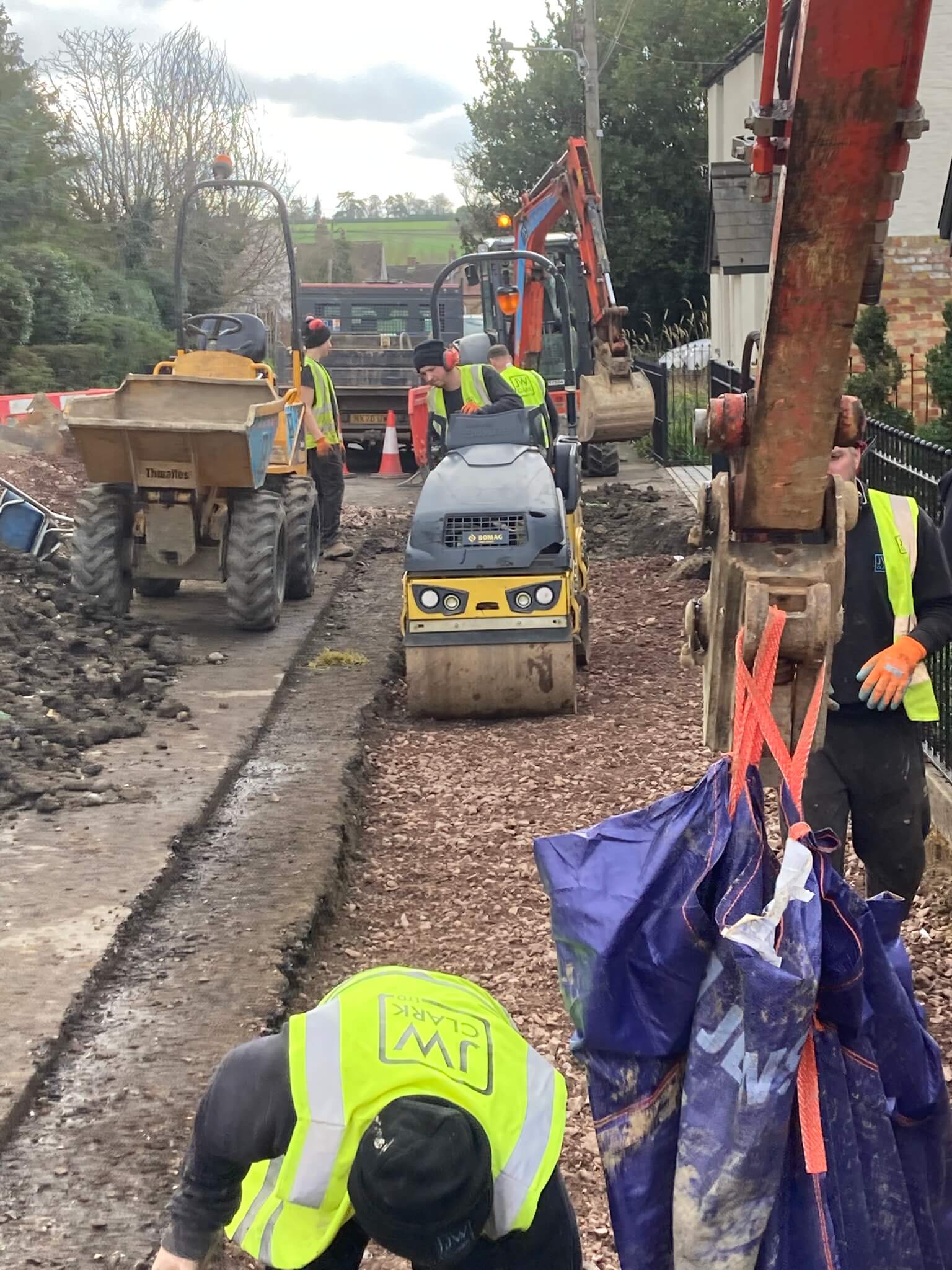
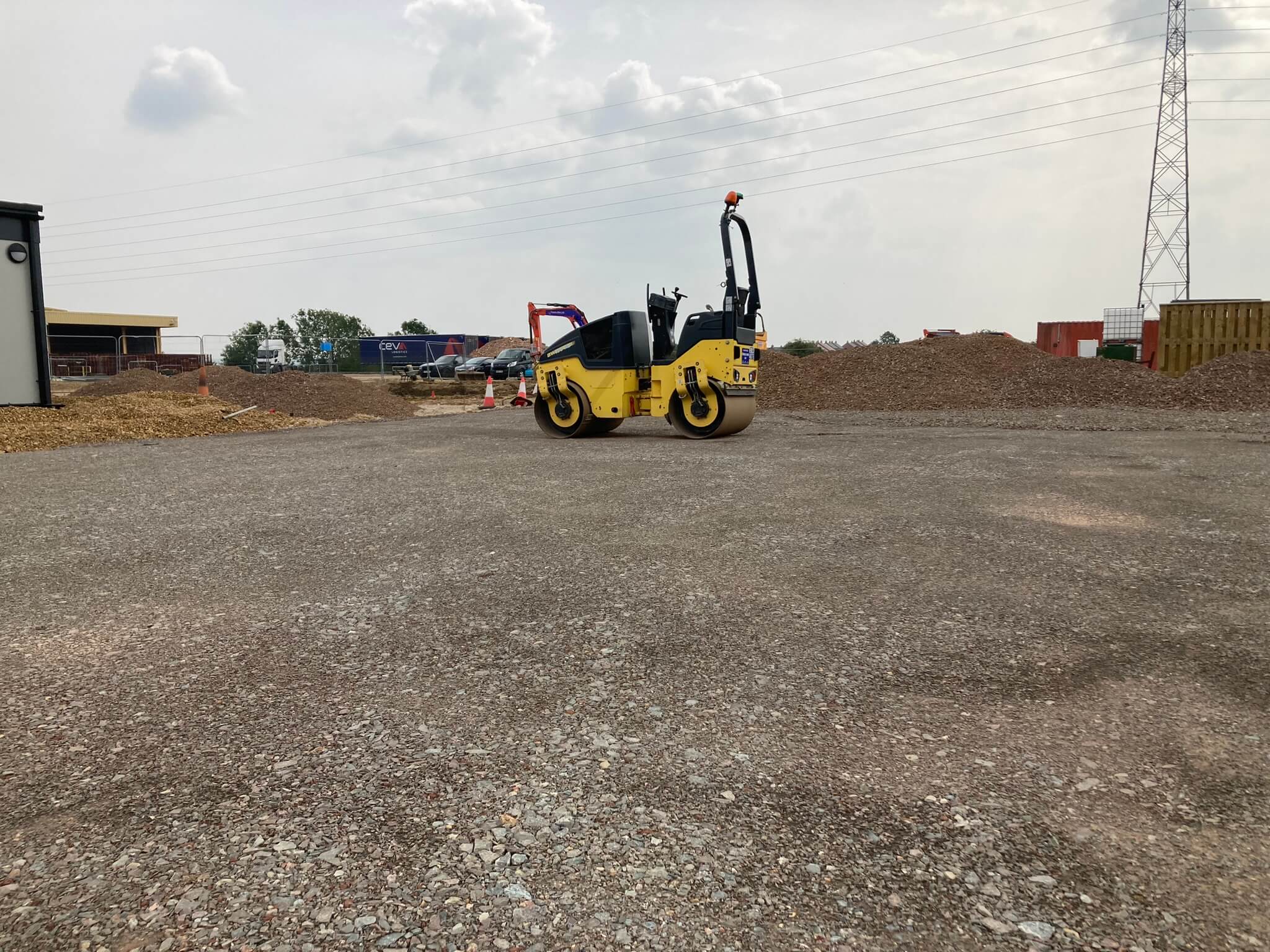
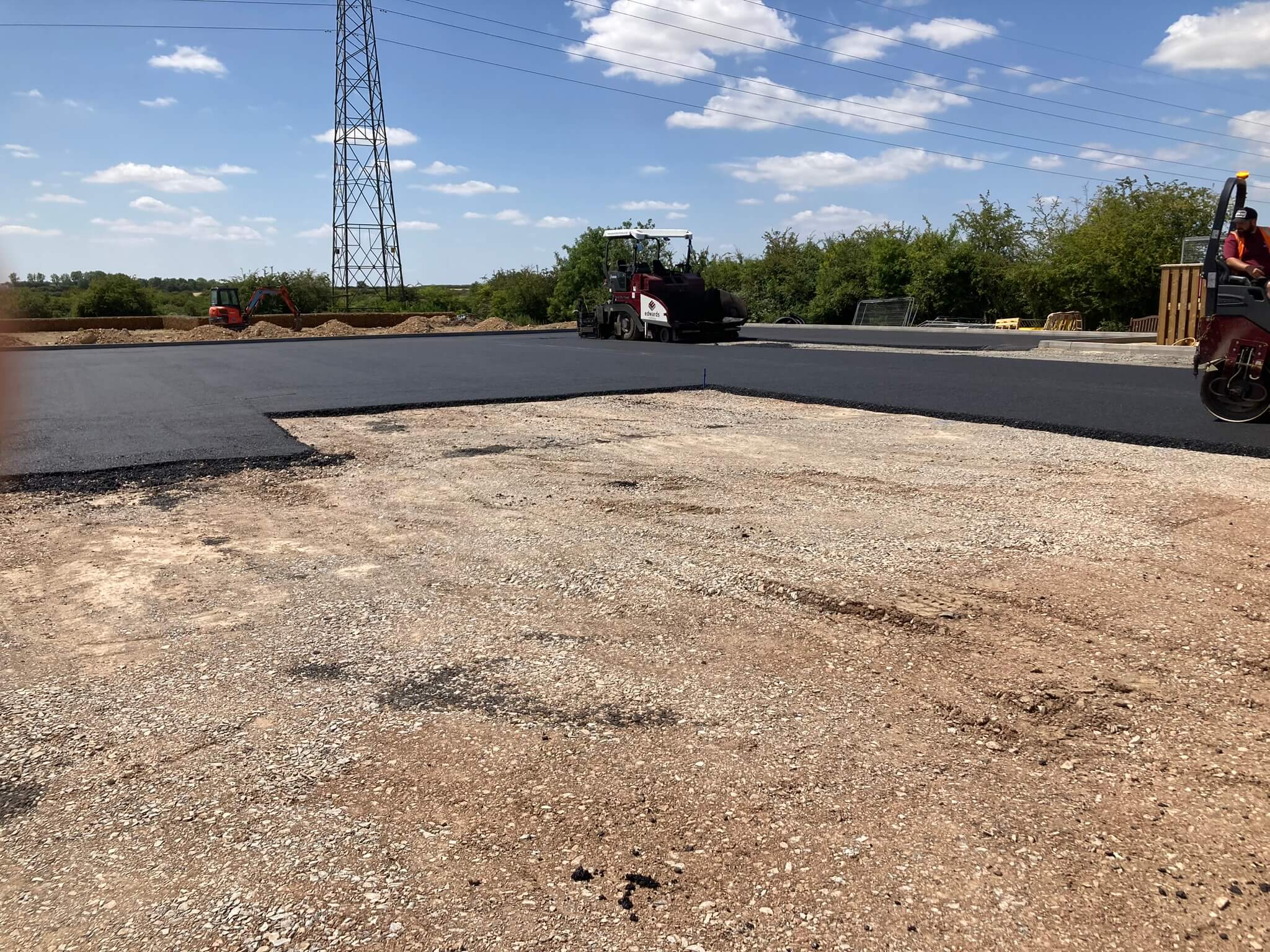
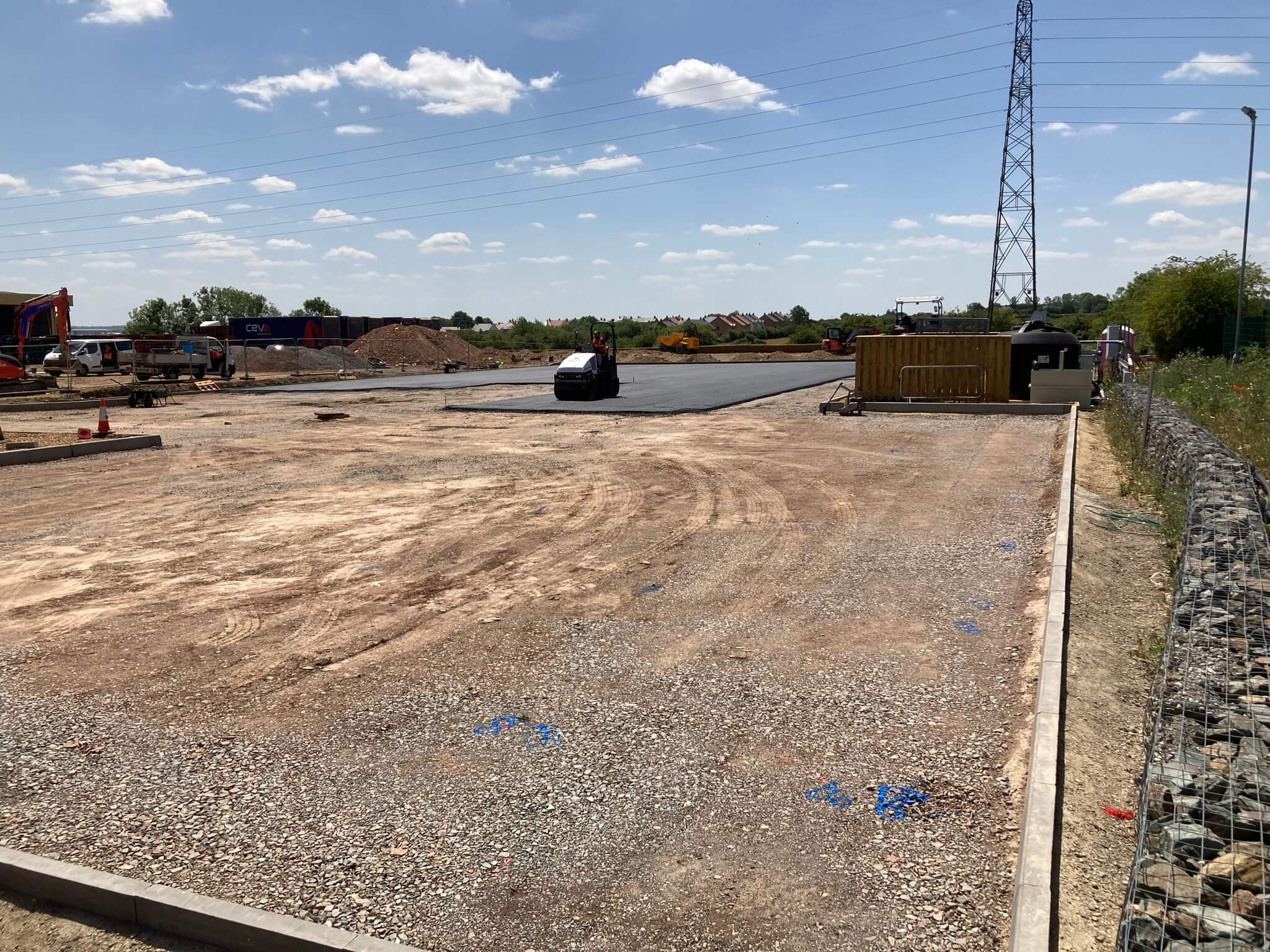
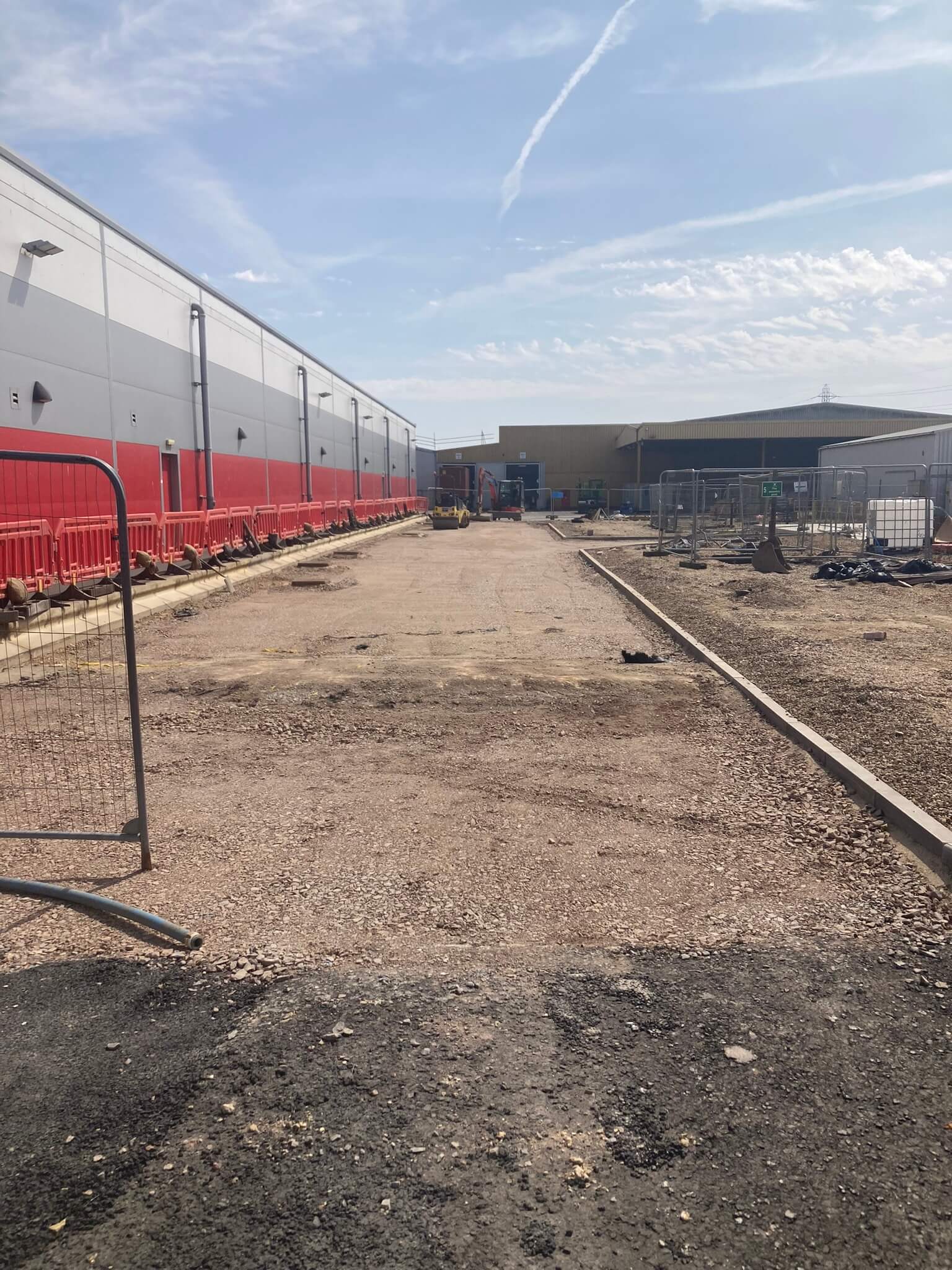
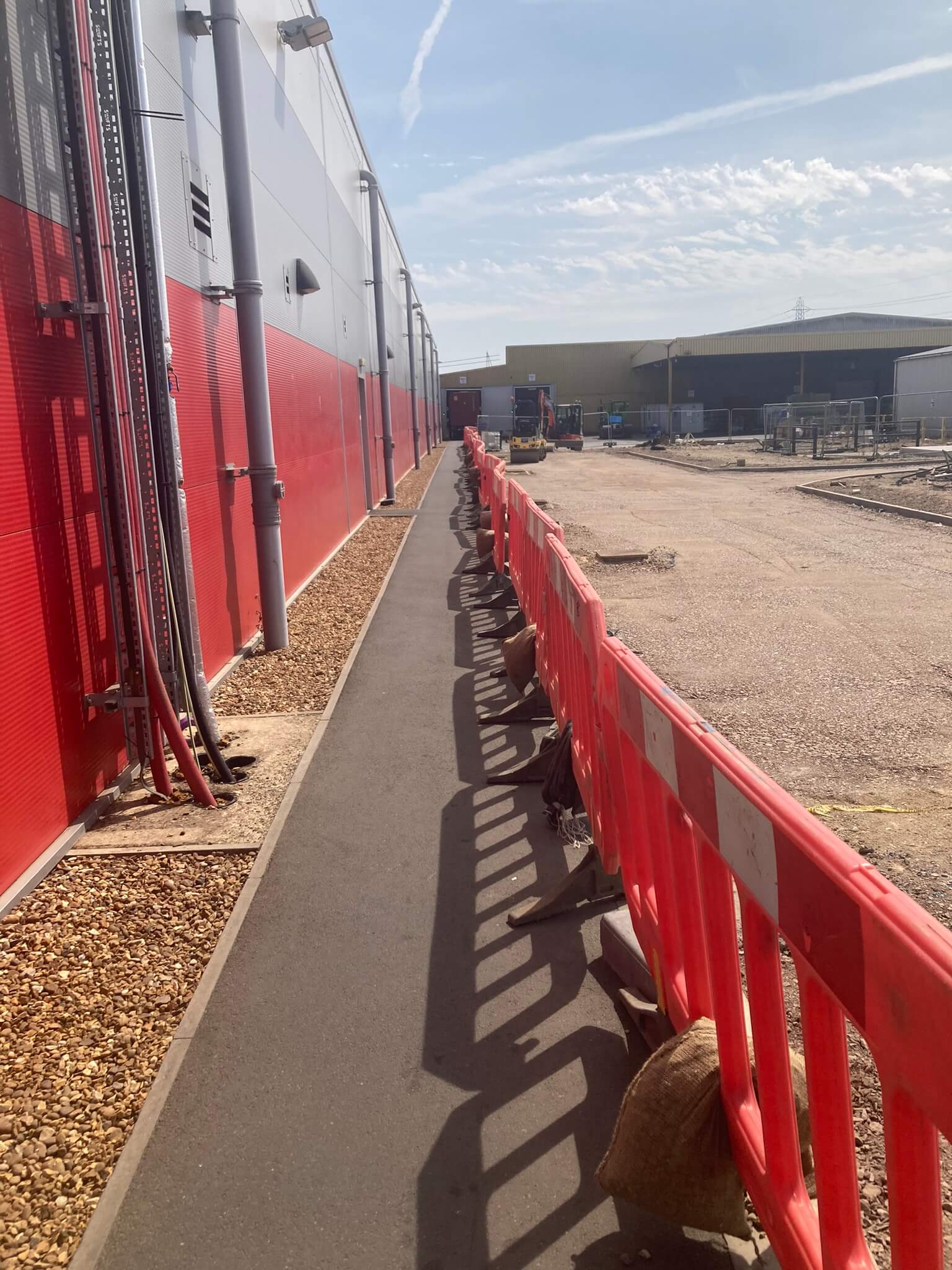
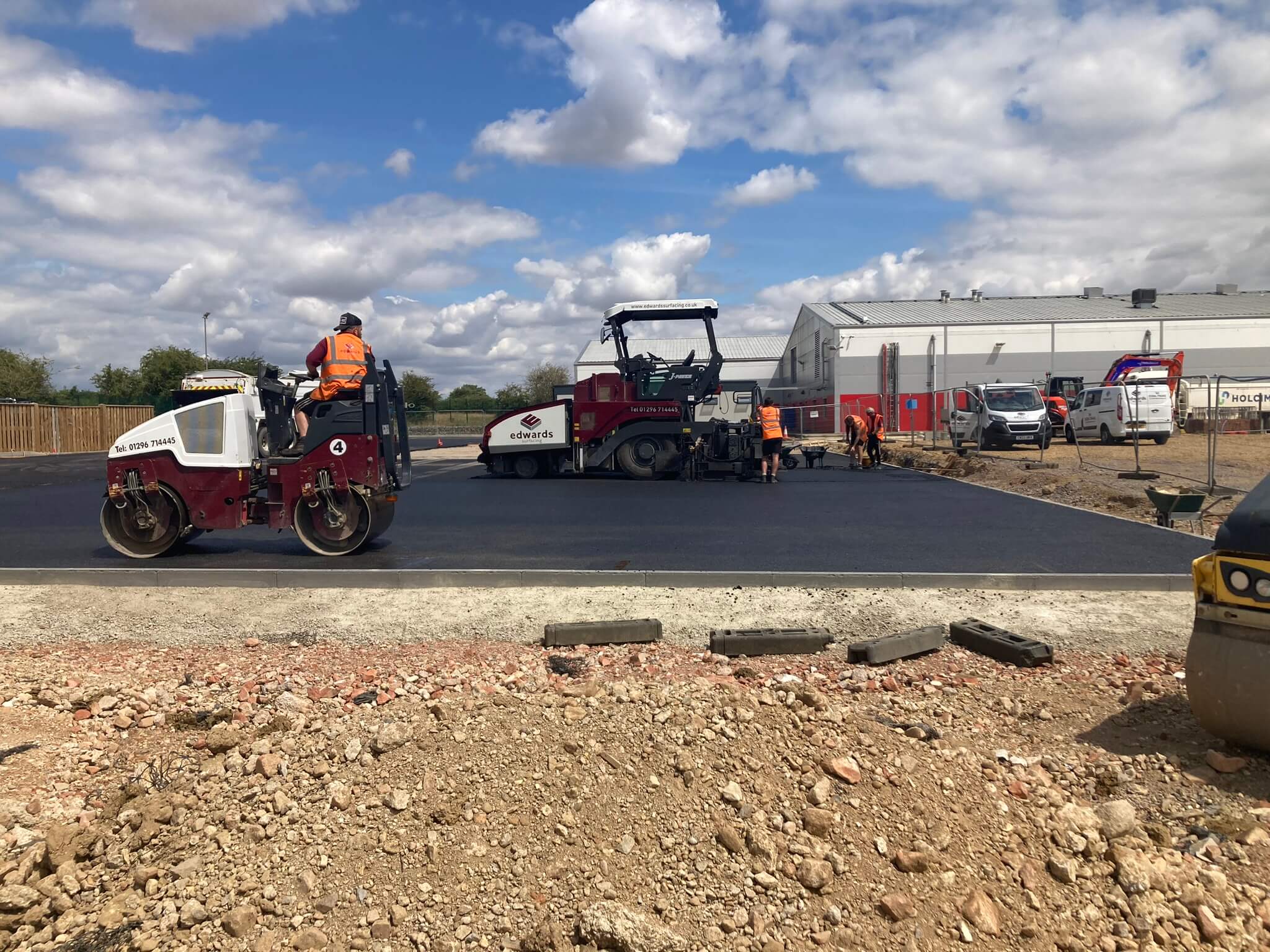
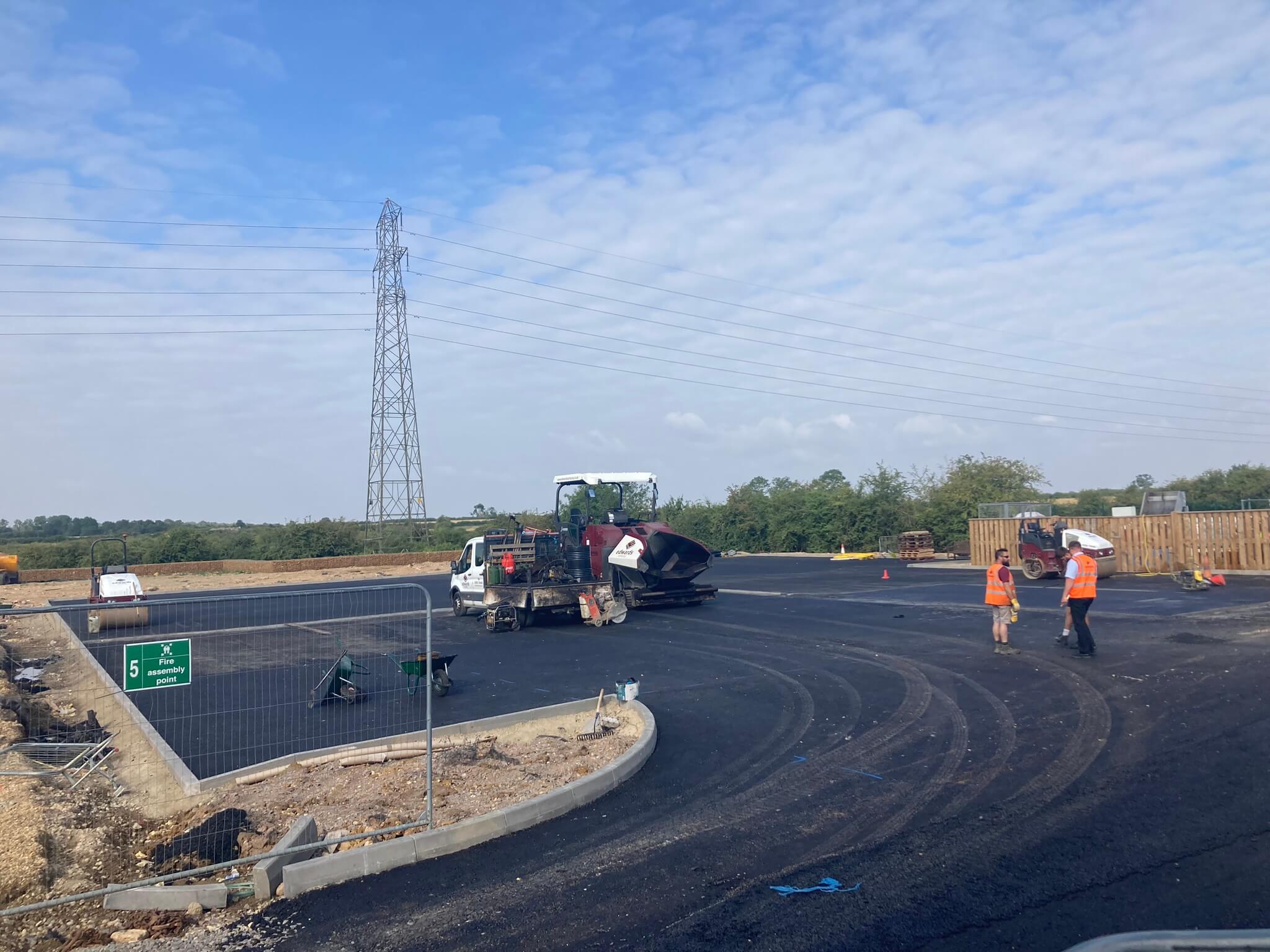
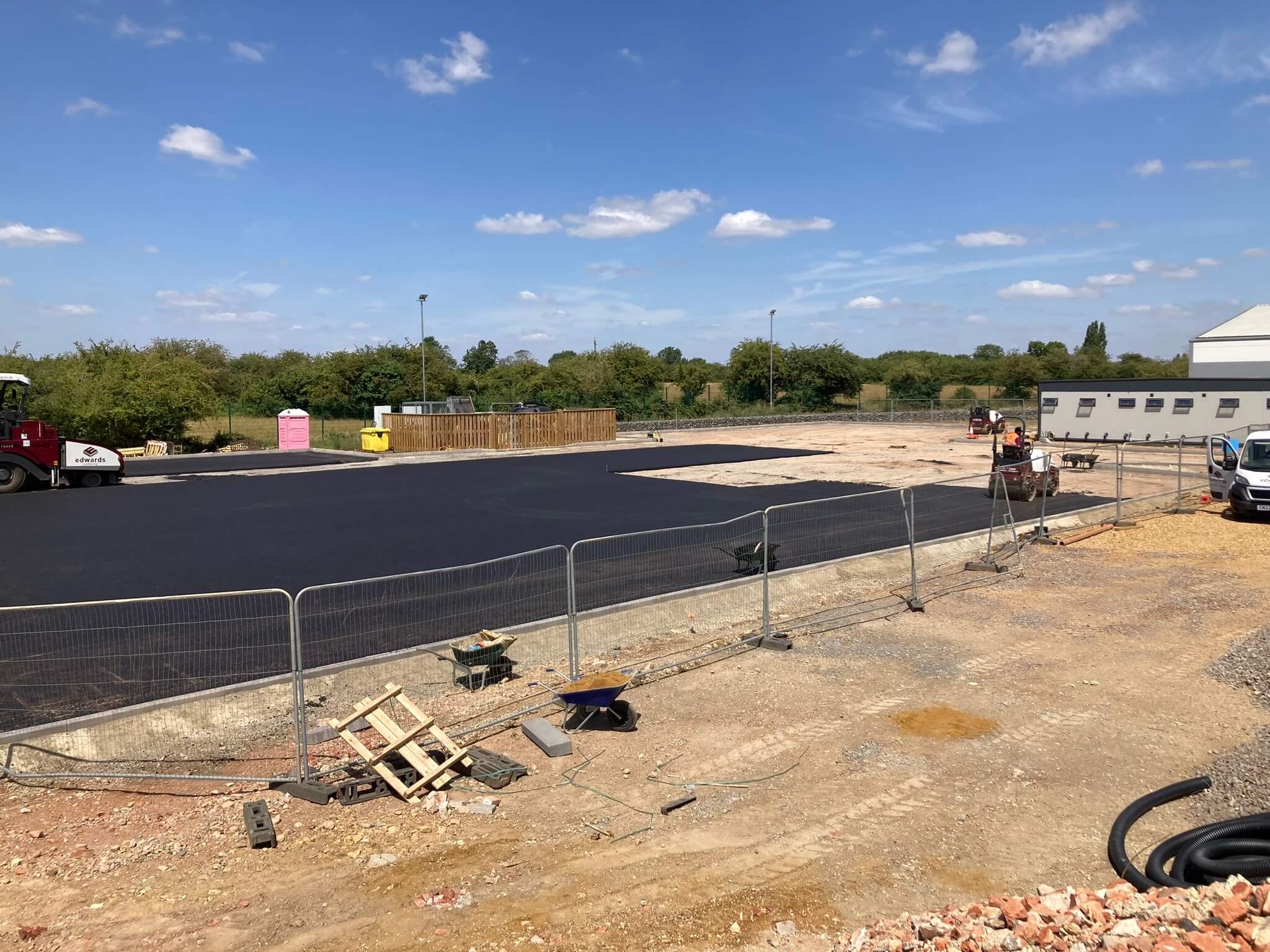
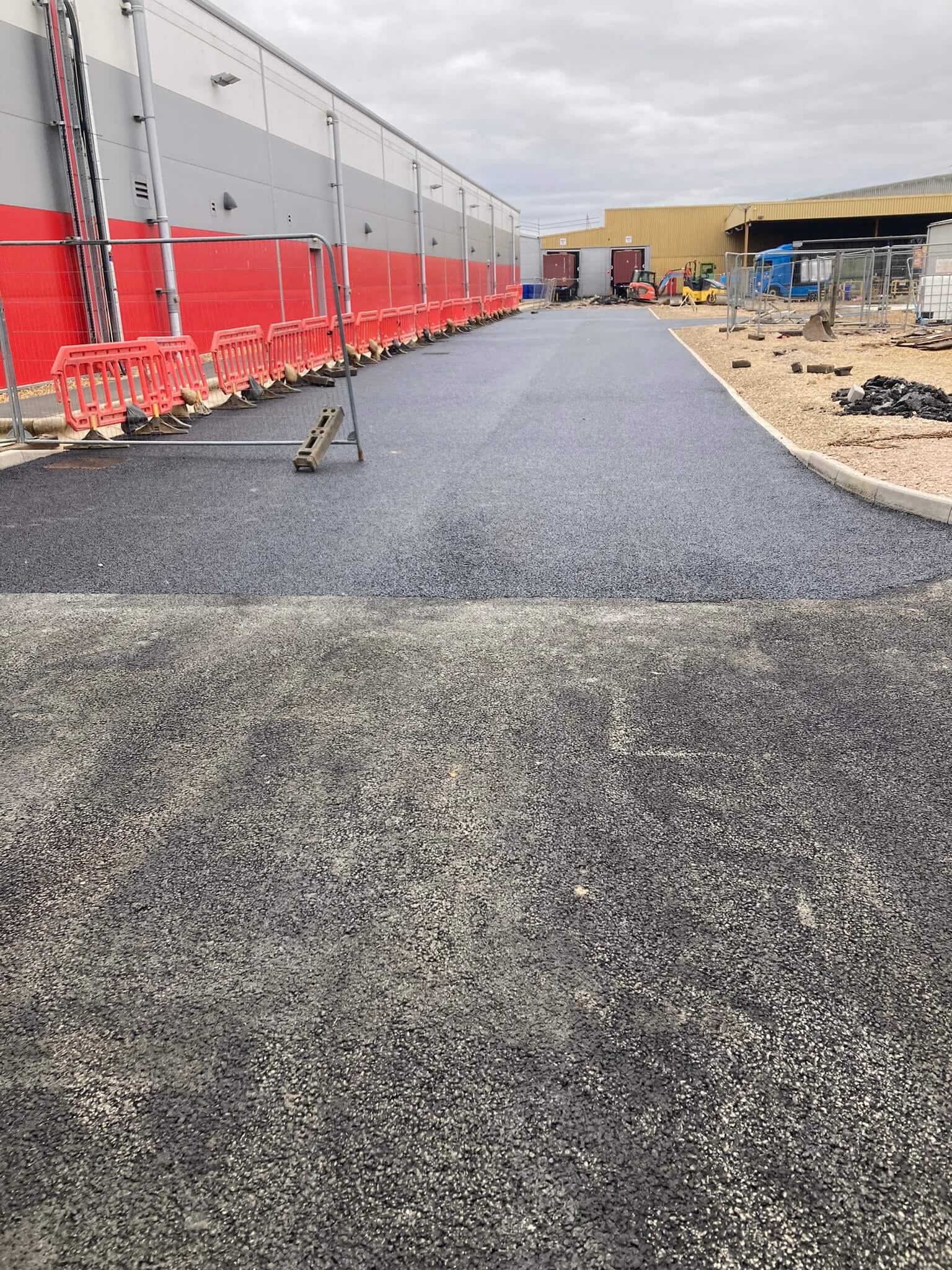
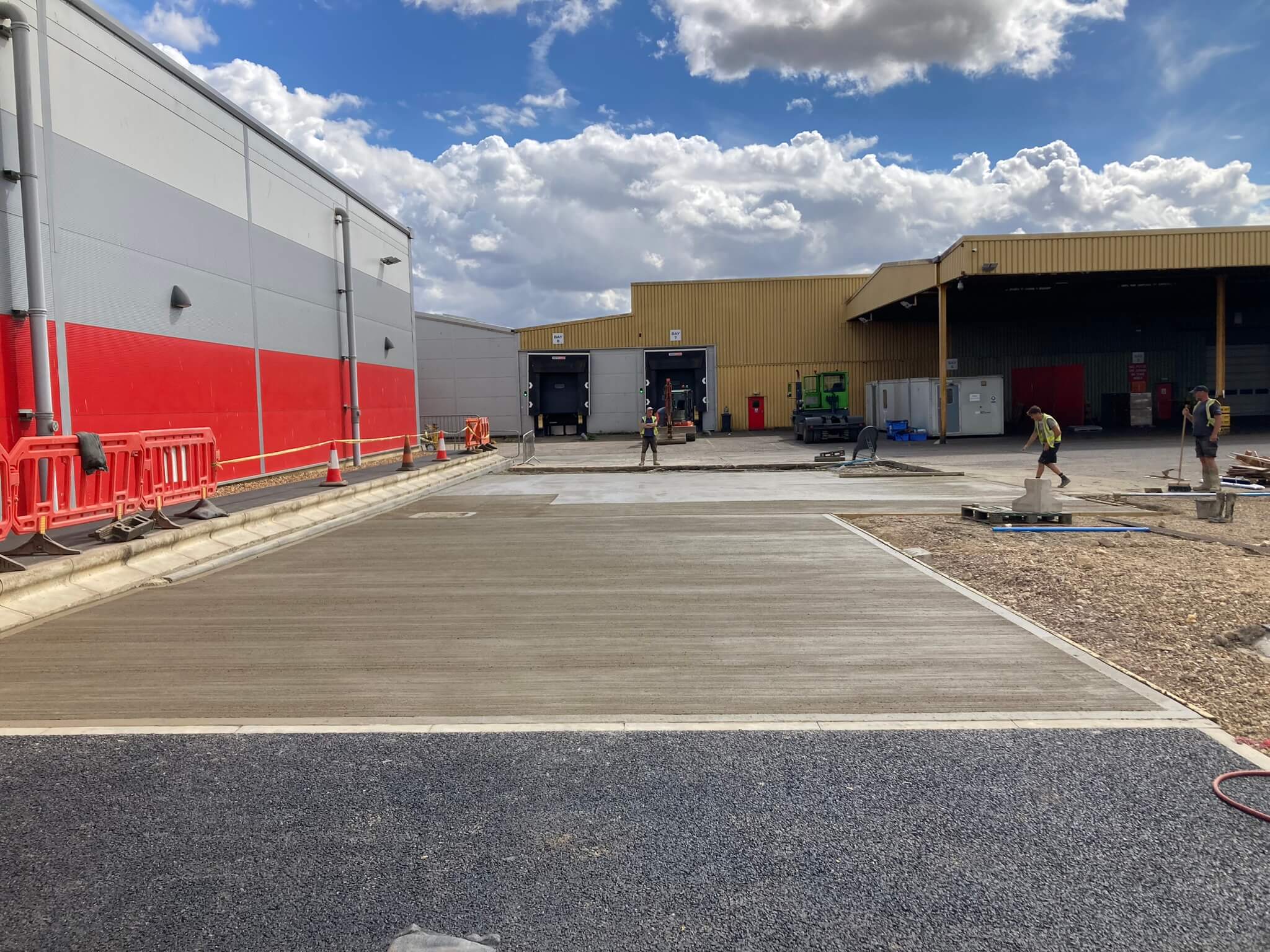
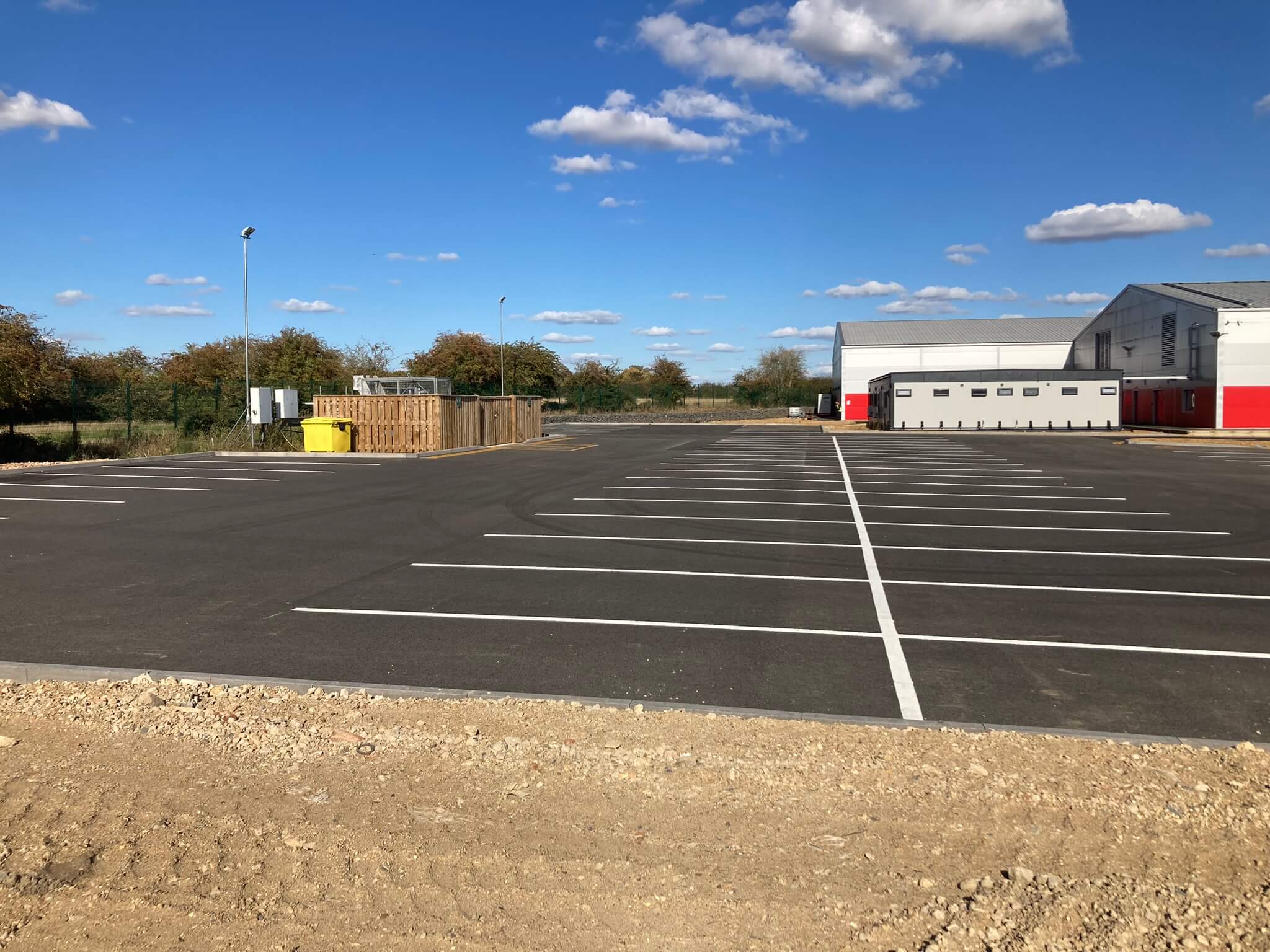
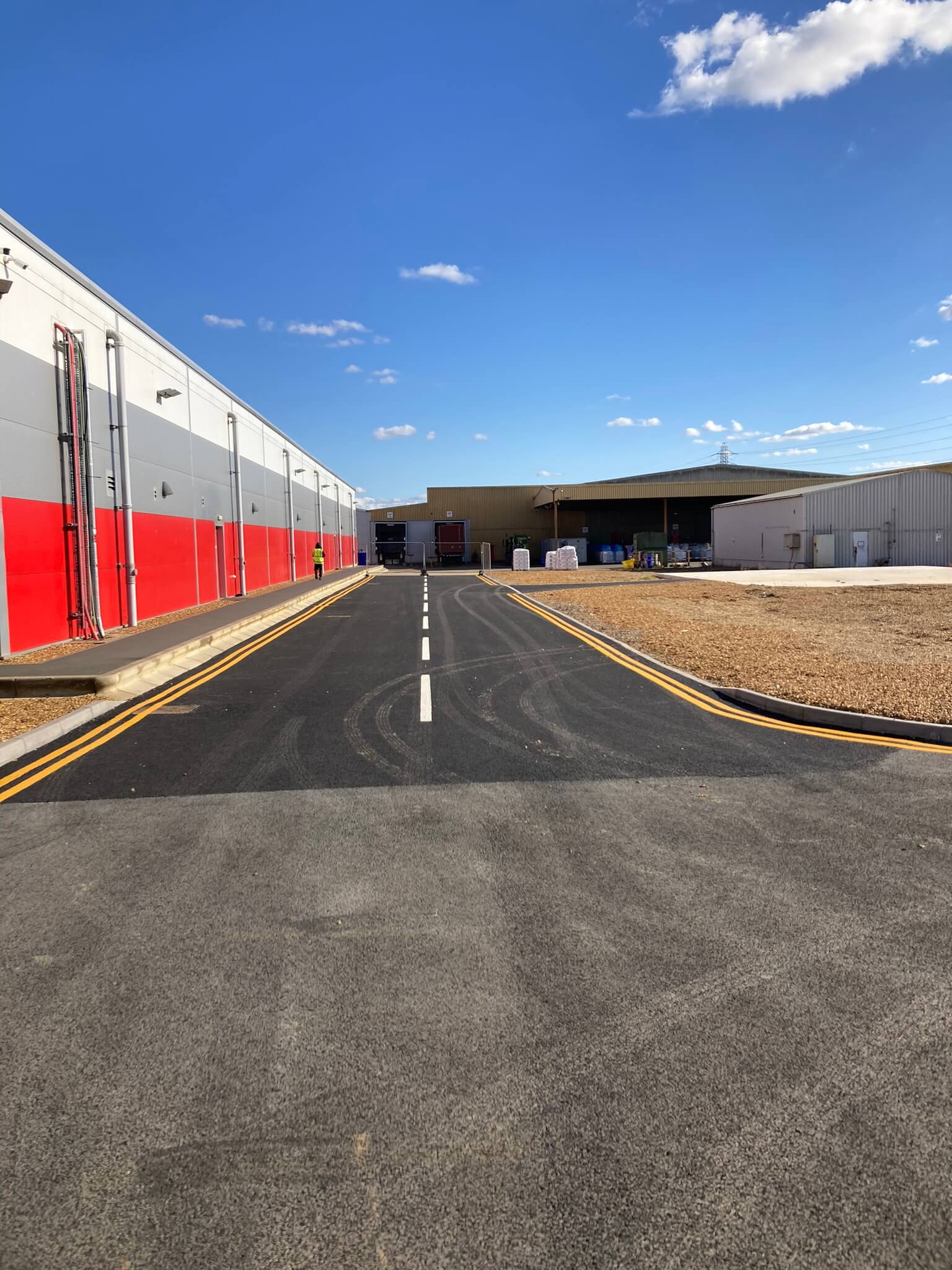
Our objective was to install a 7m wide concrete and tarmac road-way continuing on from an existing concrete area, linking up to a new car park at the back of the factory complex, to enable further parking for their expanding operation and also enabling employees to park closer to their place of work.

About the project

Our customer had already had some drawings put together, detailing how the roadway and car park would be built. Previous designs were cost-prohibitive however, and we worked with our customer over a long period of time, to come up with an alternative design to make the scheme possible.

The area in question was already hardstanding to an extent but was not suitable for smaller vehicles. The majority of the new road was to be tarmac, flexible construction, with a smaller concrete stretch at one end, where articulated lorries would also be likely to turn. The whole of the car park was tarmac, flexible construction with kerbs to the perimeter.

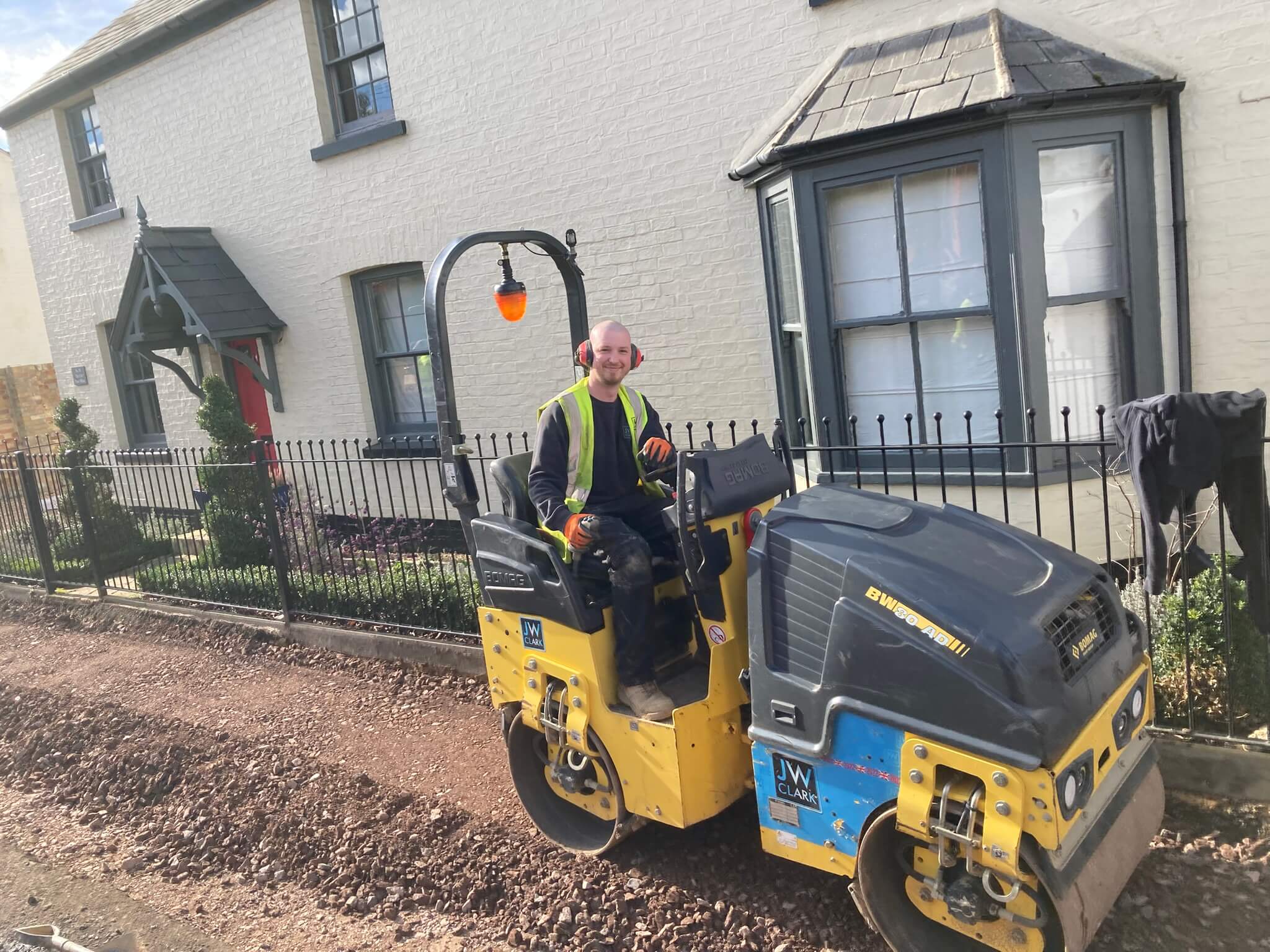
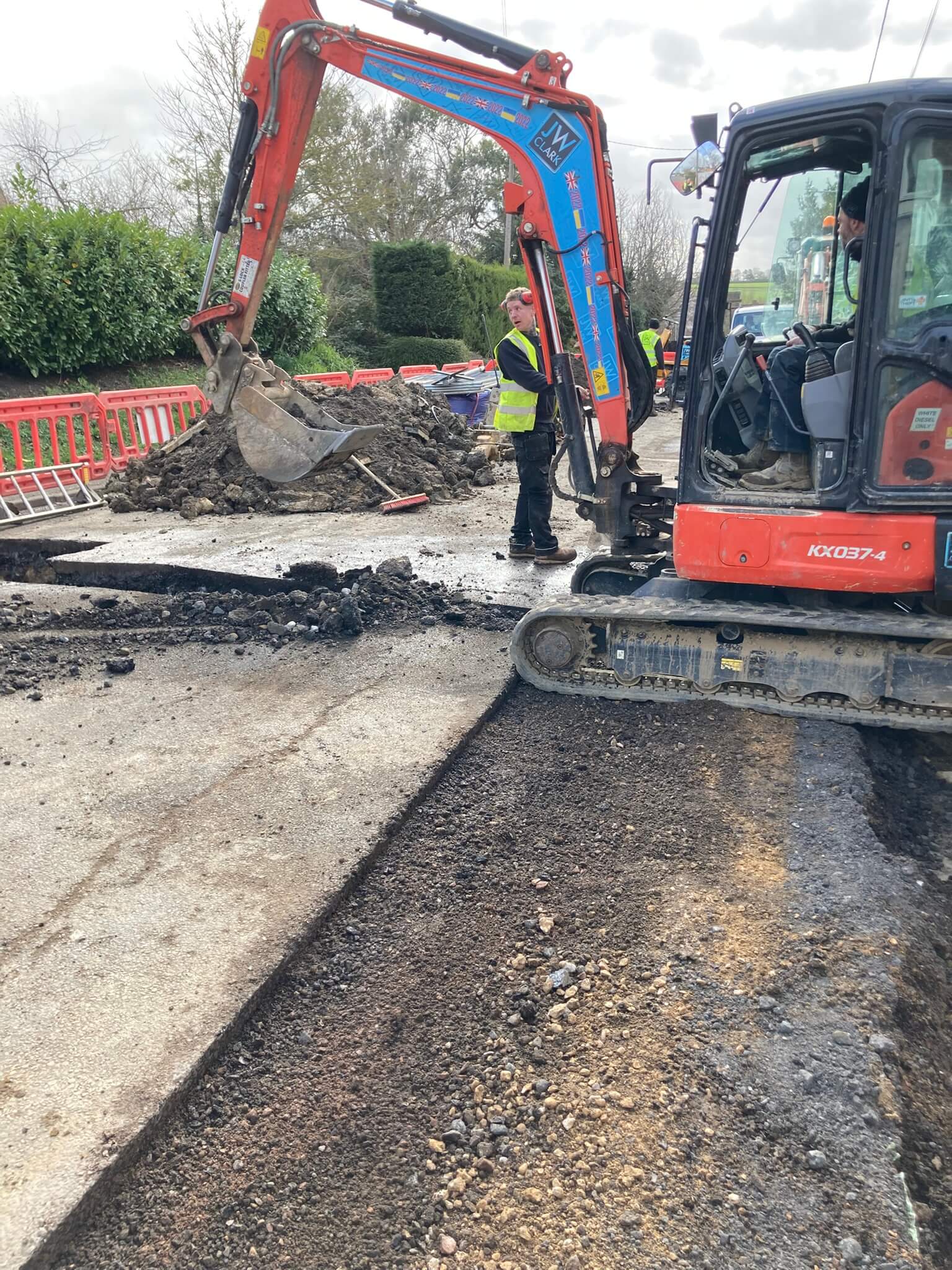
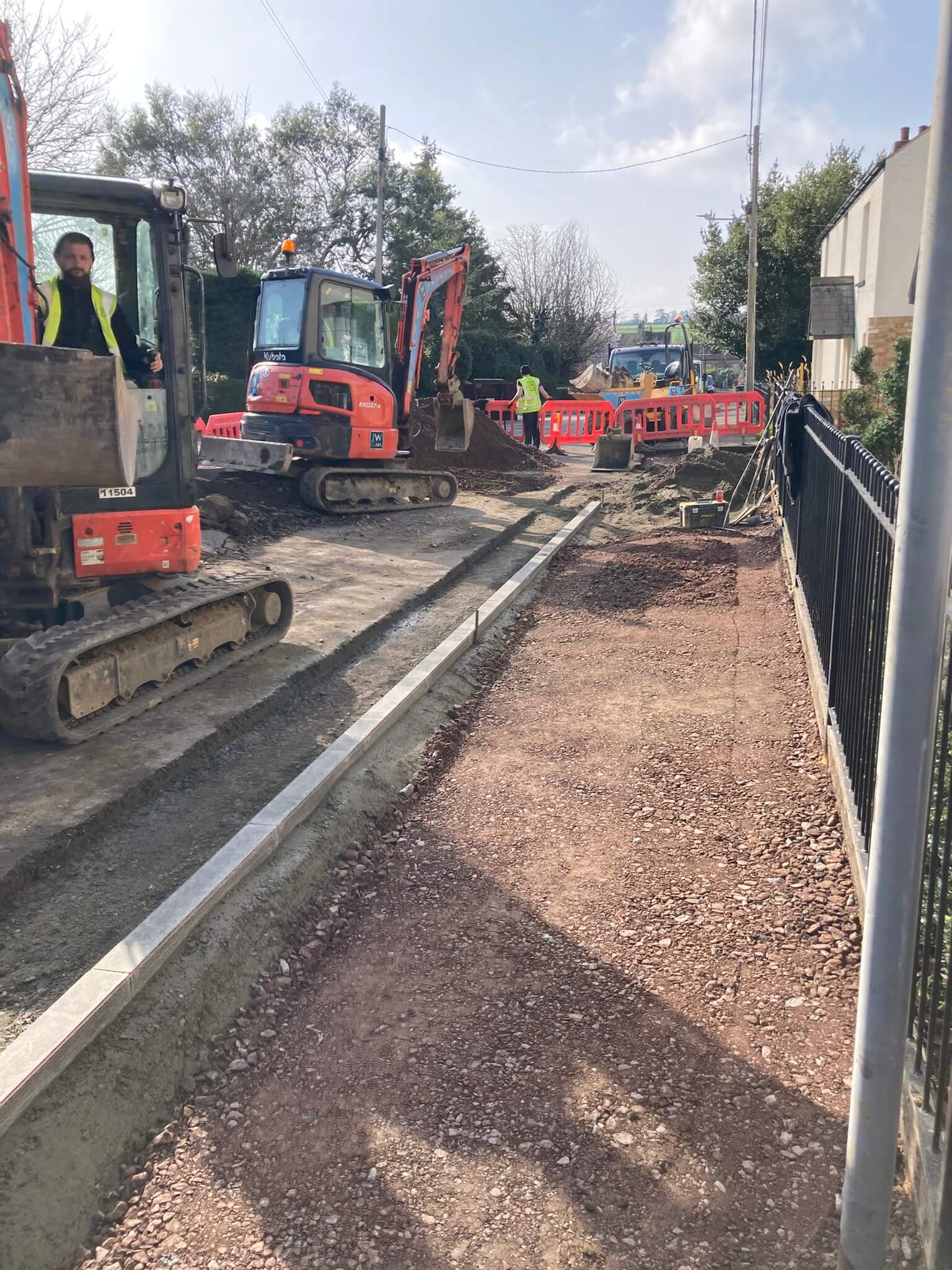
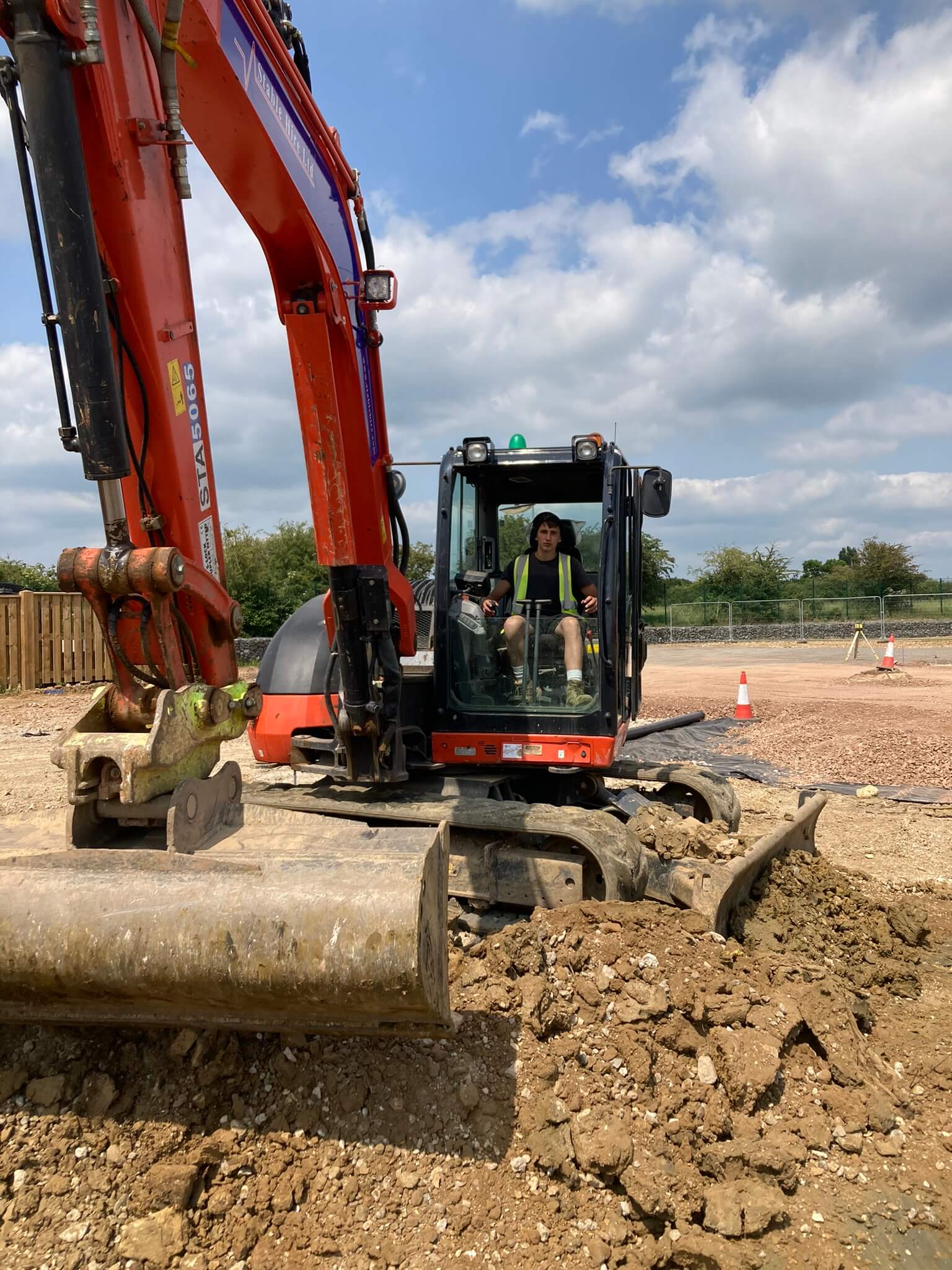
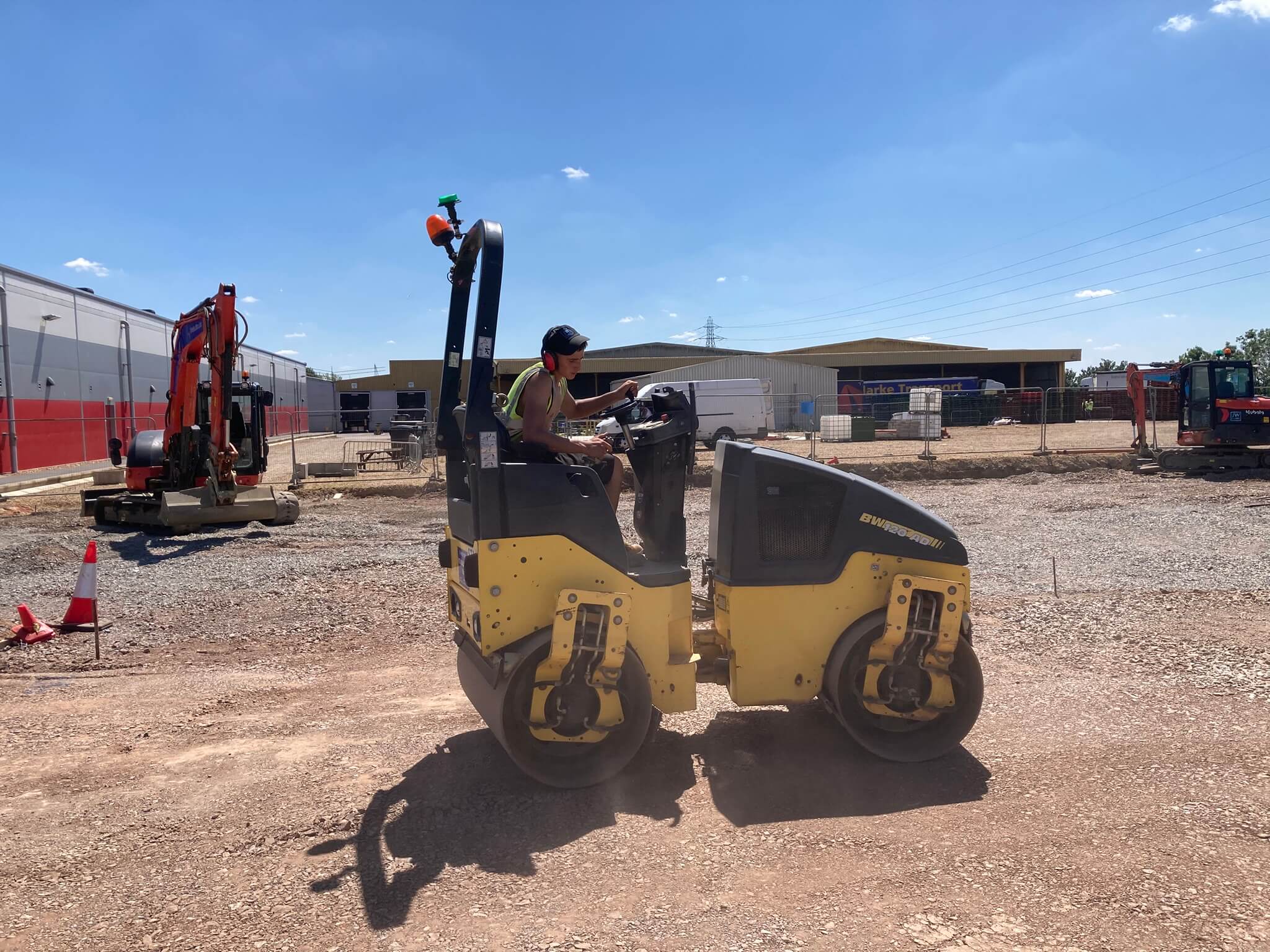
We started by clearing the site down the required level and gradients, and installing a mixture of HB2 & 6×5 kerbs to the perimeter. The existing sub base was good in most places, but still required a build up of 6F2 recycled hardcore, and then Type 1 Granite to finish, all continously rolled in layers to ensure zero settlement in the future.

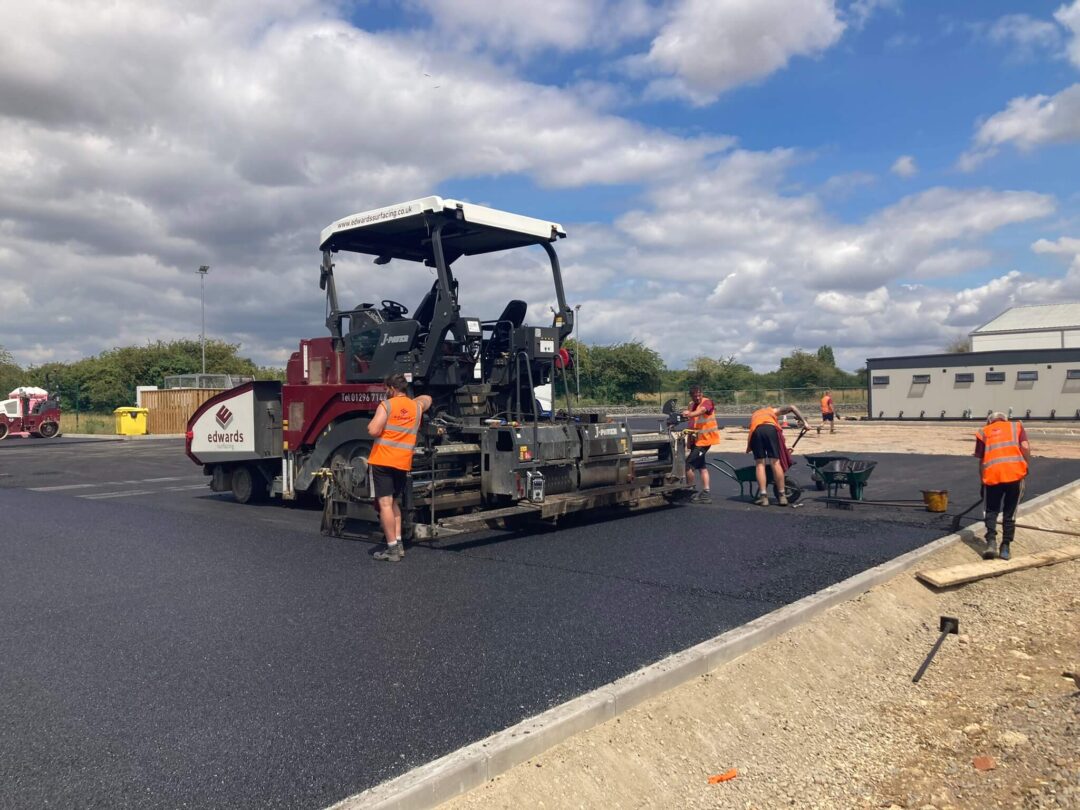
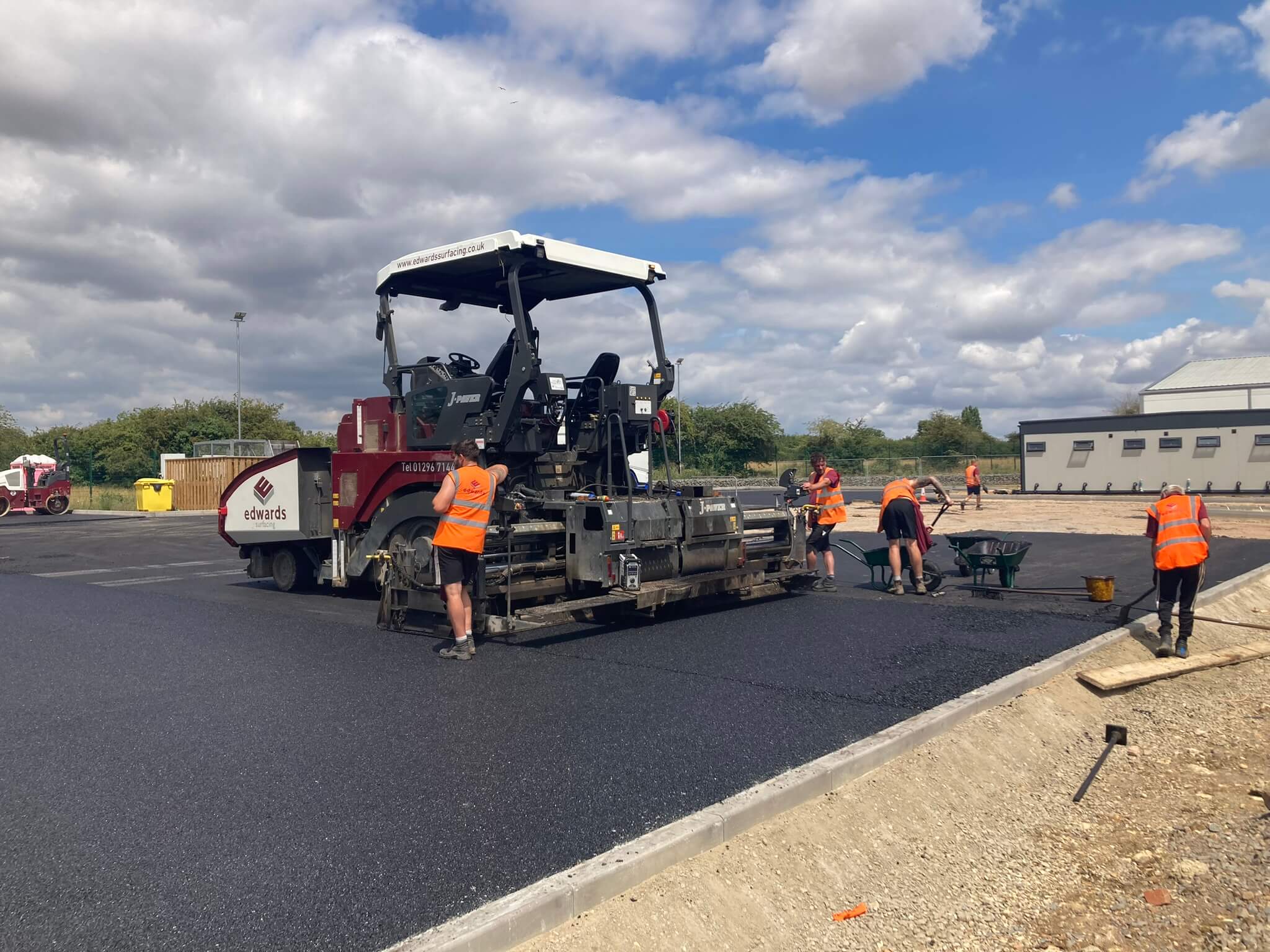
With Type 1 Granite trimmed to the correct levels, we instructed our tarmac surfacing contractor of choice, Edwards Surfacing, to install base course and 10mm SMA to finish the road and car park areas.

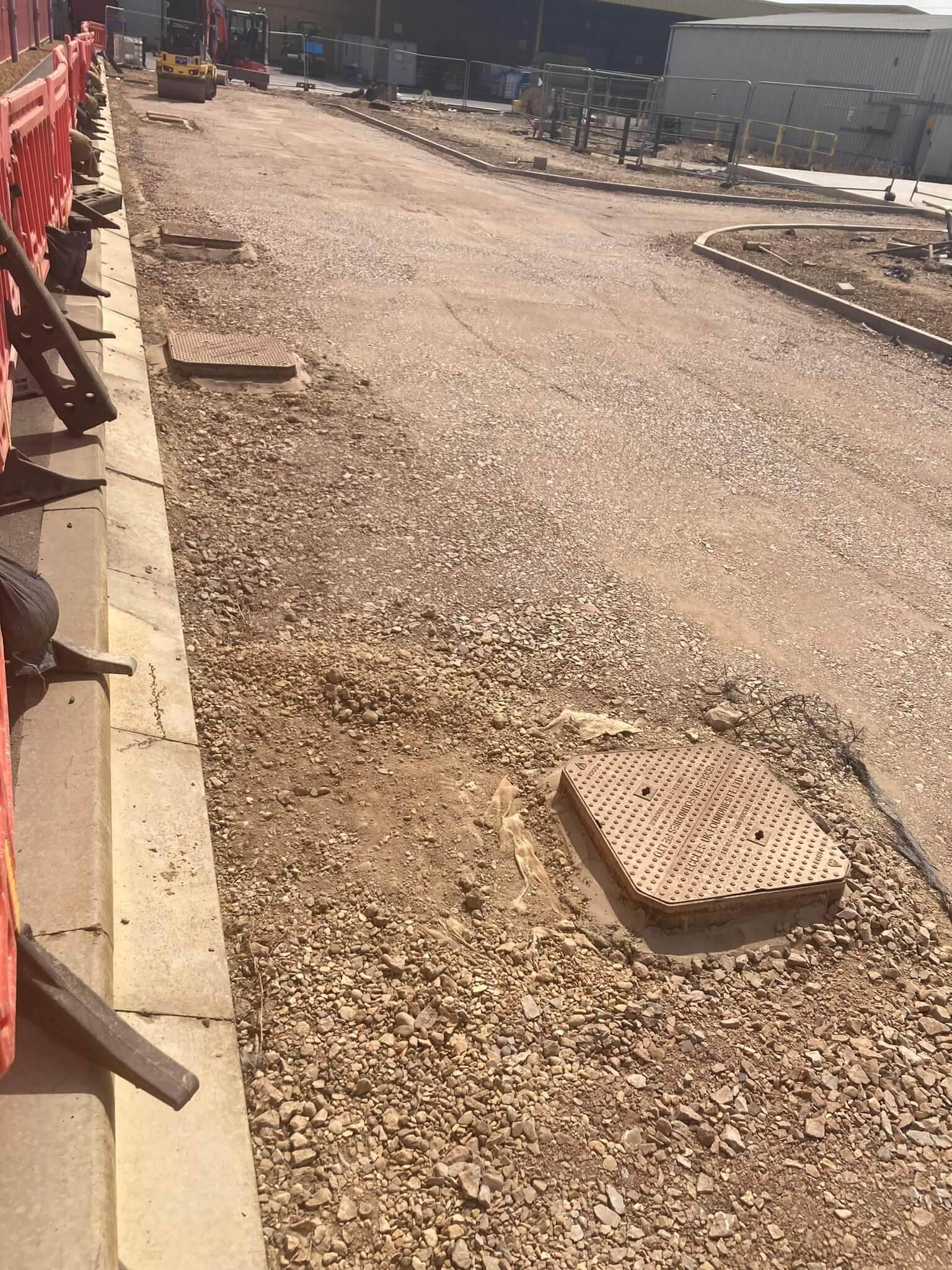
The whole project from start to finish took about 9-10 weeks, and included other aspects including drainage & alteration of manholes, installing new manhole covers etc. With all of the tarmac work complete, we finished the surfacing with line marking including for parking bays, and double yellow lines to restrict parking etc. It was great to be involved in this project, for a longstanding customer of ours, and on our doorstep in Irthlingborough.

Do you require a quote for similar works, click here to make contact

Click here to read more case studies on all aspects of groundwork & civils

S278 Works & Sewer Connection, Kettering

Projects

S278 Works & Sewer Connection, Case Study, Kettering

We were delighted to undertake these works for longstanding customer of ours, Parrott Construction

Location
Kettering, Northants
Client
Parrott Construction
Value
£xx,xxx
commercial contracts

Objective

Our objective was to facilitate Section 278 works and an Anglian Water sewer connection, for an affordable housing development in Kettering, Northants. Our customer was Parrott Construction, a long standing customer of ours, established way back in 1958…!

About the project

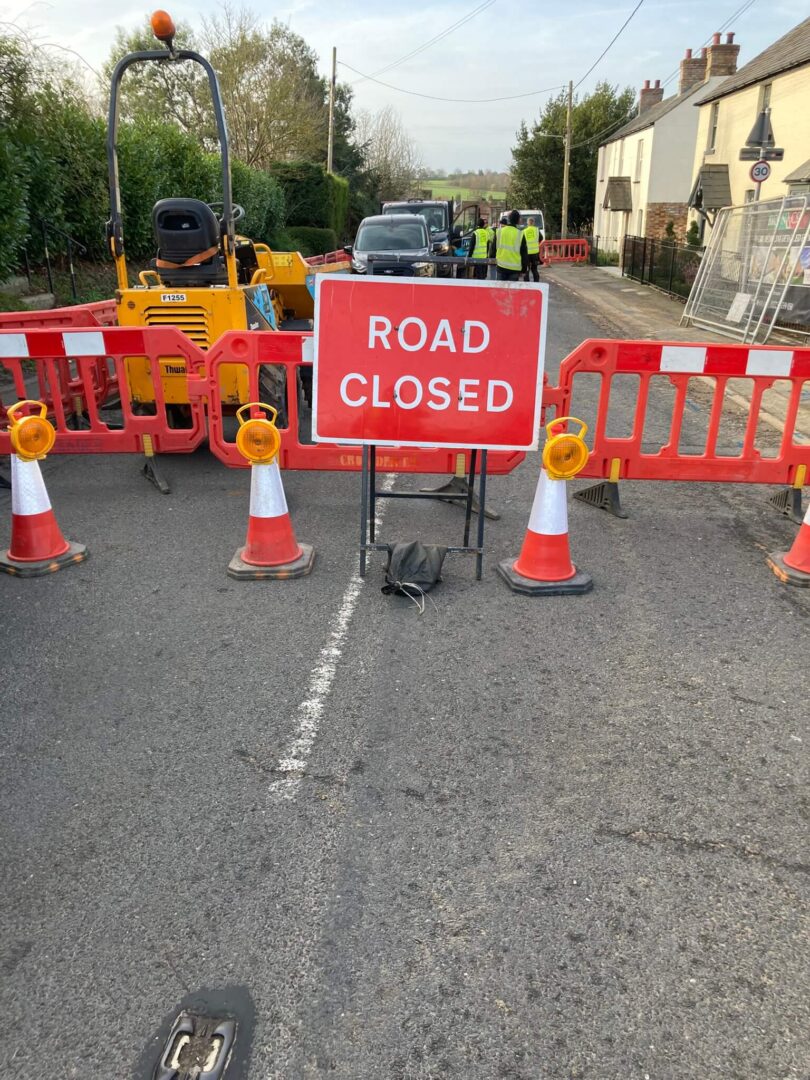
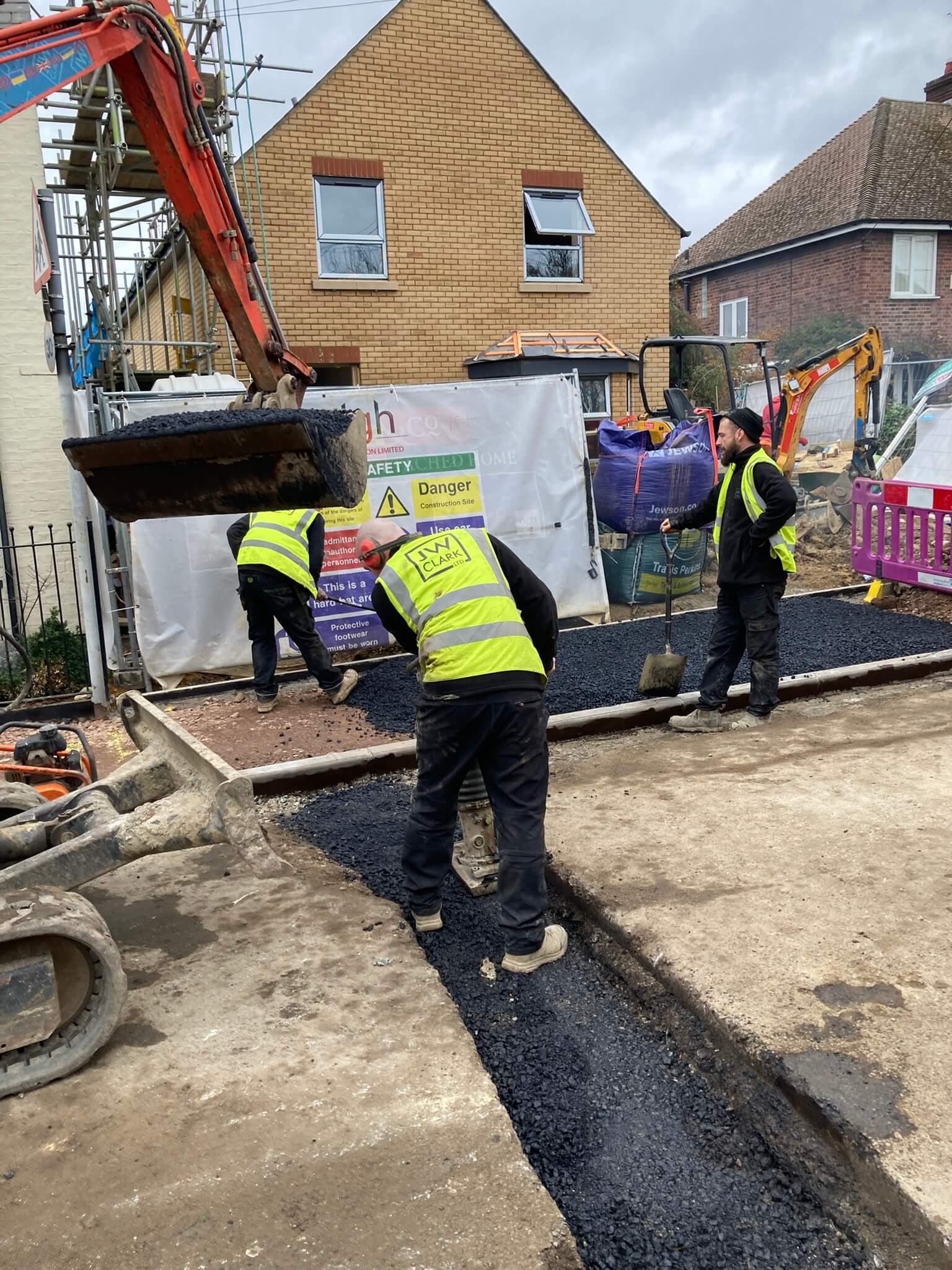
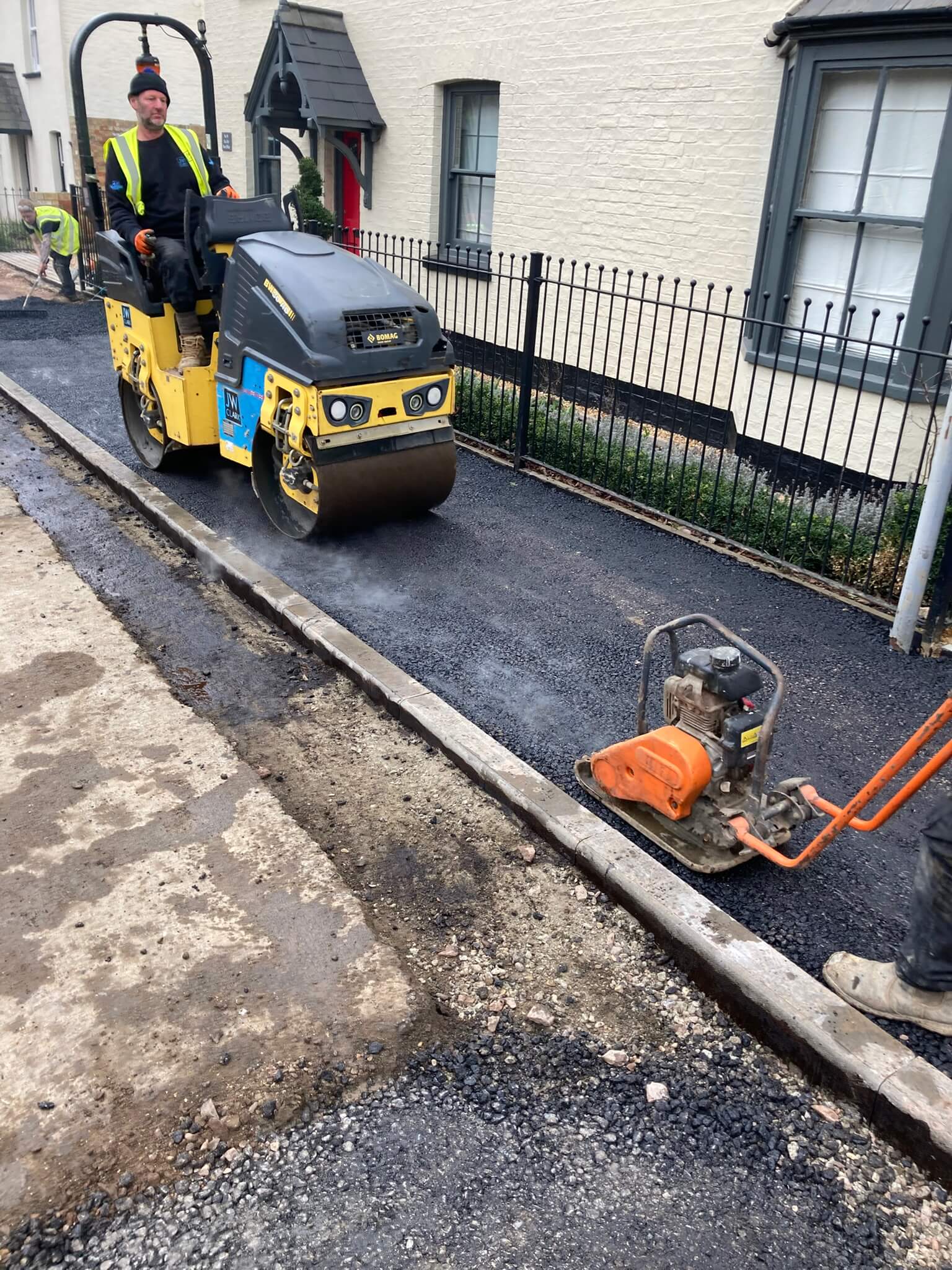
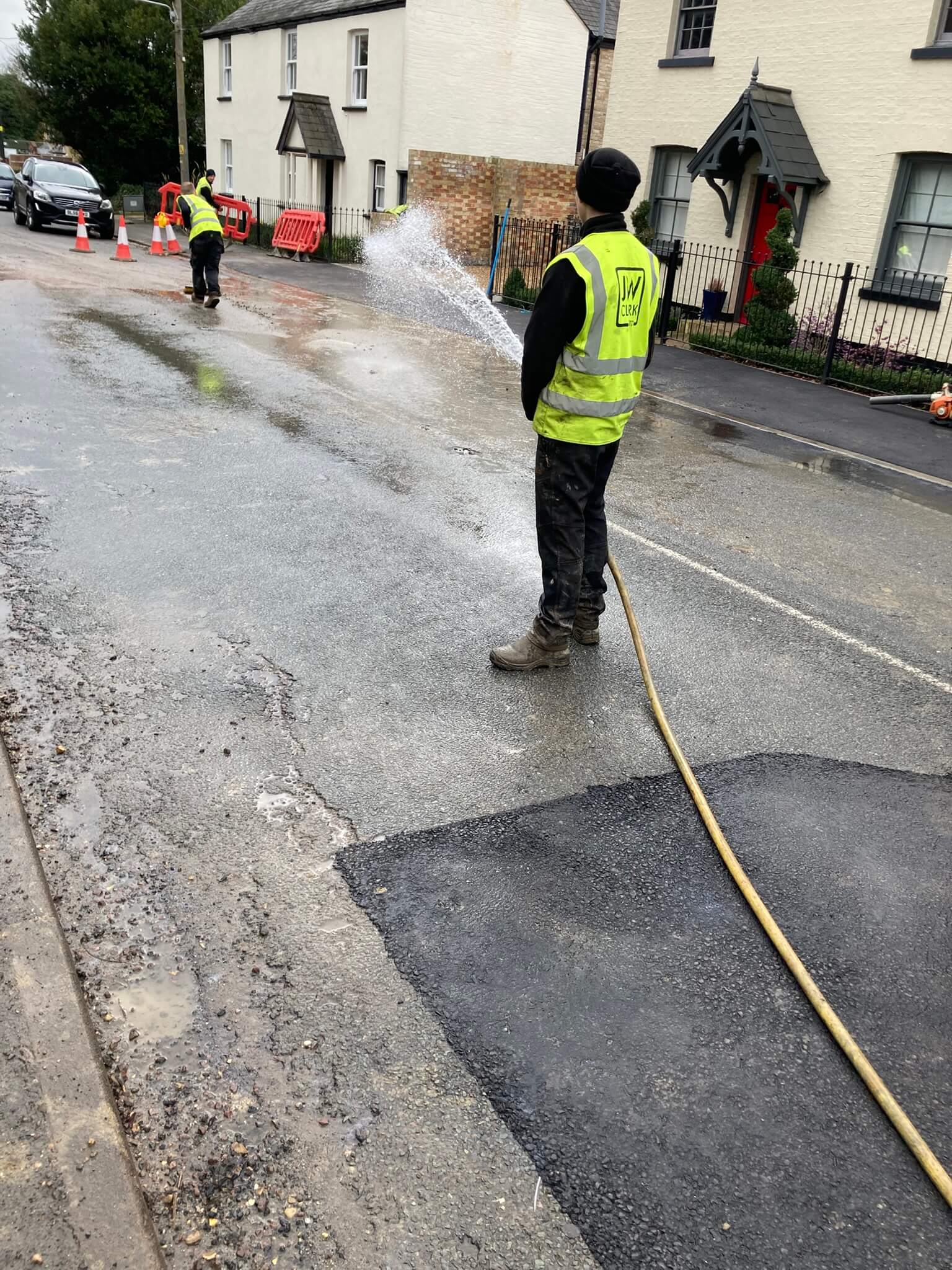
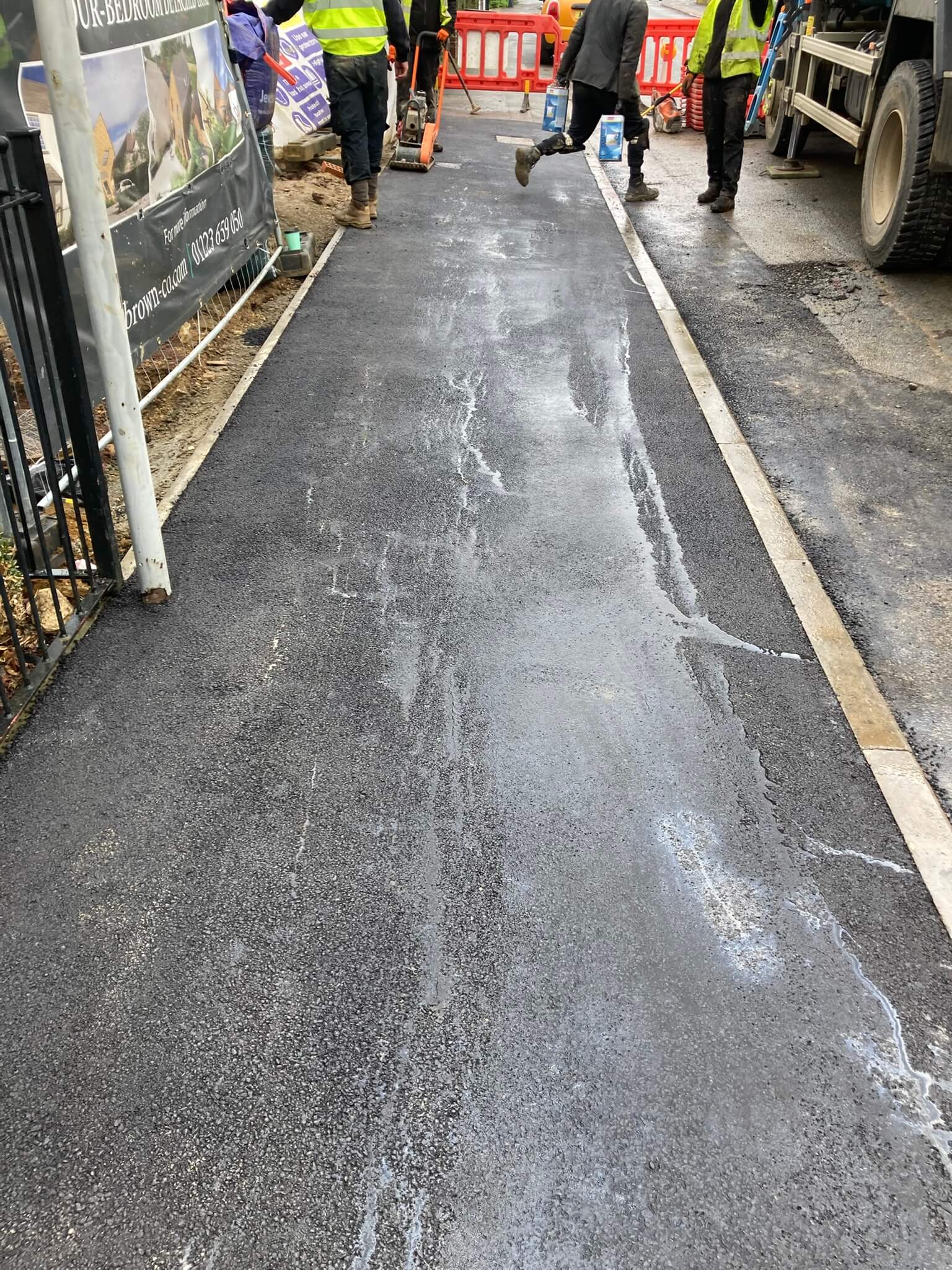
The bulk of the admin work had already been done by our customer, including drawings and design, which had all been approved by Highways. But even with this process complete, we had to start the process of applying for roadspace and organising traffic management etc. With the width of the road in mind and the space we needed to carry out the works, we agreed a road closure with Northants Highways. However, as there was no footpath on the other side of the road, we had to allocate 1.2m of the road for a pedestrian walkway. We also had to apply for a Section 50 Licence, to connect to the public sewer, although the work would be carried out under the same traffic management as the S278 works.

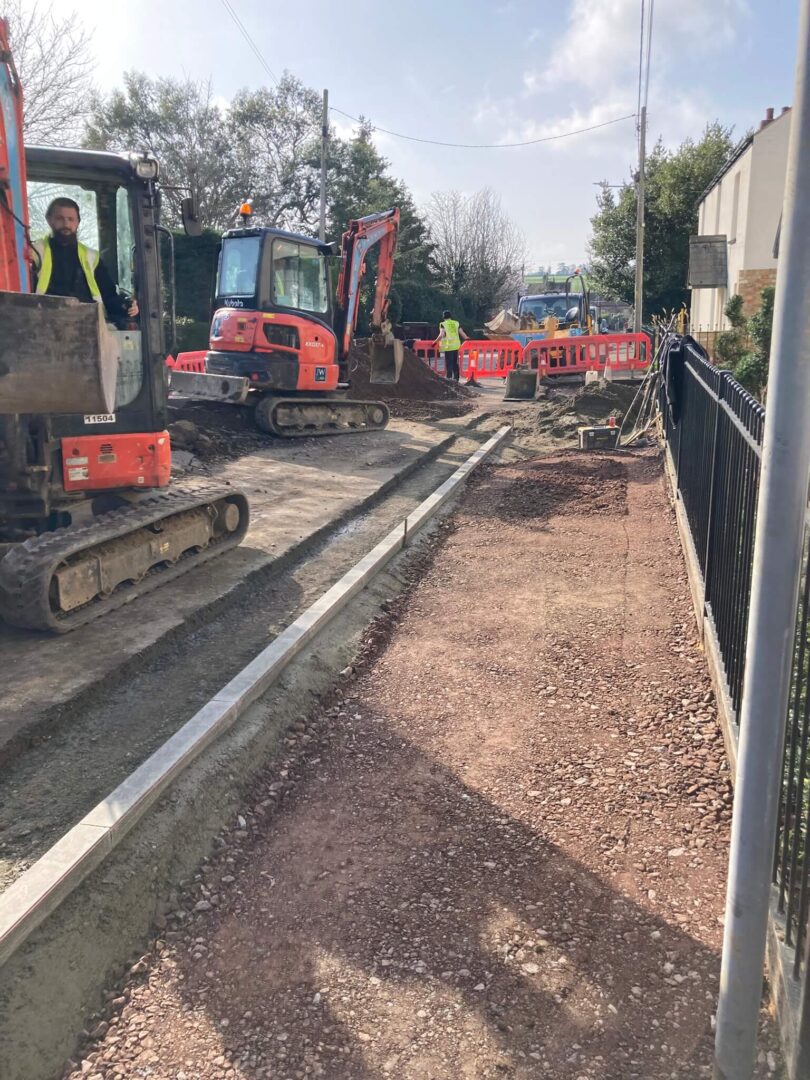
With the road closed and the pedestrian walkway set up, we broke out and removed all of the old footpath, including the kerbs and kerb brace, in preparation for full construction of the new footpath and kerbs. 

Type 1 MOT was laid to the correct specification as required by Northants Highways, new kerbs laid and the base course laid for the new footpath.

As well as the Section 278 works, we also installed a connection to the public sewer for the new properties. This was for foul only, with the surface water having been taken care of within the site boundaries by our customer. As with all the sewer connections we undertake, we liaise with Anglian Water from start to finish including arranging all inspections and final sign-off. 

Both the base course and the 6mm topping was laid by hand, due to the nature of the works. The road closure was taken down within hours of our work having being completed, and the site cleared the next day. Our work was inspected by Highways two weeks later and passed in its entirety. The works on the site were completed by our customer within days of our own work being done, and tenants were in within a week of all work being completed. It was great to work on this exciting, local project, and for a customer with whom we have had such a great and longstanding relationship.

For any similar works or for any general groundwork enquiries, please don’t hesitate to contact us. And click here to read more of our case studies.  

Riverside Park, Higham Ferrers

Projects

Riverside Park, Higham Ferrers, Case Study

We were delighted to undertake these works for Higham Town Council in conjunction with North Northants Council 

Location
Higham Ferrers, Northants
Client
Higham Ferrers Town Council
Value
£xx,xxx
commercial contracts

Objective

Our objective was to rejuvenate 400 metres of pathways that had become uneven and unsafe. The paths were put down many years ago with road plainings, and our job was to resurface with Type 1 MOT granite and granite dust

About the project

It was very important to the Council that we keep the park open for the duration of the works. The park sits between two housing estates and is used for more than just recreational use. With the weather being reasonably dry at the time, we opted to close short sections of the paths at a time, and divert people onto the grass. We put signage up and offered to assist people around our works should they require.

The paths had been laid at 1.5m wide originally, but some were down to less than a metre wide, with grass and vegetation having encroached in from both sides. Our first job was to scrape off the vegetation, and to hopefully find an existing path underneath, which hadn’t been contaminated too much. Generally the paths were okay, and in the main they just needed blinding with Type 1 MOT to smoothen out the levels.

We then applied a thin layer of 0-4mm granite dust to the paths, which we compacted in, with a ride-on roller. Lastly we laid topsoil and grass seed to either side of the paths.

There was also a small ‘bridge’ formed with railway sleepers, where a natural stream ran underneath, during wetter weather. We replaced this using oak timbers, to give it a long lifespan going forward. And on top of the timbers we fixed wire mesh, to stop them becoming slippery when wet.

It was a pleasure to carry out these works, on behalf of North Northamptonshire Council and Higham Ferrers Council, we had plenty of compliments at the end of the works, and it was great to work on this project on our doorstep and to have made such a cosmetic difference.    

Re-concreting of cemetery footpaths, Irthlingborough

Projects

Re-concreting of footpaths, Case Study
Location
Irthlingborough, Northants
Client
Irthlingborough Town Council
Value
£xx,xxx
commercial contracts

Objective

To break out and remove old concrete footpaths and road within the cemetery, and to completely renew.

We were delighted to be doing this work for Irthlingborough Town Council at the cemetery, so close to where we all live. And it was a tad emotional for a lot of us, who live in Irthlingborough, and found ourselves to be surrounded by so many familiar names. The concrete paths around the cemetery and the main road were full of trip hazards and the only remedy was to take them all up and start again. We kept the cemetery open whilst we were carrying out the work, and helped people get about the cemetery where we could. 

The old concrete paths were well-made, and some of them laid at about 5” or 6” thick, but our 6-tonne excavator soon broke them out and we took the waste away on our own grab lorry. We dug out the old sub-base and laid Type 1 Granite MOT on a geotextile membrane. Some of the paths were curved, so we used plastic fascia board to create the curved sides.

On the majority of the paths we used 4×2 timber to create a shutter on either side. We lifted these a bit higher than the new sub-base to leave 5” (125mm) for new concrete.

A long 150-metre stretch of the path had to be pumped with an overhead ‘boom pump’, which pumps it in from above. For the remainder of the paths we used a dumper truck to move the concrete into place. And when we concreted the road to the old chapel, the concrete lorries were able to drive down the already-prepared road. In total we poured 80 metres of RC40 concrete with fibres, a total of approx. 180 tonnes. With the paths and road concreted, we finished the sides with topsoil and grass seed.

With the job finished after a bit less than 3 weeks, we completlely opened up the cemetery to the general public. We believe the old concrete was in excess of 60 years old, and of course we hope the new concrete paths and road will last a lot longer than that!

Remediation Work, Warwick Academy, Wellingborough

Projects

Remediation Work, Warwick Academy, Wellingboro' Case Study

It was a pleasure to carry out our first job for Lion Academy Trust, at the Warwick Academy school in Wellingborough.

Location
Wellingborough, Northants
Client
Lion Academy Trust
Value
£x
commercial contracts

Objective

Our objective was to remove an existing sub-base from an old paved area, and reinstate with topsoil and grass seed, and revert the area back to grass.

At the request of the trust, we carried out the work on our last day in work before the Christmas break, and when the children were not in attendance at the school, with safety in mind of course. We brought a digger and dumper to site and used a breaker attachment on the digger to break out the old concrete base on which slabs had been laid previously.

We removed the broken up concrete from site, using our own 8-wheel grab lorry. On the same grab lorry we brought in recycled topsoil, screened down to 20-40mm. We compacted this in layers using the digger, thankfully the weather was dry despite the time of year. 

We used a total of 40 tonnes in the void, which we brought across the school field in a 3 tonne swivel dumper truck. The topsoil was finished with grass seed which we raked into the top couple of inches of topsoil. 

We had quite a distance to go with the dumper truck and we did make an impression on the grass, despite it being quite dry. It could have been a lot worse though, for the time of year. 

It was a pleasure to have carried out our first job for Lion Academy Trust and we look forward to working with them again in the future.

Culvert/Bridge Install, Stanwick

Projects

Culvert/Bridge install, Stanwick, Case Study

We had already been asked to do the groundwork for a new build on this site, but the existing bridge was not suitable for bringing multiple lorries across, to remove hundreds of tonnes of spoil from site and bring all the materials in etc. Therefore a new bridge in the form of a culvert was proposed and designed, and we were instructed to install this.

Location
Stanwick, Northants
Client
Private customer
Value
£xx,xxx
commercial contracts

Objective

Our objective was to demolish the existing concrete bridge with its steel supports, install the culvert sections and then form a road on top including kerbs and tarmac etc.

About the project

We decided to carry out these works in the middle of the summer, as the flow of the stream would be at its lowest, as opposed to the wetter months, when the stream was significantly faster-flowing. We started by demolishing the existing bridge, taking care not to pollute the stream with debris from the old structure. The culvert sections could have been laid on consolidated type 1 MOT, but due to the stream being live, and the volume of water being considerable even during the drier months, we decided to lay a concrete slab instead.

By laying a concrete slab, we could envelop the shuttering in plastic and divert the stream around. However we were struggling with room, as the concrete culvert sections took up more than the width of the stream, there was not much room to divert the stream around. Therefore we installed a small catchpit ‘upstream’, and from here we ‘over-pumped’ the work area to reduce the flow of the stream.

With the flow significantly reduced, we were able to excavate for and form shuttering for a concrete pad, for the culvert sections to sit on. We put a double-layer of thick dpm plastic within the shuttering, and formed a concrete slab 200mm thick, with 2 layers of reinforcing mesh to the middle. The concrete was allowed to cure for two weeks before the concrete culverts sections were scheduled to be delivered.

We looked into different ways of lifting the concrete culvert sections into place. We originally planned to have a 13-tonne ‘track machine’ on site, this would lift the sections off the lorry and onto the concrete pad. But due to trees on either side of the site entrance, some of which had protection orders on, we had to look at bringing a crane onto site. The size of crane required meant that it would have to sit in the road, and this in turn would close half of the road off for many hours. This also had implications for pedestrians as they would be passing on the pavement underneath the crane and through a live site, in effect. We spoke to Northants Highways and it was decided that we would use 2-way traffic lights to control the traffic. And that the pedestrians would be diverted into a temporary pedestrian walkway around the crane as it sat in the road.

We instructed A-Lift Crane Hire from Northampton to assist us with these works. (A few other local crane companies told us this job couldn’t be done!) We had to co-ordinate the crane hire, the delivery of the culvert sections, and the traffic lights, and all other deliveries, all to happen on the same day. The crane lift was particularly difficult due a combination of various overhead BT cables and also the many trees that surrounded the front of the site, it was very tight as the 7-tonne culvert sections were lowered down amongst all these overhead obstacles! We decided on a strong sand and cement mix to bed the culvert sections onto, on top of the pre-formed concrete. There were only 3 culvert sections to go onto the concrete base, but at 7 tonnes each, we didn’t want to be lifting them on and off our screed too many times, so we spent a lot of time getting the screed exactly right, on top of the concrete slab.

The culvert sections interlocked where they met, and we had to seal them at this point as well, with bitumen and with thick flexible bitumen strips as well. 

Looking down the culvert sections either side, we laid a double sand-bag wall 450mm thick, to retain the fill between the long edges of the culvert sections. We used 6F2 for the fill, which we compacted in layers with a heavy duty trench wacker, as the road above was to go on top of all this construction.

Before we could form the road on top of the new culvert, we had to lay services across to the proposed new build. These included electric, BT & Water. With these in, we brought type 1 in to form the sub-base of the new road. We laid kerbs either side to retain the tarmac and then laid 150mm of 20mm base course tarmac, to enable heavy traffic across the culvert/bridge for the duration of the build.  The tarmac will be topped later on at the very end of the build, with a 6mm top coat. 

Our last job was to lay oak sleepers at each end of the culvert, purely for cosmetic reasons. We finished these works just in time, as the wetter weather set in towards the end of September and the flow increased significantly. It was a pleasure to carry out this very exciting and challenging job for our customer, and from here we were ready to make a start on the groundwork for the new build. Case study coming soon for this.

Sewer connection and associated utilities works, Creaton

Projects

Sewer connection and associated utilities works, Creaton, case study

We were approached by David, a friend of his recommended he contact us regarding his project whereby he required a sewer connection and various other utilities laying from his barn conversion, all the way down to the Highway, 250 metres away.

Location
Creaton, Northants
Client
Private customer
Value
circa £40k
Transport-Truck-02

Objective

Our objective was to connect to the sewer in the Highway and lay pipework to the boundary with the property. And then to lay drainage including pipework & manholes, from the boundary with the Highway, all the way to the location of the barn conversion, over 200 metres away. We also laid other services in the same trench.

About the project

.

As is usual, we took care of both the Section 106 to Anglian Water, and also the Section 50 to Highways. Our customer already had drawings for the proposed drainage in the site, but we asked for amendments to be made to include the work in the Highway. These included for the pipework to be laid across the road to the connection point in the footpath. A ‘drainage drawing’ submitted to the Water Authority for a Section 106 has to include the pipework, detailing the pipe material & size, it has to detail the size of the existing sewer we are to connect onto, and the method of connection. In this case the method of connection was ‘Junction Insertion’.

With the drainage drawing amended, we facilitated the Section 106 application to Anglian Water. This was passed within a couple of weeks, and with the Section 106 Approval Letter in hand we made the application to Highways for the Section 50 – you cannot legally apply for a Section 50 to ‘dig up the road’ before you have the Section 106 from the water authority. Highways have a duty of care to ensure we have permission to connect onto the target apparatus, in this case the public sewer. As part of our Section 50 application to Highways, we nominated ‘give and take’ traffic management, as the road was a quiet ‘dead-end’ road without much traffic. The Section 50 was approved within 3 weeks, as is usual for a simple S50 application – but beware, the application can often take much, much longer. Click here to find out more.

We had to give 3 weeks’ notice to Highways that we wished to use our Section 50 Licence. We started on the ‘other’ side of the road to the site, in the footpath, where we believed the public sewer to be. We found the pipe at 1.6m deep, and under various other services. We made the connection onto the public sewer on day 1, and this was inspected and passed by Anglian Water on day 2. With the connection made and approved, we worked our way across the road, laying 100mm clay pipes in the direction of the site. We completed the work in the road in two halves, reinstating the first half with tarmac before continuing with the second half. The work in the Highway was complete in 6 days, including all reinstatement.

We arranged with our customer to carry out the works in private property straight after the work in the Highway. The work in private property included laying 110mm plastic pipework for the foul drainage, and various manholes along the way, and also other services relating to the barn conversion. These included 125mm electric duct, 90mm BT duct, 32mm water pipe and also a spare 63mm electric duct for future use, i.e. electric gates or similar.  

We dug various trial holes and CAT-scanned the site for electric, and luckily found there to be no services in the first half of the route. There was some electric in the second half nearest the barn conversion, we marked these and also dug exploratory holes to ascertain depth of cables etc.

The electric ducts were supplied by National Grid, as is usual, and we collected them from their local depot. We dug our trench about 1.2m deep. The foul and the water pipe were laid towards the bottom, the foul in gravel surround and the water in sand surround, with warning tape to cover. The two electric ducts were laid above and also the BT, and laid in sand surround and with more warning tape to finish.

The services were all laid to one side of the farm track leading to the barn conversion, but we had two tarmac roads to cross further up, which we reinstated with tarmac afterwards. We pulled draw cords through the ducts to enable cables to be pulled through later. With the total distance of pipework being in excess of 200 metres, and with four separate rolls of 32mm water pipe being laid and joined together, we decided to fusion-weld the water pipes together so we could be sure that the joints were 100% watertight under pressure later on when the connection was done in the Highway by Anglian Water. The most common way to join water pipes together is by way of ‘compression joints’, but it is harder to know for sure that the connections are good, in advance of the pipes being live, and we wanted to have confidence that we could backfill in advance of this. 

All trenches were compacted in layers and reinstated, whether it be with grass or topsoil, or tarmac where we crossed roads further up. The ground at the top was particularly wet, and some of the foul pipe runs were in excess of 1.8m deep here. We found various land drains running through our trenches at this point as well, which made our job harder, with water pouring into our trenches as we were excavating and laying various pipes and ducts. With all of the trenchwork complete, we went back to the bottom of the track and tidied the site from start to finish, scraping the farm track as we went, and hosing and sweeping where required

Timeline

Time taken to quote for the works: Less than 1 week

Time taken to obtain Section 106 Licence from AW: 2 weeks

Time taken to obtain Section 50 Licence from Highways: 3 weeks

Leadtime to use S50 Licence: 3 weeks

Time taken to do the work: 3 weeks


Total time:  12 weeks

Do you need a sewer connection needs doing? Click here to enquire.

Don’t leave it too late for a sewer connection, most people do! Read our article here: How long does it take to do a sewer connection?

Click here to see more of our case studies.

Vehicle crossover, Knuston

Projects

Vehicle crossover and tarmac drive, Knuston

We were approached by a regular customer of ours, who had been redeveloping a large property in the village of Knuston in Northamptonshire. The driveway had already been block-paved in the main. The entranceway was being made bigger with new walls and electric gates, and the customer wanted tarmac for this part. There was an existing crossover, in tarmac, but it was very tired and falling to bits, so it was decided to resurface this at the same time.

Location
Knuston, Northants
Client
Private customer
Value
£x,xxx
Sewer Connections - Building-Site-Scene - JW Clark

Objective

Our objective was to lay tarmac in within the new entranceway and between the new stone walls, but also to excavate the existing crossover and to relay with tarmac, all at the same time.  

About the project

Whilst our customer was having completing the remainder of the block paving within the site, and building the walls either side of the new crossover, we approached Highways regards resurfacing the existing crossover. We were told this would need a Section 171, as opposed to a Section 184, which is to create a new crossover from scratch. In deciding method of traffic management we had to consider that the footpath would be out of action for 2 days. As there was no footpath on the other side of the road, we didn’t have the option to simply close the footpath and send the pedestrians over to a footpath on the other side of the road. The pedestrians would have to go in the road, via a dedicated ‘pedestrian walkway’, and for this to be possible we would need 2-way traffic lights to close the lane nearest. This would also enable us to park works vehicles adjacent to the site.  

We set up the traffic lights at 8am on day 1. We proceeded to excavate the existing crossover to the required depth for type 1 MOT and for the crossover construction which in Northamptonshire is 100mm of 20mm-size base course, and 20mm of 6mm ‘top-coat’. The area to be laid in tarmac extended beyond the crossover at the front, between the new walls that had been build to the front of the property, and all the way to where the block paving had been laid in the site. The type 1 that had been laid and compacted by the customer was checked for levels and didn’t require any further work.

The spoil was removed from site by the end of day 1 and preparations made to tarmac the following day. On day 2 we arranged for base course to be delivered at 8am, and it arrived shortly after. The tarmac was delivered on a lorry with chutes to the rear, which we used to fill wheelbarrows. The base course was in and laid before 11am. The 6mm ‘top-coat’ was delivered around 1pm and this was in and compacted within an hour and a half.

The new crossover and tarmac laid to the rear of the crossover was cool to walk on within a couple of hours. The traffic lights were taken down ready for the heavier teatime traffic, but we kept traffic off the crossover until the following morning, when it was open and for the customer to use.

Timeline

Time taken to quote for the works: Less than 1 week

Time taken to obtain Section 171 Licence: 1 week

Leadtime to use S171 Licence: 4 weeks

Time taken to do the work: 2 days

Total time: Just over 6 weeks

Do you need a vehicle crossover doing? Click here to get a quote. Click here to see more Vehicle Crossover case studies. 

Gabion retaining wall, Irthlingborough

Projects

Gabion stone Retaining wall, Irthlingborough, Case Study

Longstanding customer of ours, Whitworths, asked us to construct a gabion stone retaining wall to enable extension of existing parking area at their site in Irthlingborough.

Location
Irthlingborough, Northants
Client
Whitworths
Value
£xx,xxx
Sewer Connections - Building-Site-Scene - JW Clark

Objective

We were tasked with creating a gabion stone retaining wall 1.8m high and 200m long, to enable our customer to extend their existing hardstanding area, in preparation for future expansion. 

About the project

A gabion stone wall had been started many years ago adjacent to the boundary with surrounding fields. This had been done with granite stone. Our customer asked us to extend this to bring it up to a height in order that the existing hardstanding area could be extended closer to the site boundary.

The design included a foundation for the baskets, made with 6F2 recycled concrete. This was already on site and had been processed on site recently, as part of a demolition project. We compacted the 6F2 in layers to bring it up to the required level. The gabion stone baskets were installed with a slight fall to the site, to help with the pressure of the ground that would be put up against the wall later. We used good quality gabion baskets for this, there are varying qualities of gabion baskets on the market, but from previous experience some of the cheaper options available tend to ‘bulge’ in time with the weight. We’ve also learnt to install the internal straps that are available and that go inside the baskets prior to filling them with stone, this also helps to reduce bulging.

The original gabion stone wall that had been done many years ago had been done with granite stone, however we used ironstone on this occasion, this with cost in mind and also local availability. With the baskets in place, we started to fill them with stone. The stone can, generally, be put into the baskets with a machine. But there is some sorting required, which had to be done by hand, particularly with the face of the wall and on top, where the stone will be seen. 

The wall was 1.8m high in places and stepped back from the watercourse at 45 degrees. With all of the gabion wall constructed, we put some of the excess 6F2 that was on site, up against the wall. The work to bring the site up to the required level is a long term project, but is ready to be completed at a later date.
It was a pleasure to carry out this work for a longstanding customer of ours, and on our doorstep too, in Irthlingborough. A lot of our employees actually live in the town. We look forward to continuing our working relationship with Whitworths in the future.

Do you have a similar project you would like a price for?  Please visit our website and fill out our contact form. We undertake all types of groundwork projects, both commercial and domestic, see here for our full list of services www.jwc.co.uk 

Weavers School, Wellingborough

Projects

Weavers School, Wellingborough, Case Study

Location
Wellingborough, Northants
Client
Weavers Academy
Value
£xx k
Sewer Connections - Building-Site-Scene - JW Clark

Objective

We were approached by Weavers Academy in Wellingborough, to lay an electric duct from an onsite substation, to a classroom block, for a new 3-phase connection. 

About the project

The work was done in the school holidays so as to minimise disruption to the school, and also with safety of the pupils and staff in mind. National Grid required that we lay 40 metres of 125mm diameter duct, which they supplied. A CAT survey was done to identify some underground services, we also dug some trial holes and lifted various manholes to ascertain a line of trench. 

The tarmac surface was covered with a fine 0-6mm gravel, which we swept to one side, to be put back later.

The trench was sawcut and broke out by one team, whilst a second team carefully excavated the trench 700mm deep. The 125mm pipe was laid in a soft sand surround, with warning tape to cover, and a draw cord pulled through.

The trench was backfilled with some of the excavated material, and then Type 1 MOT granite, all compacted in layers with a trench wacker. The tarmac was reinstated as 60mm base course and 30mm of 6mm topping, a bit more than was there previously. We swept the fine gravel back over the top, and the site was handed back to the customer 5 days after we started and ready for when the school opened the following week. 

Customer review

“I would like to say the crew we had on site were a credit to your company, very polite and aware of their surroundings especially working at a school, the crew we had really were spot on and as I said a real credit to the company, please pass on our thanks to them as I didn’t get to see them before the job finished.”

Timeline

Time taken to quote for the works: 24 hours

Time taken to do the work: 5 days