Projects
Sewer connection & pump station installation, Dagnall, Buckinghamshire
We were delighted to undertake these works for 7 private properties in Dagnall, Buckinghamshire

Objective
Our objective was to get 7 properties off a Treatment Plant which wasn’t fit for purpose, and connect them to the public sewer.
About the project
We were first approached by our customer in September 2024. They had a treatment plant which was shared by 7 people. The treatment plant appeared to be reasonably up to date and fit for purpose, apart from the fact that the effluent wasn’t dispersing properly into the ground.
As with any treatment plant, they are only as good as the quality and volume of the land drainage that is put in to disperse of the effluent thereafter, and in this case there wasn’t enough room within the boundaries of the site, for the volume of land drainage required for this size of treatment plant, and a lesser amount had been installed years ago, as a result.
We spent a couple of months paying multiple visits to site and playing about with the levels on site, to try to get a gravity sewer connection to work. The sewer was about 90 metres from the nearest sewer, and we eventually had to concede that we couldn’t get the fall. Therefore we would have to price for a sewerage pump chamber, to pump the waste nearly the full 90 metres.
As the pump station was to be shared across several properties, the residents were wary of the pump station and the ‘rising main’ to the sewer, remaining private and under their ownership. They preferred that everything be adopted by Thames Water.
However, after a long process lasting in excess of 1 year, the Section 104 process became too expensive. We had a detailed consultation period with the residents, whereby we assured them that the risks associated with a traditional ‘Section 106’ application (whereby they retain ownership of the pipework, including in the Highway) were not so excessive. And they decided to go down the Section 106 route. Nothing would be adopted by Thames Water, apart from the final connection into their public sewer. Click here to read more about adoption of pipework.
S106 & S50 applications process
As with any sewer connection, a Section 106 is always required from the Water Authority, basically to get permission to connect to the public sewer. In this instance, Thames Water were the sewerage provider for the area, so we made our application to them on behalf of our customer. Click here to read more about the Section 106 process.
Having received the S106 approval from TW, we were able to apply for the Section 50 to Highways, which is basically the application to ‘dig up the road’. You cannot apply for a S50 until you have the S106 in hand, as Highways are duty bound to ensure you have a S106 as part of their S50 process. A Section 50 application can be an extremely lengthy process and can take several months or more, to process. Click here to read more about the Section 50 application process.
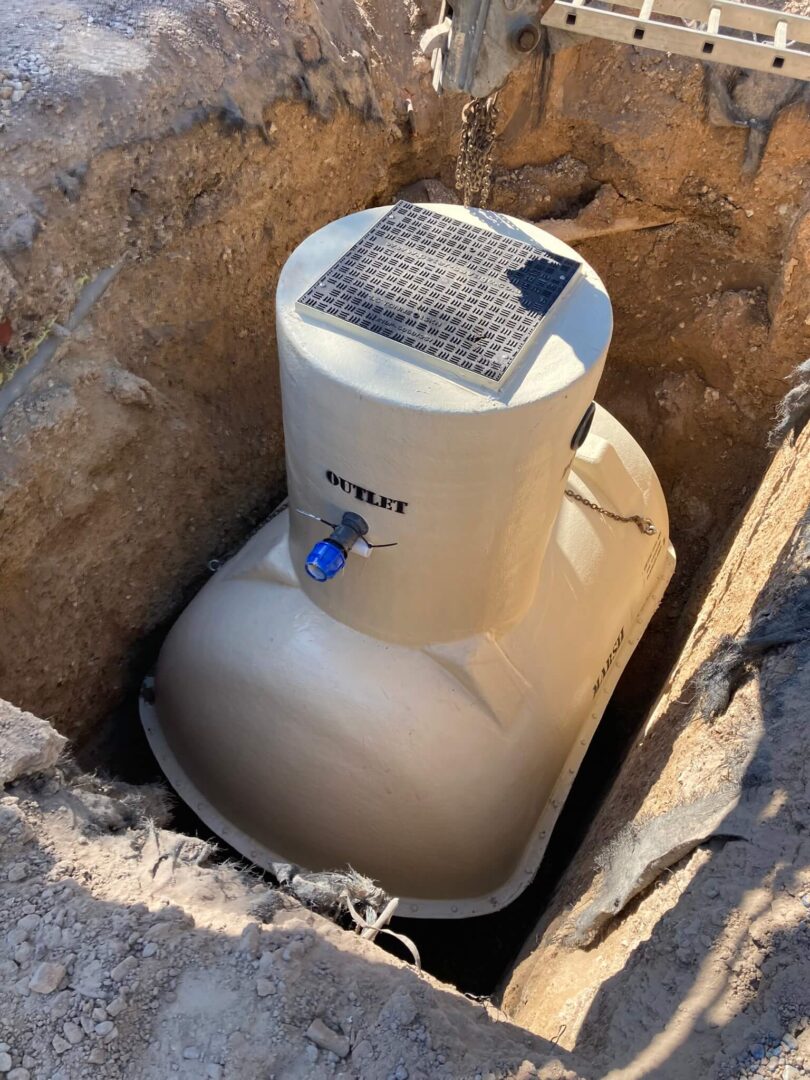
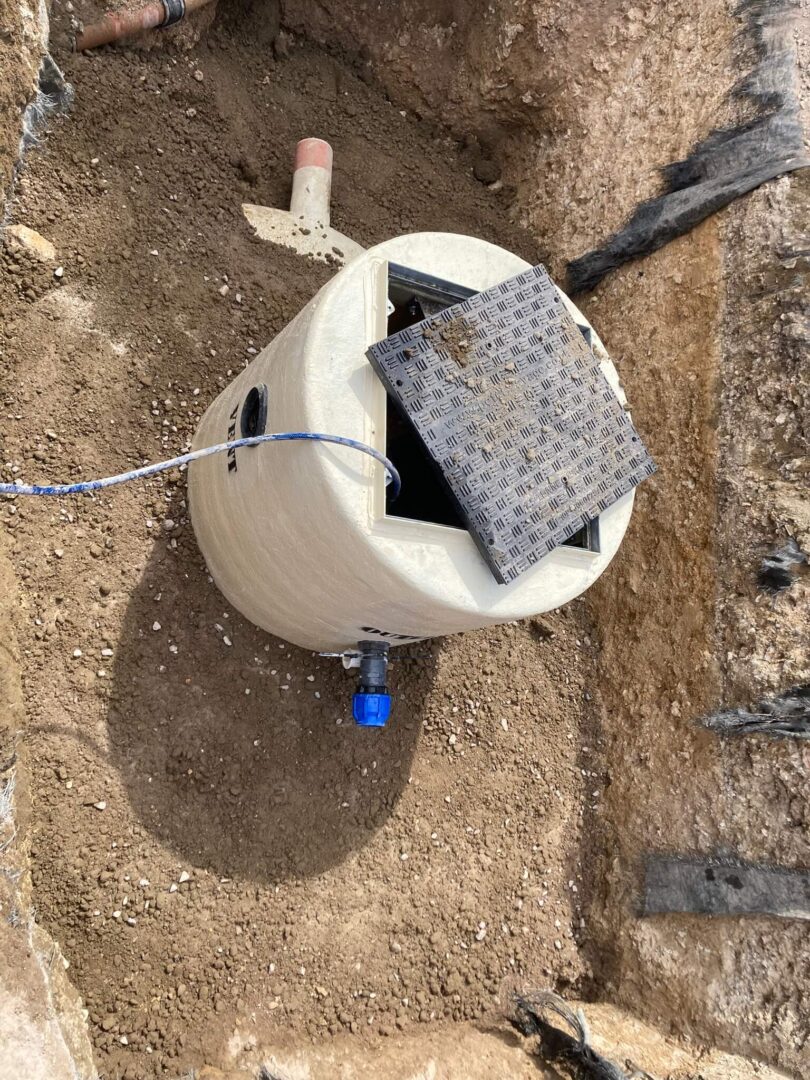
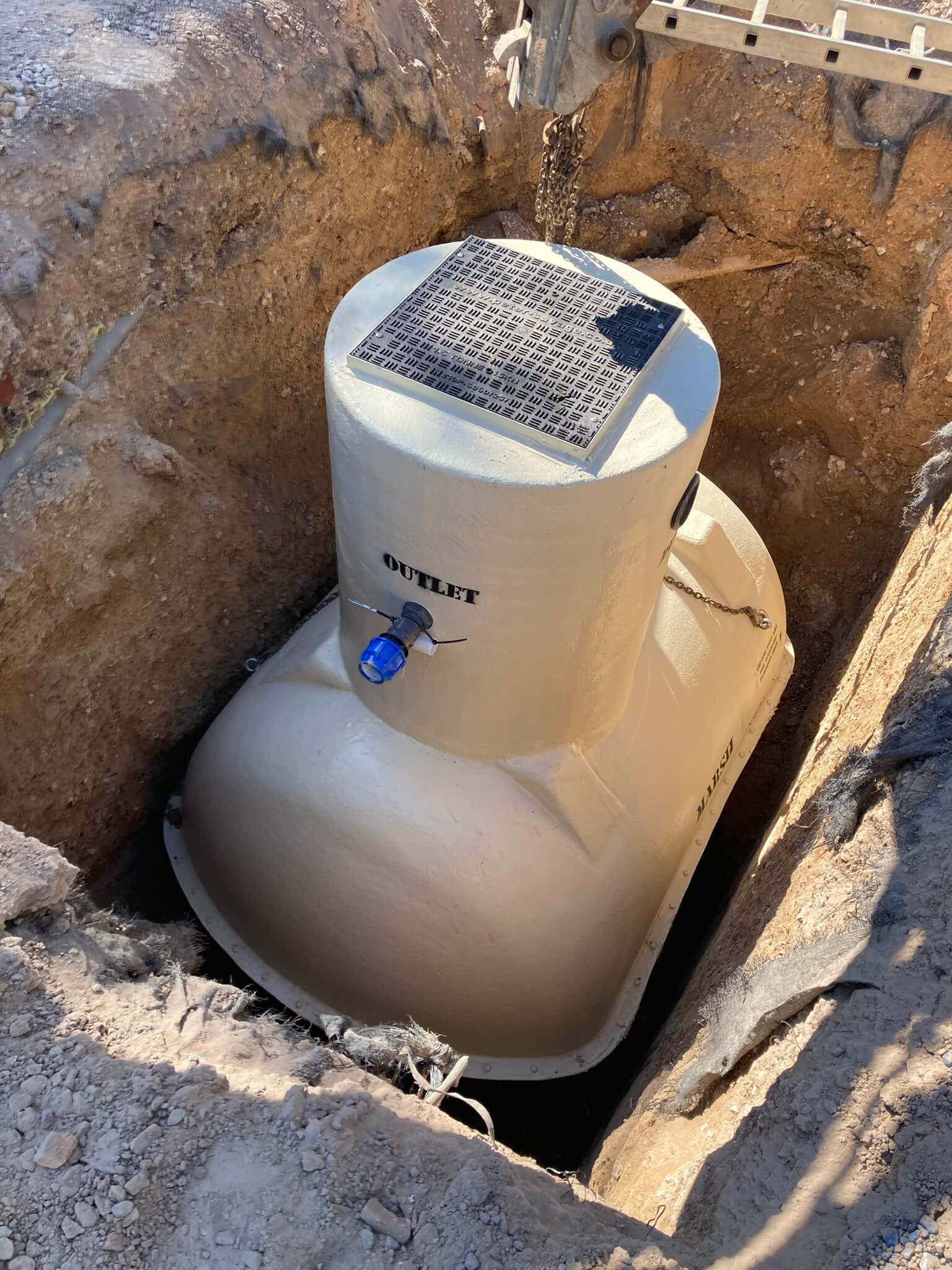
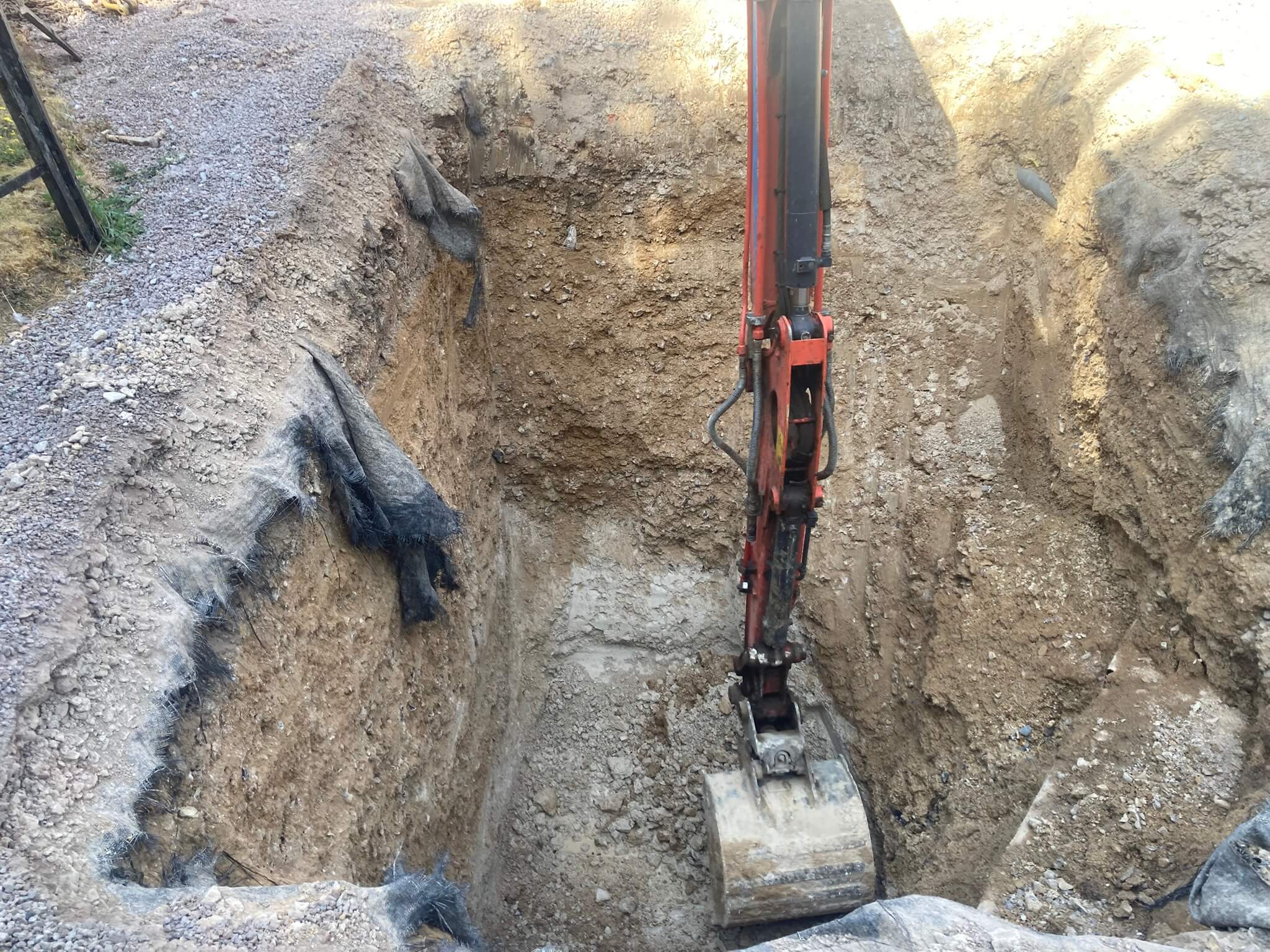
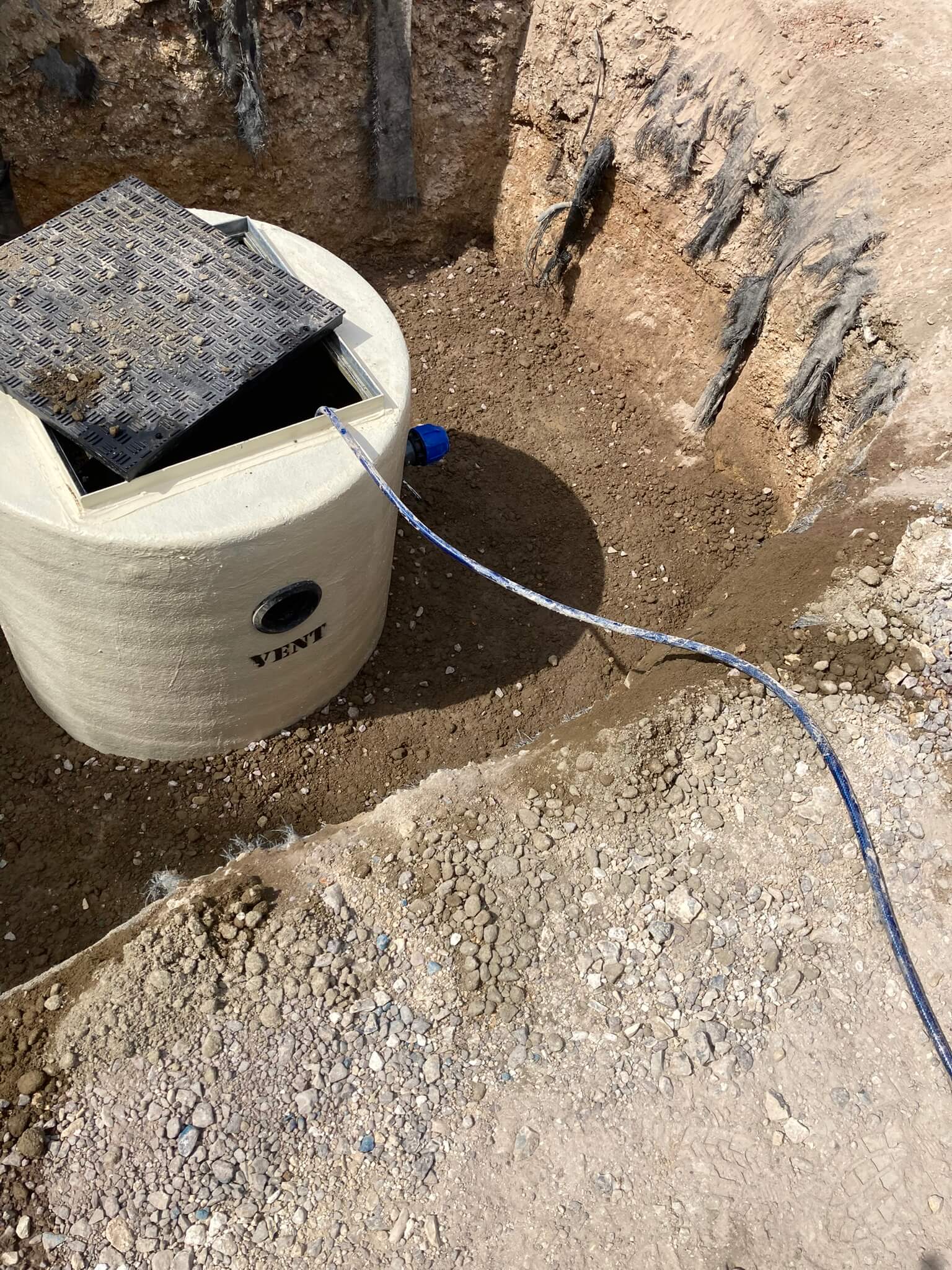
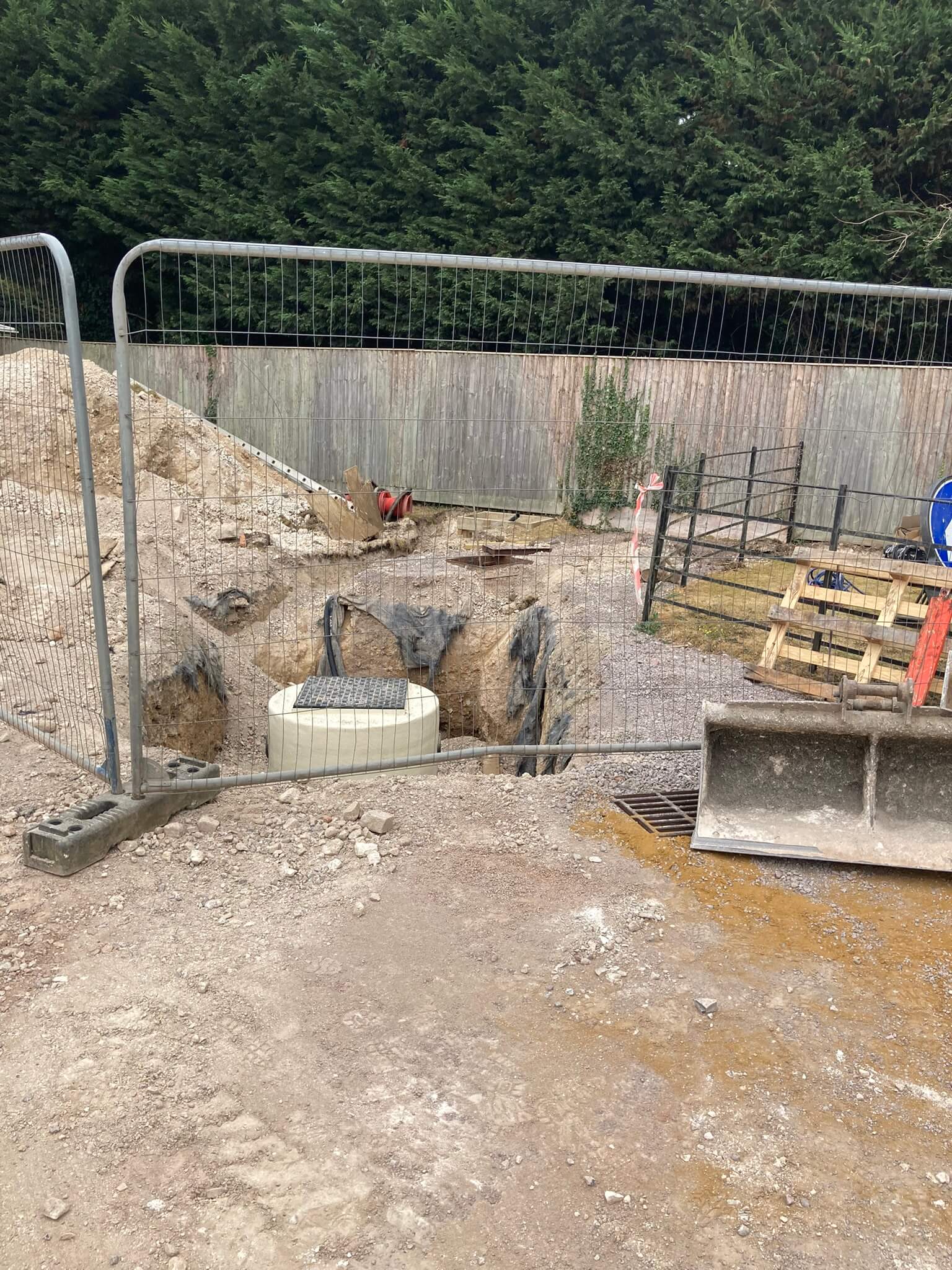
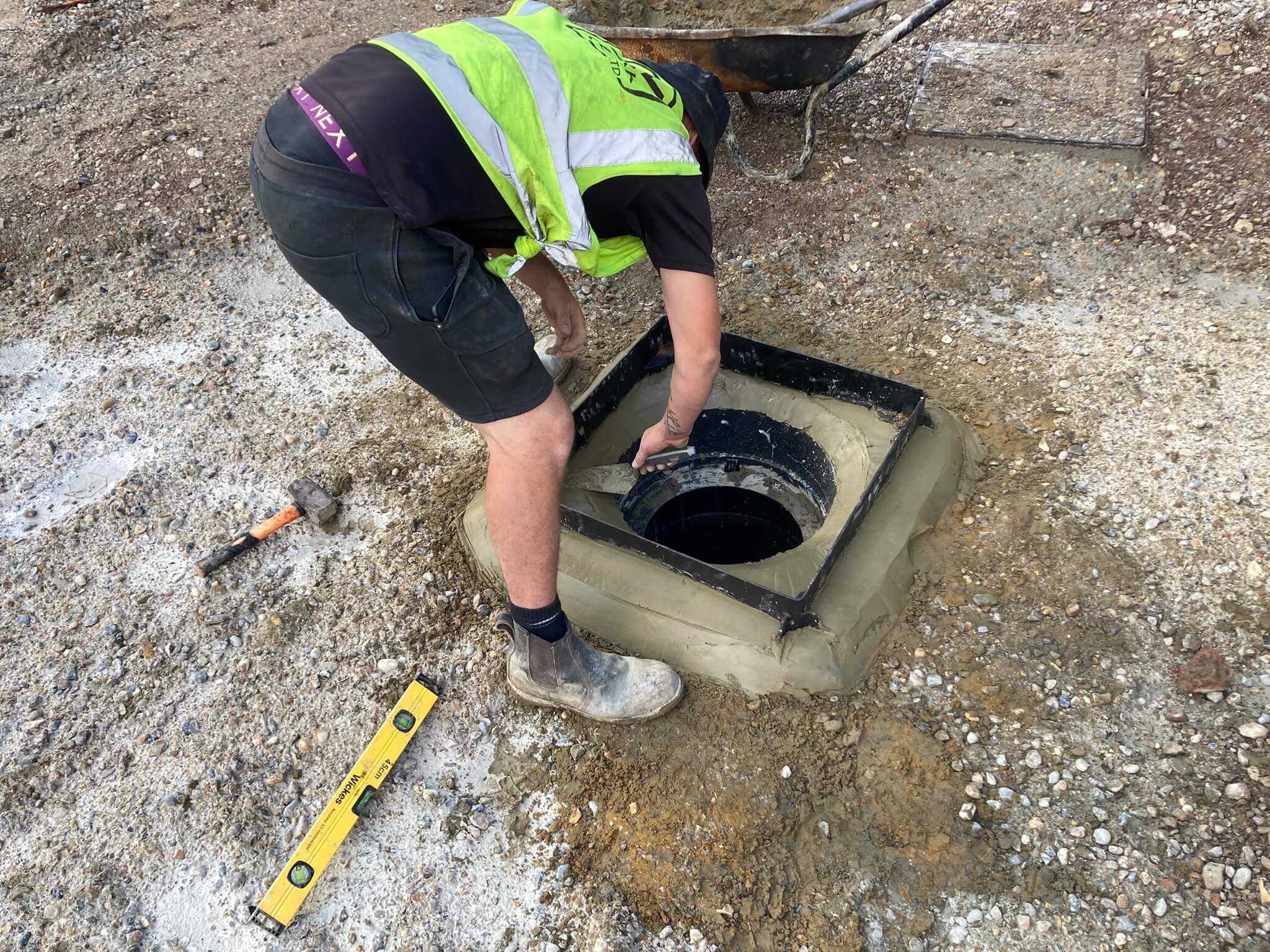
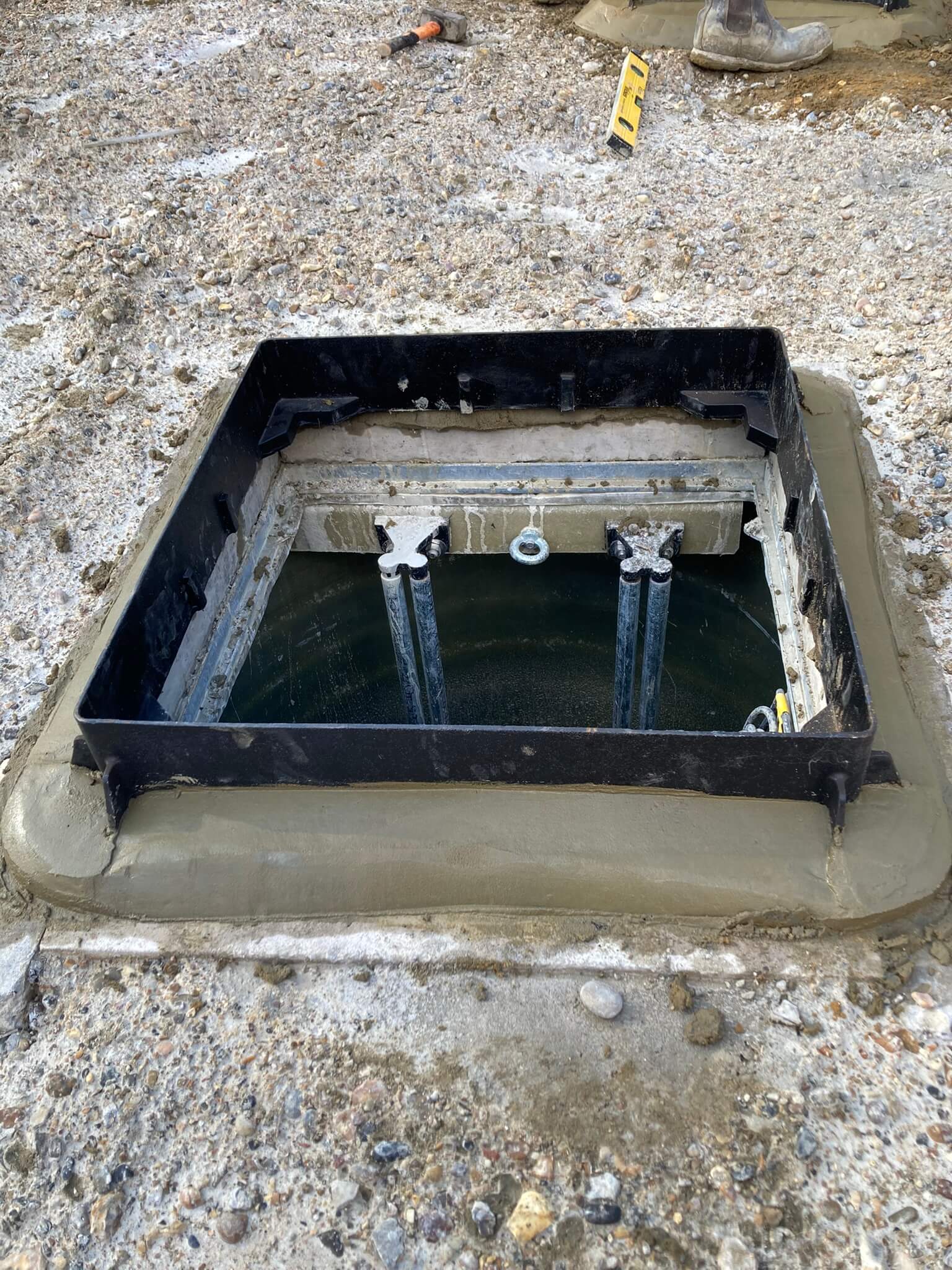
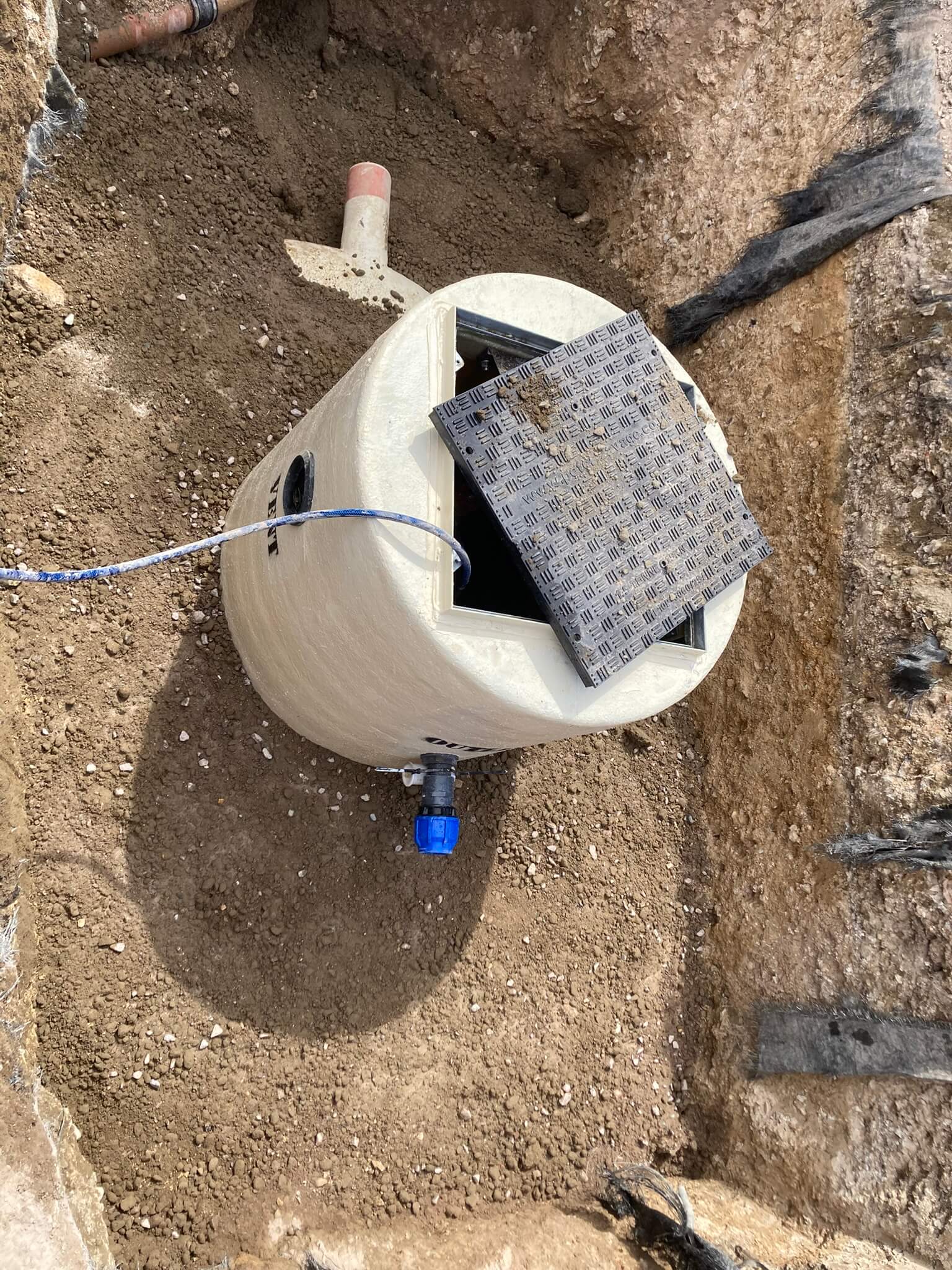
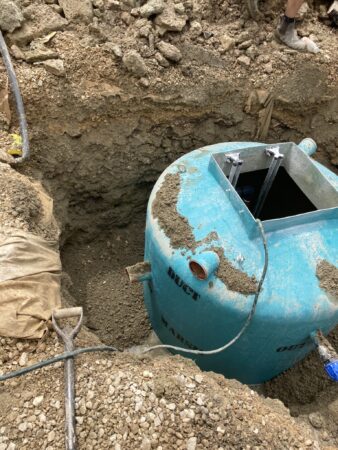
With all applications approved we started in private property, installing the pump chamber. There had been concerns about the water table – the pump chamber was about 3m deep and we were worried we would encounter water at 1-2m deep. However the work was done in August and there had been little rain over the previous couple of months, and we didn’t encounter any groundwater. The pump chamber was concreted in, as per manufacturer’s guidelines.
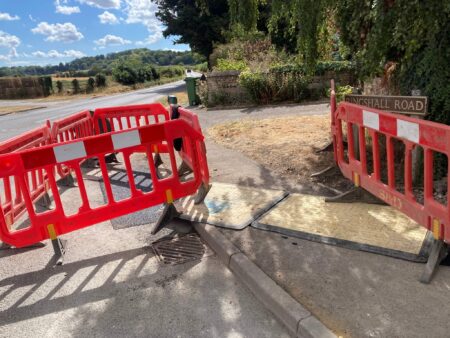
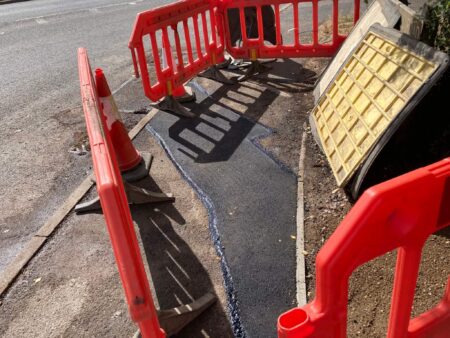
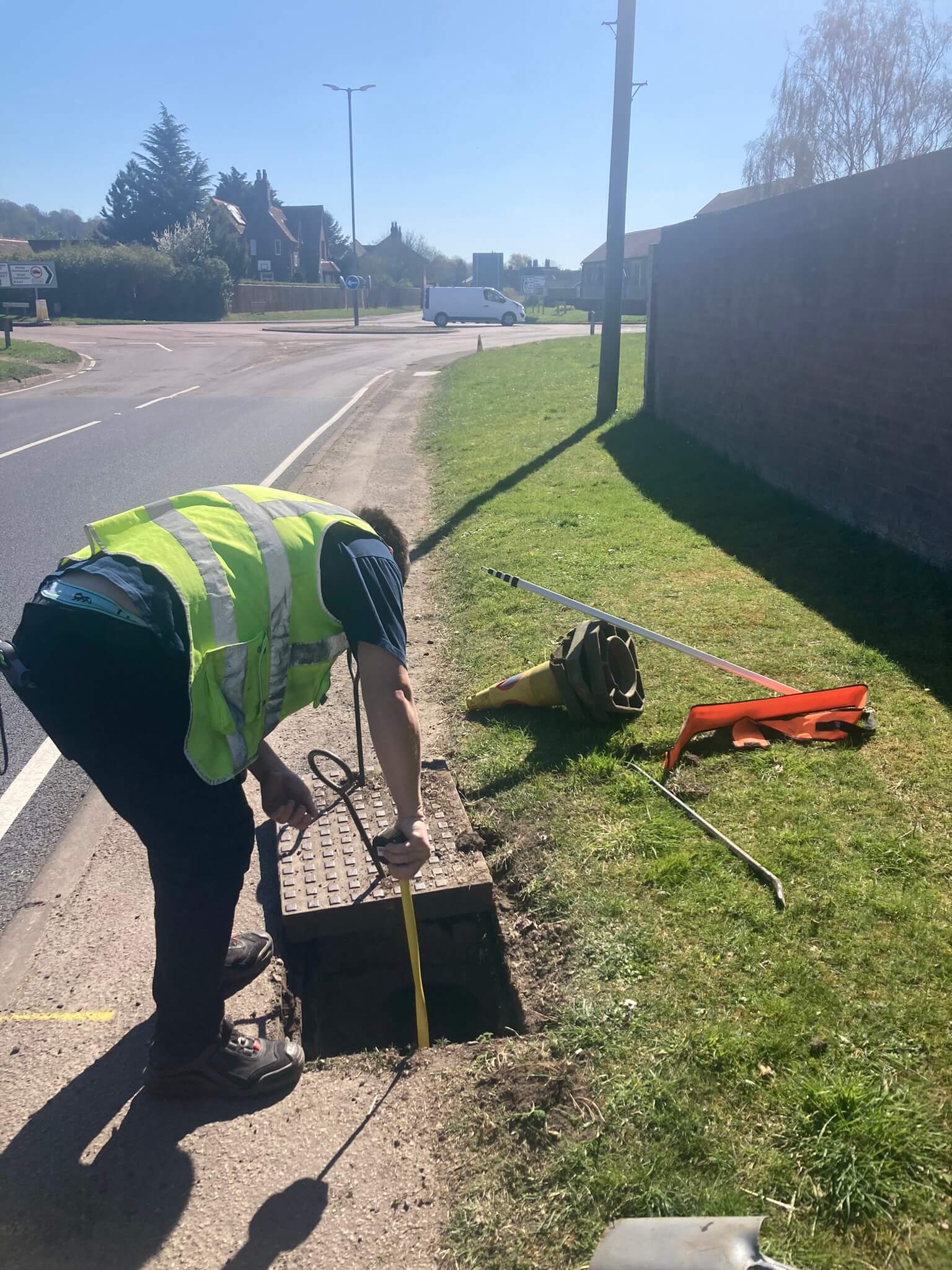
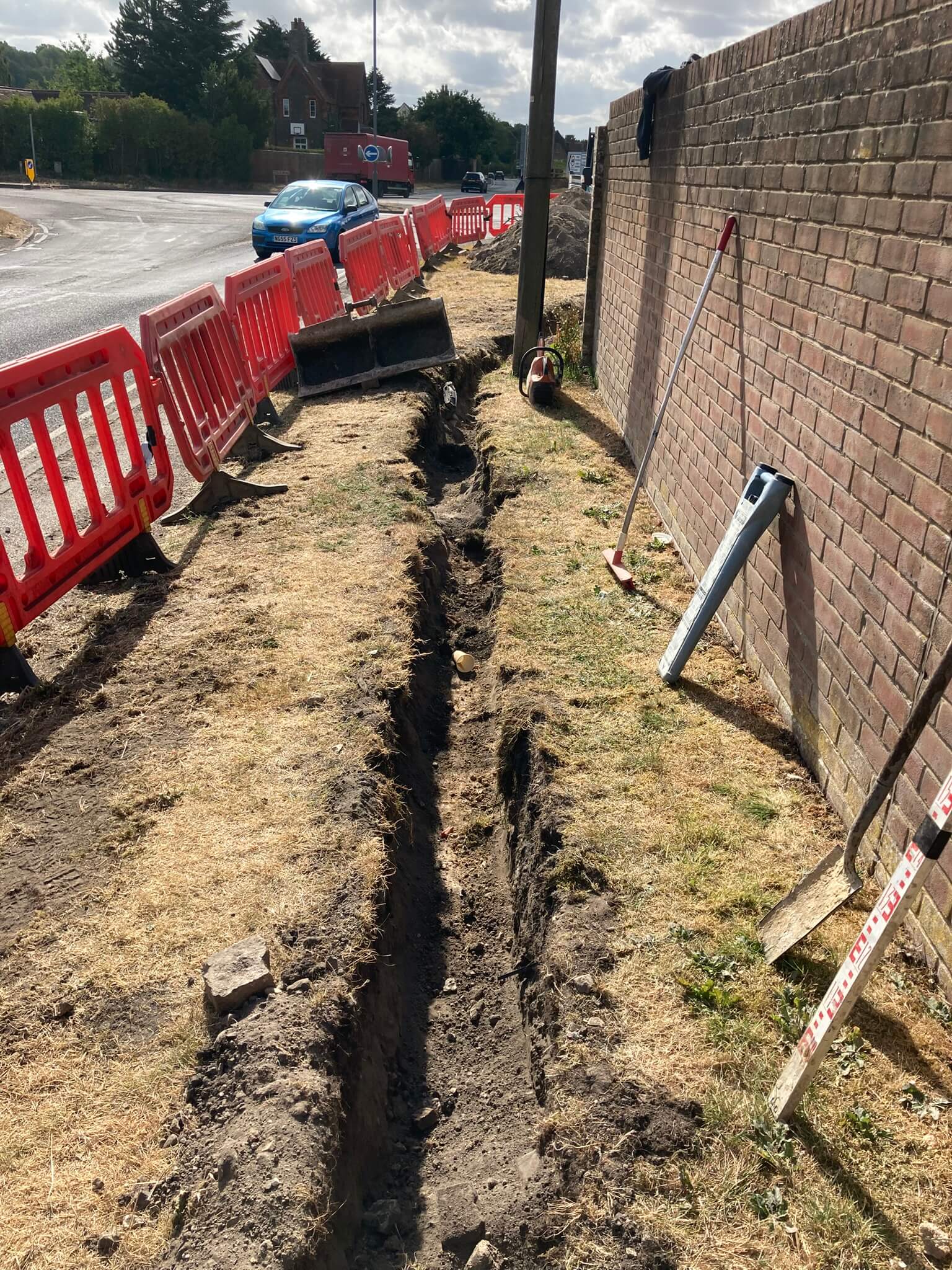
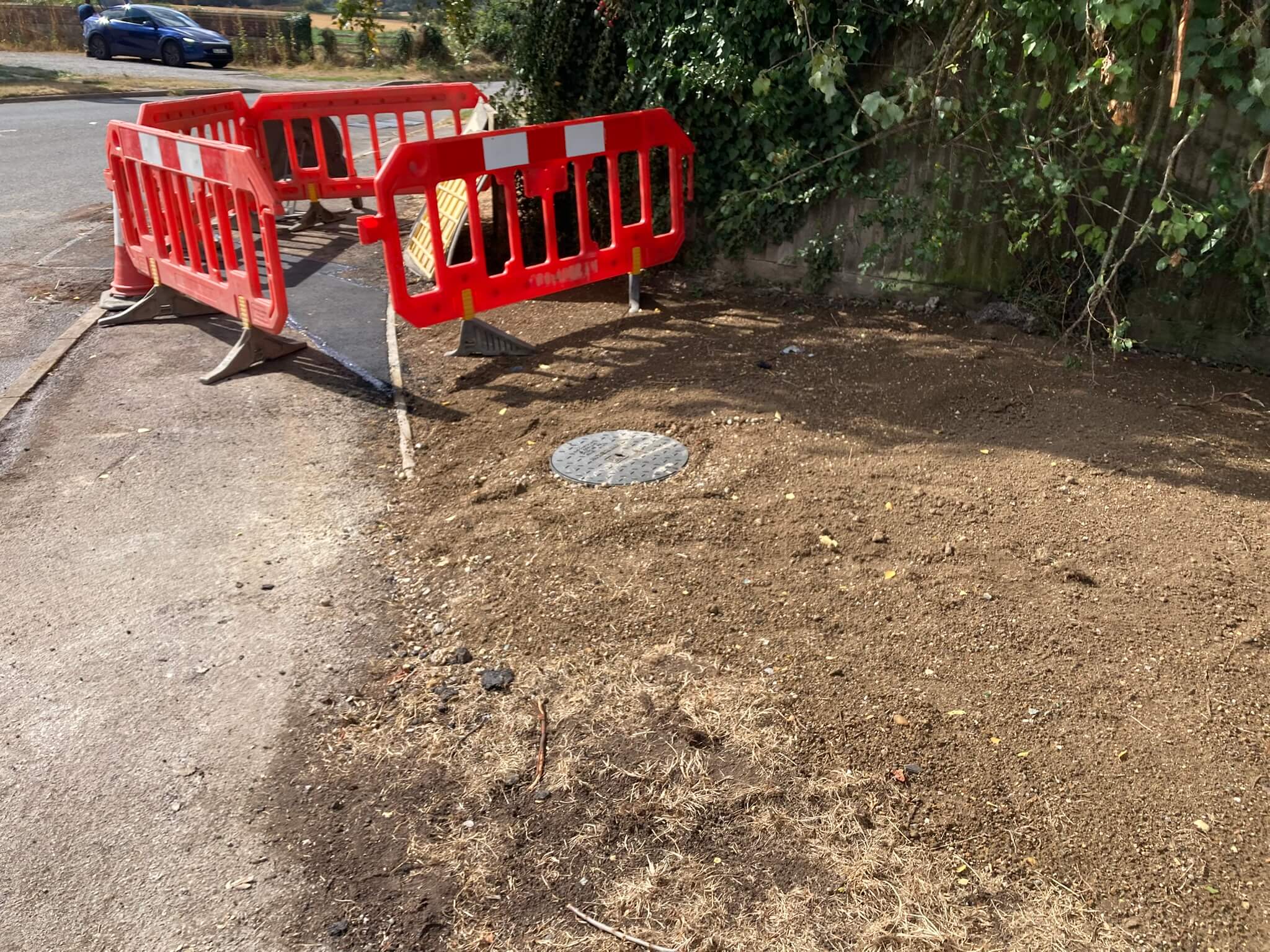
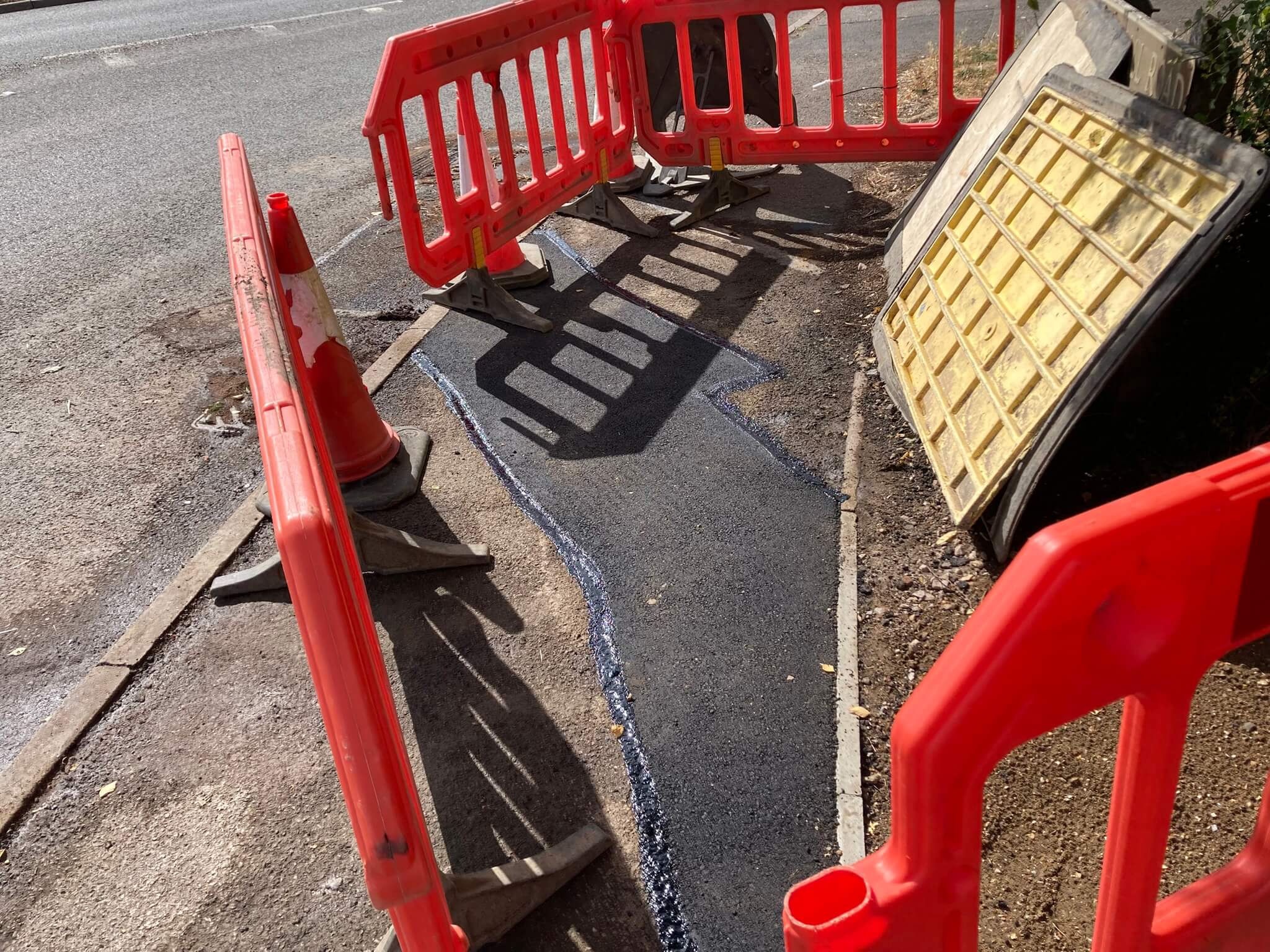
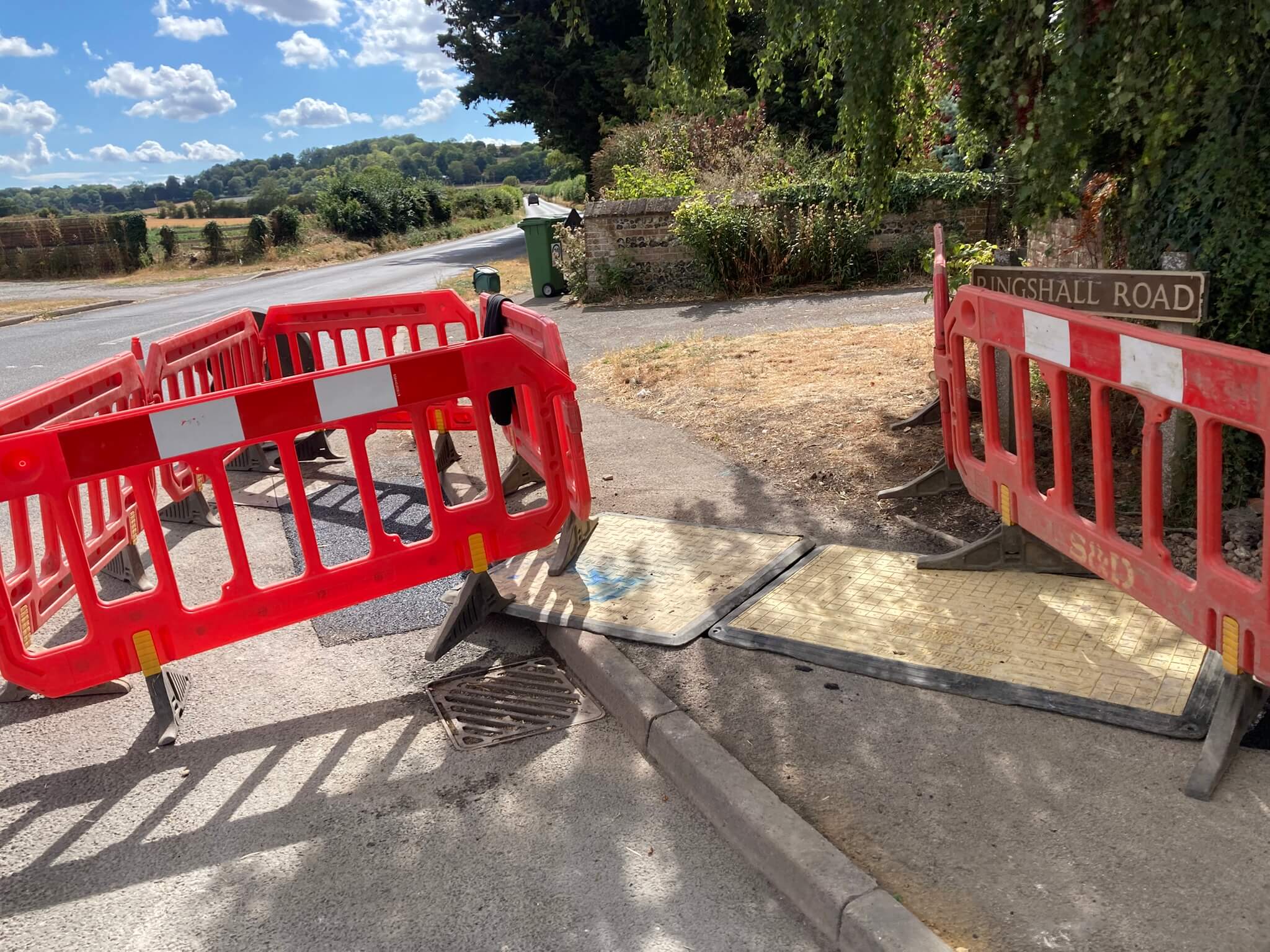
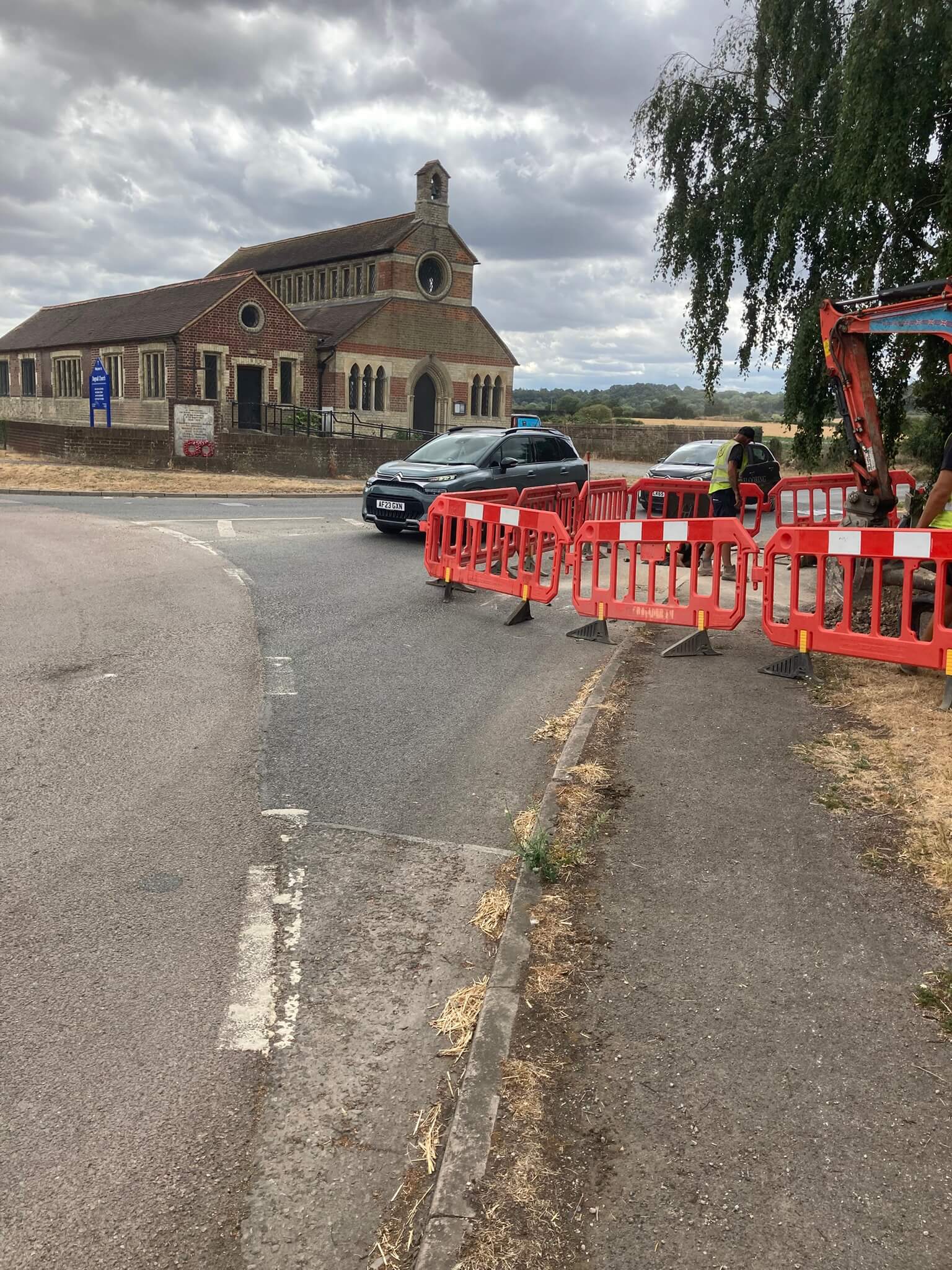
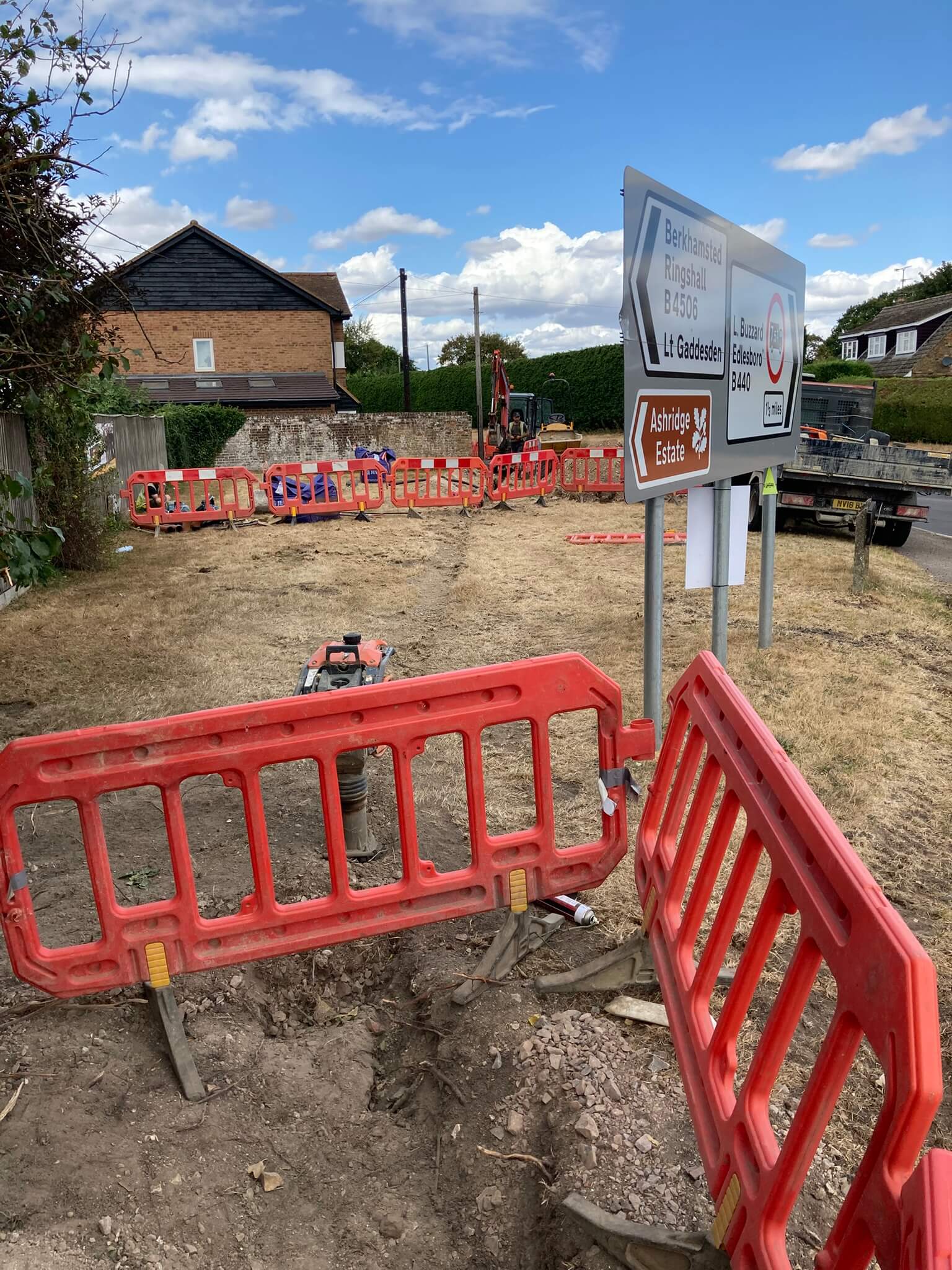
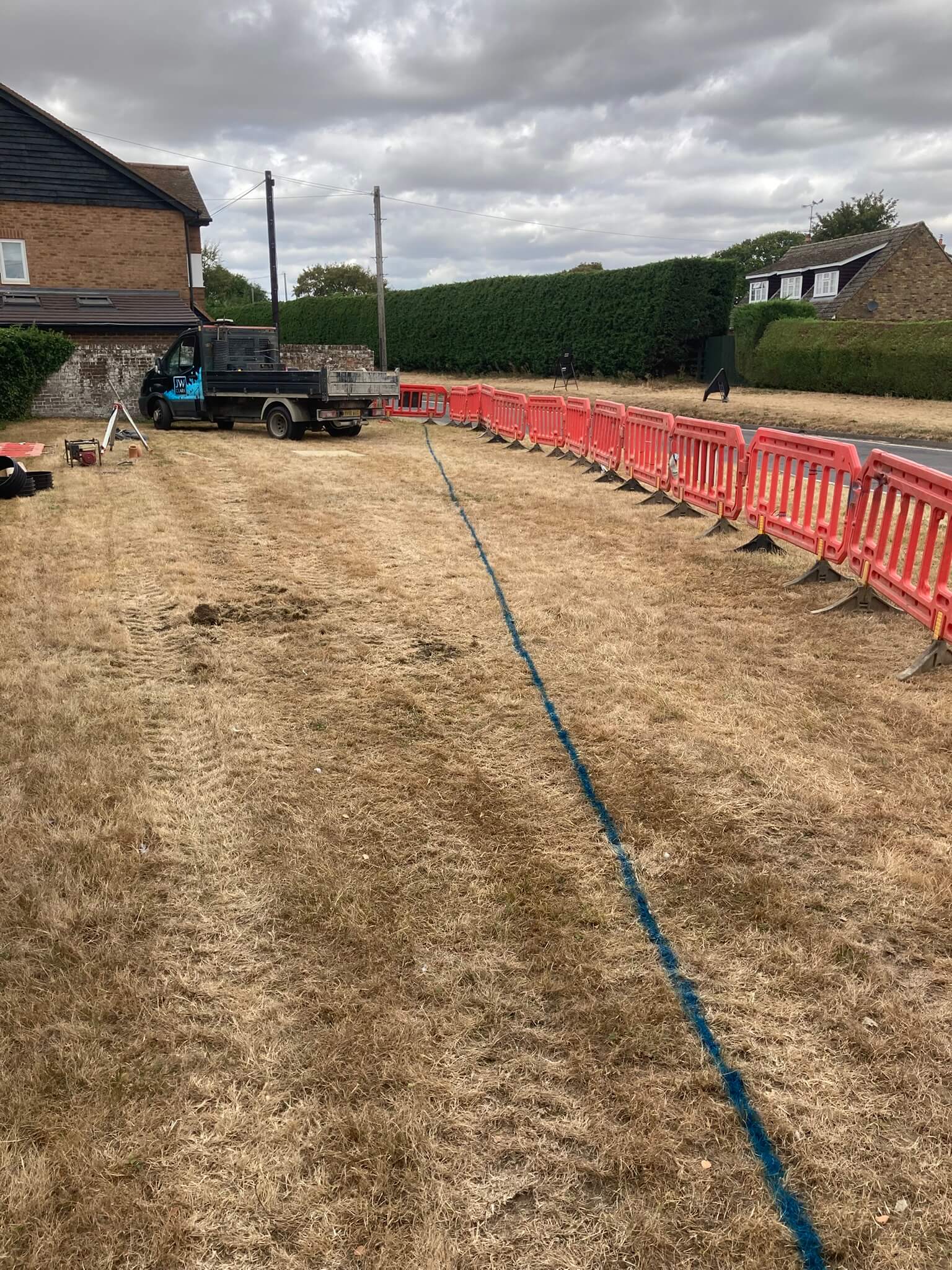
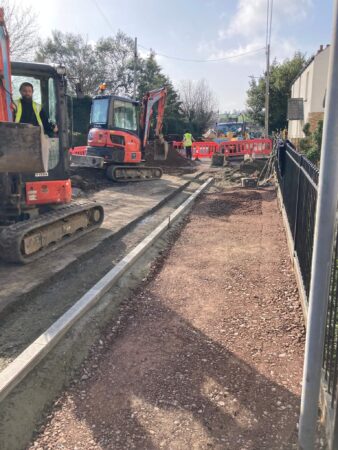
We then proceeded to undertake the works in the Highway. The connection point was at a busy roundabout, but only about 1.5m into the carriageway. We were able to maintain 3.5m for traffic, after we had set up our work zone, so we were able to undertake the works using simple ‘Give & Take’ Traffic Management, with there being no need for traffic lights. The method of connection was ‘Direct connection into a manhole’. Click here to read about different methods of connection.
With the connection made into the public sewer, we then continued to lay 100mm clay pipe towards the location of our ‘break chamber’. This is the point at which the pipework changes from gravity pipework to pumped pipework. The gravity pipework is 100mm clay pipe, and after the break chamber it changes to 63mm MDPE pipework. It is not possible to pump all the way into a public sewer, the final piece of pipework always has to be by gravity.
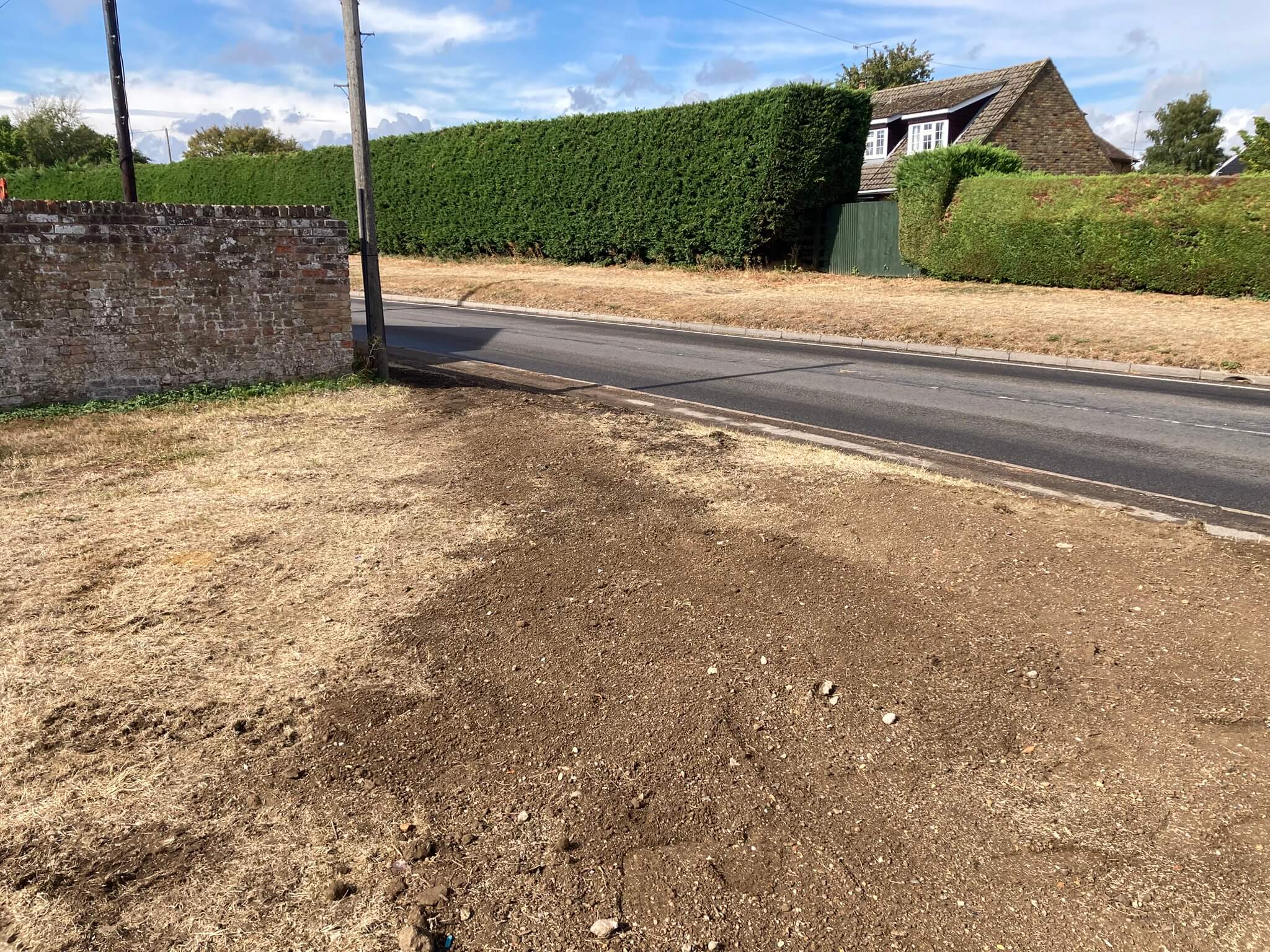
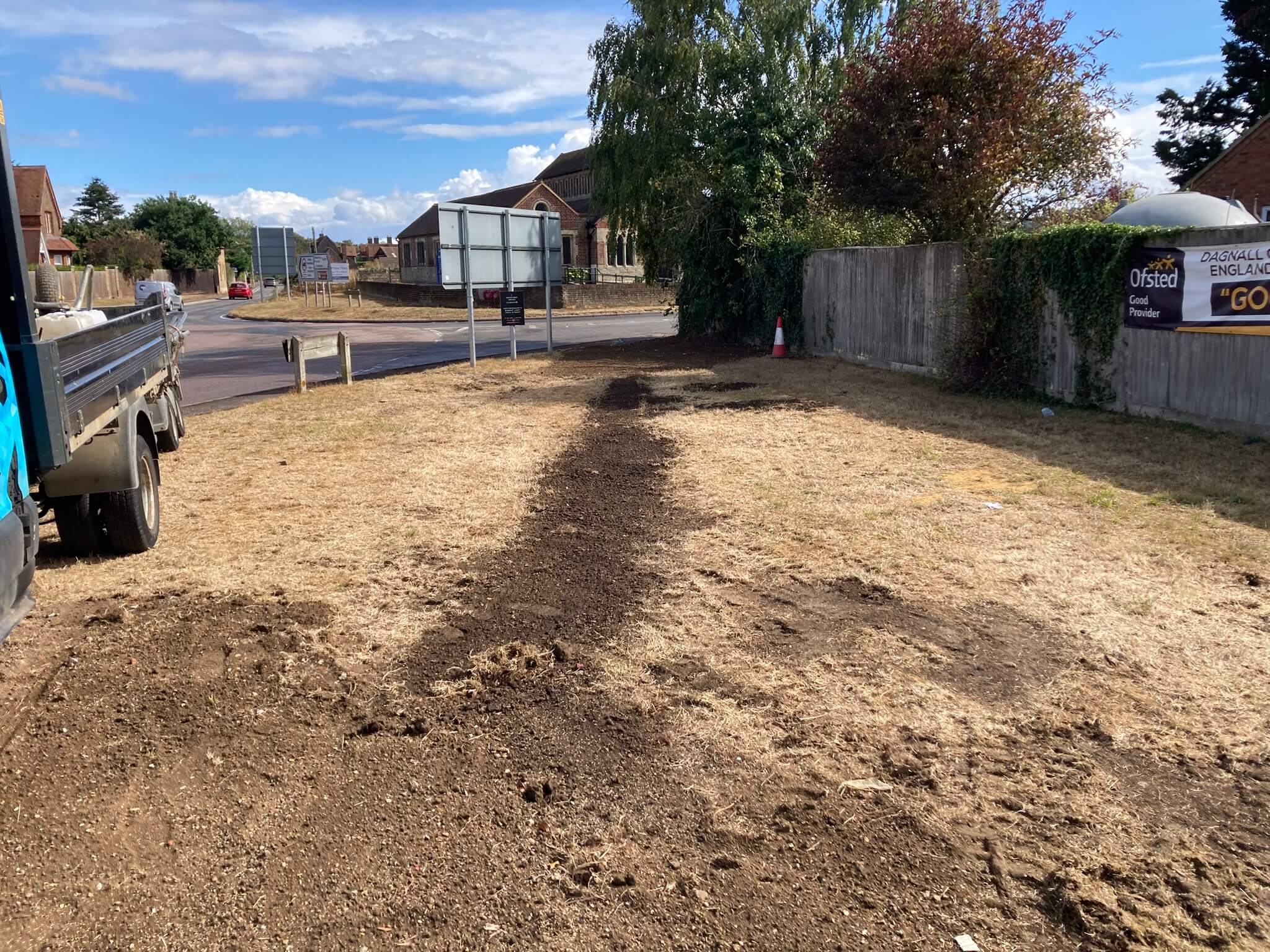
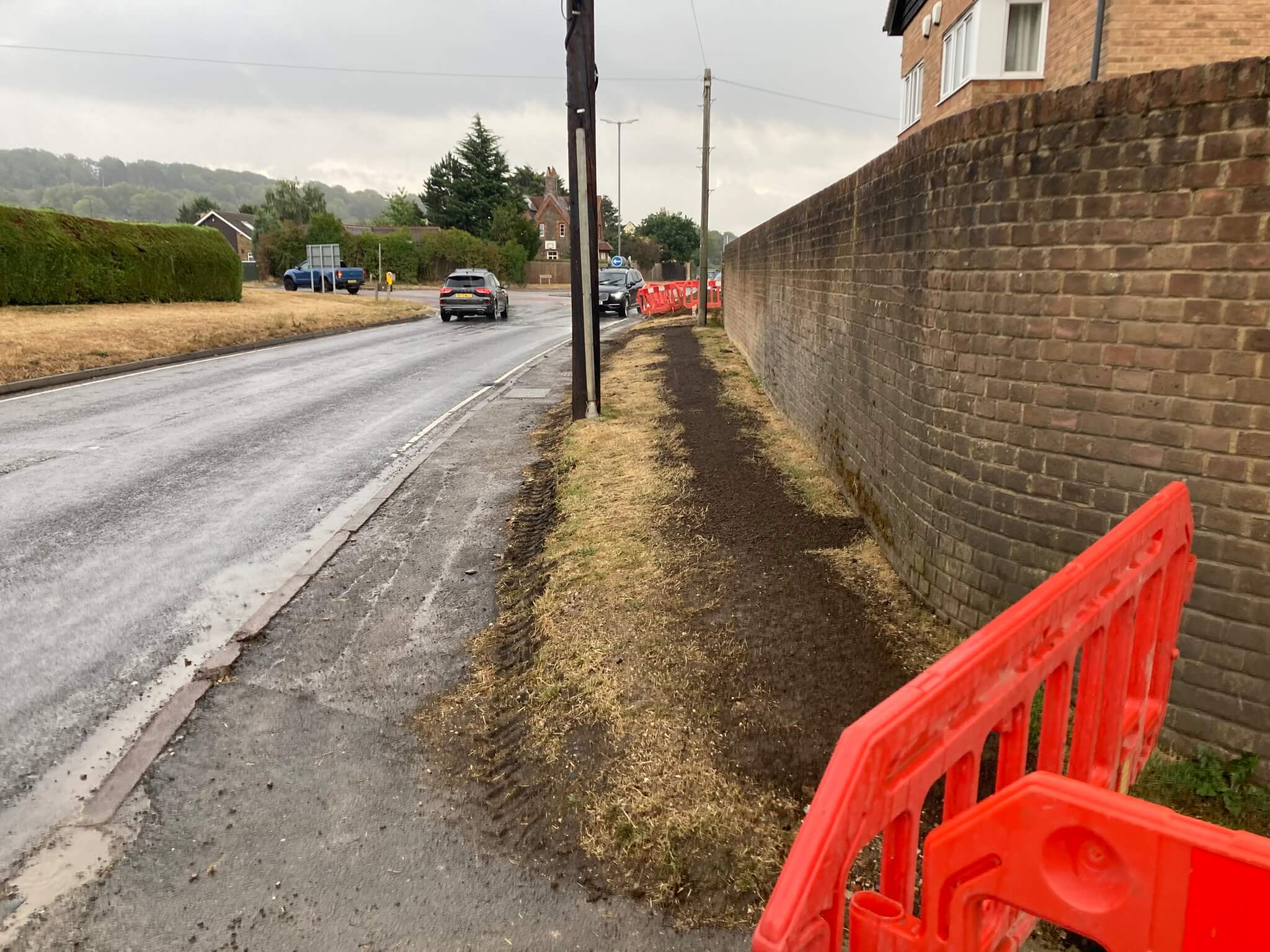
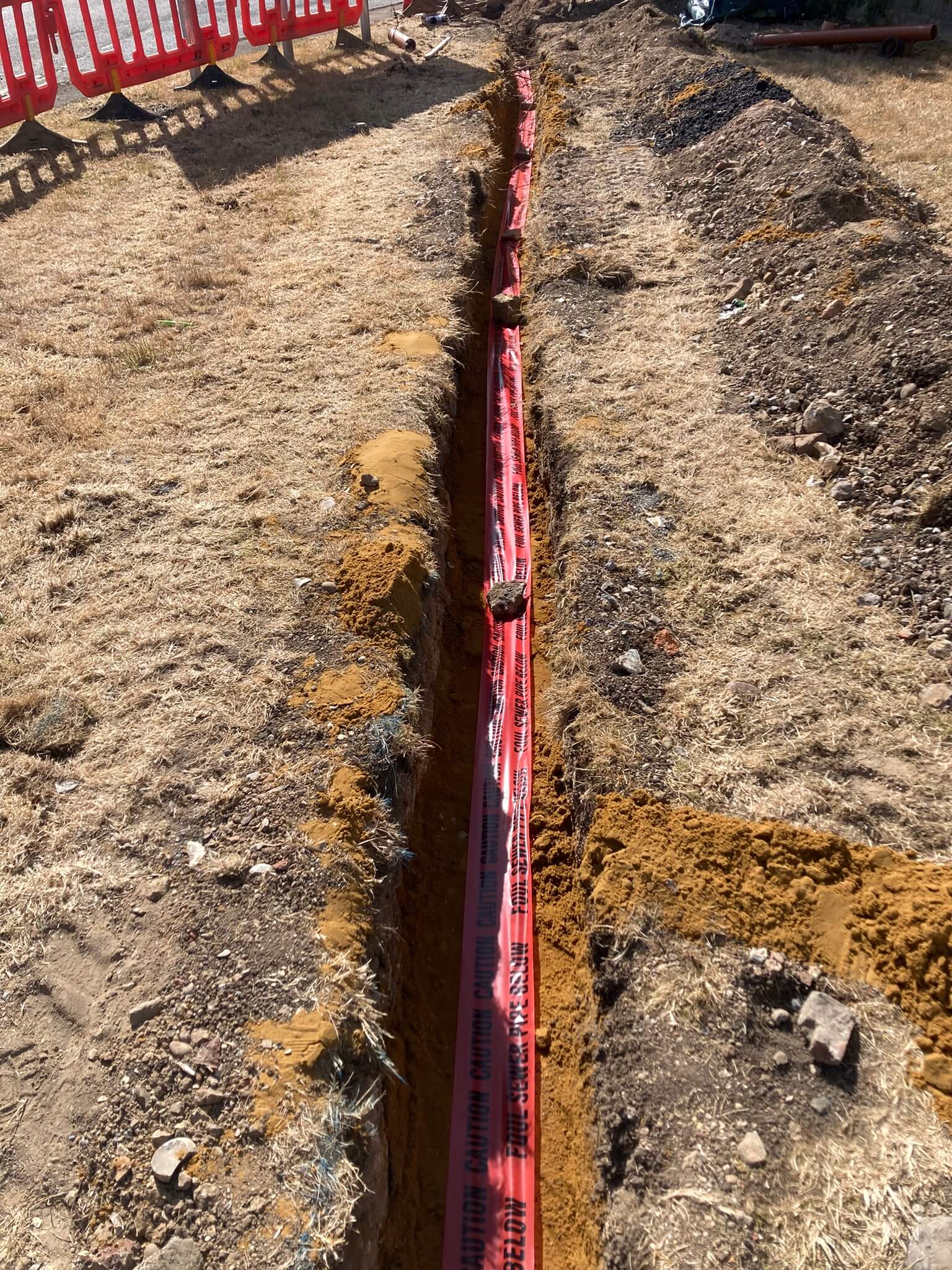
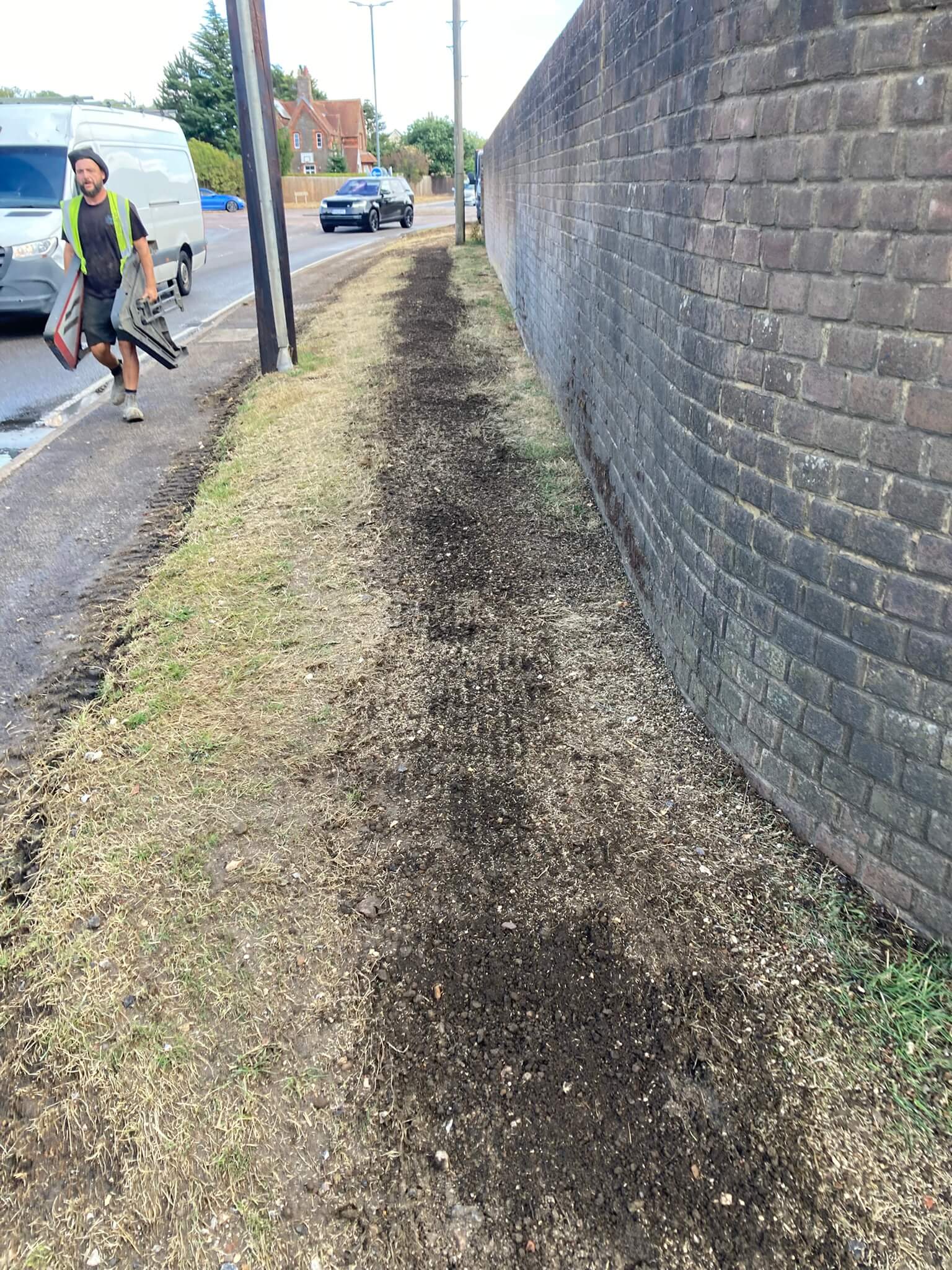
From the break chamber and towards the house we continued to lay the 63mm MDPE pipework, which was laid at 600mm cover. The MDPE pipework is lay in a sand surround, so it can ‘flex’ ever so slightly. And prior to backfilling, we put a layer of warning tape in to help protect the pipework in the future. The majority of the MDPE pipework was laid in the grass verge, with the final few metres in tarmac footway, before continuing into private property.
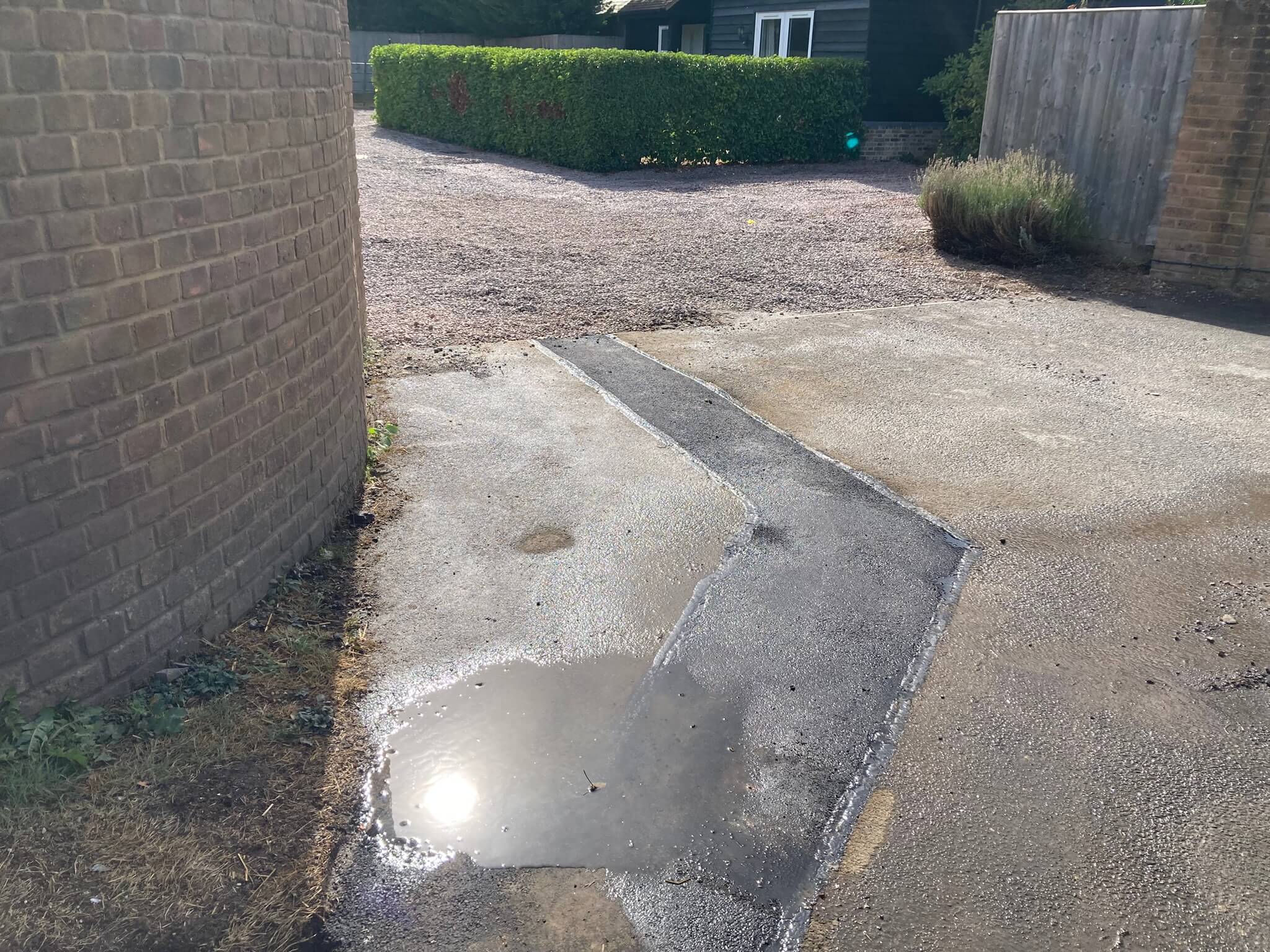
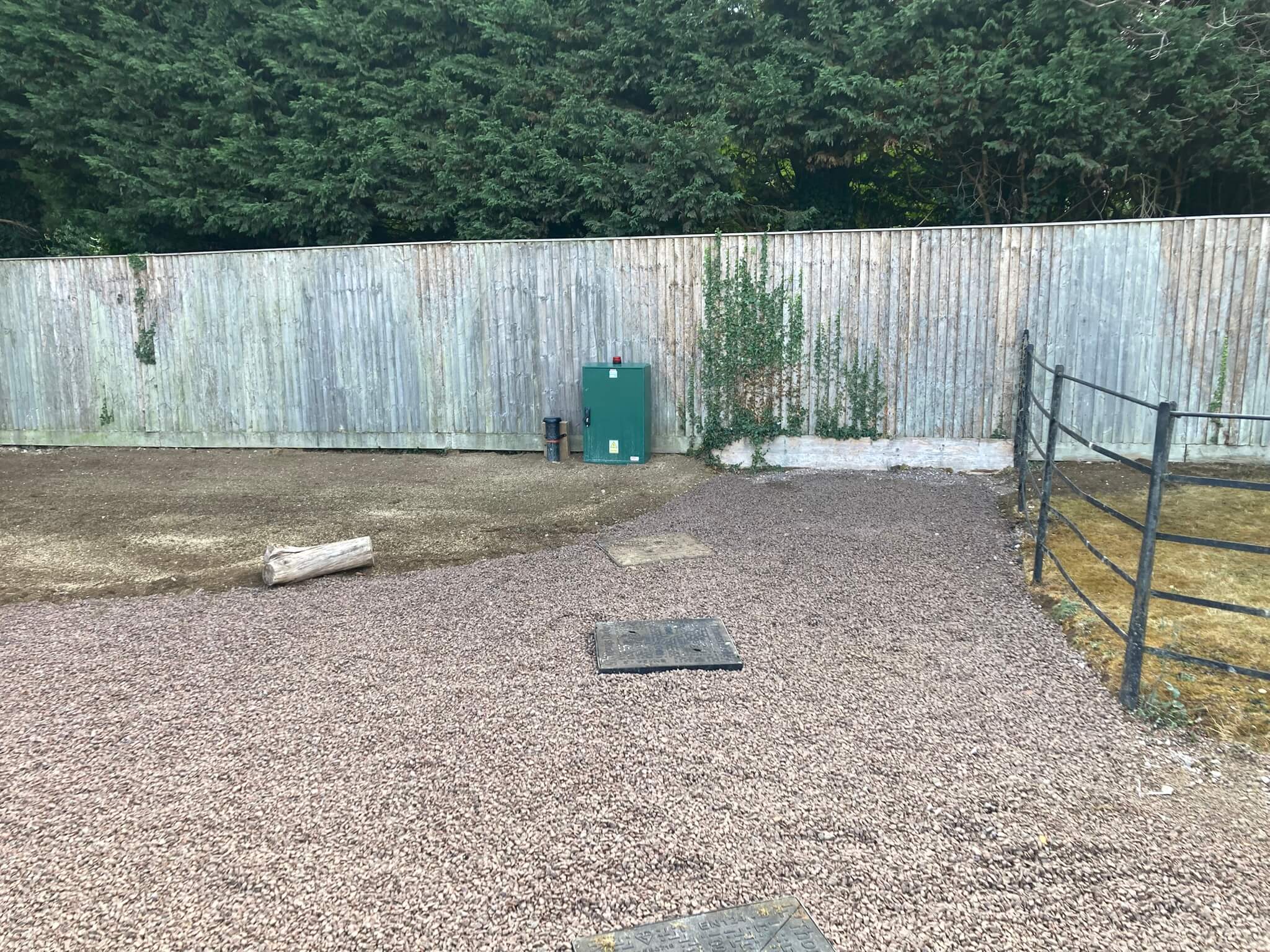
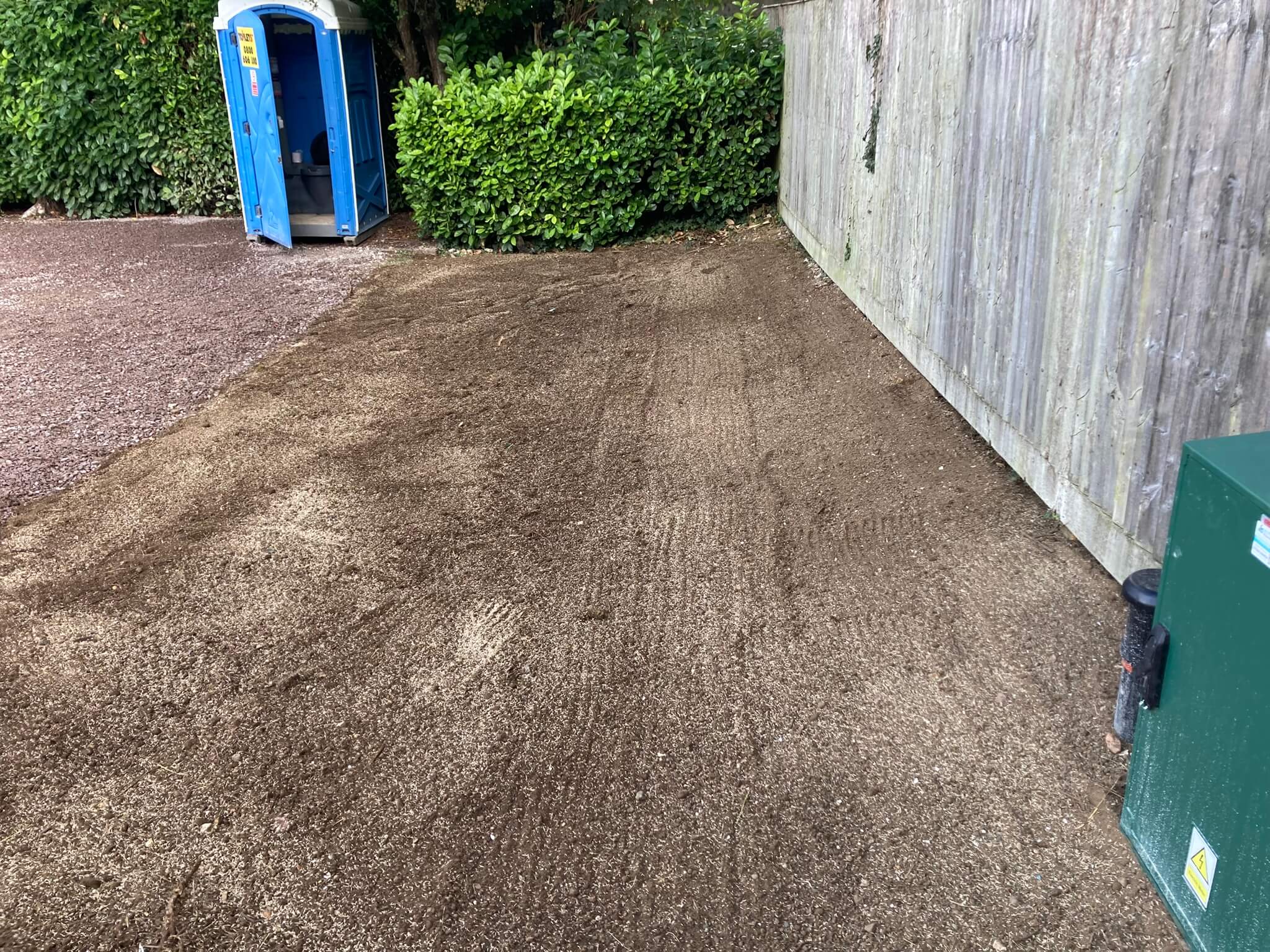
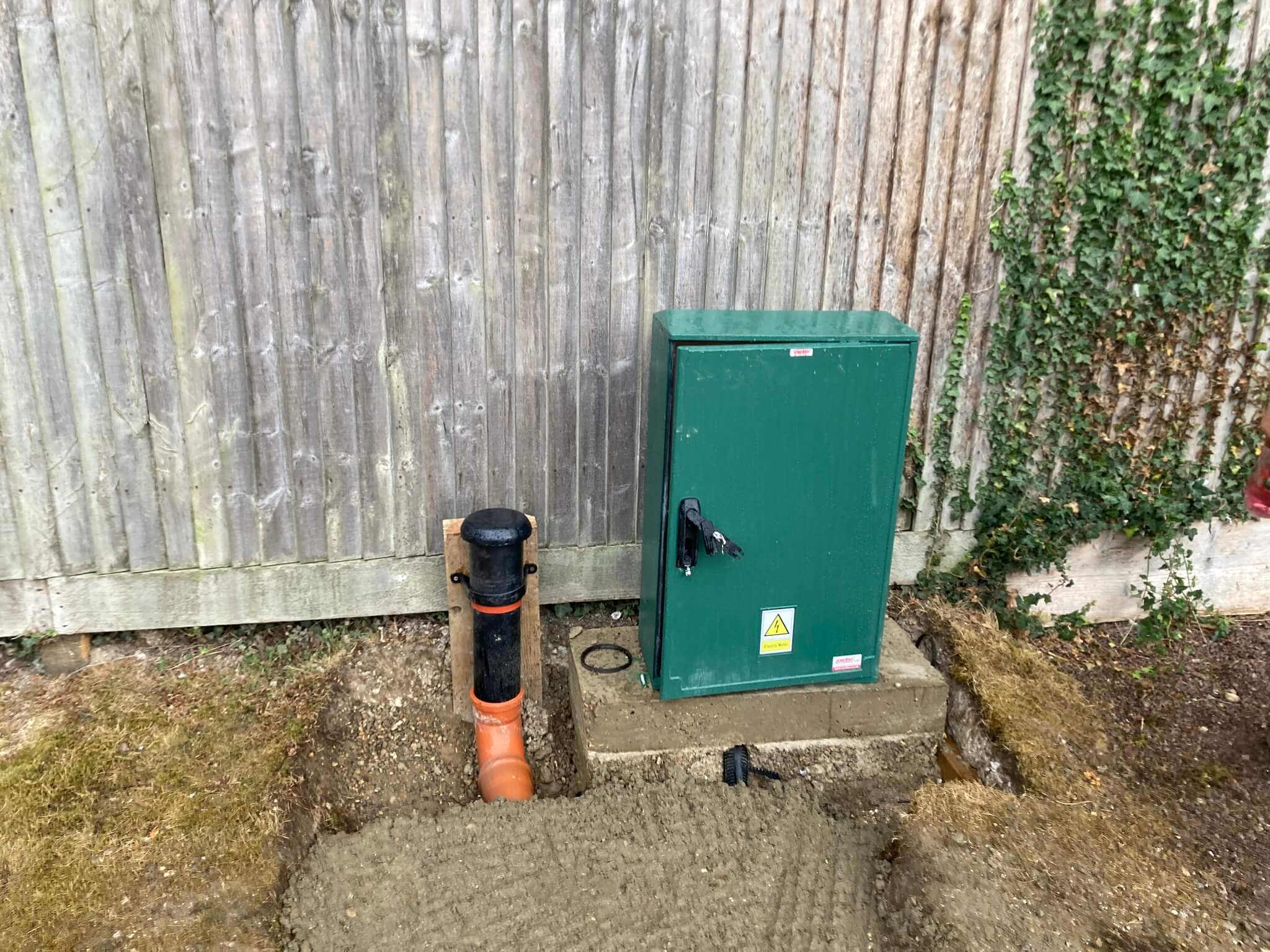
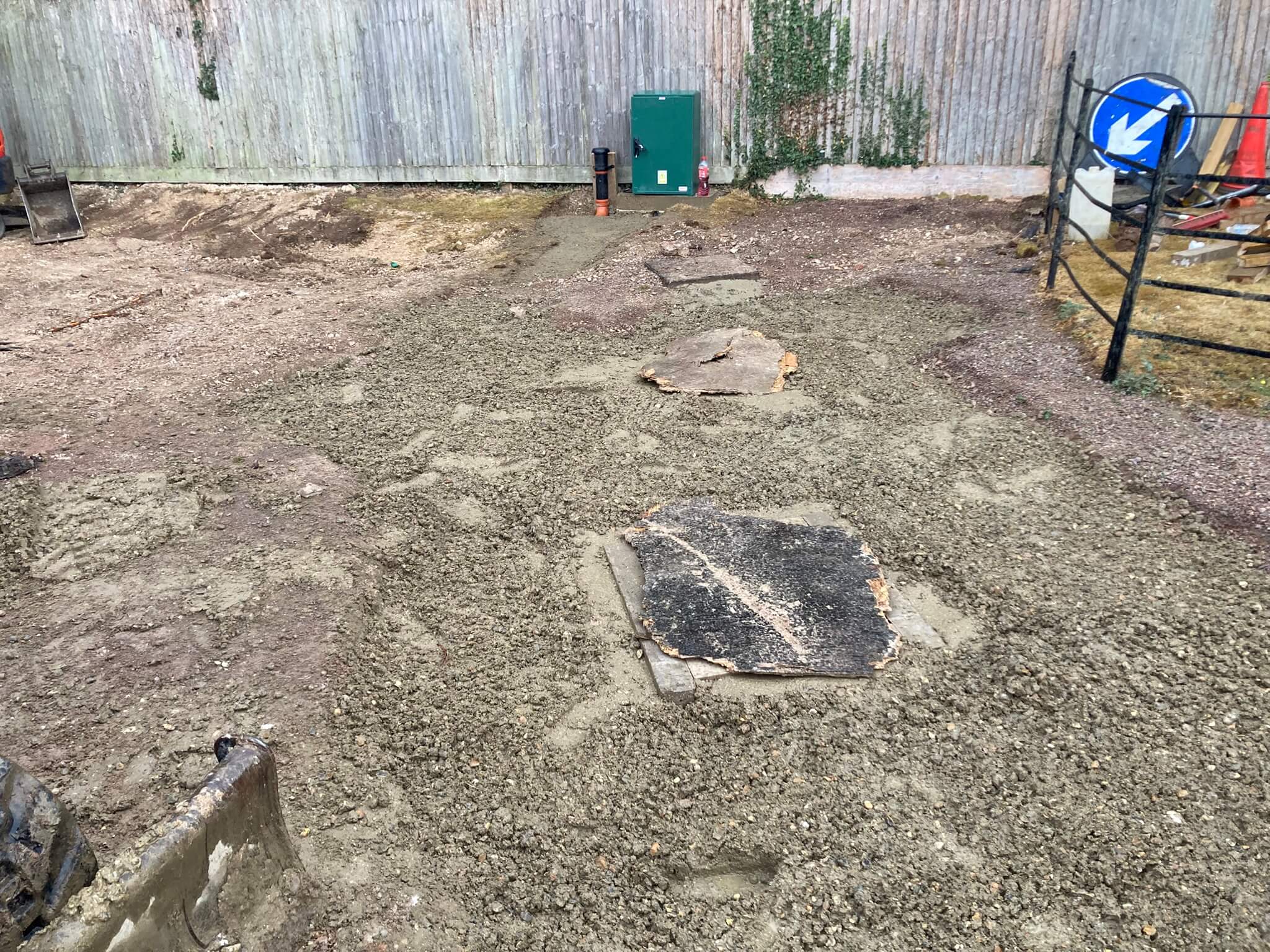
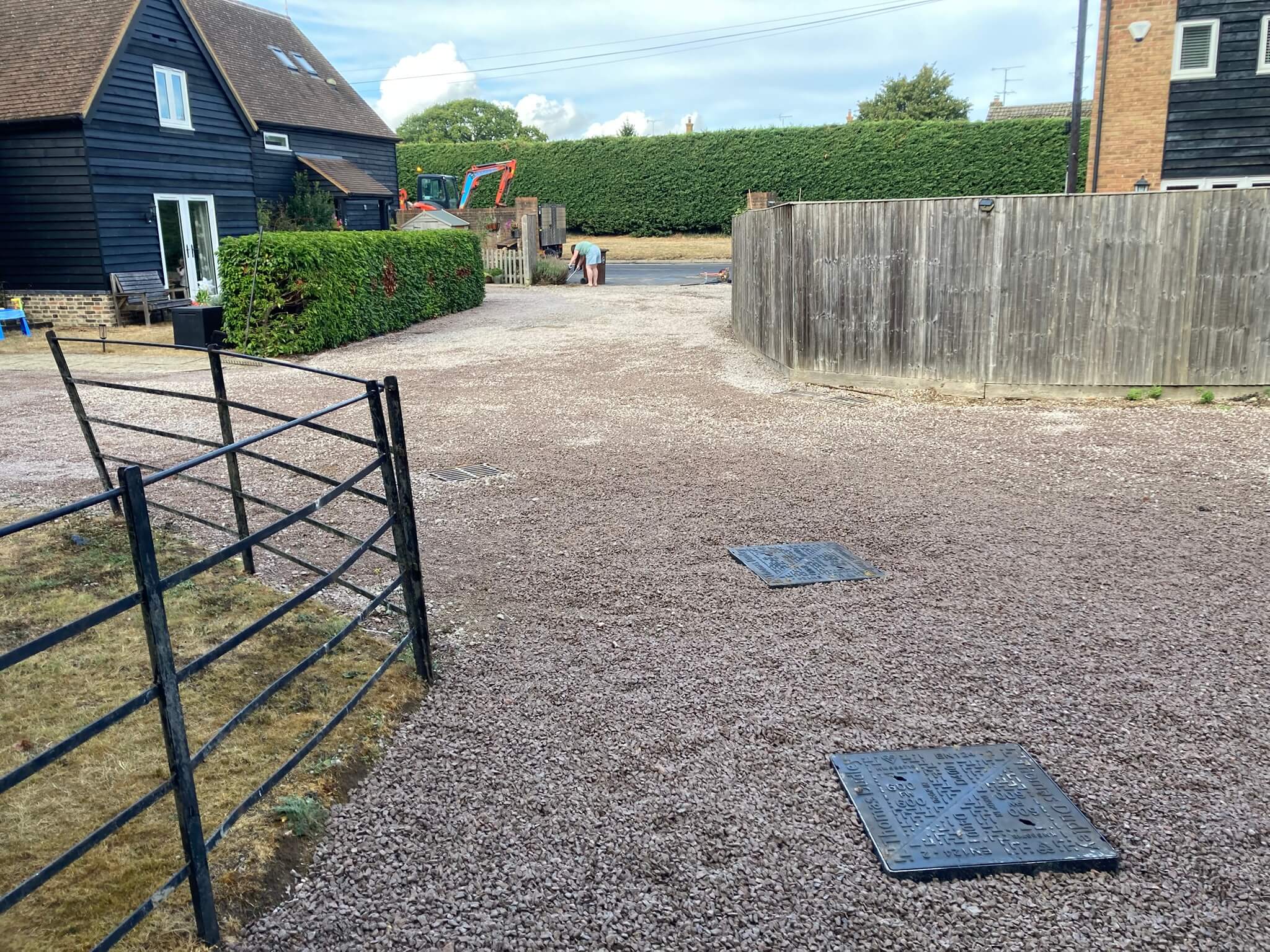
In private property, the last bit of pipework was laid in the gravel driveway and connected into the new pump camber that had been installed at the start of the job.
A ‘kiosk’ was installed adjacent to the pump chamber. This houses the control panel for the pump chamber, which co-ordinates the floats and controls when the pump is activated within the chamber. From the kiosk we laid a duct to an electric source on one of the seven houses. An electrician made the connection into the kiosk, and a third party ‘commissioner’ did the work to commission and test the new pump chamber.
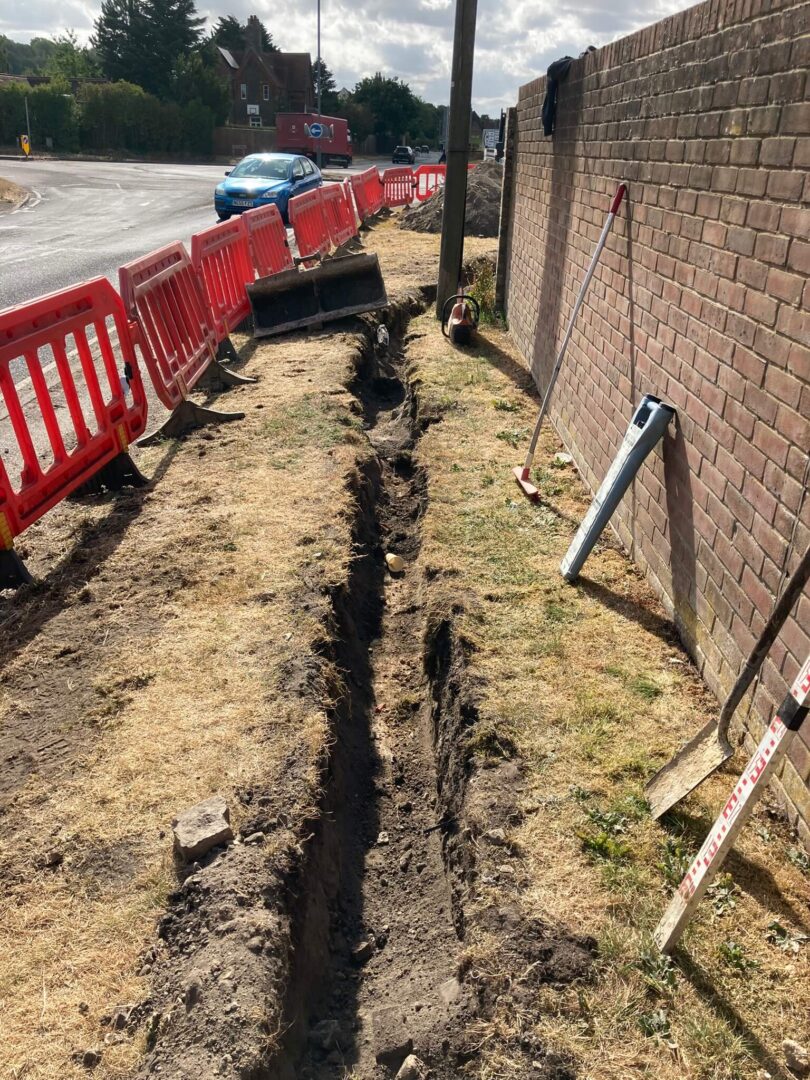
With the pump chamber connected, tested and commissioned, we did the switchover from the old system to the new. We did this in such a way that the residents were not without their foul system for any amount of time, they were able to continue using their toilets etc, as usual. It was great to get this job completed for these customers after the long and arduous applications process, that took just over two years.
Timeline
Time taken to quote for the works: 2 months
(Section 104 process pursued for 18 months and eventually abandoned)
Time taken to obtain Section 106 Licence: 4 weeks
Time taken to obtain Section 50 Licence: 3 weeks
Leadtime to use Licence: 6 weeks
Time taken to do the work: 4 weeks
Total time: 25 months
Do you have a sewer connection needs doing? Don’t leave it too late, most people do! Read our article here: How long does it take to do a sewer connection?